If possible take the help of any exterior designer or landscape architect to obtain professional drawings. If it is not possible, measure the entire landscape where you want to lay paving stones and fix everything on the drawing paper.
Before starting anything, run an inquiry in the local utility body to assure what is laid beneath the ground so you cannot hit a cable or supply/drainage pipe accidentally. If anything buried, request them officially to remove it at the safe places.
Getting required raw materials like
Cement and concrete to fix the construction, and edge restraint to stabilize the stones in construction is mandatory before doing anything on the project.
Cost-effective price required grades of quality material, and on-time delivery is a concern while finding the suppliers. The best thing is to get a reliable one in your vicinity. Go online and run a search, you will get everything about the suppliers like products, price, services, location, and reviews to check their credibility.
If you live in the USA, I will recommend “World of Stones” in Maryland with several branches as the most dependable supplier for stone craft and a variety of paving and other materials at competitive market rates and with the highest quality.
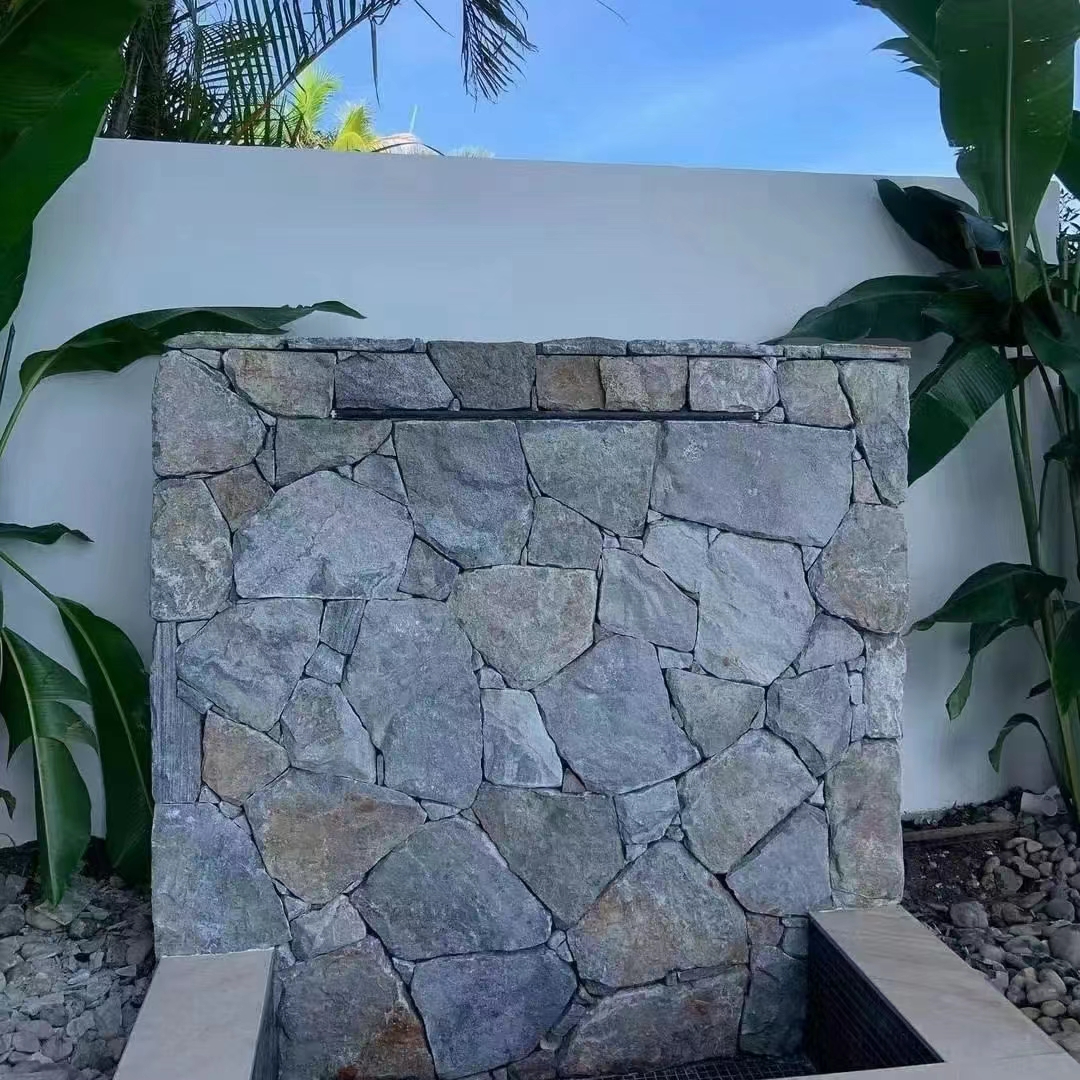
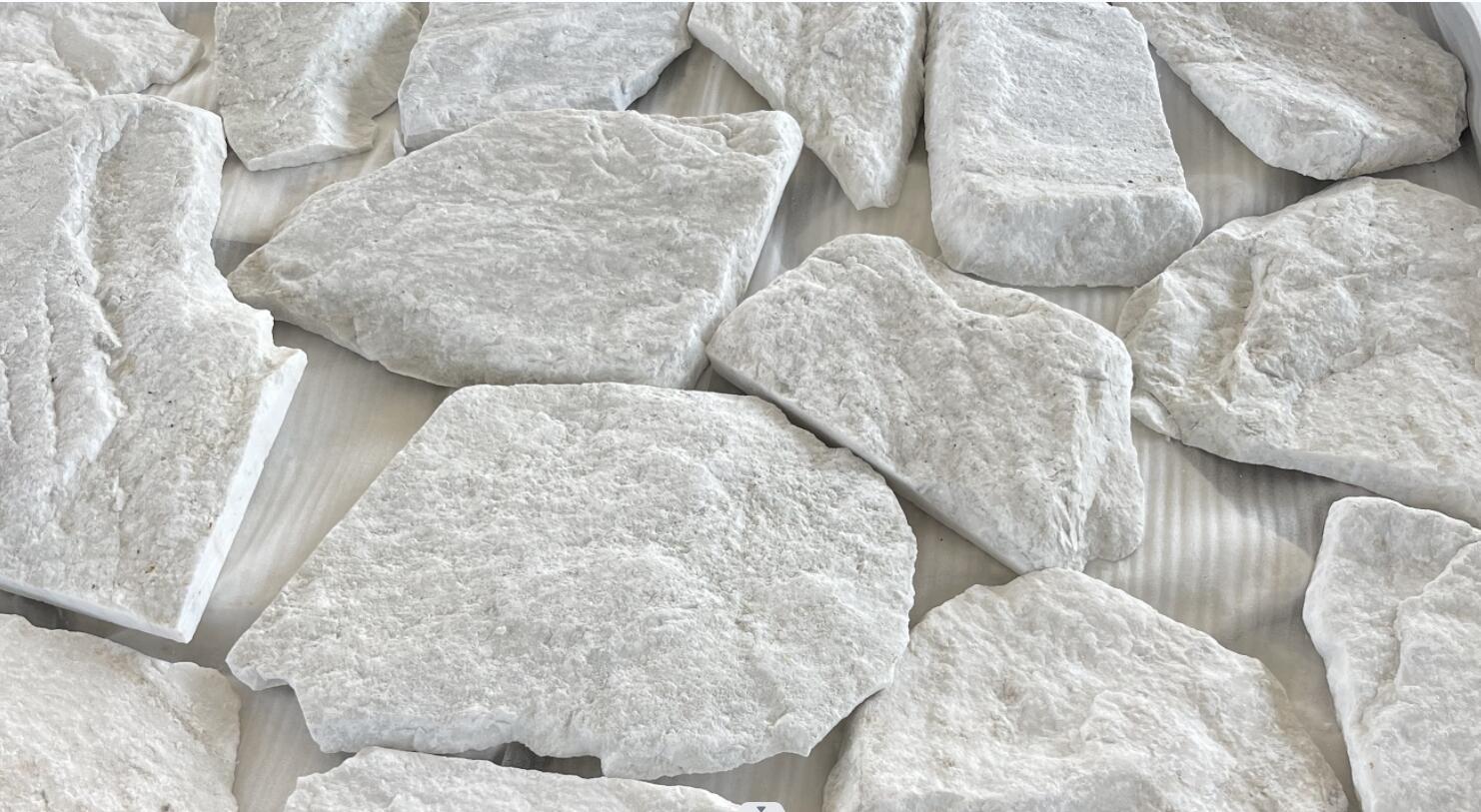
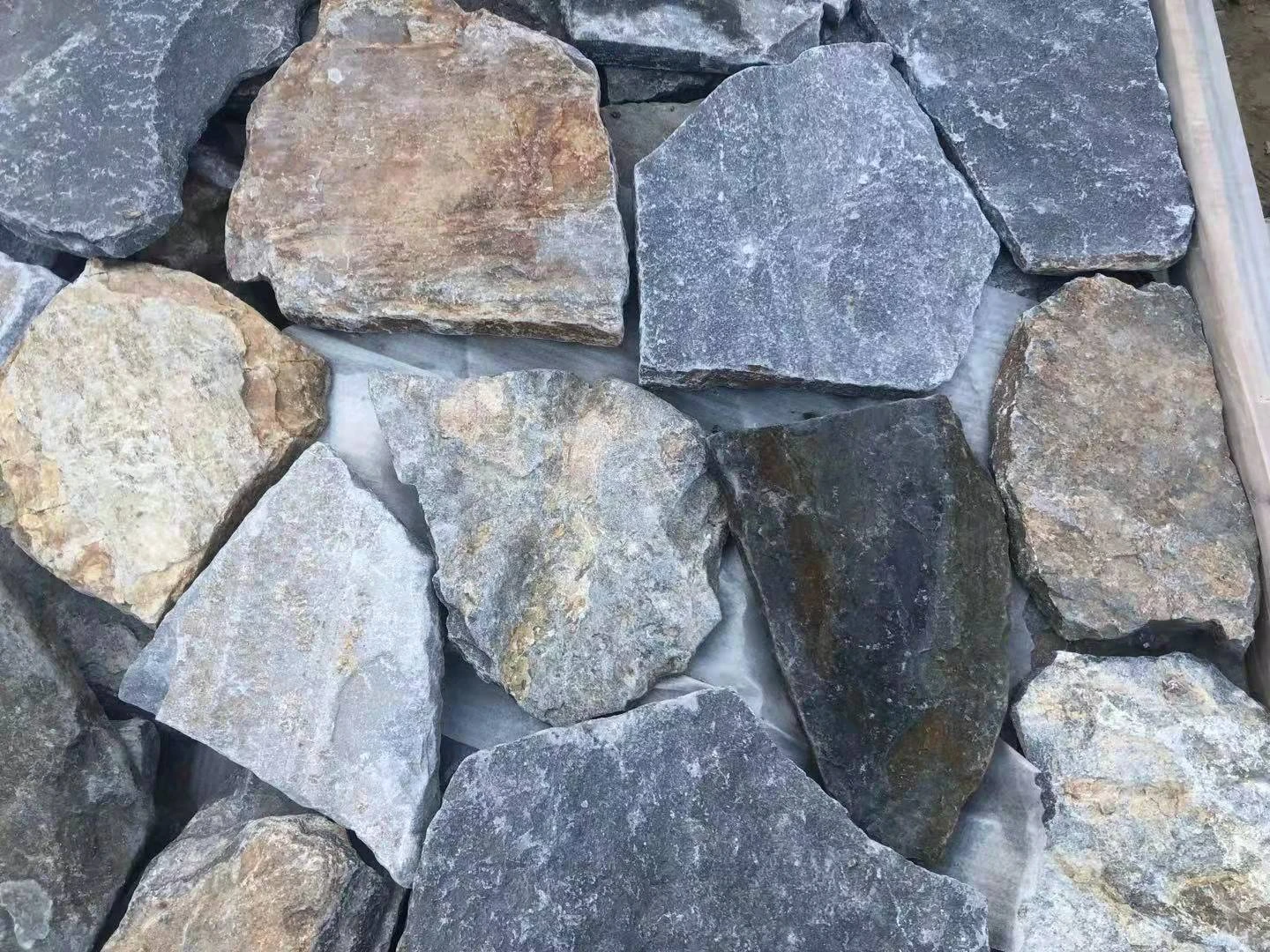
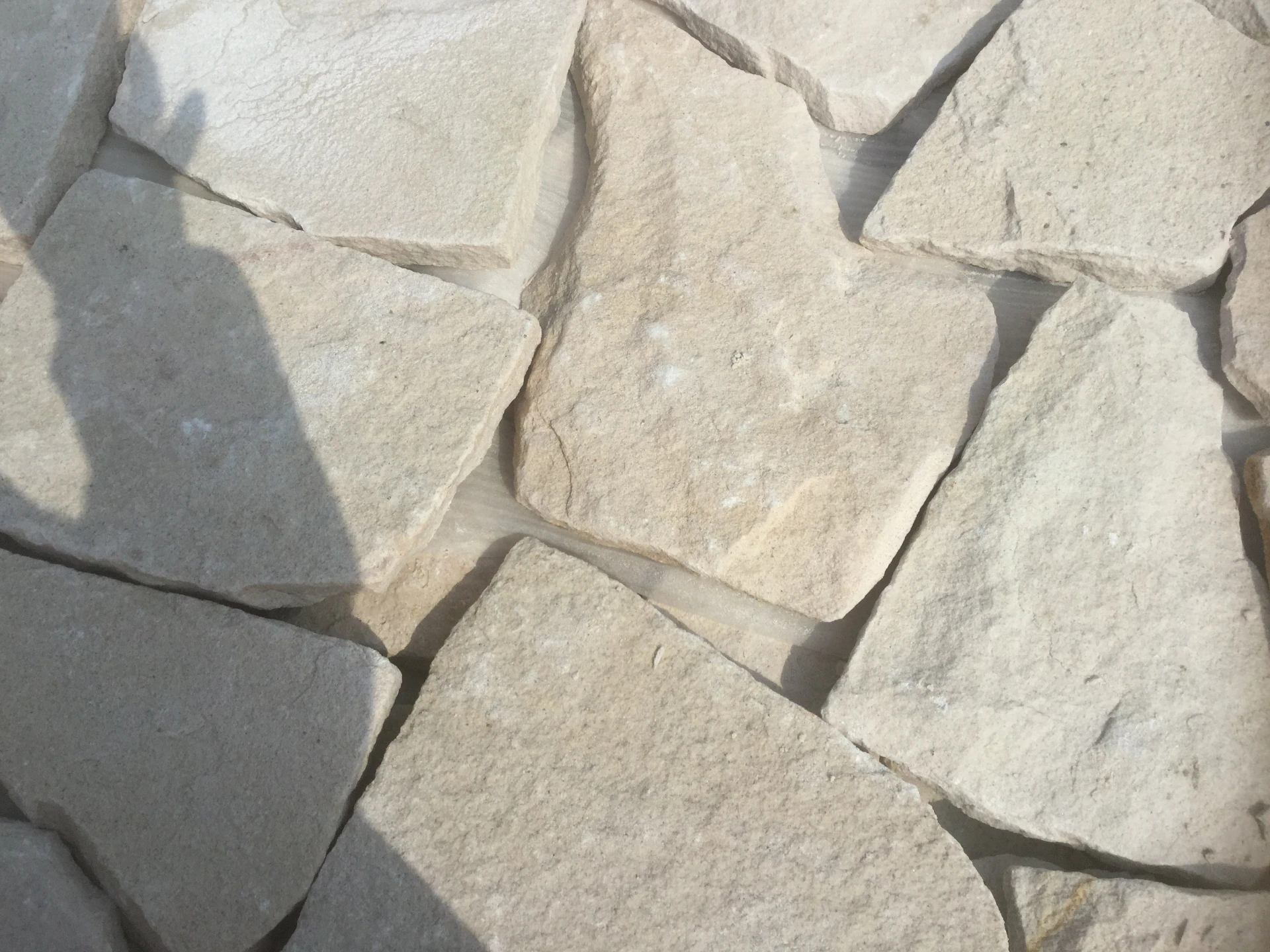
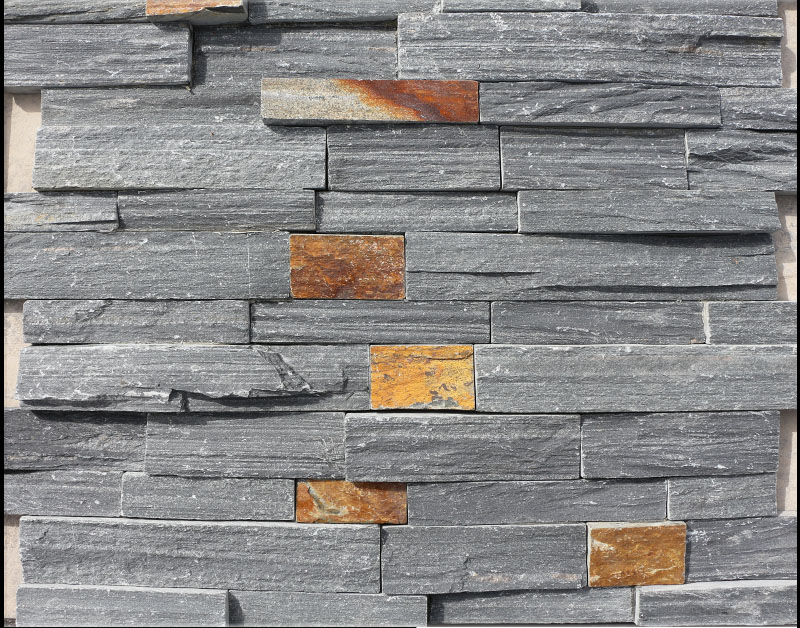
Once you find the right supplier like WOS consider a range of natural paving stones, such as Sandstone, Limestone, Flagstone, Bluestone, Slate Stone, Granite Stone, Cobblestone, Fieldstone, round stepping stones, and stone bricks. I prefer a blog on natural stone patio pavers to read more, go through it.
Leverage the free consulting services provided by the supplier you have selected to make the right decision for your paving stone needs.
It is a simple thing if you are familiar with the term square foot. You can measure the length and width of the area to cover in paving in a unit of the foot. Now, multiply length with a width (LXW) and get the total square footage of your construction area.
Now, obtain from your stone supplier the paver coverage rate, which is depending on the size and shape of paving stones. Take care to buy additional material up to 5-10% to fit the curves and odd spaces.
If your area is in regular shape, it is easy to mark it by using rope, spikes, and lime/chalk powder. If it is in an irregular shape, you need to learn some trigonometry and calculate angles, curves, and sides applying engineering knowledge. For a big size project, the help of a civil engineer or experienced contractor is mandatory.
Keep in mind that your exterior paving needs adequate drainage. A slope of 1/8” to ¼” is recommended in most conditions if it is a path/walkway or driveway, part the slop into two directions from the centerline. For the patio, the one-sided slope is enough.
Now, how will you fix the slope in the field?
Now, how will you count the depth?
You will find an overall picture as mentioned in the picture above.
It must have stones with the following cumulative properties
These properties of crushed stones make the compacting process easy and load-bearing. You can add 3/4 minus gravel in the mixture and wet the entire material a little bit to attain high compaction.
Spread the base material in a layer of 6” thickness across the entire excavation area. Use hand tamper for smaller regions or mechanical plate compactor for larger areas.
Add another layer and repeat the same process until to attain the desired depth throughout the excavated areas based on marks on the corresponding stacks.
Edge restrain holds the shape of the paving project is it a patio, path, or driveway. Edge restrain available in plastic, metal, non-corrosive wood, or pre-cast concrete.
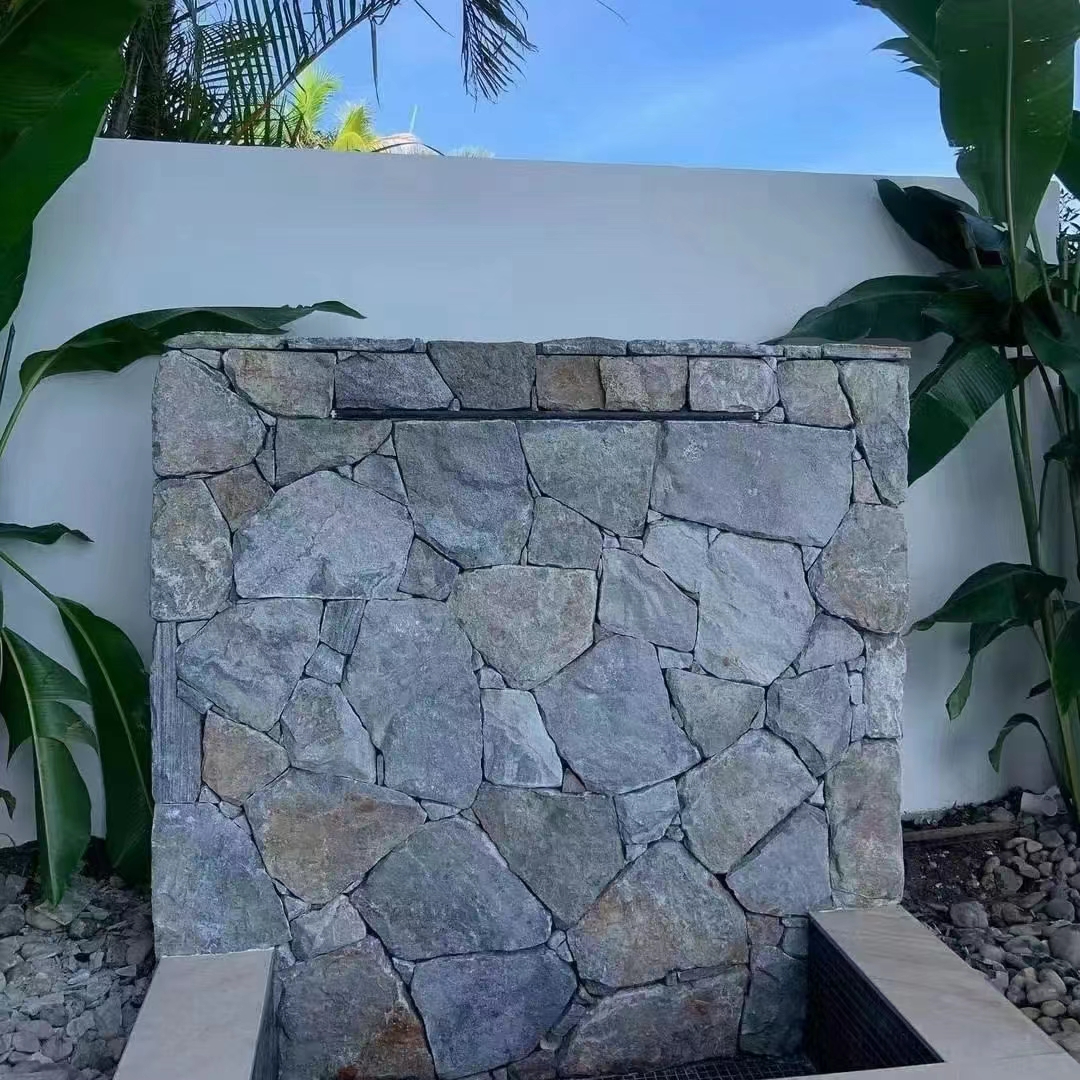
The sand quality is essential for paving stones. If sand particles are containing crushed rocks or any organic material, it may result in uneven seating of paver stones. After wetting and water percolation, organic matters whether swell or degrade and leave holes there.
Select ASTM C33 and CSA A23.1. Otherwise, ASTM C-144 and CSA 179 graded mason’s sand is an alternative.
Sometimes paving stones come into irregular shapes and need mason cutters specially made for stone cutting to get desired shapes according to your design. Today high-end stone cutting machines are available in the market using water jets along with diamond embedded edged cutters.
Installation of paving stones on the sand layer is easy if you take enough care.
Now, pour finer sand-like bagged silica over the paving stones and brush it manually or use a large broom to distribute evenly on larger areas and completely fill the joints. It will lock the pavers.
Afterward, spray a mild jet of water on the pavers and let them dry. Now, apply a suitable best sealant/sealing product on the pavers to give them durability and protection from weed growth.
Regular cleaning, sweeping, and power washing can save your paving stones from the degradation process. Re-sealing with high-quality sealant also grant durability in appearance and save stone color, texture, and shining from fading fast.