

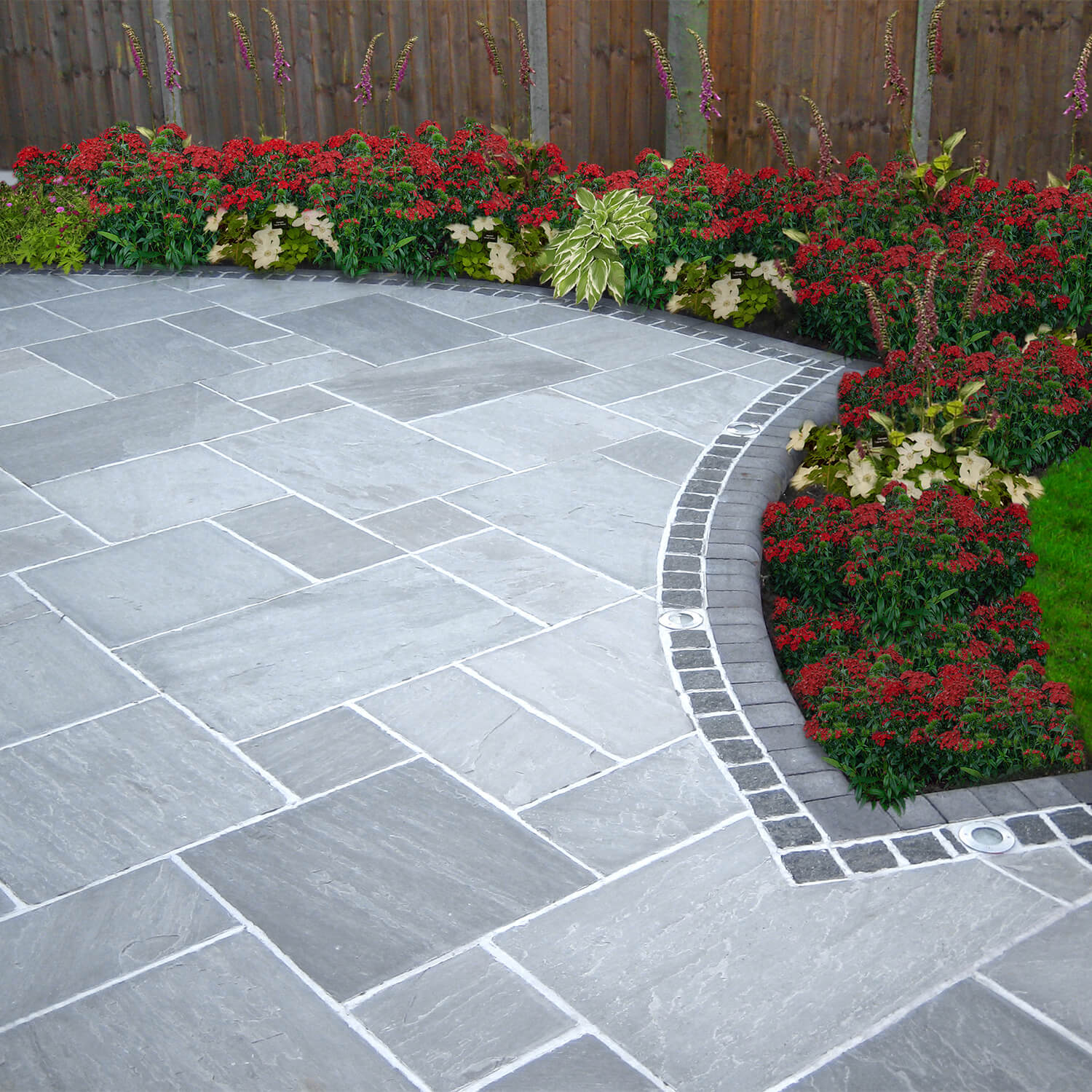
Who hasn’t been spending more time in their garden? Whether it’s for a socially distant get together or to flex those green fingers. Even if the Covid-19 pandemic had never come on the scene, our gardens were already transforming into something more like an extension to the home with areas for dining, entertaining and cooking. With this multifunctionality comes the need to divide the garden into ‘areas’ hence the importance of paving. Of course if money is no object you can pave your garden with the most beautiful, durable natural stone on the market but many of us have to stick to a budget and if that’s a bit on the small side then how can you aconseguir un gran aspecte sense trencar el banc?
Quines opcions de pavimentació hi ha?
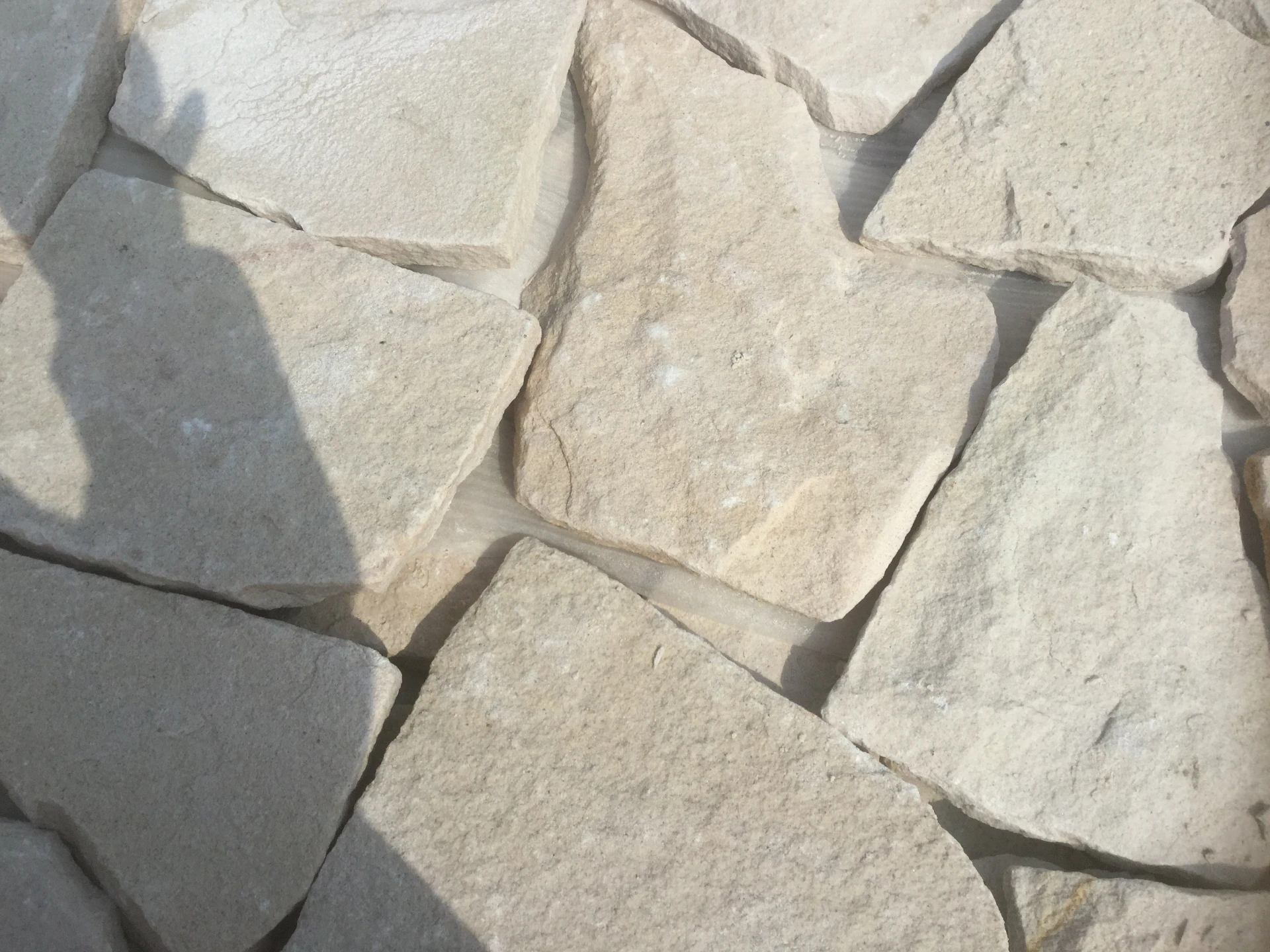
formigó is the go-to for cheaper end paving as you can choose from a variety of different colours, styles, textures, and even sizes of concrete slabs. Concrete is the perfect material if you want to ‘get the look’ for example, it can be made to look like brick on a driveway or you can use larger slabs for a clean, contemporary look. But don’t think that natural stone is out of your reach if you are working to a budget. Despite the fact that it is a fantastic quality, paviment de gres els preus són sorprenentment baixos, la qual cosa significa que podeu crear el vostre jardí de somnis per una fracció del cost d'un altre tipus de paviment de pedra natural.
Catifa de llosa natural rosa de tardor
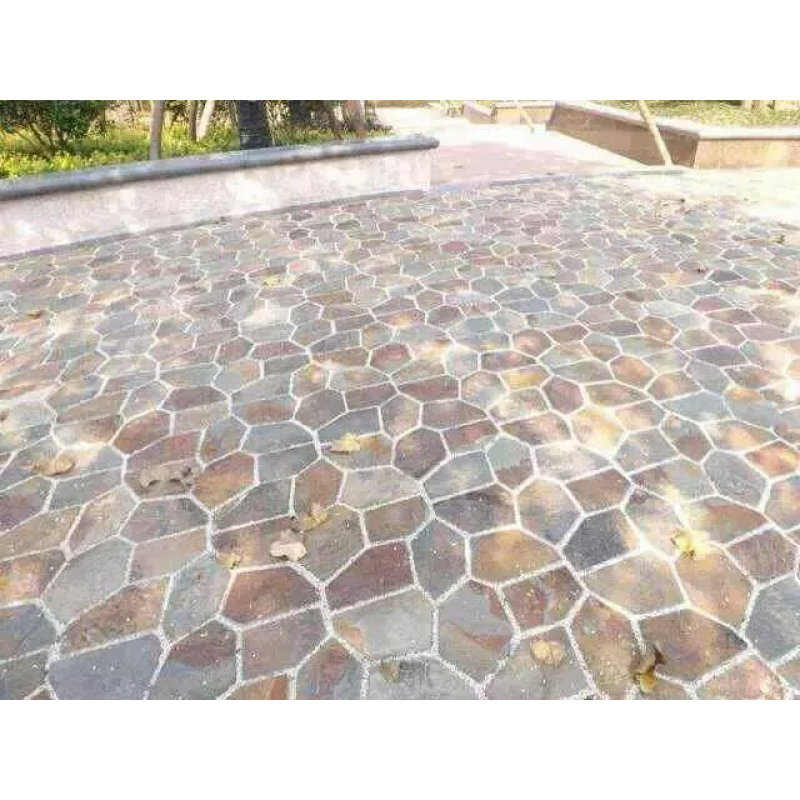
Quines són les alternatives a la pavimentació?
Una alternativa econòmica a la pavimentació és l'asfalt. És més resistent al fred i és menys costós de reparar, però el formigó és molt més resistent.
For driveways you can use gravel which is also a good alternative if you have problems with drainage. You could keep costs down by using pavers to edge the drive or pathway, And for a more stable path choose sharp-edged gravel that is labelled 1/4-inch minus. Pieces of that gravel type fit snugly together as they won’t move about so much.
Another cost-conscious alternative is poured concrete, although if you suddenly have more money to spend and want to invest in stone pavers instead it’s quite difficult to remove.
Per als patis, l'alternativa popular és la coberta, però això pot ser més car que, per exemple, el gres i no tan fàcil de mantenir.
Per què hauríeu de triar el paviment per al vostre espai exterior?
Tot i que la pavimentació és una mica més costosa que algunes alternatives, generalment és més resistent, més atractiva i tindrà més longevitat. La pedra arenisca es veu millor a mesura que envelleix i la majoria de llambordes de pedra natural són fàcils de treballar.
Com triar el paviment adequat
Budget is important, especially if you have a huge project that is going to be used a lot. In that case it’s perhaps prudent to consider how much it will cost in the long term. Sometimes spending more at the outset will save you money over time.
A l'hora d'escollir el teu paviment cal preguntar-te quina serà la seva finalitat principal. És per a calçada, patio, a garden path, or a poolscape? The type of paving you choose will also depend upon where it’s going to sit within your garden. Will it get a hammering from the elements? Or be at risk of oil drips from motor vehicles?
Finalment, l'estil de la vostra llar pot dictar la vostra elecció. El tipus de paviment que trieu per a una construcció moderna sens dubte serà diferent d'una propietat rústica, tot i que no hi ha normes. Un pati contemporani elegant pot semblar fantàstic juxtaposat a una propietat antiga.
Per a més informació sobre la gamma de paviments de pedra natural que oferim, visiteu la nostra botiga. Alternativament, tens alguna pregunta? Si us plau, no ho dubtis posar-se en contacte.
 africana
 albanès
 amàric
 àrab
àrab armeni
 azerbaidjana
 basc
basc Bielorús
 bengalí
  bosnià
 búlgar
 català
 Cebuà
Cebuà Xina
Xina Xina (Taiwan)
 Cors
Cors croat
croat txec
txec danès
danès holandès
 Anglès
 esperanto
 estonià
 finès
finès francès
 frisó
frisó gallec
 georgiana
 alemany
 grec
grec Gujarati
 crioll haitiano
 hausa
hausa hawaià
 hebreu
 No
No Miao
Miao hongarès
 islandès
 igbo
igbo indonesi
 irlandesa
 italià
 japonès
 javanès
 Kannada
 kazakh
 Khmer
Khmer Ruandès
 coreà
coreà kurd
kurd kirguis
 TB
TB llatí
llatí letó
letó lituà
lituà luxemburguesa
 macedoni
 Malgashi
 Malai
Malai malayalam
 maltès
 Maori
Maori Marathi
 mongol
 Myanmar
 nepalí
 noruec
 noruec
 occità
 Pashto
 persa
persa polonès
 portuguès
  panjabi
 romanès
 rus
rus samoà
samoà Gaèlic escocès
 serbi
serbi Anglès
 Shona
Shona Sindhi
 Sinhala
 eslovac
 eslovè
 Somali
 espanyol
 Sundanès
 suahili
 suec
suec Tagalog
 Tadjik
 Tamil
Tamil tàrtar
 Telugu
 tailandès
 turc
turc turcomà
 Ucraïnès
 Urdú
Urdú uigur
uigur Uzbek
Uzbek vietnamita
 gal·lès