

Difference between stacked stone and Ledgestone:
Stacked stone and outdoor ledger stone are both popular choices for creating visually appealing and textured wall surfaces in architecture and interior design. While they share some similarities, they also have distinct characteristics that set them apart:
Aparença:
Stacked Stone: Stacked stone typically features a more irregular and random arrangement of stones, which can create a rugged and uneven surface. The stones are often uniform in thickness but vary in size and shape, giving the appearance of a traditional dry stacked stone wall.
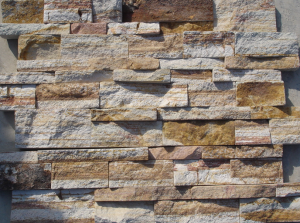
Ledgestone: Outdoor ledger stone is characterized by flat, uniform stones that are cut or shaped to interlock. The stones are arranged in a more structured and organized manner, resulting in a more controlled and cohesive appearance.
Texture:
Stacked Stone: Stacked stone tends to have a more three dimensional and varied texture due to the irregular shapes and sizes of the stones. This can create a more rustic or natural look.
Ledgestone: Ledgestone has a flatter and smoother texture compared to stacked stone. The stones are arranged in a way that creates a more even and uniform surface.
Versatility:
Stacked Stone: Stacked stone is often associated with a rustic or traditional aesthetic. It is commonly used for creating a rugged and textured look, making it suitable for projects that aim to evoke a natural and aged appearance.
Ledgestone: Outdoor ledger stone offers a more contemporary and refined look. Its structured and organized arrangement of stones makes it well suited for modern or formal design styles.
 africana
  albanès
  amàric
  àrab
àrab  armeni
  azerbaidjana
  basc
basc  Bielorús
  bengalí
  bosnià
  búlgar
  català
  Cebuà
Cebuà  Xina
Xina  Xina (Taiwan)
  Cors
Cors  croat
croat  txec
txec  danès
danès  holandès
  Anglès
  esperanto
  estonià
  finès
finès  francès
  frisó
frisó  gallec
  georgiana
  alemany
  grec
grec  Gujarati
  crioll haitiano
  hausa
hausa  hawaià
  hebreu
  No
No  Miao
Miao  hongarès
  islandès
  igbo
igbo  indonesi
  irlandesa
  italià
  japonès
  javanès
  Kannada
  kazakh
  Khmer
Khmer  Ruandès
  coreà
coreà  kurd
kurd  kirguis
  TB
TB  llatí
llatí  letó
letó  lituà
lituà  luxemburguesa
  macedoni
  Malgashi
  Malai
Malai  malayalam
  maltès
  Maori
Maori  Marathi
  mongol
  Myanmar
  nepalí
  noruec
  noruec
  occità
  Pashto
  persa
persa  polonès
  portuguès
  panjabi
  romanès
  rus
rus  samoà
samoà  Gaèlic escocès
  serbi
serbi  Anglès
  Shona
Shona  Sindhi
  Sinhala
  eslovac
  eslovè
  Somali
  espanyol
  Sundanès
  suahili
  suec
suec  Tagalog
  Tadjik
  Tamil
Tamil  tàrtar
  Telugu
  tailandès
  turc
turc  turcomà
  Ucraïnès
  Urdú
Urdú  uigur
uigur  Uzbek
Uzbek  vietnamita
  gal·lès




