

Crazy Cladding Stone
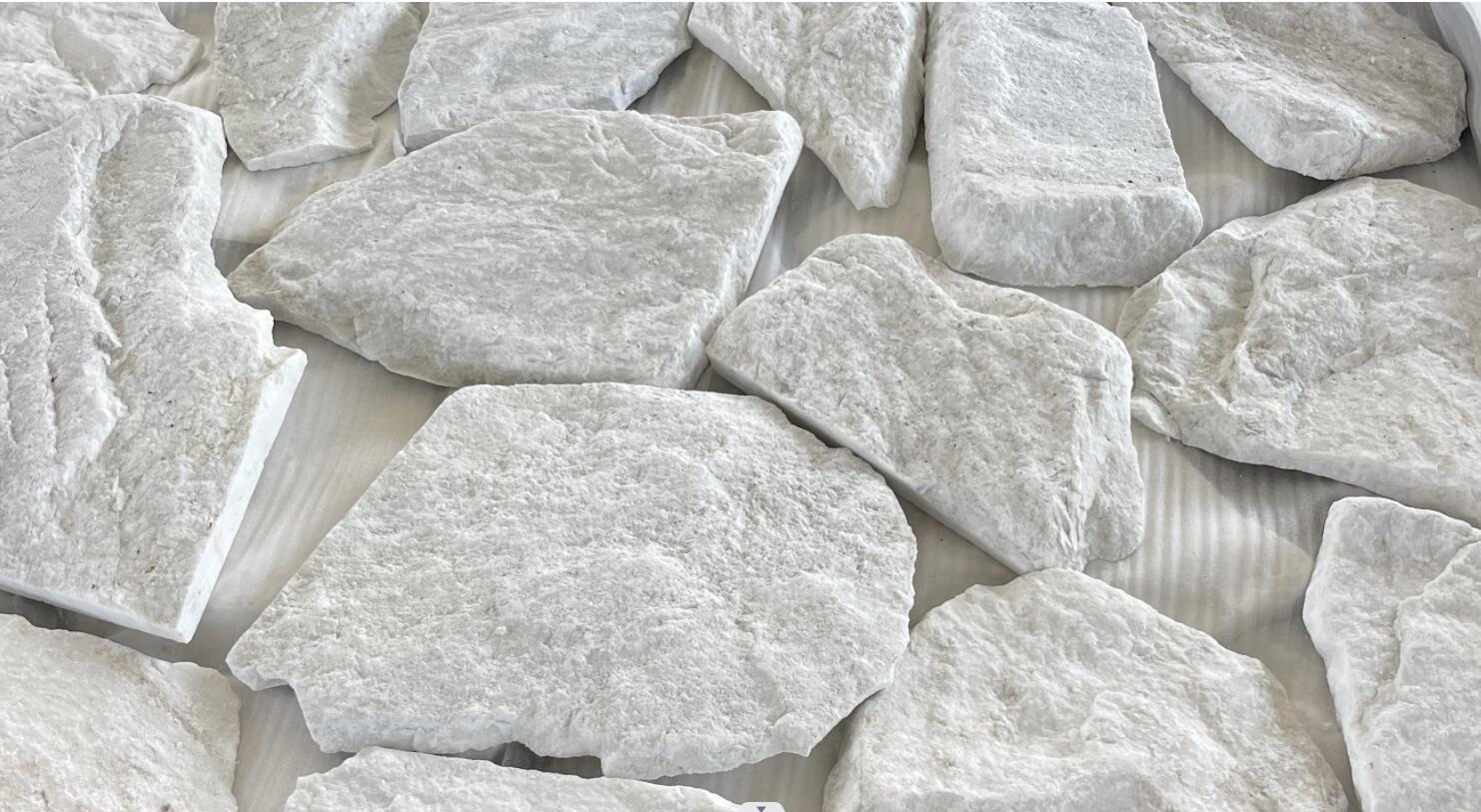
This curated selection of premium stones offers versatile solutions for both interior and exterior design. Castle stone provides a timeless, structured aesthetic with its refined edges, ideal for formal architectural features. Irregular stone celebrates organic beauty through its untamed shapes, perfect for creating naturalistic landscapes. Flamed sandstone paving delivers a textured, slip-resistant surface with earthy warmth, while loose stone cladding introduces depth and movement to vertical surfaces through its artfully fragmented composition.
Quartzite stone stands out for its exceptional durability and luminous veining, making it a sophisticated choice for high-traffic areas. White paving stones lend spaces a bright, contemporary elegance, contrasting beautifully with the dramatic sophistication of black slate, known for its fine grain and moody sophistication. Rustic stone captures the raw charm of time-worn textures, bringing organic character to modern designs.
Each stone type is meticulously sourced and finished to balance aesthetic appeal with functional performance, whether for pathways, facades, or decorative accents. These materials harmonize natural resilience with design flexibility, allowing architects and homeowners to craft spaces that feel both grounded and inspired. The collection embodies the intersection of nature's artistry and human craftsmanship, offering enduring solutions for projects where beauty and practicality converge.

what is flamed granite?
Flamed granite is a natural stone surface treated with intense heat to create a rough, textured finish. This process involves exposing the granite to high-temperature flames, causing the crystals to fracture and form a non-slip, weathered appearance. The technique enhances the stone's durability while preserving its natural color variations, making it ideal for outdoor applications like paving and facades where slip resistance is crucial. Unlike polished granite, flamed granite retains a rustic, matte aesthetic while maintaining weather resistance.
what are the different types of cladding?
Cladding refers to exterior building layers designed for protection and aesthetics. Common systems include stone veneers (natural or engineered), metal panels (aluminum or steel), composite materials, and high-pressure laminates. Each type offers unique benefits in terms of insulation, weatherproofing, and design flexibility. Modern cladding solutions often integrate thermal efficiency and sustainable properties, balancing functionality with architectural appeal. The choice depends on structural requirements, climate conditions, and desired visual impact.
what is the difference between flagstone and pavers?
Flagstone is natural sedimentary rock split into irregular slabs, prized for its organic look and durability in landscaping. Pavers are uniformly shaped units (concrete, brick, or stone) designed for precise installation. Flagstone offers a rustic, uneven surface with natural texture, while pavers provide a modular, level finish for structured designs. Flagstone requires more skill to install due to its irregularity, whereas pavers allow faster, more consistent layouts. Both are weather-resistant but differ in maintenance and aesthetic outcomes.
 Afrika
 Albania
 Amharic
 Arabic
 Armenian
 Azerbaijani
 Basque
 Belarusian
 Bengali
 Asụsụ Bosnia
 Bulgarian
 Catalan
 Cebuano
 China
 China (Taiwan)
 Corsican
 Asụsụ Croatia
 Czech
 Danish
 Dutch
 Bekee
 Esperanto
 Estonia
 Asụsụ Finnish
 French
 Onye Frisian
 Onye Galisi
 Asụsụ Georgian
 German
 Grik
 Gujarati
 Haitian Creole
 hausa
 Hawaian
 Hibru
 Mba
 Miao
 Asụsụ Hungarian
 Aislandi
 igbo
 Asụsụ Indonesian
 Irish
 Ịtali
 Japanese
 Asụsụ Javanị
 Kannada
 kazakh
 Khmer
 Onye Rwandan
 Korean
 Kurdish
 Kyrgyz
 TB
 Latịn
 Latvia
 Lithuania
 Luxembourgish
 Masedonia
 Malgashi
 Malay
 Malayalam
 Malta
 Maori
 Marathi
 Mongolian
 Myanmar
 Nepali
 Norwegian
 Norwegian
 Occitan
 Pashto
 Asụsụ Persia
 Polish
 Portuguese
 Punjabi
 Romanian
 Russian
 Samoan
 Scottish Gaelic
 Asụsụ Serbian
 Bekee
 Shona
 Sindhi
 Sinhala
 Slovak
 Slovenian
 Somali
 Spanish
 Asụsụ Sudan
 Swahili
 Swedish
 Tagalog
 Tajik
 Tamil
 Tatar
 Telugu
 Thai
 Turkish
 Turkmen
 onye Ukraine
 Urdu
 Uighur
 Uzbek
 Vietnamese
 Welsh