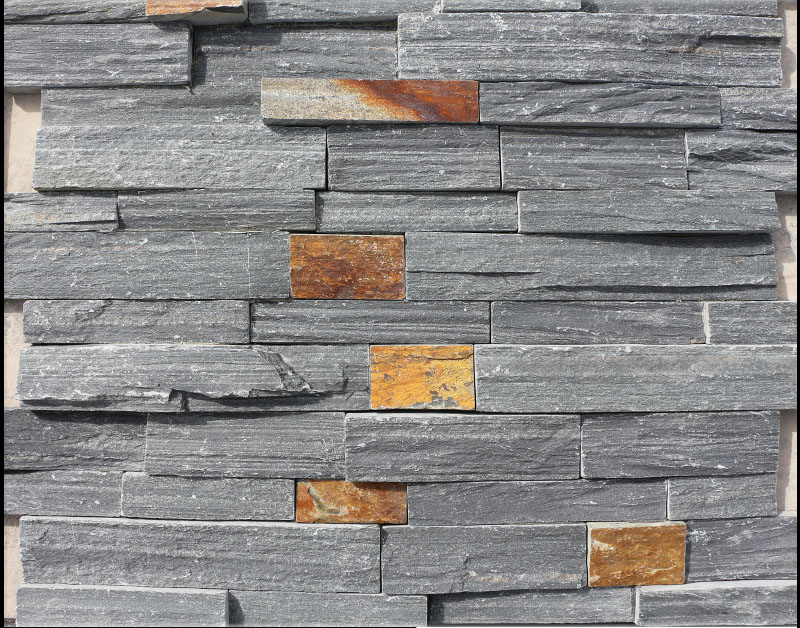
Flagstone ,as a common building material, it is highly favored for its unique texture and wide range of application scenarios. This article will provide a detailed explanation of the material composition, formation process, types and characteristics, applications, advantages and disadvantages of mwala wa mbendera, in order to provide readers with a comprehensive and in-depth understanding.
Flagstone is mainly composed of rock materials, which typically have the characteristic of easily splitting into thin sections. Specifically, flagstone can be formed from various types of rocks, including but not limited to:
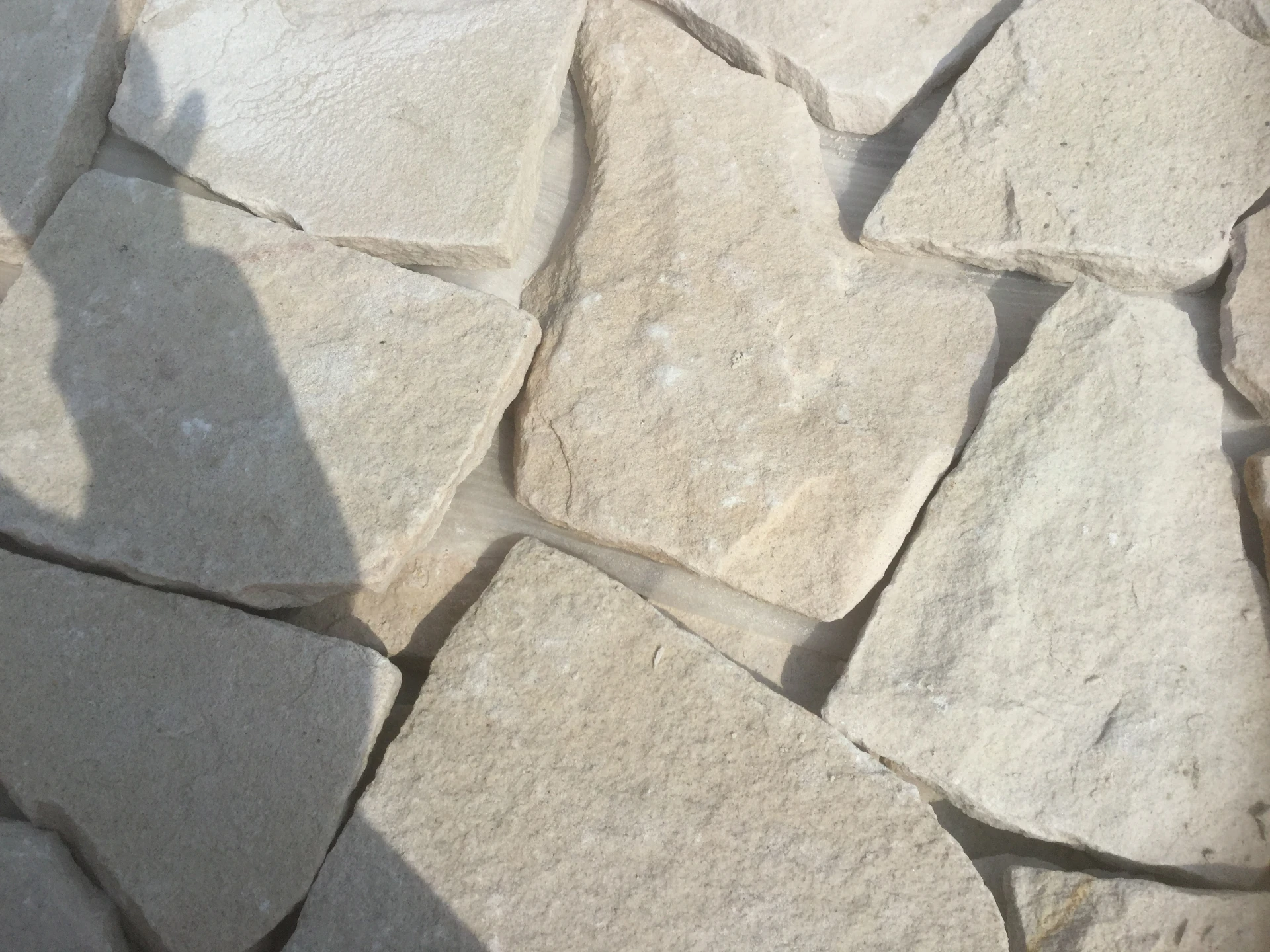
Sandstone: Sandstone is a sedimentary rock composed of tightly bound sand particles. When the sand particles in sandstone are compacted and cemented together, they can form a strong and easily separable rock layer, which is very suitable for making mwala wa mbendera
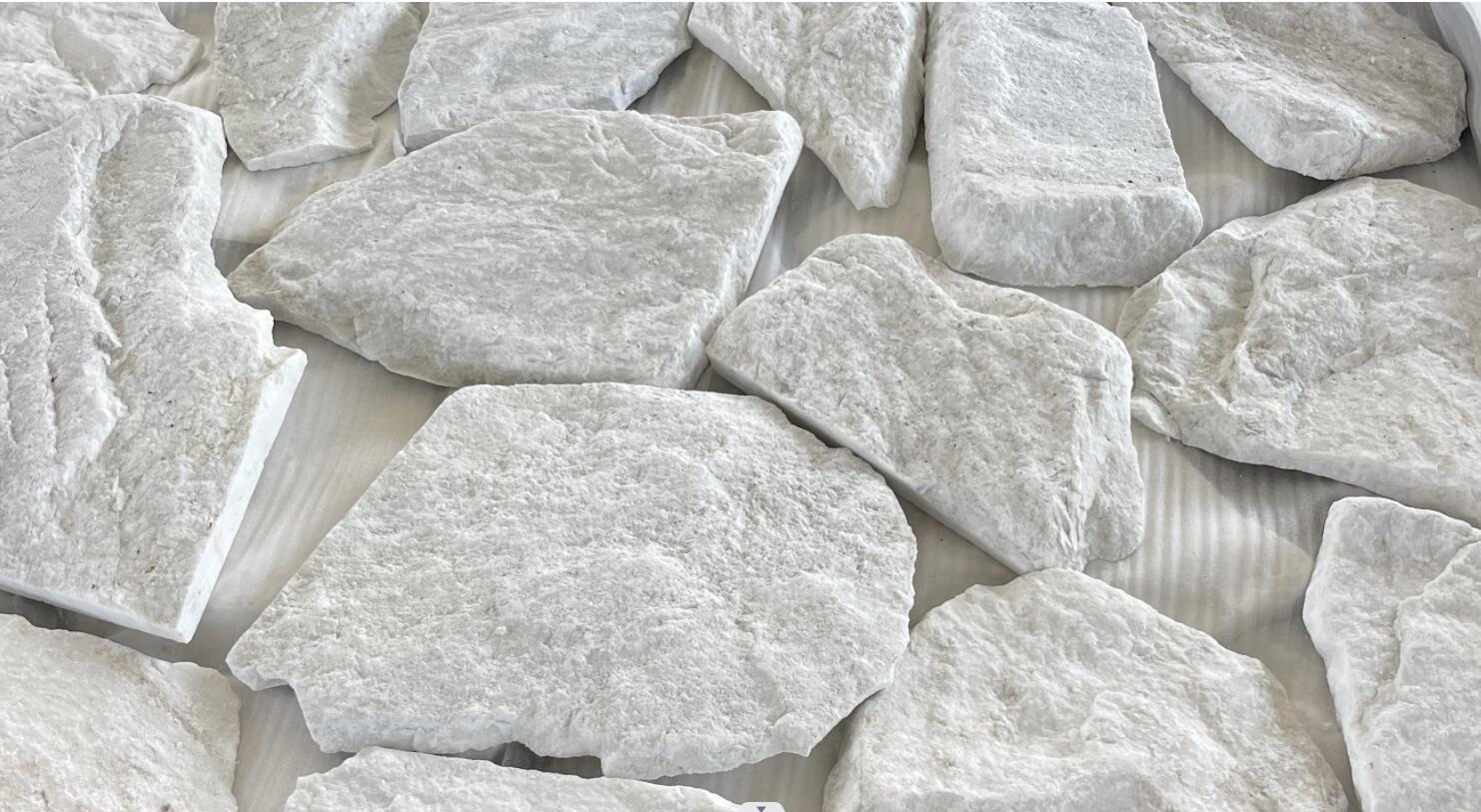
Limestone: Limestone is a sedimentary rock composed of calcium carbonate. It usually has a layered structure and is easy to split into thin sheets along the bedding planes, making it one of the ideal materials for making flagstone.
Granite: Although granite is a type of igneous rock that is usually harder and less prone to splitting, certain types of granite can form easily processable flakes under specific geological conditions, which can be used to make flagstone. However, this situation is relatively rare.
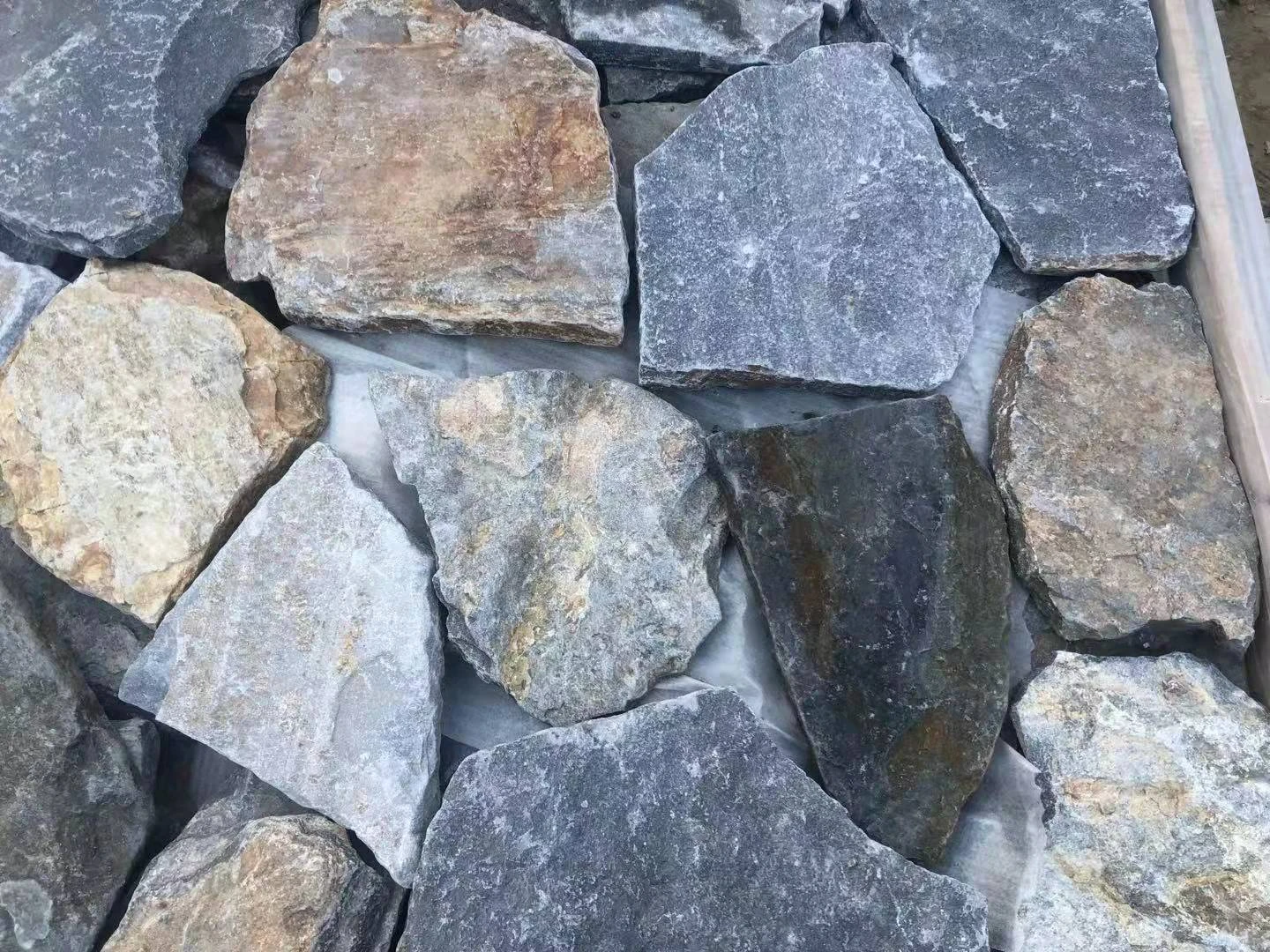
Slate: Slate is a metamorphic rock formed from shale or claystone under high temperature and pressure. It has a very obvious layered structure and can easily split into thin sheets along the bedding planes, making it one of the high-quality materials for making flagstone.
The formation process of mwala wa mbendera usually involves geological processes such as sedimentation, compaction, cementation, and metamorphism. Taking sandstone as an example, its formation process is roughly as follows:
Sedimentation: Sand particles settle in water or wind, forming a sand layer.
Compaction effect: With the passage of time, the sand layer is subjected to the pressure of overlying sediments, and the gaps between sand particles gradually decrease, making the sand layer more compact.
Cementation: Minerals (such as calcium carbonate) in groundwater gradually fill the gaps between sand particles, forming a cement that firmly binds the sand particles together.
Splitting and processing: Sandstone layers formed by geological processes can be processed into thin sheet-like mwala wa mbendera through cutting, grinding, and other techniques after mining.
According to different materials, colors, and textures, mwala wa mbendera can be divided into multiple types, each with unique characteristics and aesthetics:
Mwala wa mchenga mwala wa mbendera: usually has warm tones and rough textures, giving a natural and rustic feeling.
Mwala wamiyala mwala wa mbendera: It comes in a variety of colors, ranging from gray to light brown, and sometimes has unique fossil or texture patterns, adding a touch of mystery.
Granite flagstone: It has a hard and wear-resistant texture, usually presenting a deep color tone and unique crystal structure, giving people a noble and elegant feeling.
mwala wa mbendera: Rich in colors ranging from black, green to red, with clear and delicate textures, it is very suitable for decoration and paving.
Flagstone is widely used in the fields of architecture and landscaping due to its unique texture and beautiful appearance. Specifically, it can be used in the following areas:
Paving material: Flagstone is often used as a paving material for sidewalks, lanes, and courtyards. Its sturdy and wear-resistant characteristics make it an ideal choice for outdoor flooring.
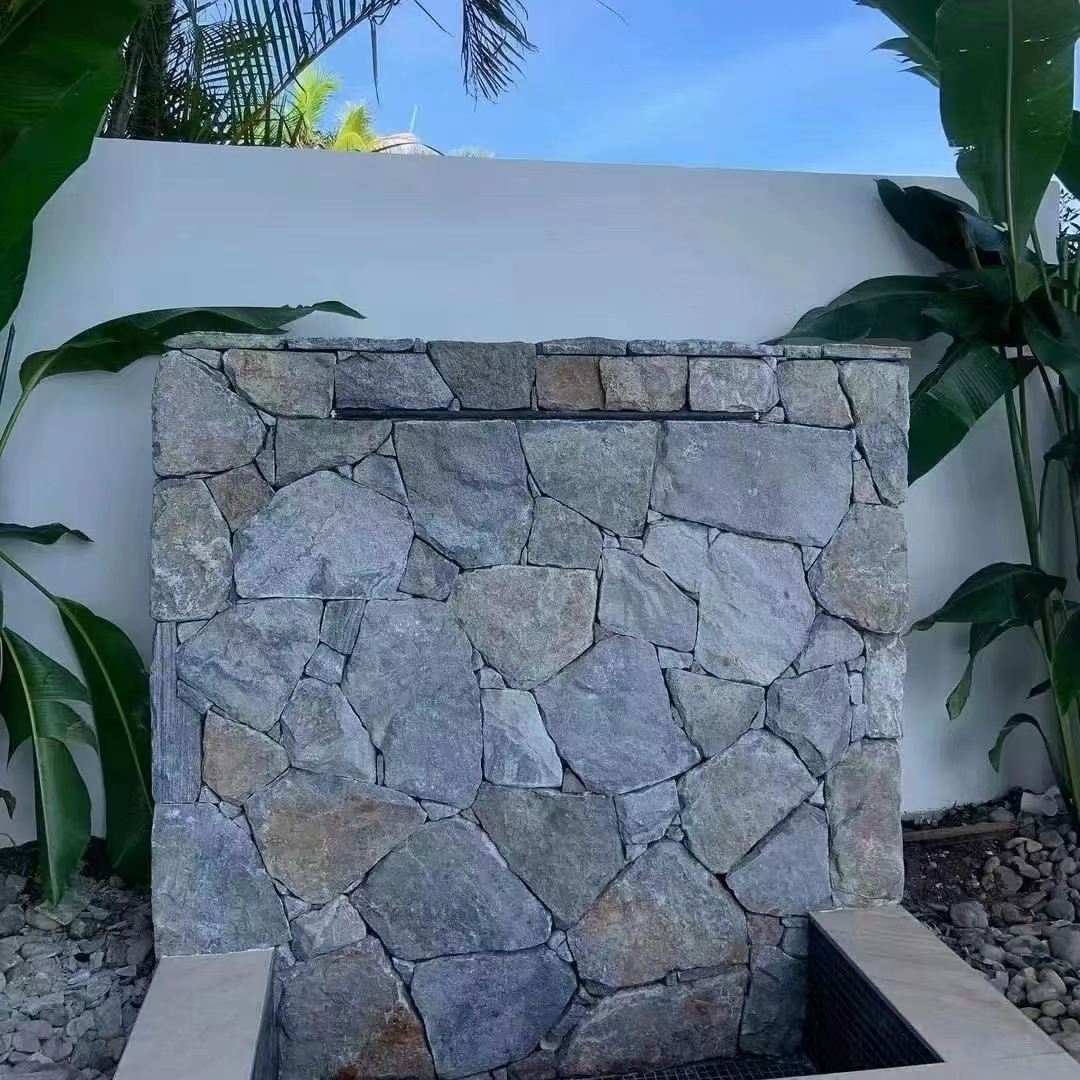
Wall decoration: After cutting the mwala wa mbendera into appropriate sizes and shapes, it can be embedded on the wall as a decorative element. This decoration method is not only aesthetically pleasing but also enhances the texture and layering of the wall.
Sculptures and artworks: Flagstone is often used to create sculptures and artworks due to its ease of processing and carving. These artworks not only have ornamental value, but also showcase the exquisite skills and creativity of the craftsmen.
Landscape elements: In garden design, mwala wa mbendera is often used as a boundary material for water features, flower beds, and lawns. Through clever layout and combination, a natural and harmonious landscape effect can be created.
advantage:
Beautiful and elegant: Flagstone has a unique texture and texture that can add beauty to buildings and gardens.
Strong durability: Due to its sturdy and wear-resistant material, mwala wa mbendera is not easily damaged during use and has a long service life.
Easy to maintain: Compared to other paving materials, mwala wa mbendera has lower maintenance costs. Regular cleaning and maintenance are sufficient to maintain its good appearance and performance.
In summary, mwala wa mbendera, as a high-quality building material and decorative element, has broad application prospects in the fields of architecture and landscaping. Although it is expensive and difficult to construct, its beauty, durability, and ease of maintenance make it the preferred material for many designers and homeowners.
As a is a company specializing in the stone, our business scope is very broad . We have water feature stone wall , thin stone , ledge stone ndi castle stone . About the castle stone ,we have irregular stones , flamed sandstone paving , loose cladding ,quartzite stone , pavers with white rocks , rustic stone ndi rustic flagstone patio. The rustic flagstone patio price in our company are reasonable . If you are interesting in our product welcome to contact us!
 Afirika
 Chialubaniya
 Chiamharic
 Chiarabu
 Chiameniya
 Chiazerbaijani
 Basque
 Chibelarusi
 Chibengali
 Chibosnia
 Chibugariya
 Chikatalani
 Cebuano
 China
 China (Taiwan)
 Chikosikani
 Chikroatia
 Chicheki
 Chidanishi
 Chidatchi
 Chingerezi
 Chiesperanto
 Chiestonia
 Chifinishi
 Chifalansa
 Chifrisian
 Chigalikiya
 Chijojiya
 Chijeremani
 Chigriki
 Chigujarati
 Chikiliyo cha ku Haiti
 hausa
 Hawaii
 Chiheberi
 Ayi
 Miao
 Chihangare
 Chi Icelandic
 igbo
 Chi Indonesian
 ayi
 Chitaliyana
 Chijapani
 Chijavani
 Kanada
 kazakh
 Khmer
 Rwanda
 Chikorea
 Chikurdi
 Kyrgyz
 TB
 Chilatini
 Chilativiya
 Chilithuania
 ChiLuxembourgish
 Chimakedoniya
 Malgashi
 Chimalayi
 Malayalam
 Chimalta
 Chimaori
 Chimarathi
 Chimongoliya
 Myanmar
 Chinepali
 Chinorwe
 Chinorwe
 Occitan
 Pashto
 Chiperisi
 Chipolishi
 Chipwitikizi
 Chipunjabi
 Chiromania
 Chirasha
 Chisamoa
 Scottish Gaelic
 Chisebiya
 Chingerezi
 Chishona
 Sindi
 Sinhala
 Chisilovaki
 Chisiloveniya
 Somalia
 Chisipanishi
 Chisundanese
 Swahili
 Chiswidishi
 Chitagalogi
 Tajiki
 Tamil
 Chitata
 Telugu
 Thai
 Turkey
 Turkmen
 Chiyukireniya
 Chiurdu
 Uighur
 Chiuzbeki
 Vietnamese
 Chiwelesi