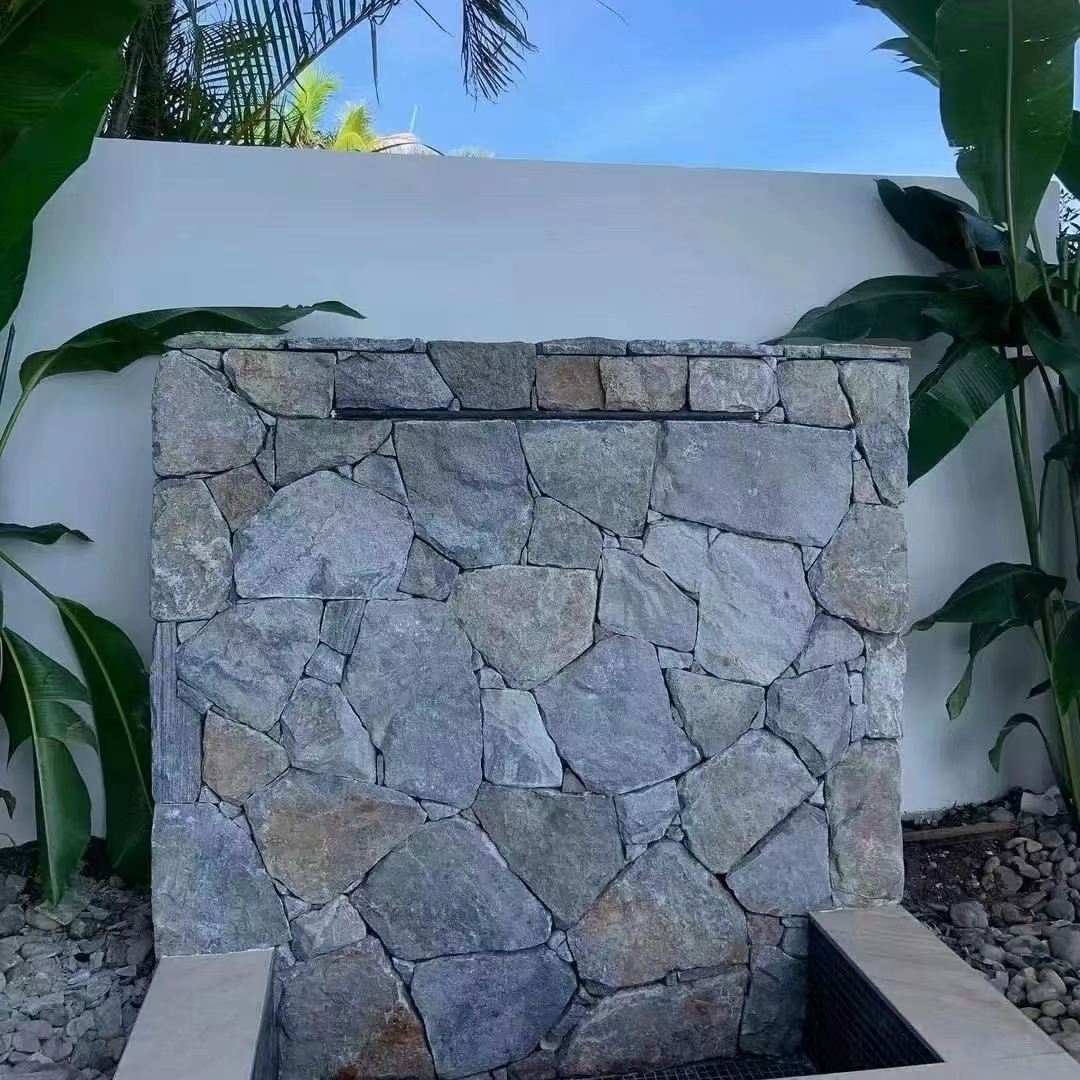
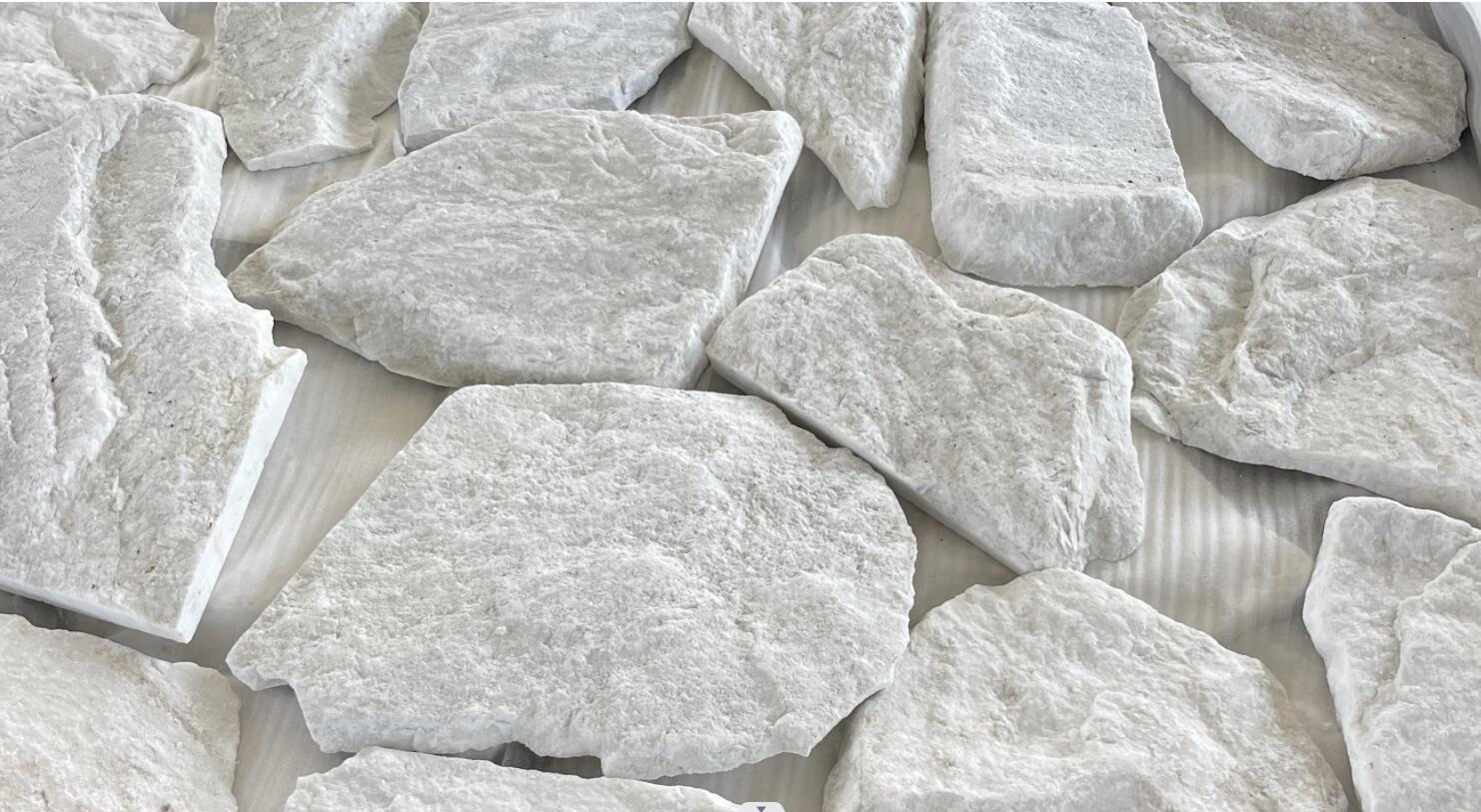
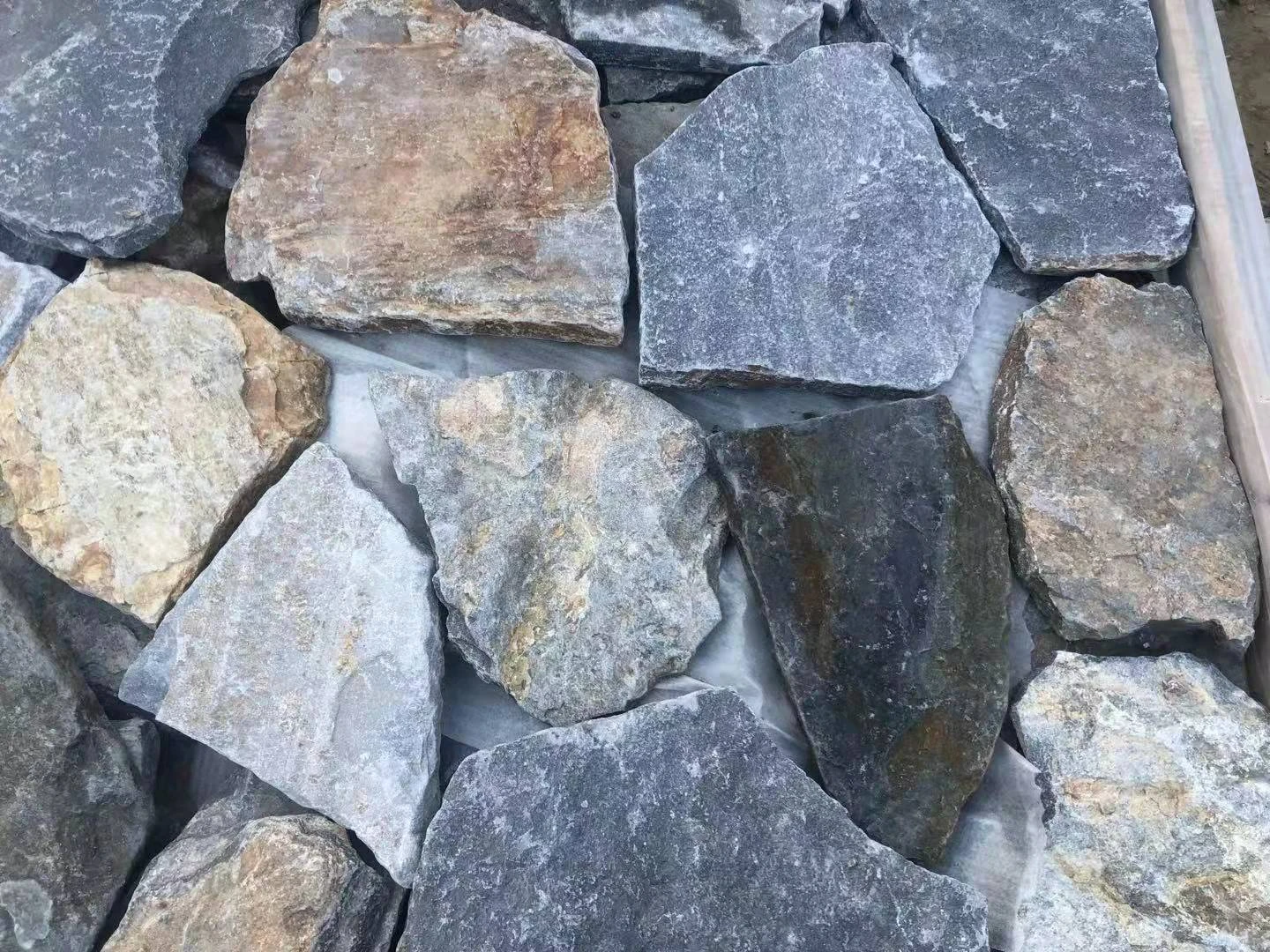
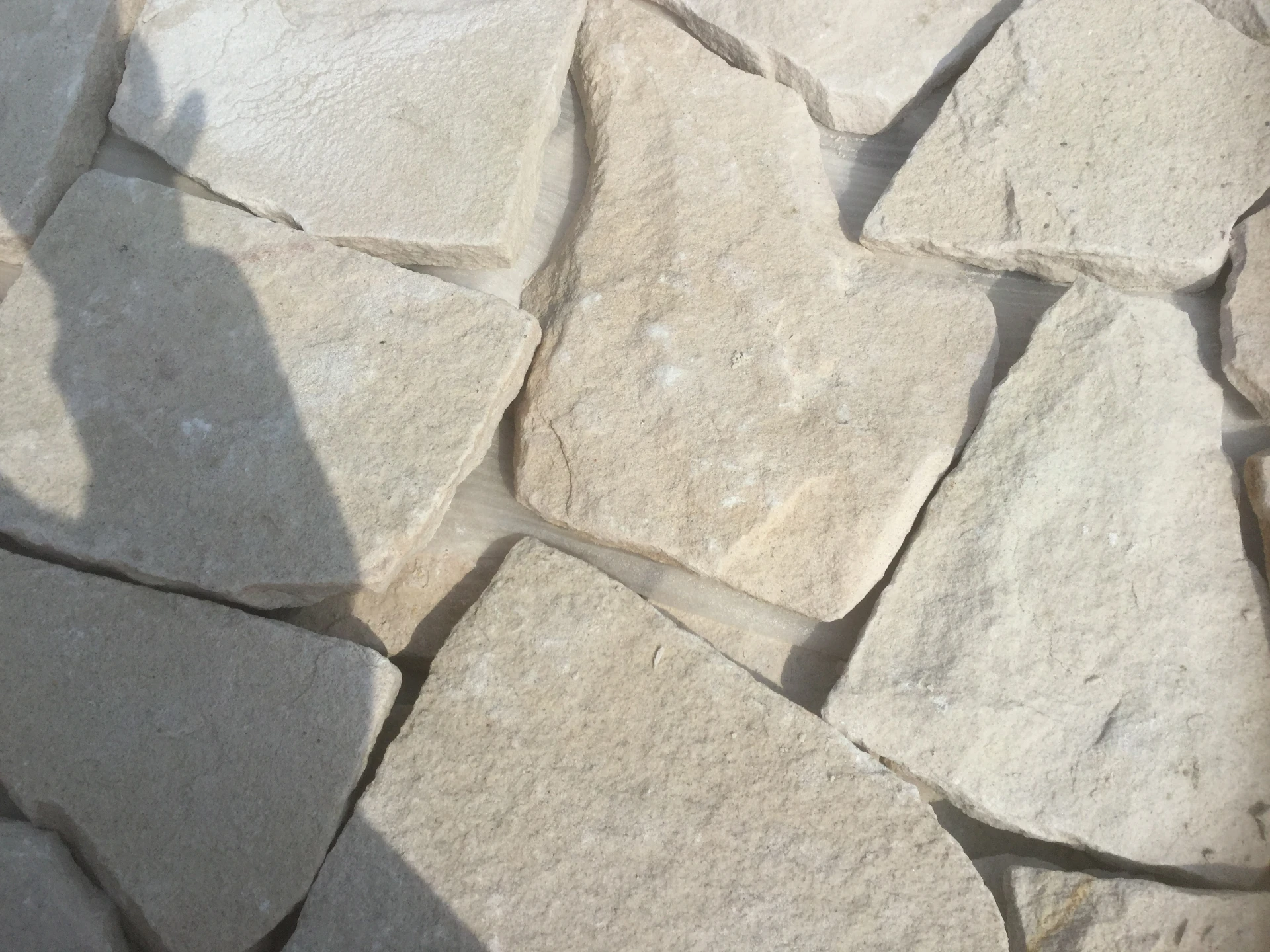
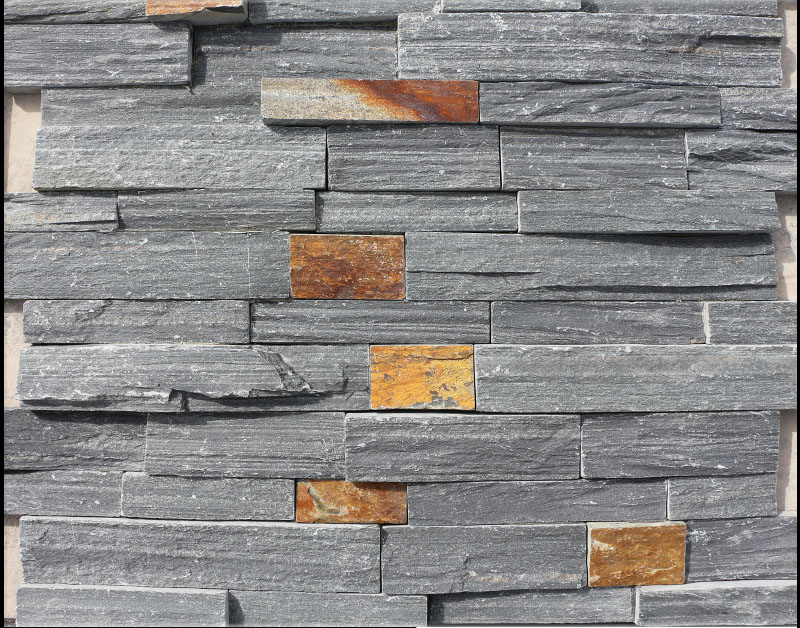
Instalowanie różnych typów Naturalny cienki fornir kamienny is a challenging, but achievable project for most DIY’ers. One of the first questions we at Sklep Surface get asked when talking with potential customers is “How do I cut it?”. Stone is a new building product for most people, unlike more traditional mediums like wood, metal, concrete, and tile, so bridging that gap with easy to understand knowledge is something we know our customers appreciate.

First, let’s break up the types of Natural Thin Stone Veneers into two primary types: Okleiny murarskie & Okleiny modułowe. Forniry murarskie obejmują bardziej tradycyjne style forniru kamiennego, powszechnie znane jako Kamień półkowy, Kamień Jesionowy i Kamień Polny (which we call Terraform™); these are best left for professional installation by experienced masons. Modular Stone Veneer, on the other hand, includes our Ułożone panele z forniru kamiennego i nasze Linear Stone Veneers; these are considered “modular” because they come in set sizes, which are designed for easy installation.
Zatem, zgodnie z częstym pytaniem, jak to wyciąć?
The short answer is that stacked stone veneer panels are best cut using a combination of two tools: (1) A wet saw designed to cut tile and stone, and (2) An angle grinder for more precision and unique cuts. Let’s take a look at each of these tools and some things a first time stone veneer DIY installer will want to know about each of them.
A Tile Wet Saw with a continuous rim diamond blade is going to be your primary cutting tool for a stack stone veneer panel installation. A wet saw works on the concept of water being applied to the blade and to the tile or stone to provide lubrication as the blade cuts through. The water is typically recycled through a close loop system which allows for it to drain off the tile and into a reservoir where a small pump is located which cycles it back up to blade. One of the most important things to remember when working with a wet saw is to constantly be refreshing the water, especially when cutting stone since the heavy sediment the saw creates when cutting the stone will start to diminish the water’s ability to lubricate the saw.
 Tarcza diamentowa z obrzeżem ciągłym brzmi fantazyjnie, ale w rzeczywistości jest to dość powszechny typ tarczy dostępny w większości sklepów z narzędziami, a na pewno w każdym sklepie z płytkami i kamieniem. Diamenty są jednym z najtwardszych materiałów występujących naturalnie na ziemi i wyjątkowo dobrze przecinają płytki i kamień.
A tile wet saw will typically either have a stationary blade and a movable tray where the stacked stone veneer can be placed and then pushed through the blade. Alternatively some saws have a fixed tray and a movable blade set up. Depending on the complexity of the cuts you need to make, tile saws can also have a blade that can be tilted, or a mount that can be fixed to the tray to allow for inside and outside miter cuts on stone veneer. Either way, stone should cut nice and easy on a wet saw.

Prawdopodobnie najważniejszą rzeczą, o której należy pamiętać podczas cięcia ułożonego forniru kamiennego na piłze do płytek na mokro, jest bezpieczeństwo. Ochrona oczu jest koniecznością, a ochrona uszu jest dobrym pomysłem, ponieważ większość urządzeń może być głośno. Praca z prądem i zasilaniem w tym samym narzędziu również wymaga szczególnej staranności, dlatego należy koniecznie przeczytać instrukcję obsługi i podłączyć piłę do uziemionego gniazdka.
While a tile wet saw will account for probably 95% or more of the cuts on most stacked stone veneer jobs, a hand held angle grinder is the tool of choice for everything else. Whether you’re cutting a curve to fit around a pipe, or cutting a rectangle out of the panel to go around a light switch or outlet, an angle grinder is the tool for the job. Since angle grinders don’t use water as a lubricant like a wet saw, cutting stacked stone veneer takes a little bit longer, can be ear screechingly loud, and create a lot of dust. Blades also will need replaced much more frequently as compared to the wet saw. Besides wearing eye and ear protection, heavy gloves are a great idea to protect hands and fingers from stone chunks and the blade itself.

Tile wet saws are very commonly available to rent at local hardware equipment rental locations at a reasonable charge. Unless you’re getting ready to do a bunch of tile and stone work, it’s generally worth renting this equipment, where you’ll typically get a higher grade saw, than purchasing a lower end one. Quality angle grinders are available at reasonable price points if you can’t borrow one from a neighbor or friend.
Thanks for learning more about the best ways to cut stacked stone veneer with us today! We enjoy sharing the knowledge and passion we have about our products and how to install stacked stone correctly with our customers and anyone interested in knowing more. Please don’t hesitate to contact any of our reps who are well versed in technical knowledge of the product with any questions that you might have about stacked stone veneer.
 afrykanin
 albański
 amharski
 arabski
 ormiański
 azerbejdżański
 baskijski
 białoruski
 bengalski
 bośniacki
 bułgarski
 kataloński
 Cebuański
 Chiny
 Chiny (Tajwan)
 korsykański
 chorwacki
 Czech
 duński
 Holenderski
 język angielski
 esperanto
 estoński
 fiński
 Francuski
 fryzyjski
 galicyjski
 gruziński
 Niemiecki
 grecki
 gudżarati
 Kreolski haitański
 hausa
 hawajski
 hebrajski
 Nie
 Miao
 język węgierski
 islandzki
 ibo
 indonezyjski
 Irlandczyk
 Włoski
 język japoński
 jawajski
 Kannada
 kazachski
 Khmer
 Rwandyjski
 koreański
 kurdyjski
 Kirgiski
 gruźlica
 łacina
 łotewski
 litewski
 luksemburski
 macedoński
 Malgashi
 malajski
 malajalam
 Maltański
 Maoryski
 marathi
 mongolski
 Myanmar
 Nepalski
 norweski
 norweski
 oksytański
 paszto
 perski
 Polski
 portugalski
 Pendżabski
 rumuński
 Rosyjski
 Samoański
 szkocki gaelicki
 serbski
 język angielski
 Shona
 Sindhi
 syngaleski
 słowacki
 słoweński
 somalijski
 hiszpański
 Sundajczyk
 Suahili
 szwedzki
 tagalski
 tadżycki
 Tamil
 Tatar
 telugu
 tajski
 turecki
 Turkmeni
 ukraiński
 urdu
 Ujgur
 uzbecki
 wietnamski
 walijski