This article touches on 13 different types of natural stone, with links to each type to explore further.
You learned this in 8th grade: Geologic categories of stone
Geologists, like all scientists, love to put things in categories. We group rocks by the process that formed them. Did a rock erupt from a fiery volcano, or take shape in a placid river bed?

Making more useful categories: Grouping stone by their properties
I’ll admit that geologic categories aren’t all that helpful for the way natural stones are used. Instead, we can group stones by the properties that matter to us, like how they hold up in the places we use them.
Here’s an overview of rock types sorted by hardness and their ability to withstand an onslaught of marinara sauce.

Note the empty category of hard stones that are damaged by acids. It turns out that hard minerals also tend to be unaffected by household acids. That’s just a coincidence of mineral chemistry, but it’s convenient for those looking for a hard, resistant natural surface.
When we talk about acid resistance, we’re referring to things like vinegar or citrus. Strong acids like oven cleaner and some bathroom cleaners will damage almost any stone, so keep those away from your stone, or better yet, use less toxic means to clean your home.
In the world of geology, all stones are related to each other. Over deep spans of time, any rock can turn into a whole new rock if it gets melted, squeezed, uplifted, or eroded. In fact, that’s exactly what’s been happening all through Earth’s history. Understanding the relationships between different stones can make it easier to see why some share similar traits. It also helps you appreciate the events that gave rise to all those beautiful slabs in the showrooms.
Sedimentary rocks turn into metamorphic ones
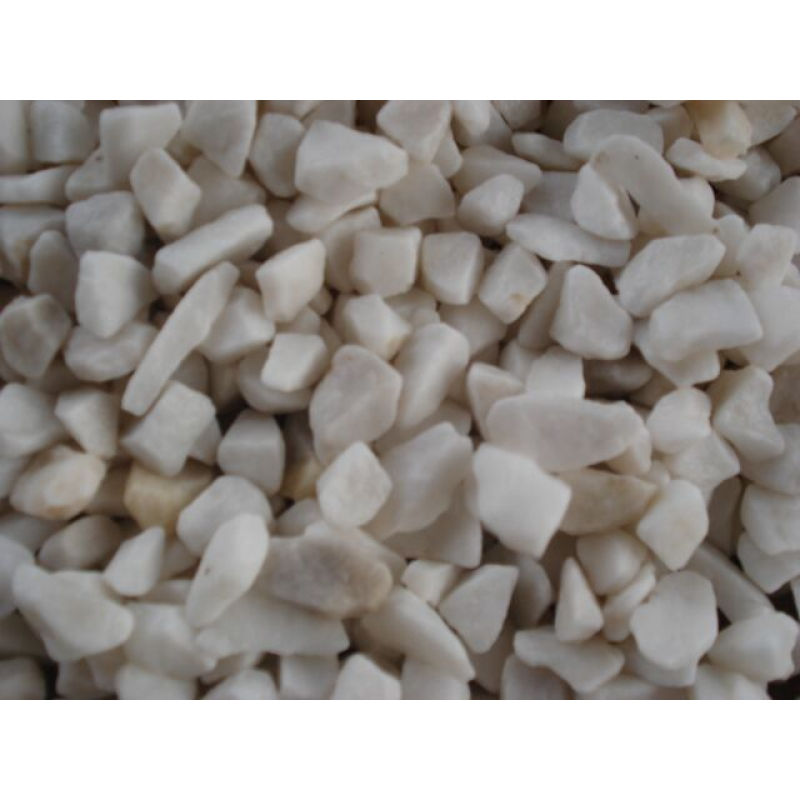
石灰石 forms in shallow, warm oceans and coral-rich beaches. It’s made of shells, shell fragments, and dissolved shells. Limestone can get buried and heated to taffy-like consistency, wherein it turns to marble. Both stones are made of the same mineral – calcite – but in marble’s case the calcite grains have been crystallized together, making the stone less porous. Marble’s distinctive grey streaks are clay layers from the original limestone that got heated and swirled.
The relationship between sandstone and quartzite follows a similar theme. Sand grains gather on beaches, sand dunes, and riverbanks. Layers of sand get buried and pressed together, forming sandstone. If sandstone gets shoved down deep and compressed even further, the sand grains fuse together to become quartzite. As described in the Deep Dive Into Quartzite article, this process is a gradual one. This means there are many gradations of sandstone and quartzite, ranging from highly porous sandstone to bombproof crystalline quartzite. The more deeply a stone is buried, the more tightly compacted it will get. The porosity of a stone translates into its ability to shrug off stains, and this is something that buyers can evaluate as they shop for different stones.


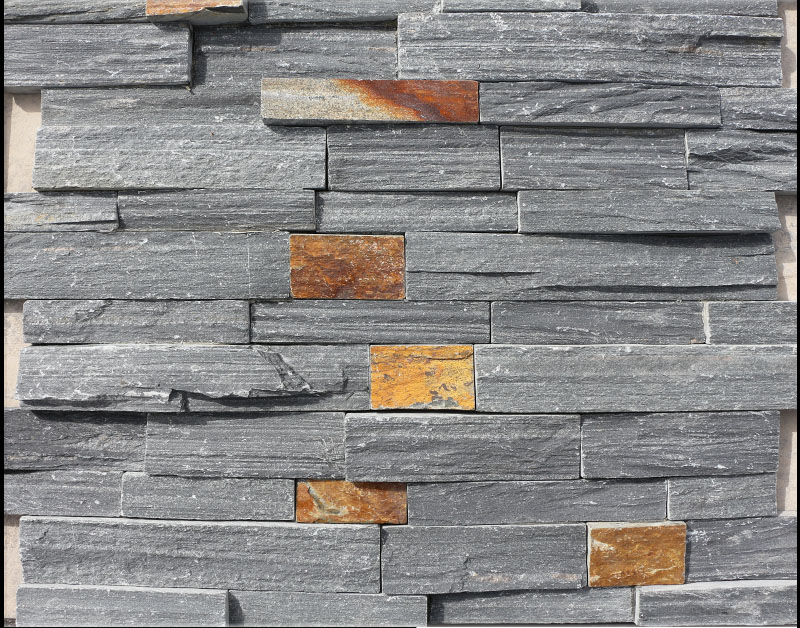
青石 is a variety of sandstone. It formed as rivers flowed off a former mountain range along the eastern seaboard. As 400,000,000 year-old rivers wound their way through the landscape, they left behind pockets of sandstone in Pennsylvania and southern New York. Because the sandy deposits occurred in small, scattered areas, the quarries were small, too, setting the stage for generations of family-run quarrying operations throughout the region.
Dialing up the heat on slate, schist, and gneiss
This trio of rocks shows what happens if you crank up the thermostat on a stone. The predecessor to all of these stones is shale, which is compressed clay and is decidedly un-sexy. But add a little heat and pressure and those unremarkable clay particles start to grow and strengthen and the rock turns into slate. Unlike shale, slate is durable – and is workable into tiles, shingles, and of course, old-school blackboards.
If the stone gets hotter, the clay particles morph into mica and the rock takes on a subtle sheen. This is called phyllite, but in commercial terms phyllite is usually sold as slate. More heat begets even larger mica grains, and the stone becomes schist, which is known for its glittery look. Schists with small mica grains are preferable to stones with large chunks of mica, because the latter can be weak and literally flaky.
Adding even more heat and pressure will make the stone separate into bands of light and dark minerals. Striped or banded patterns are the hallmark of gneiss. The patterns can be calm or bold, straight or swirled. For commercial purposes, gneiss is usually classified as granite, because it’s made of the same minerals, and shares similar properties and colors.
If the stone gets hotter still, it will start to melt. In some slabs of gneiss you can see melted blobs of quartz, showing the stone was right on the edge of becoming liquid again. If the whole thing melts, then you’ll end up with granite, an igneous rock.


The many colors of granite
Granite means many things. It’s a catch-all category that’s often used to describe any hard, crystalline stone. In geology, granite is one specific thing: an igneous rock that is coarse-grained and overall light-colored. But in the parlance of the natural stone industry, the definition of granite is expanded to include all igneous rocks, as well as many metamorphic rocks like gneiss and schist.

Geologists classify igneous rocks by the size of the crystals and the types of minerals. And while you will definitely sound smart if you casually inquire if your local slab yard has any quartz monzonite or granodiorite, that’s not necessary. Most igneous rocks are quite similar to each other, despite their different colors and patterns. We can just stick to calling them all granite. (Just please don’t tell my geology friends I said this!)
玄武岩 is one type of igneous rock that is famous for erupting out of volcanoes, like the spectacular lava flows from Kilauea we saw last spring and summer. Basalt also makes up the entire ocean crust (which itself is volcanic, betcha didn’t know that!) and forms oceanic islands like Hawaii and Iceland.
Solid rock from liquid water
缟玛瑙 和 travertine are variations of the same stone. They come about from mineral-laden water, like you’d find at the mouth of a hot spring. Both are made of calcite, the same mineral that’s in limestone and marble. Travertine has a lacy pattern from the way the water flows in little rivulets away from the mouth of a hot spring. Onyx can form from either hot or cool water, and is less porous than travertine. Onyx is beloved for its smooth layers and gem-like colors that are especially glorious when backlit.
Last but not least: The oddball stone that doesn’t fit into any categories
It’s true with people and it’s true with stones, too. Not everyone fits into a tidy category. Soapstone, for instance, is basically nothing like other rocks. It manages to be soft, yet dense. You can scratch it with your fingernail, but you can’t stain it or burn it, no matter how careless you are. Soapstone is more like a family of stones rather than one specific thing, but it is cool stuff, and I bet it will surprise you.
Geologists and natural stone aficionados agree
Natural stone offers a lot to love—there’s zero doubt about that. Take a moment to learn about the history and characteristics of your favorite stone, and I bet you’ll appreciate it even more.
 非洲人
非洲人  阿尔巴尼亚语
  阿姆哈拉语
阿姆哈拉语  阿拉伯
阿拉伯  亚美尼亚语
亚美尼亚语  阿塞拜疆语
阿塞拜疆语  巴斯克
巴斯克  白俄罗斯语
白俄罗斯语  孟加拉
孟加拉  波斯尼亚语
波斯尼亚语  保加利亚语
保加利亚语  加泰罗尼亚语
  宿务语
宿务语  中国
中国  中国(台湾)
  科西嘉岛
科西嘉岛  克罗地亚语
克罗地亚语  捷克语
捷克语  丹麦语
丹麦语  荷兰语
荷兰语  英语
英语  世界语
世界语  爱沙尼亚语
爱沙尼亚语  芬兰
芬兰  法语
法语  弗里斯兰语
弗里斯兰语  加利西亚语
加利西亚语  格鲁吉亚语
格鲁吉亚语  德语
德语  希腊语
希腊语  古吉拉特语
古吉拉特语  海地克里奥尔语
  豪萨
豪萨  夏威夷人
夏威夷人  希伯来语
希伯来语  没有
没有  苗族
苗族  匈牙利
匈牙利  冰岛的
冰岛的  伊博语
伊博语  印度尼西亚
印度尼西亚  爱尔兰语的
爱尔兰语的  意大利语
意大利语  日本人
日本人  爪哇语
爪哇语  卡纳达语
卡纳达语  哈萨克语
哈萨克语  高棉语
高棉语  卢旺达
卢旺达  韩国人
韩国人  库尔德
库尔德  吉尔吉斯斯坦
  结核病
结核病  拉丁
拉丁  拉脱维亚语
拉脱维亚语  立陶宛语
立陶宛语  卢森堡语
卢森堡语  马其顿语
马其顿语  马尔加什
马尔加什  马来语
马来语  马拉雅拉姆语
  马耳他语
马耳他语  毛利人
毛利人  马拉地语
马拉地语  蒙
蒙  缅甸
缅甸  尼泊尔语
尼泊尔语  挪威
挪威  挪威
挪威  奥克语
奥克语  普什图语
普什图语  波斯语
波斯语  抛光
抛光  葡萄牙语
葡萄牙语  旁遮普语
旁遮普语  罗马尼亚语
罗马尼亚语  俄语
俄语  萨摩亚人
萨摩亚人  苏格兰盖尔语
  塞尔维亚
塞尔维亚  英语
英语  绍纳语
绍纳语  信德语
信德语  僧伽罗语
僧伽罗语  斯洛伐克语
斯洛伐克语  斯洛文尼亚语
  索马里
索马里  西班牙语
西班牙语  巽他语
巽他语  斯瓦希里语
斯瓦希里语  瑞典
瑞典  他加禄语
他加禄语  塔吉克
塔吉克  泰米尔语
泰米尔语  鞑靼人
鞑靼人  泰卢固语
泰卢固语  泰国
泰国  土耳其
土耳其  土库曼语
土库曼语  乌克兰
乌克兰  乌尔都语
乌尔都语  维吾尔
维吾尔  乌兹别克语
乌兹别克语  越南语
越南语  威尔士语
威尔士语