

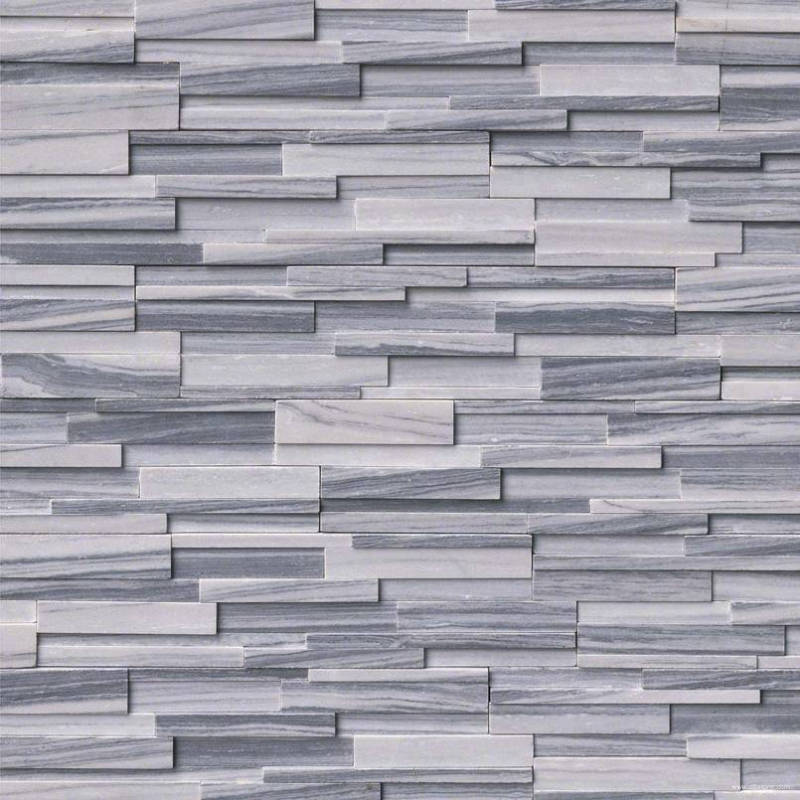
Bato sa Bato is one of the truly classic stone styles that has withstood the test of time with only slight refinements along the way. In its most basic sense, Ledge Stone is a pattern of stonework utilizing horizontal joints. The pattern is typically made up of individually stacked pieces of stone where the horizontal ledge is more defined than the vertical joins. Traditionally this look was achieved by laying the stone piece by piece by hand. While this technique is tried and true, it is also very time consuming, labor intensive, and expensive if paying a mason or specialist to complete the work.
Ledge Stone is great for many applications. It can be applied to exterior projects such as outdoor kitchens, retaining walls, exterior feature walls and even pools and water features. It is also a popular accent for front porches and columns.
Nindot nga Natural Stacked Stone System para sa gawas nga Pader
For as many exterior uses, there are just as many, if not more interior uses. Ledge Stone looks great on fireplaces, backsplashes and even in bathrooms to give a spa like feel to the space. It is also great to use in sunrooms to bring a little of the outdoors in.
The other appealing feature of Ledge Stone is its diversity and ability to fit into most décor schemes. As a result of the emphasis on the horizontal joints, the stone stays traditional but the layout can lend to a somewhat contemporary feel. It is a nice blend of the old and new, traditional yet modern. The height and shape of the individual pieces in a ledgestone will also dictate how modern or traditional it appears.
Overall, Ledge Stone is a great option when considering a hard surface wall finish and is a look that has stood the test of time, both literally and in the design sense. Today we have options to make it an affordable reality in our own homes!
 Aprikano
  Albaniano
  Amharic
  Arabiko
  Armenian
  Azerbaijani
  Basque
  Belarusian
  Bengali
  Bosnian
  Bulgarian
  Catalan
  Cebuano
  China
China  China (Taiwan)
  Corsican
  Croatiano
  Czech
Czech  Danish
  Dutch
Dutch  English
  Esperanto
  Estonian
  Finnish
  Pransiya
  Frisian
  Galician
  Georgian
  Aleman
  Griyego
  Gujarati
  Haitian Creole
  hausa
hausa  hawaiian
  Hebreohanon
  dili
dili  Miao
Miao  Hungarian
  Icelandic
  igbo
igbo  Indonesian
  irish
irish  Italyano
  Hapon
Hapon  Javanese
  Kannada
  kazakh
  Khmer
Khmer  Rwandan
  Koreano
  Kurdish
  Kyrgyz
  TB
TB  Latin
Latin  Latviano
  Lithuanian
  Luxembourgish
  Macedonian
  Malgashi
  Malay
Malay  Malayalam
  Maltese
  Maori
Maori  Marathi
  Mongolian
  Myanmar
  Nepali
  Norwegian
  Norwegian
  Occitan
  Pashto
  Persianhon
  kahamis
  Portuges
  Punjabi
  Romaniano
  Ruso
Ruso  Samoano
  Scottish Gaelic
  Serbiano
  English
  Shona
Shona  Sindhi
  Sinhala
  Slovak
  Slovenian
  Somali
  Kinatsila
  Sundanese
  Swahili
  Swedish
  Tagalog
  Tajik
Tajik  Tamil
Tamil  Tatar
Tatar  Telugu
  Thai
Thai  Turko
Turko  Turkmen
  Ukrainiano
  Urdu
Urdu  Uighur
  Uzbek
Uzbek  Vietnamese
  Welsh
Welsh 




