

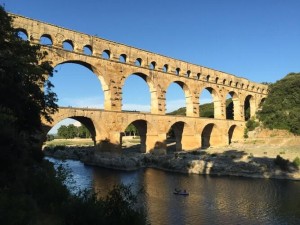
Masonry is one of the oldest trades in recorded history. Pedres have been used in construction for over 6,000 years. Of course, masonry techniques have evolved over the centuries, but looking back at the structures of ancient civilizations can provide new perspectives on modern building materials. Here’s a look at three important examples of historical masonry.
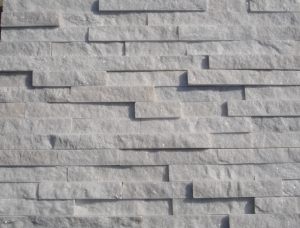
The Egyptian pyramids are perhaps the most iconic and impressive examples of historical masonry in the world. Construction began on them more than 2,500 years ago. The Egyptians used copper tools to cut and stack large pieces of limestone. They also used granite to create stable roof structures and line the walls of burial chambers inside the pyramids. These materials were readily available from quarries in the hills along the Nile River.
The ancient Romans revolutionized masonry with the invention of concrete, which they developed by mixing volcanic ash, pieces of stone, water, and lime. Concrete allowed the Romans to build sturdy walls much more quickly and cheaply than they could by using stone blocks. Concrete is highly malleable and has impressive tensile strength. It was instrumental in developing the iconic Roman arch, a design feature that was used to construct large bridges, aqueducts, and the Colosseum.
Stone and clay remained the most commonly used masonry materials up to and through the Middle Ages. During this period, durable castle walls, cathedrals, and bridges were among Europe’s most impressive construction projects. Medieval artisans expanded on the Roman arch and developed the pointed arch, which allowed them to build massive vaulted structures supported by flying buttresses. These advances in masonry techniques and arch design quickly gave way to Gothic architecture, a style known for its grand, vaulted ceilings and supportive trusses.
 africana
  albanès
  amàric
  àrab
àrab  armeni
  azerbaidjana
  basc
basc  Bielorús
  bengalí
  bosnià
  búlgar
  català
  Cebuà
Cebuà  Xina
Xina  Xina (Taiwan)
  Cors
Cors  croat
croat  txec
txec  danès
danès  holandès
  Anglès
  esperanto
  estonià
  finès
finès  francès
  frisó
frisó  gallec
  georgiana
  alemany
  grec
grec  Gujarati
  crioll haitiano
  hausa
hausa  hawaià
  hebreu
  No
No  Miao
Miao  hongarès
  islandès
  igbo
igbo  indonesi
  irlandesa
  italià
  japonès
  javanès
  Kannada
  kazakh
  Khmer
Khmer  Ruandès
  coreà
coreà  kurd
kurd  kirguis
  TB
TB  llatí
llatí  letó
letó  lituà
lituà  luxemburguesa
  macedoni
  Malgashi
  Malai
Malai  malayalam
  maltès
  Maori
Maori  Marathi
  mongol
  Myanmar
  nepalí
  noruec
  noruec
  occità
  Pashto
  persa
persa  polonès
  portuguès
  panjabi
  romanès
  rus
rus  samoà
samoà  Gaèlic escocès
  serbi
serbi  Anglès
  Shona
Shona  Sindhi
  Sinhala
  eslovac
  eslovè
  Somali
  espanyol
  Sundanès
  suahili
  suec
suec  Tagalog
  Tadjik
  Tamil
Tamil  tàrtar
  Telugu
  tailandès
  turc
turc  turcomà
  Ucraïnès
  Urdú
Urdú  uigur
uigur  Uzbek
Uzbek  vietnamita
  gal·lès




