Masonry is one of the oldest trades in recorded history. Pietre have been used in construction for over 6,000 years. Of course, masonry techniques have evolved over the centuries, but looking back at the structures of ancient civilizations can provide new perspectives on modern building materials. Here’s a look at three important examples of historical masonry.
The Egyptian pyramids are perhaps the most iconic and impressive examples of historical masonry in the world. Construction began on them more than 2,500 years ago. The Egyptians used copper tools to cut and stack large pieces of limestone. They also used granite to create stable roof structures and line the walls of burial chambers inside the pyramids. These materials were readily available from quarries in the hills along the Nile River.
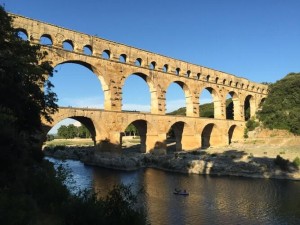
The ancient Romans revolutionized masonry with the invention of concrete, which they developed by mixing volcanic ash, pieces of stone, water, and lime. Concrete allowed the Romans to build sturdy walls much more quickly and cheaply than they could by using stone blocks. Concrete is highly malleable and has impressive tensile strength. It was instrumental in developing the iconic Roman arch, a design feature that was used to construct large bridges, aqueducts, and the Colosseum.
Stone and clay remained the most commonly used masonry materials up to and through the Middle Ages. During this period, durable castle walls, cathedrals, and bridges were among Europe’s most impressive construction projects. Medieval artisans expanded on the Roman arch and developed the pointed arch, which allowed them to build massive vaulted structures supported by flying buttresses. These advances in masonry techniques and arch design quickly gave way to Gothic architecture, a style known for its grand, vaulted ceilings and supportive trusses.
 africano
  albanese
  Amarico
  Arabo
Arabo  armeno
  Azero
Azero  Basco
Basco  bielorusso
  bengalese
  Bosniaco
  bulgaro
  catalano
  Cebuano
  Cina
Cina  Cina (Taiwan)
  Corso
Corso  croato
  ceco
ceco  danese
  Olandese
  Inglese
  esperanto
  Estone
  finlandese
  francese
  Frisone
  galiziano
  georgiano
  Tedesco
  greco
greco  Gujarati
  Creolo haitiano
  haussa
  hawaiano
  ebraico
  No
No  Miao
Miao  ungherese
  islandese
  igbo
igbo  indonesiano
  irlandesi
  Italiano
  giapponese
  giavanese
  Kannada
  kazako
  Khmer
Khmer  Ruandese
  coreano
  curdo
curdo  Kirghizistan
  TBC
TBC  latino
  lettone
  lituano
  lussemburghese
  macedone
  Malgasci
  malese
  Malayalam
  maltese
  Maori
Maori  Marathi
  mongolo
  Myanmar
  nepalese
  norvegese
  norvegese
  occitano
  Pashtu
  persiano
  Polacco
  portoghese
  Punjabi
  rumeno
  russo
russo  Samoano
  Gaelico Scozzese
  serbo
serbo  Inglese
  Shona
Shona  Sindhi
  Singalese
  slovacco
  sloveno
  Somalo
  spagnolo
  Sundanese
  Swahili
  svedese
  Tagalog
  Tagico
  Tamil
Tamil  Tartaro
  Telugu
  tailandese
  Turco
Turco  turkmeno
  ucraino
  Urdu
Urdu  Uiguro
  Uzbeco
  vietnamita
  gallese