

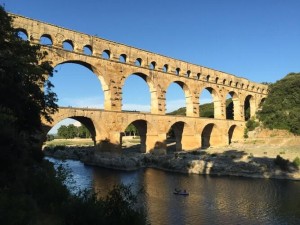
Masonry is one of the oldest trades in recorded history. Duwatsu have been used in construction for over 6,000 years. Of course, masonry techniques have evolved over the centuries, but looking back at the structures of ancient civilizations can provide new perspectives on modern building materials. Here’s a look at three important examples of historical masonry.
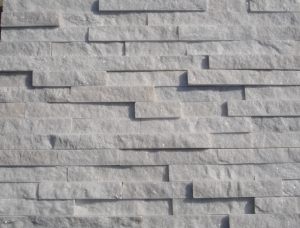
The Egyptian pyramids are perhaps the most iconic and impressive examples of historical masonry in the world. Construction began on them more than 2,500 years ago. The Egyptians used copper tools to cut and stack large pieces of limestone. They also used granite to create stable roof structures and line the walls of burial chambers inside the pyramids. These materials were readily available from quarries in the hills along the Nile River.
The ancient Romans revolutionized masonry with the invention of concrete, which they developed by mixing volcanic ash, pieces of stone, water, and lime. Concrete allowed the Romans to build sturdy walls much more quickly and cheaply than they could by using stone blocks. Concrete is highly malleable and has impressive tensile strength. It was instrumental in developing the iconic Roman arch, a design feature that was used to construct large bridges, aqueducts, and the Colosseum.
Stone and clay remained the most commonly used masonry materials up to and through the Middle Ages. During this period, durable castle walls, cathedrals, and bridges were among Europe’s most impressive construction projects. Medieval artisans expanded on the Roman arch and developed the pointed arch, which allowed them to build massive vaulted structures supported by flying buttresses. These advances in masonry techniques and arch design quickly gave way to Gothic architecture, a style known for its grand, vaulted ceilings and supportive trusses.
 Afirka
  Albaniya
  Amharic
  Larabci
  Armenian
  Azabaijan
  Basque
  Belarushiyanci
  Bengali
  Bosniya
  Bulgarian
  Catalan
  Cebuano
  China
China  China (Taiwan)
  Corsican
  Croatian
  Czech
Czech  Danish
  Yaren mutanen Holland
  Turanci
  Esperanto
  Estoniya
  Finnish
  Faransanci
  Farisa
  Galiciyan
  Jojin
Jojin  Jamusanci
  Girkanci
  Gujarati
  Haitian Creole
  hausa
hausa  hawayi
  Ibrananci
  A'a
A'a  Miya
Miya  Harshen Hungary
  Icelandic
  igbo
igbo  Indonesiya
  Irish
Irish  Italiyanci
  Jafananci
  Yawanci
  Kannada
  kazakh
  Khmer
Khmer  Ruwanda
  Yaren Koriya
  Kurdish
  Kyrgyzstan
  TB
TB  Latin
Latin  Latvia
  Lithuaniyanci
  Luxembourg
  Makidoniya
  Malgashi
  Malay
Malay  Malayalam
  Maltase
  Maori
Maori  Marathi
  Mongolian
  Myanmar
  Nepali
  Yaren mutanen Norway
  Yaren mutanen Norway
  Occitan
  Pashto
  Farisa
  Yaren mutanen Poland
  Fotigal
  Punjabi
  Romanian
  Rashanci
  Samoan
  Scottish Gaelic
  Serbian
  Turanci
  Shona
Shona  Sindhi
  Sinhala
  Slovak
  Harshen Sloveniya
  Somaliya
  Mutanen Espanya
  Sundanci
  Harshen Swahili
  Yaren mutanen Sweden
  Tagalog
  Tajik
Tajik  Tamil
Tamil  Tatar
Tatar  Telugu
  Thai
Thai  Baturke
  Turkmen
  Ukrainian
  Urdu
Urdu  Uighur
  Uzbek
Uzbek  Vietnamese
  Welsh
Welsh 




