

Industry sales of stacked stone panels have been rising steadily each year for the last five years. While we cut and split individual natural thin stone from New England – all day every day – we see customers from every region of the country choosing stacked stone panels. Here are the pros and cons of these panels.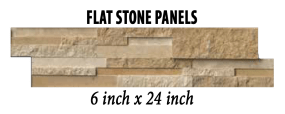
PRO: Stones are cut, fit, and glued together into an interlocking panel with no mesh backing. This significantly reduces onsite cutting and allows for a much quicker install.
CON: The panels still have to be handled carefully during installation to avoid breakage.

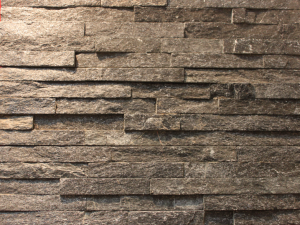
PRO: The panels fit together without modification. The seams are offset and disappear when you stagger the panels by 1/3 of their length.
CON: If you don’t stagger the panels, you will see a stepped stairway seam.
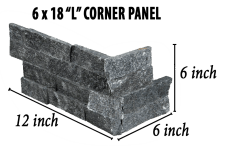
PRO: Panels have matching corners that interlock perfectly with one short, and one long side. This allows for weaving back and forth to stagger the joints.
CON: to shorten a corner, you’ll need to make stepped cuts using a wet saw. The same applies to flat panels.
PRO: Panels install much faster than individual stones. A stonemason can install 100 square feet a day.
CON: For larger vertical walls it is best to install three vertical feet, then let the mortar adhere for 24 hours prior to installing the next section above it.
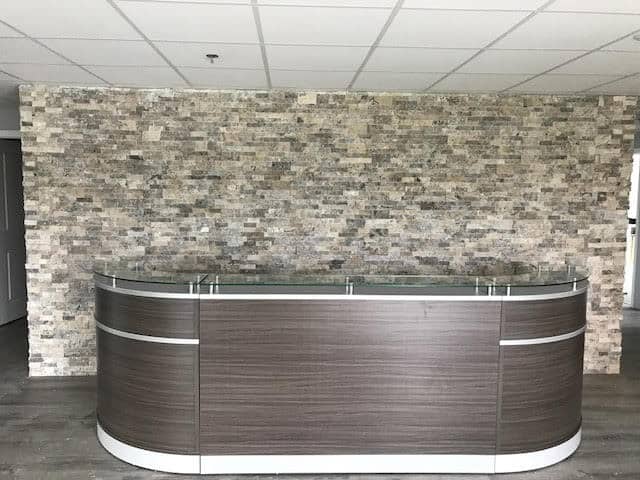
PRO: You don’t have to worry about selecting individual stones.
CON: You can’t create a custom mix of stones or colors but there are plenty of beautiful colors to choose.
 Afraganach
  Albànianach
  Amharic
  Arabach
  Armenianach
  Azerbaijani
  Basgach
  Belarusianach
  Bengàlach
  Bosnianach
  Bulgàrianach
  Catalanach
  Cebuano
  Sìona
Sìona  Sìona (Taiwan)
  Corsicanach
  Croatianach
  Seacach
  Dànach
  Duitseach
  Sasannach
  Esperanto
  Estòinianach
  Fionnlaineach
  Frangach
  Frisianach
  Galicianach
  Georgianach
  Gearmailteach
  Grèigeach
  Gujarati
  Haitian Creole
  Hausa
Hausa  Hawaiianach
  Eabhrach
  Chan eil
  Miao
Miao  Hungàrianach
  Innis Tìleach
  igbo
igbo  And-Innseach
  Èireannach
  Eadailteach
  Iapanach
  Iabhaininnseach
  Kannada
  Kasakh
  Ciméireach
  Ruanda
  Corèanach
  Curdach
  Kyrgyz
  TBh
TBh  Laidinn
  Latbhianach
  Lithuanianach
  Luxembourgach
  Macedonianach
  Malgashi
  Malaidheach
  Malayalamach
  Malteseach
  Maori
Maori  Marathiach
  Mongolianach
  Myanmar
  Nepalach
  Lochlannach
  Lochlannach
  Occitan
  Pashto
  Persianach
  Pòlainneach
  Portugalach
  Punjabi
  Romànianach
  Ruiseanach
  Samoan
  Gàidhlig na h-Alba
  Serbianach
  Sasannach
  Shona
Shona  Sindeach
  Sinhala
  Slovacanach
  Slobhenianach
  Somali
  Spàinneach
  Sundais
  Swahilieach
  Suaineach
  Tagalogach
  Tajik
Tajik  Tamileach
  Tatarais
  Telugach
  Thaidheach
  Turcach
  Turkmen
  Ucràinis
  Urdu
Urdu  Uighur
  Uzbek
Uzbek  Bhietnam
  Cuimris




