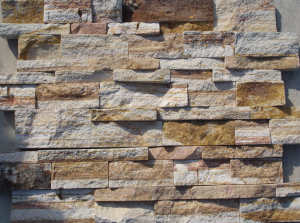
The absorption rating refers to how porous a given material is. The more absorbent it is, the more susceptible the stone will be to stain. Absorbent stone can also be prone to cracking damage if it is subjected to freezing conditions. Natural stones vary greatly in their absorption rates, with sandstone being the most porous and granite the most impervious to water absorption. Absorption rates are classified according to the following terms:
In general, sandstone is the most porous natural stone material. Travertine, limestone, and ákveða have medium absorbency, while granite is relatively waterproof. Polished materials also absorb less water than honed or cleft surfaces.
Some retailers use a grading system to rate the quality of materials. This can refer to the size, shape, and thickness of the tile, as well as the condition of its surface. Most grading systems have three levels of quality:
This measures how slippery various materials are. The higher the coefficient, the more traction a tile will have. This number is especially important in moist environments such as bathrooms and kitchens, as well as high-traffic commercial areas. The Americans with Disabilities Act requires that flooring material has a minimum of a .6 dryness coefficient.
Some natural stone flooring materials are more suited to outdoor applications than others. Many of the factors above will determine whether a material should be used in an open-air environment.
Natural stone materials are formed beneath the earth over millions of years, and often contain a variety of disparate elements. Sometimes iron is present in these materials, which can manifest as bright red and amber hues in the surface of the stone. The problem in an outdoor environment is that those traces of iron can oxidize, a process more commonly known as rusting. This can cause the entire tile to degenerate over time.
There are many aesthetic and practical reasons why natural stone flooring can be a good choice:
There are also some drawbacks to the use of natural stone:
When purchasing natural stone flooring materials it is important to do your research and understand the characteristics of the material you are purchasing. Find out whether it is appropriate for your specific application and how much maintenance it will require. Ask your retailer questions, and thoroughly research the stone before you make a purchase.
 Afríku
  albanska
  amharíska
  arabíska
  Armenska
  Aserbaídsjan
  baskneska
  hvítrússneska
  bengalska
  bosníska
  búlgarska
  katalónska
  Cebuano
  Kína
Kína  Kína (Taívan)
  korsíkanskt
  króatíska
  tékkneska
  danska
  hollenska
  Enska
Enska  esperantó
  eistneska, eisti, eistneskur
  finnska
  franska
  frísneska
  galisíska
  georgískt
  þýska, Þjóðverji, þýskur
  grísku
  Gújaratí
  Haítískt kreóla
  hausa
hausa  hawaiískur
  hebreska
  Neibb
Neibb  Miaó
Miaó  ungverska, Ungverji, ungverskt
  íslenskur
  igbó
igbó  indónesíska
  írska
írska  ítalska
  japönsku
  javanska
  Kannada
  kasakska
  Khmer
Khmer  Rúanda
  kóreska
  Kúrda
Kúrda  Kirgisi
  TB
TB  latína
  lettneska
  litháískur
  Lúxemborg
  makedónska
  Malgashi
  malaíska
  Malajalam
  maltneska
  Maori
Maori  Marathi
  mongólska
  Mjanmar
  nepalska
  norska
  norska
  oksítanska
  Pastó
Pastó  persneska
  pólsku
  portúgalska
  Púndjabí
  rúmenska
  Rússneskt
  Samósk
  skosk gelíska
  serbneska
  Enska
Enska  Shona
Shona  Sindhi
  Sinhala
  Slóvakíu
  slóvenska
  sómalska
  spænska, spænskt
  Sundaneskir
  svahílí
  sænsku
  Tagalog
  Tadsjikska
  tamílska
  Tatar
Tatar  telúgú
  Tælensk
  tyrkneska
  Túrkmena
  úkraínska
  Úrdú
Úrdú  Uighur
  úsbekskur
  Víetnamska
  velska