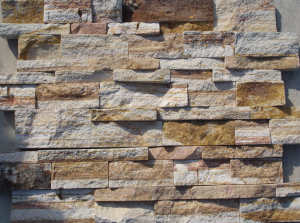
The absorption rating refers to how porous a given material is. The more absorbent it is, the more susceptible the stone will be to stain. Absorbent stone can also be prone to cracking damage if it is subjected to freezing conditions. Natural stones vary greatly in their absorption rates, with sandstone being the most porous and granite the most impervious to water absorption. Absorption rates are classified according to the following terms:
In general, sandstone is the most porous natural stone material. Travertine, limestone, and 石板 have medium absorbency, while granite is relatively waterproof. Polished materials also absorb less water than honed or cleft surfaces.
一些零售商使用分级系统来评估材料的质量。这可以指瓷砖的尺寸、形状和厚度,以及其表面的状况。大多数分级系统有三个质量等级:
这衡量了各种材料的防滑程度。系数越高,瓷砖的牵引力就越大。这个数字在浴室和厨房等潮湿环境中以及人流量大的商业区尤其重要。《美国残疾人法案》要求地板材料的防滑系数至少为 0.6 干燥系数。
有些天然石材地板材料比其他材料更适合户外应用。上述许多因素将决定某种材料是否应在露天环境中使用。
Natural stone materials are formed beneath the earth over millions of years, and often contain a variety of disparate elements. Sometimes iron is present in these materials, which can manifest as bright red and amber hues in the surface of the stone. The problem in an outdoor environment is that those traces of iron can oxidize, a process more commonly known as rusting. This can cause the entire tile to degenerate over time.
有许多美学和实用的原因使天然石材地板成为一个很好的选择:
使用天然石材也有一些缺点:
购买天然石材地板材料时,务必进行研究并了解所购买材料的特性。了解它是否适合您的特定用途以及需要多少维护。在购买之前,请咨询零售商并彻底研究石材。
 非洲人
非洲人  阿尔巴尼亚语
  阿姆哈拉语
阿姆哈拉语  阿拉伯
阿拉伯  亚美尼亚语
亚美尼亚语  阿塞拜疆语
阿塞拜疆语  巴斯克
巴斯克  白俄罗斯语
白俄罗斯语  孟加拉
孟加拉  波斯尼亚语
波斯尼亚语  保加利亚语
保加利亚语  加泰罗尼亚语
  宿务语
宿务语  中国
中国  中国(台湾)
  科西嘉岛
科西嘉岛  克罗地亚语
克罗地亚语  捷克语
捷克语  丹麦语
丹麦语  荷兰语
荷兰语  英语
英语  世界语
世界语  爱沙尼亚语
爱沙尼亚语  芬兰
芬兰  法语
法语  弗里斯兰语
弗里斯兰语  加利西亚语
加利西亚语  格鲁吉亚语
格鲁吉亚语  德语
德语  希腊语
希腊语  古吉拉特语
古吉拉特语  海地克里奥尔语
  豪萨
豪萨  夏威夷人
夏威夷人  希伯来语
希伯来语  没有
没有  苗族
苗族  匈牙利
匈牙利  冰岛的
冰岛的  伊博语
伊博语  印度尼西亚
印度尼西亚  爱尔兰语的
爱尔兰语的  意大利语
意大利语  日本人
日本人  爪哇语
爪哇语  卡纳达语
卡纳达语  哈萨克语
哈萨克语  高棉语
高棉语  卢旺达
卢旺达  韩国人
韩国人  库尔德
库尔德  吉尔吉斯斯坦
  结核病
结核病  拉丁
拉丁  拉脱维亚语
拉脱维亚语  立陶宛语
立陶宛语  卢森堡语
卢森堡语  马其顿语
马其顿语  马尔加什
马尔加什  马来语
马来语  马拉雅拉姆语
  马耳他语
马耳他语  毛利人
毛利人  马拉地语
马拉地语  蒙
蒙  缅甸
缅甸  尼泊尔语
尼泊尔语  挪威
挪威  挪威
挪威  奥克语
奥克语  普什图语
普什图语  波斯语
波斯语  抛光
抛光  葡萄牙语
葡萄牙语  旁遮普语
旁遮普语  罗马尼亚语
罗马尼亚语  俄语
俄语  萨摩亚人
萨摩亚人  苏格兰盖尔语
  塞尔维亚
塞尔维亚  英语
英语  绍纳语
绍纳语  信德语
信德语  僧伽罗语
僧伽罗语  斯洛伐克语
斯洛伐克语  斯洛文尼亚语
  索马里
索马里  西班牙语
西班牙语  巽他语
巽他语  斯瓦希里语
斯瓦希里语  瑞典
瑞典  他加禄语
他加禄语  塔吉克
塔吉克  泰米尔语
泰米尔语  鞑靼人
鞑靼人  泰卢固语
泰卢固语  泰国
泰国  土耳其
土耳其  土库曼语
土库曼语  乌克兰
乌克兰  乌尔都语
乌尔都语  维吾尔
维吾尔  乌兹别克语
乌兹别克语  越南语
越南语  威尔士语
威尔士语