

The longevity of stone puts any human concept of old age to shame. Stone creates a sense of permanence and solidity, even when worn and weathered. It’s been used throughout history as the structure and facade of buildings- buildings that have literally stood the test of time.
While natural stone has been the material of choice for millennia, glass has dominated commercial construction—especially large scale projects like skyscrapers—in recent years. But architects are increasingly reacting to this glut of glass by returning to stone for their projects. For many developers and architects, glass had become the default, a sterile, too obvious choice which resulted in a flat, texture-less and uninspired design.
Az üvegről a kőre való átállás szintén környezetvédelmi megfontolások eredménye. New York polgármestere, Bill De Blasio nemrég költözött ide tiltsák be az új üveg felhőkarcolókat in the city, making New York the first city to mandate energy efficiency. But it won’t be the last: According to the United Nations, 40% of the world’s energy consumption can be attributed to buildings. Pressure to construct buildings in a sustainably responsible manner is being felt by developers and architects around the world.
INDIANA LIMESTONE – FULL COLOR BLEND™ homlokzat előregyártott betonon | Yankee Stadion | Építész: Népes
“It’s pretty well known in the industry that those glass facade buildings are not energy efficient,” said Hugo Vega, vice president of Architectural Sales at Polycor. “Meaning that in the summer it becomes super hot and you need to have an extensive system of air conditioning and in the winter you need a lot of heating as compared to a traditional building with more stone.”
The design community has been embracing stone for facade design instead, and just in time, as changes in building codes and regulations are set to further tighten architects’ design choices. Natural stone plays an important role in the future of sustainable architecture thanks to its life-cycle, durability, ease of care, low maintenance, and energy efficiency— the list goes on. The minimal environmental impact that innovative cladding wall systems provide is another reason the building industry is moving back to natural materials.
A Polycor természetes kövek számos homlokzati rögzítési és tartórendszerhez használhatók. Nézze meg, hogyan.
“Energy inefficient glass facades concerns are a good driver for the growing popularity of stone cladding,” said Vega.
Vega understands this continued demand for stone cladding better than just about anyone: he’s been the driving force behind the development of the cladding division of Polycor and he has an in-depth understanding of what architects and builders are looking for in their products.
BETHEL WHITE® és CAMBRIAN BLACK® 3 cm-es gránit panelek Eclad rendszeren a meglévő szerkezet fölé telepítve | TD épület | Építész: WZMH
“The type of stone will dictate possible finishes, thickness, and more,” said Vega. “For example, it’s inadvisable to use polished 3cm marble and expose it to the elements for cladding. Direct communication with selected quarries will help validate the block sizes and thus the maximum finished panel sizes, what natural features can be expected in the stone, and the availability of the material according to job size and phases.” Specification challenges can present themselves throughout a project, such as alternate stones being introduced by other parties and detracting from the initial design intent. Maintaining a close contact with the quarry teams helps ensure this is preserved. As Hugo points out, “Make sure to specify the true, branded names of the materials to avoid being supplied with undesired alternates.” The old days of calling out Olasz márvány doesn’t cut it anymore.
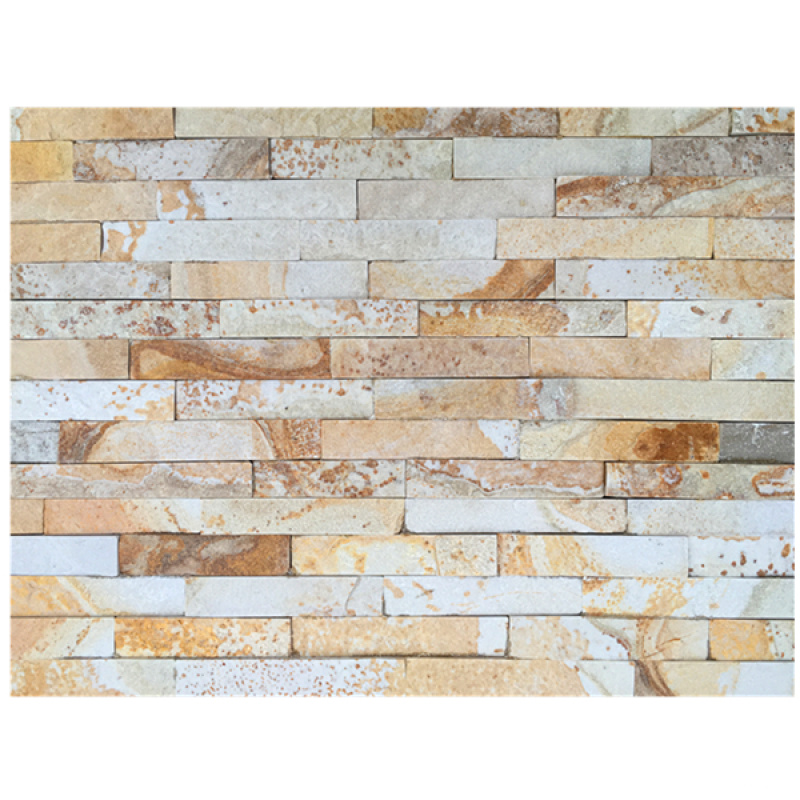
Stone cladding isn’t just the smart alternative to energy efficient glass, it’s also the simple choice, thanks to new cladding attachment systems.
“These new attachment systems allow stone to be used for lighter applications, when the structure has not been designed for a heavy full bed,” said Vega. “They also allow for a faster installation compared to traditional methods.“
Az innovatív burkolati megoldások nagyobb tervezési lehetőségeket tesznek lehetővé | A képen: Litecore vékonyra vágott Indiana Limestone ragasztott alumínium méhsejt hátlapra
A burkolati innovációk elegáns és költséghatékony megoldást kínálnak a természetes kő színeinek és textúráinak beépítésére a költséges szállítás és a hosszadalmas szerelés bonyodalmai nélkül. Miközben a természetes kő autentikus karakterét megszemélyesítik, egyes rendszerek könnyűek maradnak a könnyű használat érdekében, így okos választássá teszik azokat a szigorú követelményeket, amelyeket az építészeknek meg kell felelniük a modern építési szabályzatban.
A Polycor természetes kövek számos homlokzati rögzítési és tartórendszerhez használhatók. Származása a Polycor kőbányák and all through production, the stones are manufactured to each of our partner system’s specifications from ultra-thin profiles up to full thickness dimensional elements complimenting a wide range of facade structures.
A burkolókő kiválasztásakor az építészeknek számos tényezőt kell mérlegelniük: megjelenés, tervezett használat, a projekt mérete, szilárdság, tartósság és teljesítmény. Ha Polycor köveket választanak homlokzatokhoz, az építészek előnyt élveznek az ellátási lánc teljes tulajdonjogából, az alapkőzettől egészen a beépítésig. Egy olyan céggel, mint a Polycor, az az értéke, hogy mivel miénk a kőbányáink, közvetlenül meg tudunk válaszolni minden olyan kérdést vagy aggályt, amely egy építésznek a homlokzati specifikáció kidolgozása során felmerülhet ahelyett, hogy 2-3 középső embere lenne.
Polycor Bethel White® granite quarry | Bethel, VT
“We have a wide array of our own limestone, granite and marble, so architects can discuss with the source and get accurate and reliable information,” said Vega. “We fabricate ourselves and sell blocks to other fabricators, ensuring competitiveness of the offers, while preserving the design intent. We work with industry leaders like Eclad, Hofmann-kő and others to offer a complete cladding solution for the project.“
A Vega érdeklődött az innovatív burkolati technológiák iránt, és gyártóüzemeink kutatási és fejlesztési szakértőivel együtt dolgozott azon, hogy változó vastagságú természetes kőburkolatot készítsenek, amely épületen belül és kívül egyaránt használható. Általában független sín- és bilincsrendszeren keresztül rögzítik.
Polycor’s stone veneer can be installed over solid facing, which eliminates the challenge of removing the original substructure in some cases. Some stone panels are cut thin, while still maintaining the authentic look and feel of a thicker stone without the heavy weight of a 3-6 inch deep stone veneer, making installation fast and simple. Polycor’s thin stones are compatible in many cladding configurations and are manufactured for systems like Litecore, egy olyan megoldás, amely a súly töredékéért kínál követ, és kétszer gyorsabban telepíthető.
A kép jóvoltából: Litecore
Ezek a sokoldalú, kompozit falpanelek rendkívül vékony furnérra vágott Polycor kőből készülnek. A réteges méhsejtre tapadt, alumíniumlemezek és üvegszálas háló közé beágyazva a panelek alacsony sűrűségű, nagy szilárdságú és könnyű homlokzati rendszert biztosítanak.
KODIAK BROWN™ ultra thin 1cm granite with carbon fiber backing on Eclad system | Architect: Régis Côtés
A Polycor 1 cm-es szénszálas hátlapok ultravékony, könnyű és tartós természetes kőből készült termékek, amelyek alumínium helyett ragasztott, szabadalmaztatott hátlapon alapulnak. Az így létrejött kőpanelek alkalmasak az Eclad és az Elemex burkolati rendszerekbe való integrálásra.
GEORGIA MARBLE – WHITE CHEROKEE™and Indiana Limestone facade on precast concrete | 900 16th St. Washington, D.C. | Architect: Robert AM Stern
3cm stone mechanically anchored to thin, precast concrete panels provides additional installation advantages. Companies such as Hoffman Stone systems are compatible with Polycor’s stones.
A Polycor rendelkezik azzal a szakértelemmel, hogy bármilyen projektet létrehozzon az egyszerű faltól a padokig, a kiemelkedő építészeti projektekig és a magas lobby belső terekig. Mindegyik megoldás lehetővé teszi az építészek számára, hogy innovatív, fenntartható és esztétikus épületkülső felületeket tervezzenek kőfelületekkel.
“These solutions can also be used interchangeably to blend with more traditional architectural elements and stone masonry construction such as full bed trim, cornices, lintels and things of that nature,” said Vega. “And again, once the material is specified, it can be used on any cladding system, traditional masonry and fabricated by pretty much all the fabricators operating on the market today. This way architects can lock in their design intent, and let engineers and builders establish means and methods to realize the design within budget.”
INDIANA LIMESTONE – STANDARD BUFF™ burkolat modern kiegészítés hagyományos kőmunkával | Kanadai Szenátus, Ottawa, CA | Építész: Diamond Schmitt
A múltban lehorgonyzott, de a jövőre készen álló természetes kőburkolat megfelel a modern építészet és formatervezés igényeinek. És bár a burkolattal kapcsolatos innovációk továbbra is könnyebbé teszik a vékony kő használatát, mint valaha, a burkolat nem az egyetlen jövője a természetes kőnek.
 afrikai
  albán
albán  amhara
  arab
arab  örmény
  azerbajdzsáni
  baszk
baszk  fehérorosz
  bengáli
  bosnyák
  bolgár
  katalán
  Cebuano
  Kína
Kína  Kína (Tajvan)
  korzikai
  horvát
  cseh
cseh  dán
dán  holland
  angol
angol  eszperantó
  észt
észt  finn
finn  Francia
  fríz
fríz  galíciai
  grúz
grúz  német
német  görög
görög  gudzsaráti
  Haiti kreol
  hausa
hausa  hawaii
  héber
héber  Dehogy
  Miao
Miao  Magyar
  izlandi
  igbo
igbo  indonéz
  ír
ír  olasz
olasz  japán
japán  jávai
jávai  kannada
  kazah
kazah  khmer
khmer  ruandai
  koreai
  kurd
kurd  kirgiz
  tuberkulózis
  latin
latin  lett
lett  litván
  luxemburgi
  macedón
  Malgashi
  maláj
maláj  Malayalam
  máltai
  maori
maori  marathi
  mongol
  Mianmar
  nepáli
  norvég
  norvég
  okszitán
  pastu
pastu  perzsa
  fényesít
  portugál
  pandzsábi
  román
román  orosz
orosz  szamoai
  skót gael
  szerb
szerb  angol
angol  Shona
Shona  szindhi
  szingaléz
  szlovák
  szlovén
  szomáliai
  spanyol
  szundanai
  szuahéli
  svéd
svéd  tagalog
  tadzsik
  tamil
tamil  tatár
tatár  telugu
  thai
thai  török
török  türkmén
  ukrán
ukrán  urdu
urdu  ujgur
ujgur  üzbég
üzbég  vietnami
  walesi




