

The longevity of stone puts any human concept of old age to shame. Stone creates a sense of permanence and solidity, even when worn and weathered. It’s been used throughout history as the structure and facade of buildings- buildings that have literally stood the test of time.
While natural stone has been the material of choice for millennia, glass has dominated commercial construction—especially large scale projects like skyscrapers—in recent years. But architects are increasingly reacting to this glut of glass by returning to stone for their projects. For many developers and architects, glass had become the default, a sterile, too obvious choice which resulted in a flat, texture-less and uninspired design.
Przejście ze szkła z powrotem na kamień jest również wynikiem troski o środowisko. Niedawno przeprowadził się tam burmistrz Nowego Jorku Bill De Blasio zakazać nowych szklanych drapaczy chmur in the city, making New York the first city to mandate energy efficiency. But it won’t be the last: According to the United Nations, 40% of the world’s energy consumption can be attributed to buildings. Pressure to construct buildings in a sustainably responsible manner is being felt by developers and architects around the world.
INDIANA LIMESTONE – FULL COLOR BLEND™ elewacja na prefabrykacie betonowym | Stadion Yankesów | Architekt: Ludny
“It’s pretty well known in the industry that those glass facade buildings are not energy efficient,” said Hugo Vega, vice president of Architectural Sales at Polycor. “Meaning that in the summer it becomes super hot and you need to have an extensive system of air conditioning and in the winter you need a lot of heating as compared to a traditional building with more stone.”
The design community has been embracing stone for facade design instead, and just in time, as changes in building codes and regulations are set to further tighten architects’ design choices. Natural stone plays an important role in the future of sustainable architecture thanks to its life-cycle, durability, ease of care, low maintenance, and energy efficiency— the list goes on. The minimal environmental impact that innovative cladding wall systems provide is another reason the building industry is moving back to natural materials.
Kamienie naturalne Polycor mają zastosowanie w różnych systemach kotwienia i wspierania elewacji. Zobacz jak.
“Energy inefficient glass facades concerns are a good driver for the growing popularity of stone cladding,” said Vega.
Vega understands this continued demand for stone cladding better than just about anyone: he’s been the driving force behind the development of the cladding division of Polycor and he has an in-depth understanding of what architects and builders are looking for in their products.
BETHEL WHITE® I CAMBRIAN BLACK® płyty granitowe 3cm w systemie Eclad zamontowane na istniejącej konstrukcji | Budynek TD | Architekt: WZMH
“The type of stone will dictate possible finishes, thickness, and more,” said Vega. “For example, it’s inadvisable to use polished 3cm marble and expose it to the elements for cladding. Direct communication with selected quarries will help validate the block sizes and thus the maximum finished panel sizes, what natural features can be expected in the stone, and the availability of the material according to job size and phases.” Specification challenges can present themselves throughout a project, such as alternate stones being introduced by other parties and detracting from the initial design intent. Maintaining a close contact with the quarry teams helps ensure this is preserved. As Hugo points out, “Make sure to specify the true, branded names of the materials to avoid being supplied with undesired alternates.” The old days of calling out Włoski marmur doesn’t cut it anymore.
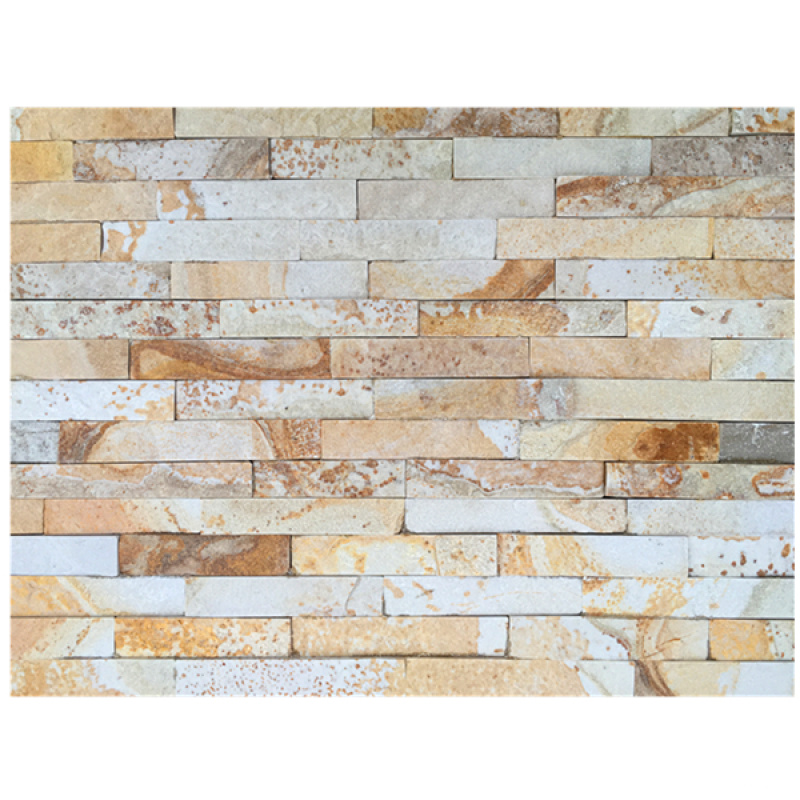
Stone cladding isn’t just the smart alternative to energy efficient glass, it’s also the simple choice, thanks to new cladding attachment systems.
“These new attachment systems allow stone to be used for lighter applications, when the structure has not been designed for a heavy full bed,” said Vega. “They also allow for a faster installation compared to traditional methods.“
Innowacyjne rozwiązania okładzinowe pozwalają na większe możliwości projektowe | Na zdjęciu: Cienko cięty wapień Indiana Litecore przyklejony do aluminiowego podłoża o strukturze plastra miodu
Innowacje w zakresie okładzin mogą stanowić eleganckie i ekonomiczne rozwiązanie umożliwiające połączenie kolorów i faktur kamienia naturalnego bez komplikacji związanych z kosztownym transportem i długotrwałym montażem. Chociaż niektóre z tych systemów uosabiają autentyczny charakter kamienia naturalnego, pozostają lekkie i łatwe w użyciu, co czyni je mądrym wyborem w przypadku spełnienia surowych wymagań, jakie architekci muszą spełnić w nowoczesnych przepisach budowlanych.
Kamienie naturalne Polycor mają zastosowanie w różnych systemach kotwienia i wspierania elewacji. Pochodzące z kamieniołomy polikoru and all through production, the stones are manufactured to each of our partner system’s specifications from ultra-thin profiles up to full thickness dimensional elements complimenting a wide range of facade structures.
Wybierając kamień na elewację, architekci muszą wziąć pod uwagę wiele czynników: wygląd, przeznaczenie, wielkość projektu, wytrzymałość, trwałość i wydajność. Wybierając kamienie Polycor do elewacji, architekci korzystają z naszej pełnej własności w łańcuchu dostaw, od samego podłoża skalnego aż do punktu instalacji. Wartość współpracy z firmą taką jak Polycor polega na tym, że ponieważ jesteśmy właścicielami naszych kamieniołomów, możemy bezpośrednio odpowiedzieć na wszelkie pytania lub wątpliwości, jakie architekt może mieć w trakcie opracowywania specyfikacji elewacji, zamiast korzystać z 2-3 pośredników.
Polycor Bethel White® granite quarry | Bethel, VT
“We have a wide array of our own limestone, granite and marble, so architects can discuss with the source and get accurate and reliable information,” said Vega. “We fabricate ourselves and sell blocks to other fabricators, ensuring competitiveness of the offers, while preserving the design intent. We work with industry leaders like Eklad, Kamień Hofmanna and others to offer a complete cladding solution for the project.“
Vega interesowała się innowacyjnymi technologiami okładzinowymi i współpracowała z ekspertami ds. badań i rozwoju w naszych zakładach produkcyjnych, aby wykonać okładziny z kamienia naturalnego o zmiennej grubości, które można stosować zarówno wewnątrz, jak i na zewnątrz budynku. Zwykle mocuje się go za pomocą niezależnego systemu szyn i zacisków.
Polycor’s stone veneer can be installed over solid facing, which eliminates the challenge of removing the original substructure in some cases. Some stone panels are cut thin, while still maintaining the authentic look and feel of a thicker stone without the heavy weight of a 3-6 inch deep stone veneer, making installation fast and simple. Polycor’s thin stones are compatible in many cladding configurations and are manufactured for systems like Litecore, rozwiązanie, które oferuje kamień za ułamek wagi i montaż z dwukrotnie większą szybkością.
Zdjęcie dzięki uprzejmości: Litecore
Te wszechstronne, kompozytowe panele ścienne wykorzystują kamień Polycor pocięty w ultracienki fornir. Przyklejone do warstwowego plastra miodu, umieszczone pomiędzy arkuszami aluminium i siatką z włókna szklanego, panele zapewniają system elewacyjny o niskiej gęstości, wysokiej wytrzymałości i lekkości.
KODIAK BROWN™ ultra thin 1cm granite with carbon fiber backing on Eclad system | Architect: Régis Côtés
Płyty Polycor o grubości 1 cm na spodzie z włókna węglowego to ultracienkie, lekkie i trwałe produkty z kamienia naturalnego, które opierają się na przyklejonym, zastrzeżonym podłożu stosowanym zamiast aluminium. Powstałe w ten sposób panele kamienne są przystosowane do integracji z systemami okładzinowymi Eclad i Elemex.
GEORGIA MARBLE – WHITE CHEROKEE™and Indiana Limestone facade on precast concrete | 900 16th St. Washington, D.C. | Architect: Robert AM Stern
3cm stone mechanically anchored to thin, precast concrete panels provides additional installation advantages. Companies such as Hoffman Stone systems are compatible with Polycor’s stones.
Polycor ma wiedzę niezbędną do stworzenia dowolnego projektu, od prostych ścian po ławki, wyjątkowe projekty architektoniczne i wnętrza holów w wysokich budynkach. Każde rozwiązanie pozwala architektom projektować innowacyjne, zrównoważone i estetyczne elewacje budynków z wykorzystaniem kamiennych powierzchni.
“These solutions can also be used interchangeably to blend with more traditional architectural elements and stone masonry construction such as full bed trim, cornices, lintels and things of that nature,” said Vega. “And again, once the material is specified, it can be used on any cladding system, traditional masonry and fabricated by pretty much all the fabricators operating on the market today. This way architects can lock in their design intent, and let engineers and builders establish means and methods to realize the design within budget.”
INDIANA LIMESTONE – STANDARD BUFF™ okładzina łącząca nowoczesny dodatek z tradycyjną kamieniarką | Senat Kanady, Ottawa, Kalifornia | Architekt: Diamond Schmitt
Zakotwiczone w przeszłości, ale gotowe na przyszłość, okładziny z kamienia naturalnego spełniają potrzeby nowoczesnej architektury i wzornictwa. I chociaż innowacje w zakresie okładzin w dalszym ciągu sprawiają, że użycie cienkiego kamienia jest łatwiejsze niż kiedykolwiek, okładziny nie są jedyną przyszłością kamienia naturalnego.
 afrykanin
  albański
  amharski
  arabski
  ormiański
  azerbejdżański
  baskijski
  białoruski
  bengalski
  bośniacki
  bułgarski
  kataloński
  Cebuański
  Chiny
Chiny  Chiny (Tajwan)
  korsykański
  chorwacki
  Czech
Czech  duński
  Holenderski
  język angielski
  esperanto
  estoński
  fiński
  Francuski
  fryzyjski
  galicyjski
  gruziński
  Niemiecki
  grecki
  gudżarati
  Kreolski haitański
  hausa
hausa  hawajski
  hebrajski
  Nie
Nie  Miao
Miao  język węgierski
  islandzki
  ibo
ibo  indonezyjski
  Irlandczyk
  Włoski
  język japoński
  jawajski
  Kannada
  kazachski
  Khmer
Khmer  Rwandyjski
  koreański
  kurdyjski
  Kirgiski
  gruźlica
  łacina
  łotewski
  litewski
  luksemburski
  macedoński
  Malgashi
  malajski
  malajalam
  Maltański
  Maoryski
  marathi
  mongolski
  Myanmar
  Nepalski
  norweski
  norweski
  oksytański
  paszto
  perski
  Polski
  portugalski
  Pendżabski
  rumuński
  Rosyjski
  Samoański
  szkocki gaelicki
  serbski
  język angielski
  Shona
Shona  Sindhi
  syngaleski
  słowacki
  słoweński
  somalijski
  hiszpański
  Sundajczyk
  Suahili
  szwedzki
  tagalski
  tadżycki
  Tamil
Tamil  Tatar
Tatar  telugu
  tajski
  turecki
  Turkmeni
  ukraiński
  urdu
urdu  Ujgur
Ujgur  uzbecki
  wietnamski
  walijski




