

After decades quarrying, fabricating and supplying stone facades, Hugo Vega, Vice President of Sales at Polycor, noticed that the architects he was calling on were lacking a thin stone veneer that was light enough and strong enough for cladding large-scale architectural projects. After some R&D within the company, Polycor went on to release its 1 cm reinforced slabs and Vega returned to his architects in triumph. Only their response was, “That’s great, but we need a way to hang it.”
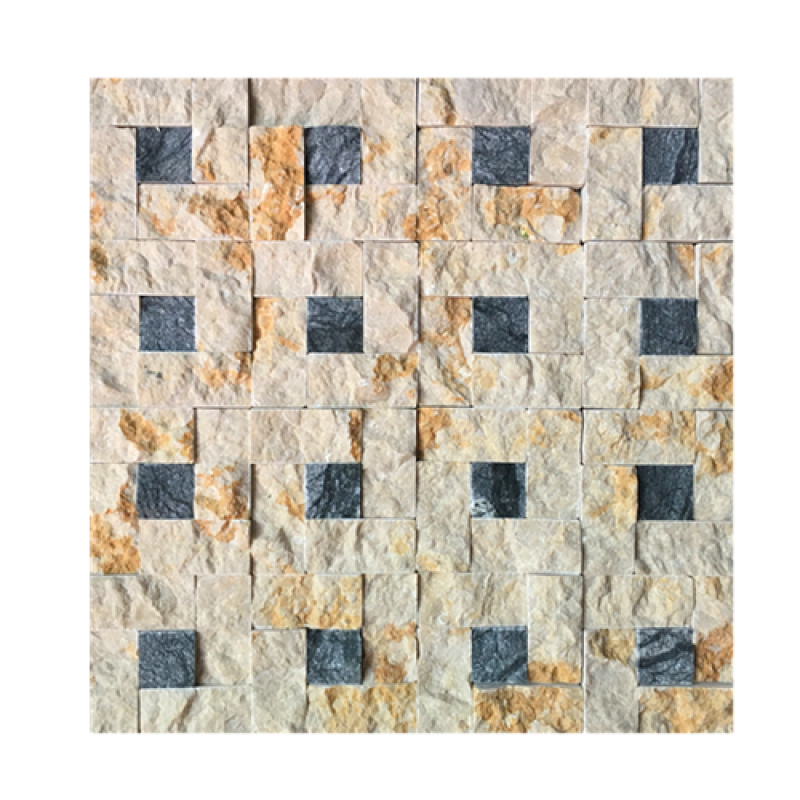
“The 1 cm product was a great innovation, but there was no way to apply it quickly and easily on large-scale projects,” Vega said.
Allora a squadra Polycor hà tornatu à u sviluppu.
Intantu, una altra risposta hà cuminciatu à percolate in u mondu A&D. In un pocu di sorpresa per Vega, e vendite di lastre di 1 cm sò partite in u mercatu residenziale induve i diseggiani è i so clienti anu sappiutu l'uppurtunità di incorpore pareti caratteristiche in docce, backsplashes di lastre piene è caminetti verticali senza cuciture. (Pudete vede quelli disinni in questu lookbook.) À un terzu di u pesu di u materiale di 3 cm abituale chì si trattavanu, i fabricatori ùn anu più rottu u so spinu à u musculu di una lastra piena sopra à un contatore per installà un backsplash. À 10 volte a forza di flexura, (grazie à u so supportu compositu di policarbonate) hè andata a preoccupazione chì e lastre orientate verticalmente nantu à u focu si ficcate à l'installazione.
U mercatu residenziale era à bordu per a petra fina.
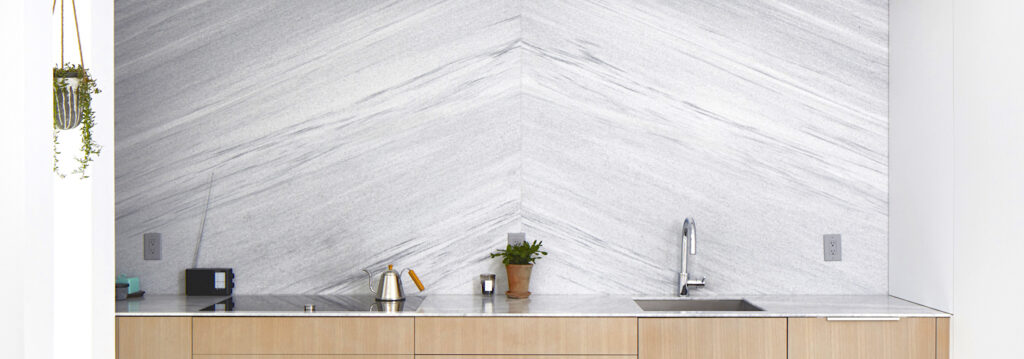
Un esempiu di un backsplash fabbricatu da una lastra cuntinua di ultra-thin Marmuru americanu Cherokee biancu.
That was great news, but Vega’s customers are typically working on commercial, not residential, specifications. So he continued to mull over this problem of adhering thin stone cladding to the exteriors of architectural projects. From time to time he would bump into the team from eclad at job sites where thicker panels of Polycor marble and granite were being installed with existing eclad systems, structural supports laid over existing facades in a modular fashion. A world leader in stone cladding systems, eclad has been creating and refining cladding systems since the 1990s. They too were seeing the same need in the market as the Polycor team – a fast and efficient way to clad with ultra-thin slabs. And so together the companies decided it was time to team up to bring a comprehensive thin stone cladding system to market.
Ciò chì anu sviluppatu hè un sistema senza saldatura chì risparmia tempu, travagliu è soldi: Eclad 1.
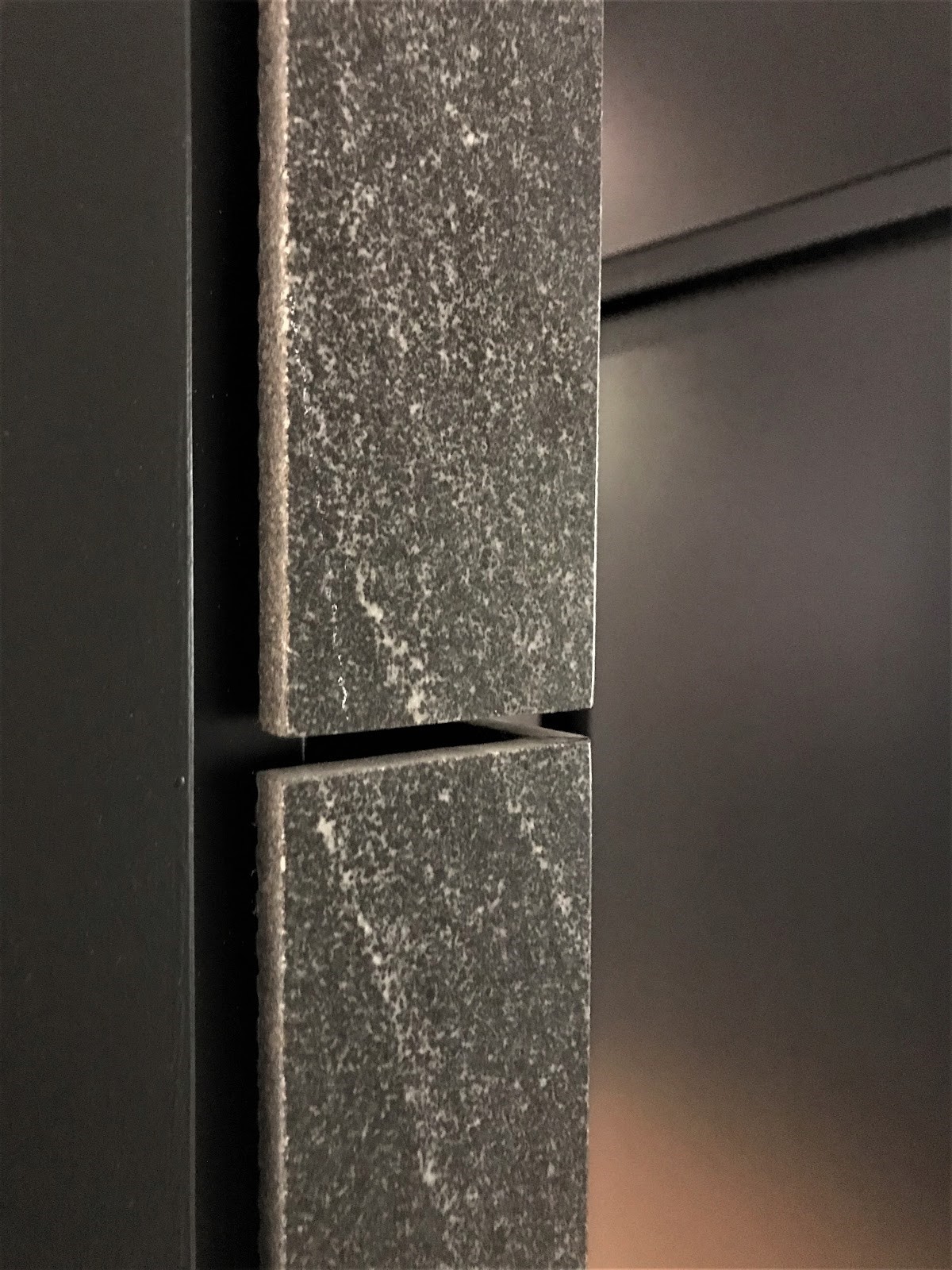
Ultra-sottile granitu neru americanu pare chì flotte, sustinutu da a struttura invisibile Eclad 1.
U novu disignu hè basatu annantu à un sistema di griglia d'aluminiu in cumbinazione cù ancoraggi undercut attaccati à a parte posteriore di i pannelli di 1 cm in modu chì restanu dissimulati quandu si usa una petra cusì fina. I pannelli sò dispunibuli finu à 9 piedi per 5 piedi è pesanu solu sei liri per piede quadru in media, facendu u prucessu di stallazione un compitu più faciule.
Amparate più nantu à i sistemi di facciata in pietra
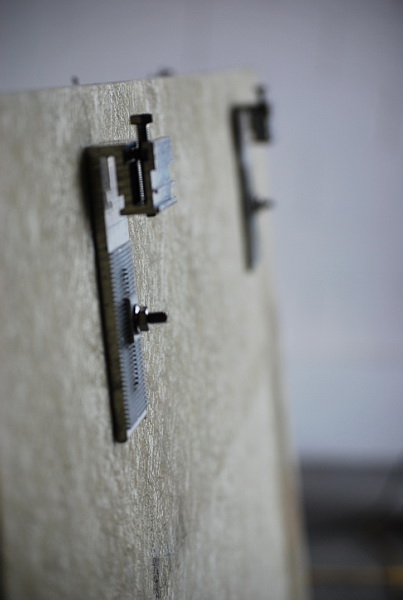
L'ancora restanu nascosti per una superficia libera.
U sistema cumpletu furnisce pannelli di petra ligeri preforati nantu à una struttura di rivestimentu protettivu chì rende più faciuli l'installazione di pannelli di pietra pesanti. I sistemi di rivestimentu tradiziunali si basanu nantu à a petra più spessa cumminata cù crampi, cinturini è clips ingombranti. Cù l'installatori di Eclad 1, basta à infilà e lastre in u locu è affruntà viti in i buchi preforati.
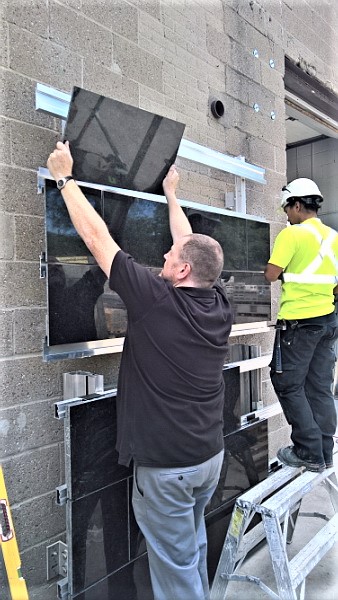
Un esempiu di un sistema Eclad 1 à piccula scala mock up.
“It’s basically a different way of installing the stone,” Vega said. “With traditional cladding systems, the anchors have to be installed one-by-one. The process is more labor intensive. On average, it’s twice as fast installing panels using the Eclad grid system.”
 africanu
  Albanese
  Amaricu
  Arabu
Arabu  Armenu
  Azerbaijani
  Vascu
Vascu  Belarusian
  Bengali
  Bosniacu
  Bulgaru
  Catalanu
  Cebuanu
  Cina
Cina  Cina (Taiwan)
  Corsu
Corsu  Cruatu
  Ceccu
Ceccu  Danese
  Ulandesa
  Inglese
  Esperantu
  Estone
  Finlandese
  Francese
  frisone
  Galizianu
  Georgianu
  Tedescu
  Grecu
Grecu  Gujarati
  Creolu Haitianu
  Hausa
Hausa  Hawaiianu
  Ebraicu
  Innò
Innò  Miao
Miao  Ungherese
  Islandesu
  igbo
igbo  Indonesianu
  Irlandese
  Talianu
  Ghjappunese
  Giavanese
  Kannada
  Kazakh
  Khmer
Khmer  Rwanda
  Coreanu
  Curdu
Curdu  Kyrgyz
  TB
TB  Latinu
  Lettone
  Littuanianu
  Lussemburghese
  Macedone
  Malgashi
  Malese
  Malayalam
  Maltese
  Maori
Maori  Marathi
  Mongolianu
  Birmania
  Nepalese
  Novegese
  Novegese
  Occitanu
  Pashto
  Persianu
  Pulaccu
  Portughese
  Punjabi
  Rumenu
  Russu
Russu  Samoanu
  gaelicu scozzese
  Serbianu
  Inglese
  Shona
Shona  Sindhi
  Sinhala
  Sluvaccu
  Sluvenu
  Somalianu
  Spagnolu
  Sundanese
  Swahili
  Svedese
  Tagalog
  Tajik
Tajik  Tamil
Tamil  Tatar
Tatar  Telugu
  Thai
Thai  Turcu
Turcu  Turchmennu
  Ucrainu
  Urdu
Urdu  Uighur
  Uzbek
Uzbek  vietnamita
  gallese




