

Stone cladding is durable, attractive, and low maintenance. Here’s what you need to know about this stone alternative.
Stone cladding is also known as stacked stone or stone veneer. It can be made from actual stone or artificial, so-called engineered stone. It’s available in a wide variety of finishes that look like slate, brick, and many other stones. It’s a fast and affordable way to get the look of stone on a wall without the cost or time of a masonry installation.
Placarea cu piatră are multe avantaje față de alte materiale de construcție și, în unele cazuri, față de construcția din piatră de zidărie.
• Lightness: Stone cladding is easier to carry and install than natural stone, and it places less pressure on the existing structure. It generally weighs considerably less than natural stone.
• Insulation: Stone cladding is weather-resistant and protective. It helps a building stay warm in winter and cool in summer. Reinforcing the cladding with a steel or aluminum framework, called a honeycomb, makes it able to resist earthquakes and high winds.
• Minimal maintenance: Like stone, stone cladding requires little upkeep to look good for many years.
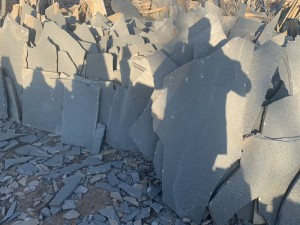
• Ease of installation: Lightweight cladding is easier to install than stone. It doesn’t require the same heavy equipment that a masonry installation does. This doesn’t mean you can install it yourself, however. Hanging stone cladding requires experience and skill.
• Esthetics: Stone gives any building an elegant look. Cladding can look like quartz, granite, marble, or any natural stone. It also comes in a wide choice of colors. Because you can install it anywhere, stone cladding gives you endless ways to design with stone.
Ancore subdecupate
Aceasta este metoda obișnuită pentru instalațiile mari. Într-un sistem de ancorare sub tăietură, instalatorii fac găuri în spatele pietrei, introduc un șurub și fixează placarea orizontal. Aceasta este o metodă bună pentru soffituri și panouri mai groase.
Metoda Kerf
În această metodă, instalatorii decupează caneluri în partea de sus și de jos a pietrei. Piatra se află pe o închizătoare în partea de jos a panoului de placare cu o a doua închizătoare în partea de sus. Aceasta este o metodă de instalare rapidă, ușoară, excelentă pentru instalații mai mici și panouri mai subțiri.
Ambele metode de instalare folosesc un design cu îmbinare deschisă. Pentru a imita aspectul pietrei adevărate, instalatorii punctează spațiile dintre rosturi cu chit de zidărie.
• Entry areas
• Bathrooms
• Kitchens
• Sheds
• Freestanding garages
• Patios
• Mailboxes
Deși placarea cu piatră este excelentă în multe cazuri, nu este ideală pentru fiecare instalare. Are și unele dezavantaje pe care piatra nu le are.
• It’s not as durable as a masonry installation.
• Some veneers allow moisture to seep into the joints.
• It can crack under repeated freeze-and-thaw cycles.,
• Unlike natural stone, it is not a sustainable building material.
 african
  albanez
  amharică
  arabic
  armean
  Azerbaidjan
  bască
bască  Belarus
  bengaleză
  Bosniac
  bulgară
  catalan
  Cebuano
  China
China  China (Taiwan)
  corsicană
  croat
croat  ceh
ceh  danez
danez  olandeză
  Engleză
  esperanto
  estonă
  finlandeză
  limba franceza
  frizonă
  Galician
  georgian
  limba germana
  greacă
  Gujarati
  creolul haitian
  hausa
hausa  hawaian
  ebraică
  nu
nu  Miao
Miao  maghiară
  islandez
  igbo
igbo  indoneziană
  irlandez
  Italiană
  japonez
  javaneză
  Kannada
  kazah
kazah  Khmer
Khmer  ruandez
  coreeană
  kurdă
kurdă  Kârgâz
  TB
TB  latin
latin  letonă
  lituanian
  luxemburghez
  macedonean
  Malgashi
  Malaeză
  Malayalam
  malteză
  maori
maori  marathi
  mongol
  Myanmar
  nepaleză
  norvegian
  norvegian
  occitană
  Pashto
  persană
  Lustrui
  portugheză
  punjabi
  Română
  Rusă
Rusă  samoană
  gaelic scoțian
  sârb
sârb  Engleză
  Shona
Shona  Sindhi
  Sinhala
  slovacă
  slovenă
  somalez
  Spaniolă
  Sundaneza
  Swahili
  suedez
  tagalog
  Tadjik
  tamil
tamil  tătar
tătar  Telugu
  thailandez
  turc
turc  turkmeni
  ucrainean
  Urdu
Urdu  Uighur
  uzbec
uzbec  vietnamez
  galeză




