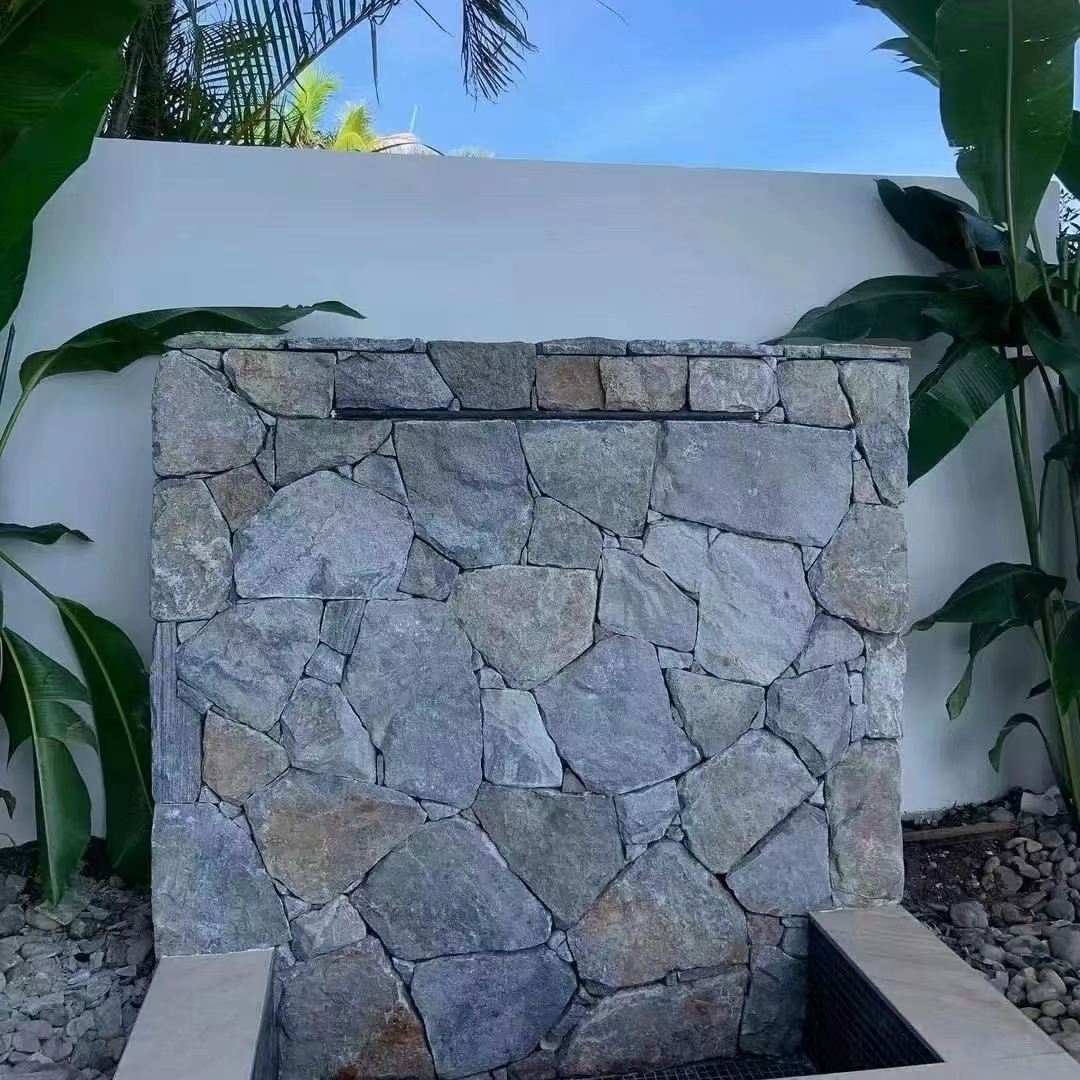
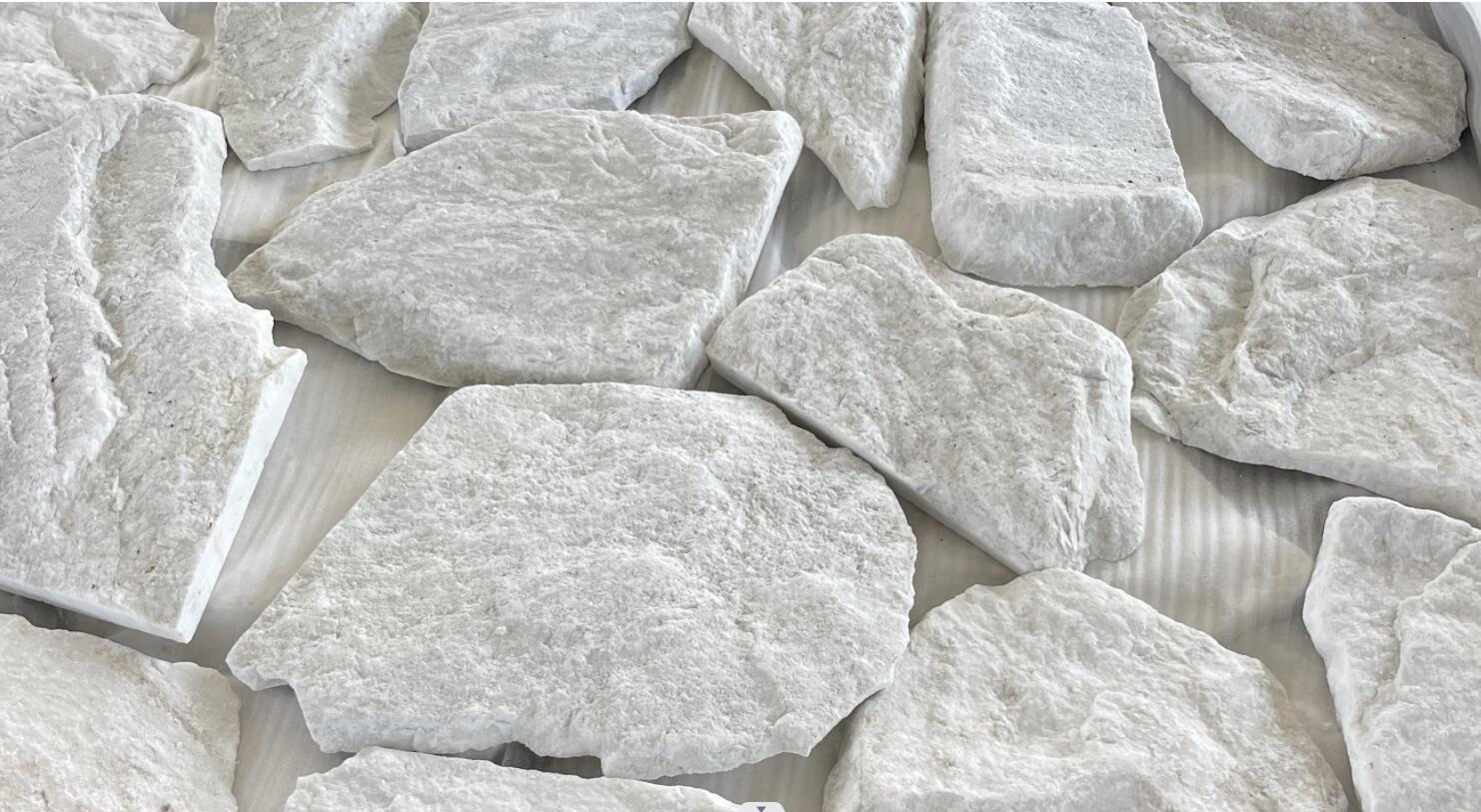
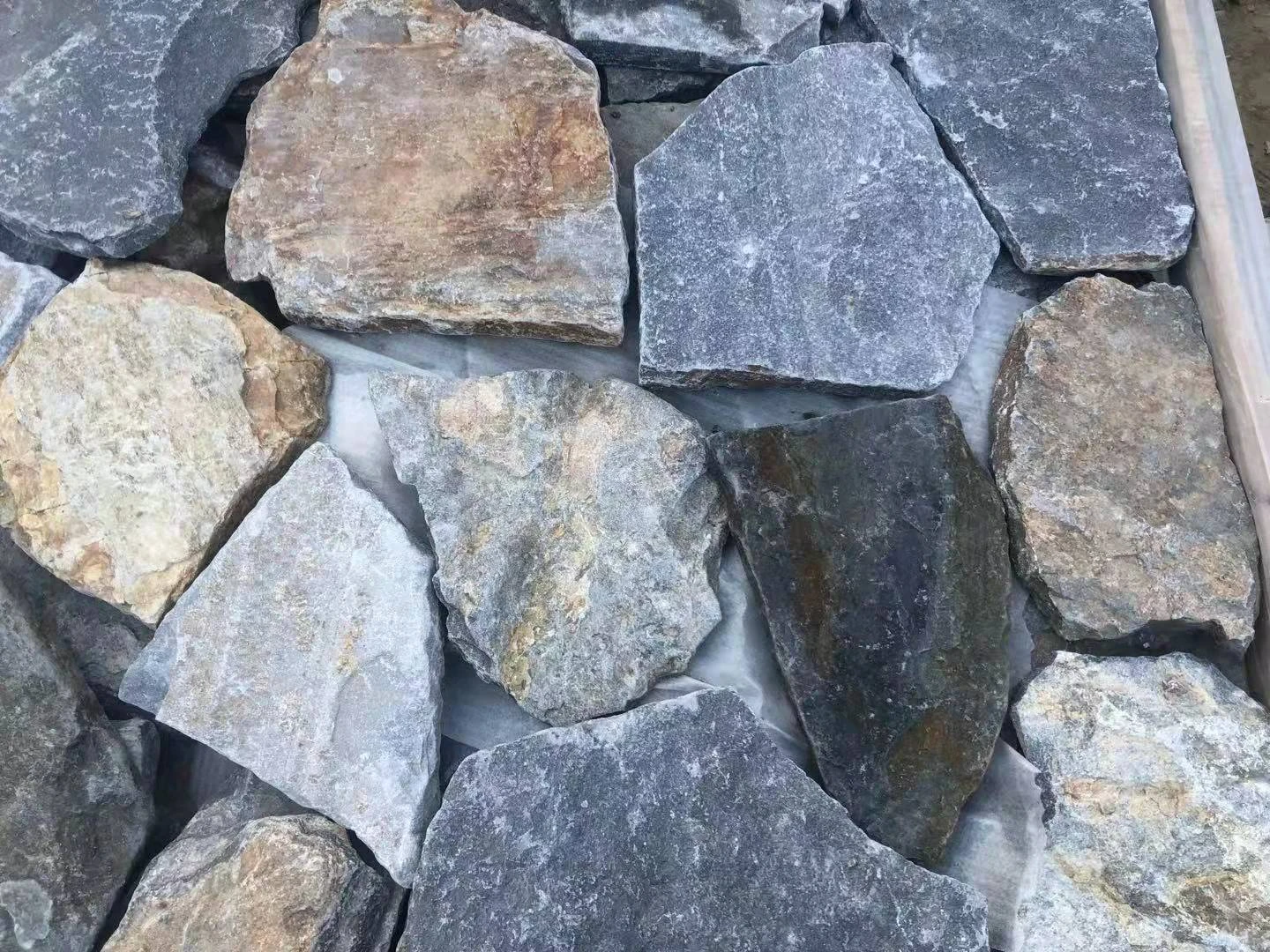
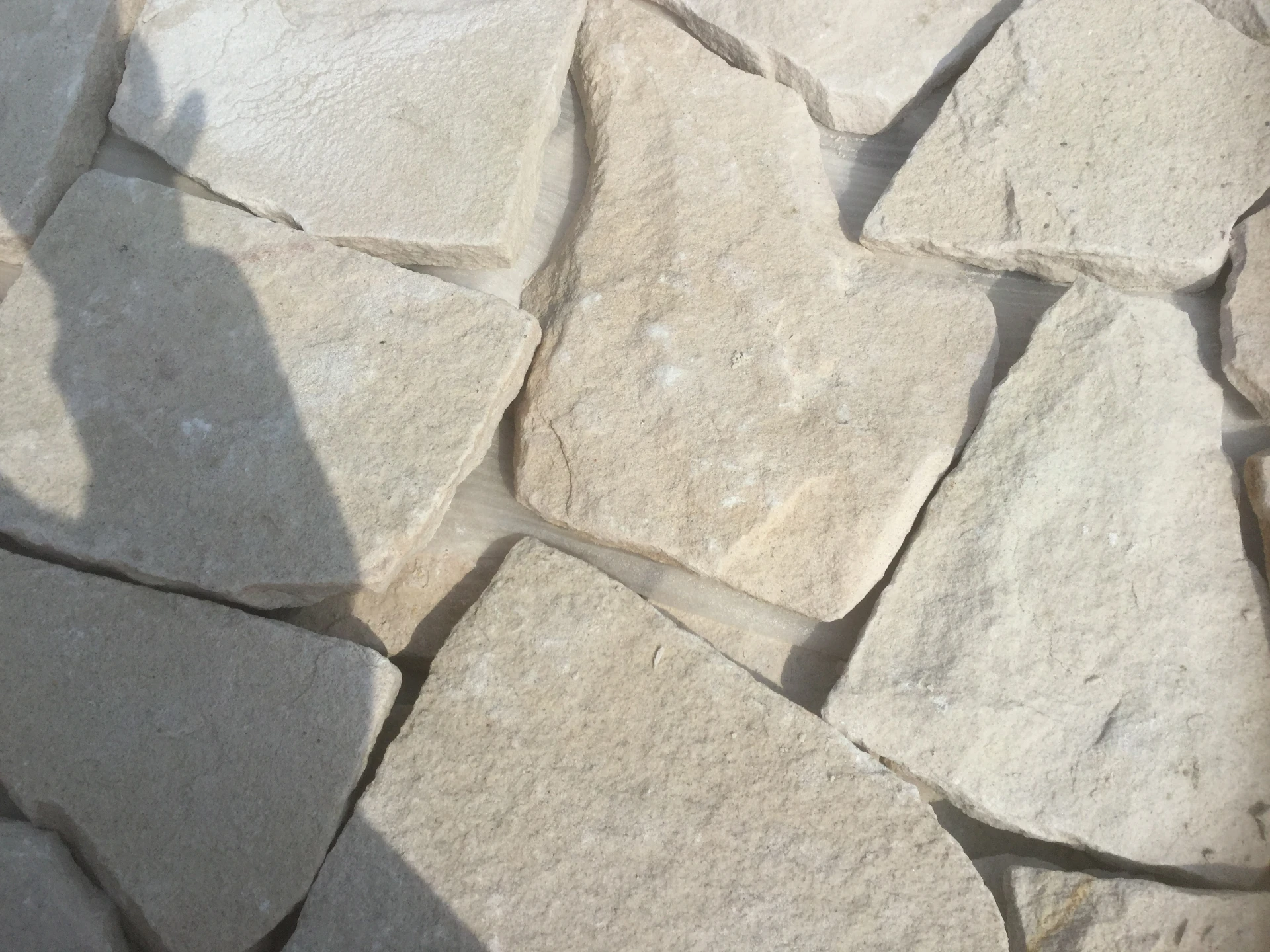
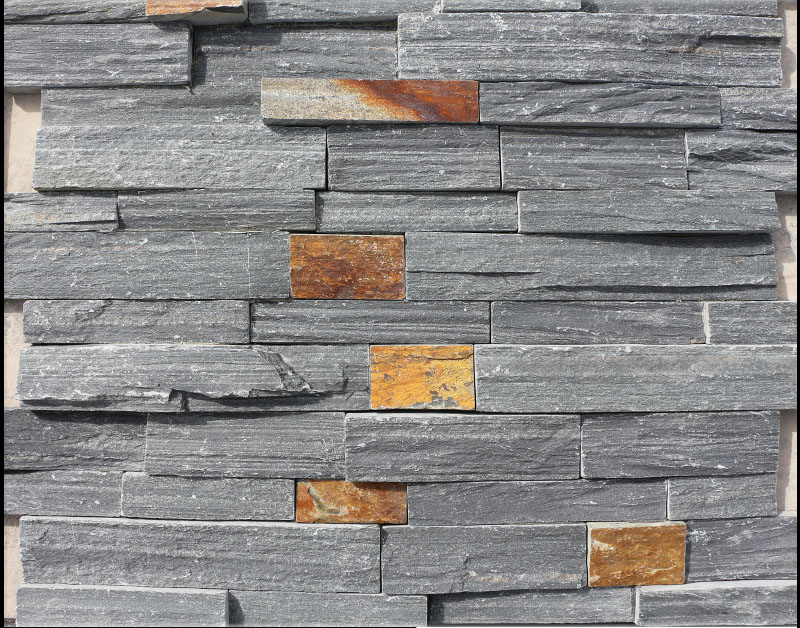
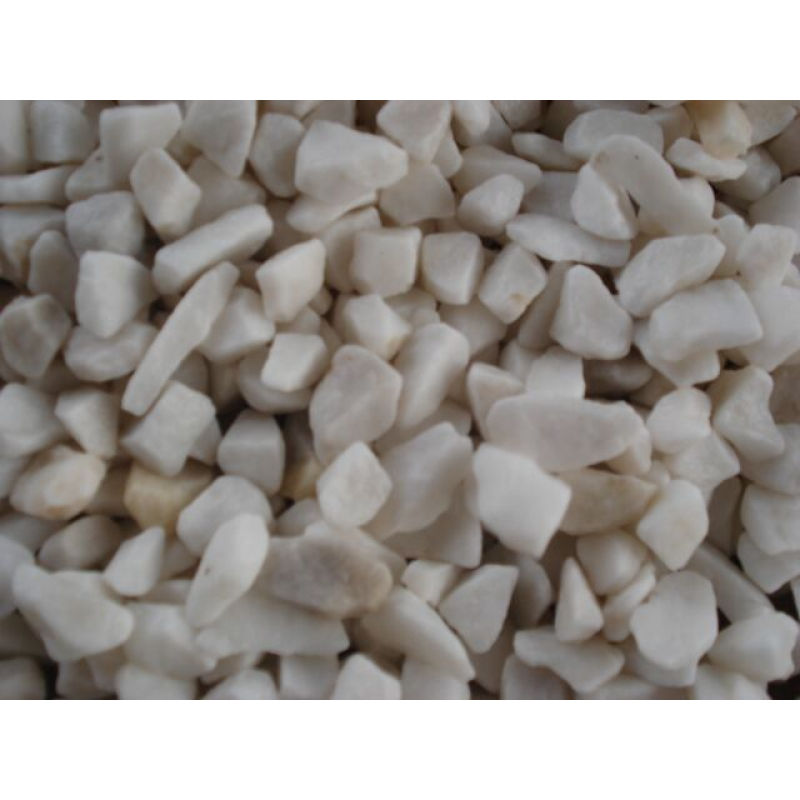
Ut nivis, nullae duae lagenae eaedem sunt. Sicut verus naturae effectus, lapis lagena venit inter myriades varias figuras, magnitudines, et colores undecumque provenit. Haec incredibilis diversitas adiuvat homeowners sicut vos creas hardscapes, qui sunt vere singulares.
Different flagstones don’t only look different, though. They also have varying thicknesses, textures, levels of permeability, and uses. These durable, versatile unsung heroes of landscaping can be a part of just about any hardscape you could think of.
To help you narrow down the possibilities, we’ve come up with eight flagstone ideas to incorporate in your yard.
Lapis naturalis est sedimentaria petra in stratis dirupta et ad usum landscaping. Sunt multa alia genera navisomnes cum suis propriis. Varietates populares nonnullae sunt sabuleum, quadrantem, caeruleum, calcis.
Plurima lagenae duae figurae in unum veniunt;
For either shape option, you can lay flagstones dry on a bed of sand or gravel (“dry-laid”) or use concrete (“wet-laid”). If you’re using thinner flagstones, it’s a good idea to lay them in concrete, as they sometimes crack easily when laid dry.
Whatever kind of landscaping project you’re working on, the cost of flagstone is typically $15 to $20 per square foot. That price covers all the materials needed, including the stone itself and sand, gravel, or concrete.
The price varies depending on what specific type of flagstone you use and whether it’s dry-laid or wet-laid. Dry-laid is typically cheaper because you won’t have to pay for concrete.
Now that we’ve covered the basics of flagstone, let’s get into our eight design ideas for using them in your landscape.
Lapides fusci perfecti sunt ad areas sicut patios summus negotiatio, quia eorum textura aspera lapsus repugnantes facit.
Jactare lagenium patio facile potes in spatium vitae foris addendo aliquam supellectilem patio et a . pergola vel alio coopertorio.
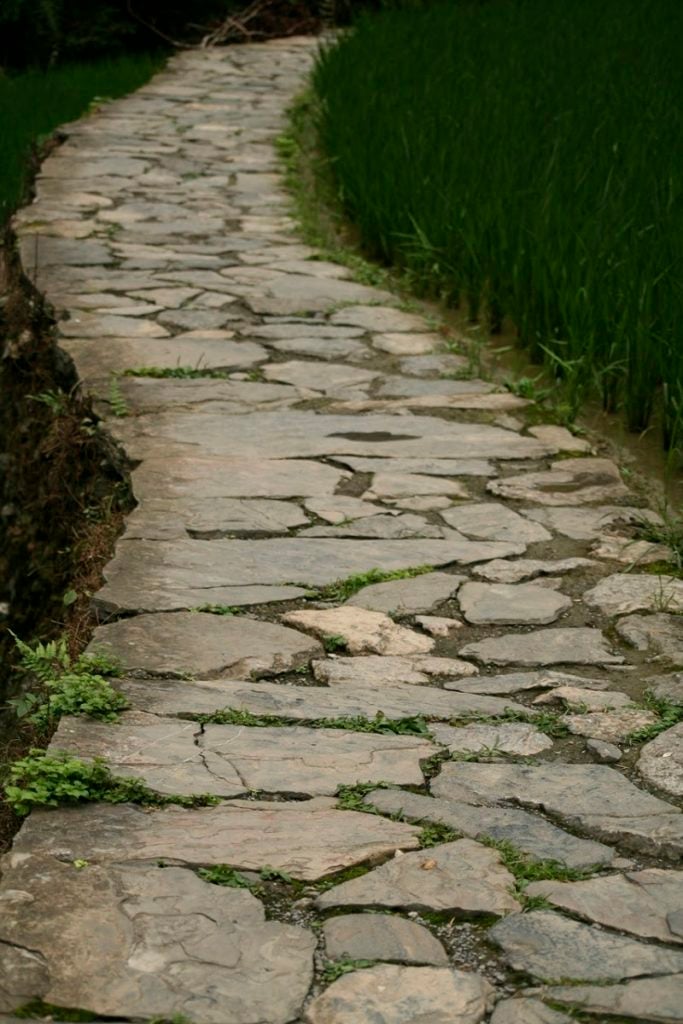
Si infantes parvi, senes propinqui, vel alii convivae supplantatores regulariter domum tuam frequentant, leves, rectae tabulae lapidis lagonis locum efficere potes.
As with flagstone patios, flagstone pathways are naturally slip-resistant because of the stone’s texture, so you won’t have to worry about your paths getting slick with rainwater.
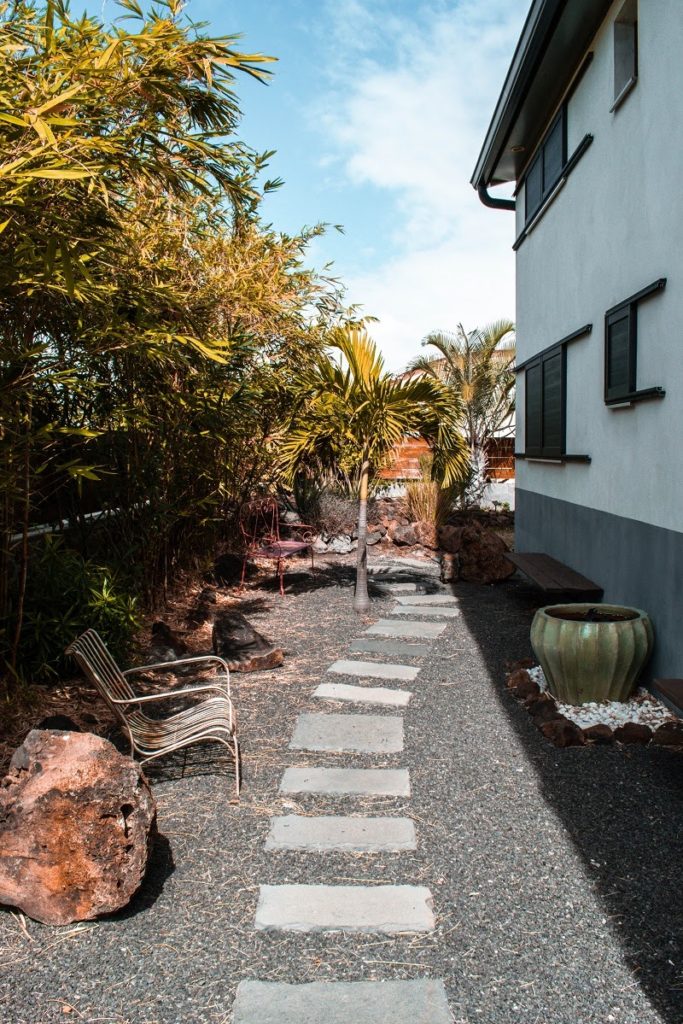
Ad lapides gradientes, lapides aliquot digitorum spatio distantes et hiatus imple pavonum glarea, flumen petramaut humo operire herbas. Paversibus uti potes pro recentiori aspectu sicut hoc unum vel lagenas irregulares ad viam horti styli casale.
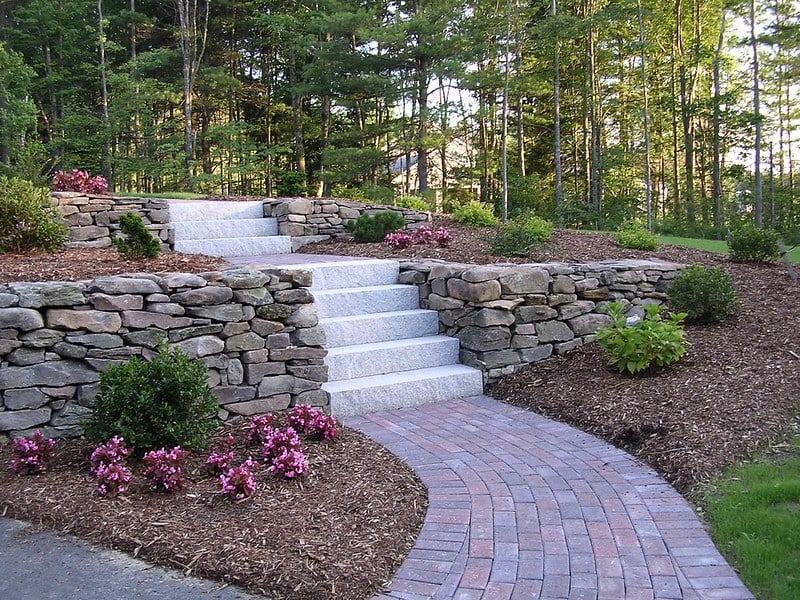
Though people might not typically use flagstones as stone for retaining walls, it is an option. You can stack flagstones to create a low wall in your landscape. Just don’t try stacking them too tall. You know what happened to Icarus when he flew too close to the sun.
Cum retentam parietem e lago- nis conficis, vel ACERVUS eas siccas vel mortario uteris ad continendas. Pro fortiore, multo diuturnoque muro, mortario adhibito (etsi paulo pretiosius id facere posset).
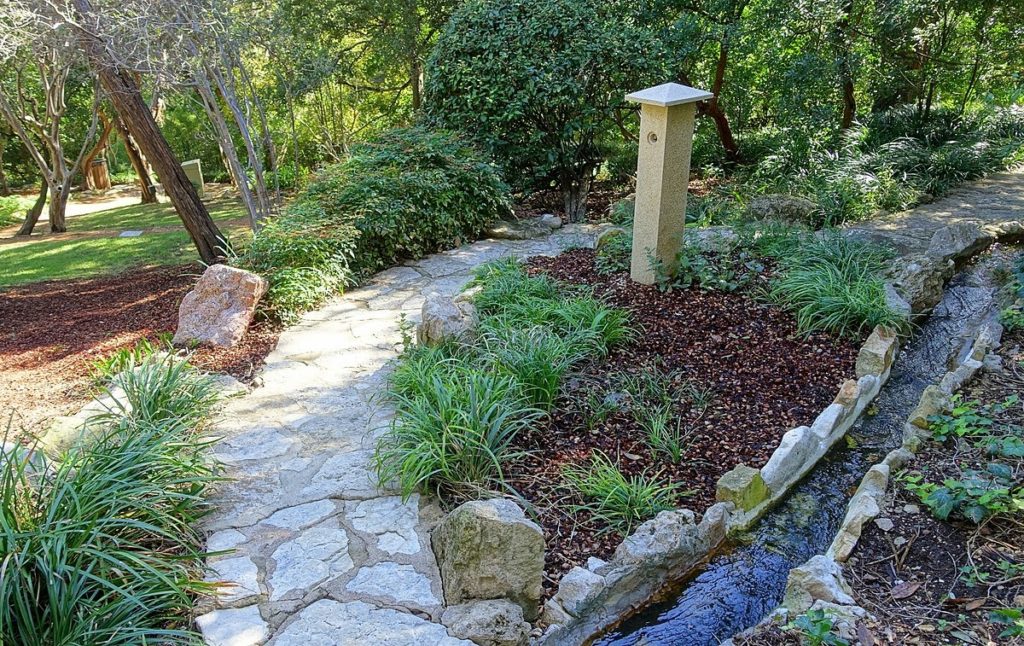
Hortus limbus Est simpliciter terminus qui in circuitu tuo cubilibus landscape ut gramen custodiat, et totum navale tuum fac politius inspicias. Iterum ad hortum tuum aut florem lecti diversi generis lagenis varias formas consequi potes.

Pavers notae tuae plus geometricae et modernae videbunt, dum lagenae irregulares (sicut pictae) ferociorem, magis naturalem aestheticam offerunt. Cum in diversis coloribus lagonis venient, perfectos invenire potes colores plantarum tuarum aequare vel opponere.
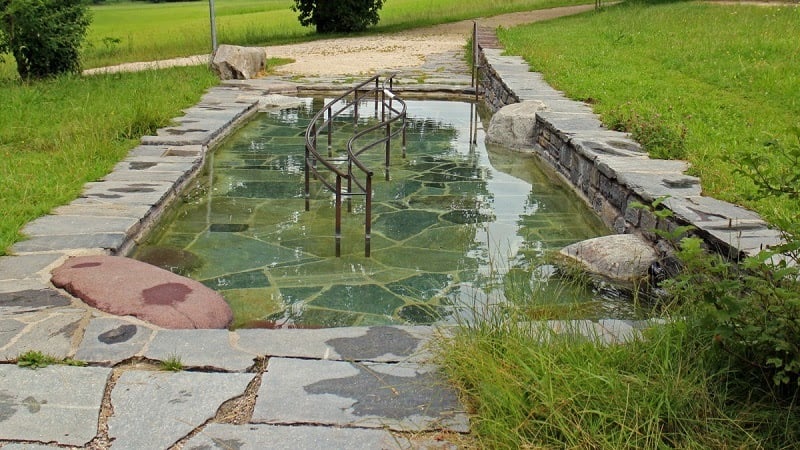
Flagstones are heavy enough to hold down liners for ponds and other similar water features, so they make great borders. Some types of flagstone are also permeable, which means they’ll absorb water instead of causing runoff if they get wet from your pond, waterfall, or fountain overflowing.
Cum pavers flagstone, marginem rectum, mundum pro aesthetico hodierno creare potes, vel flagstones irregulares pro certo limite, qui stylo naturali miscet cum stagno.
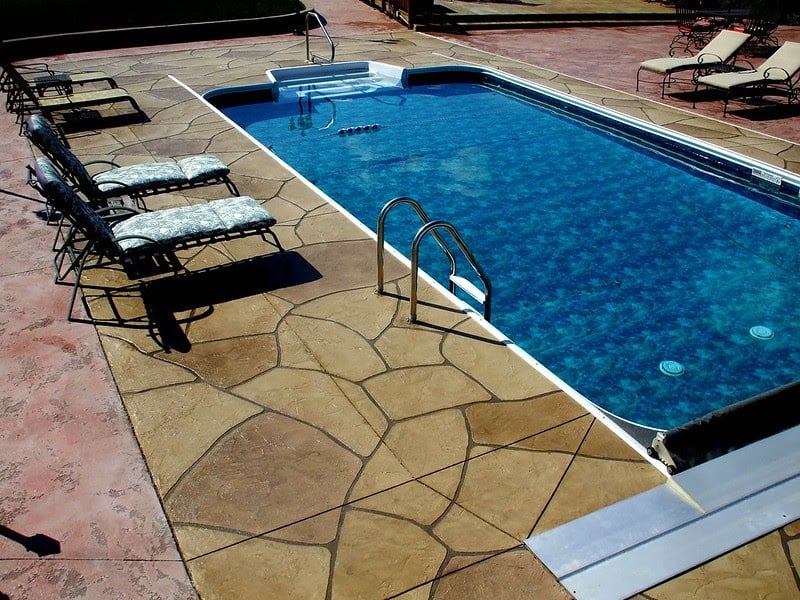
Because flagstones are slip-resistant, they’re the perfect material for lacus or hot tub decks, where friends and family will regularly run around barefoot. Some types of flagstone, such as sandstone, don’t absorb heat, so they won’t burn your feet, either.
Et iterum, lagenae permeabiles sunt, ut omnia omnia quae vis, sine cura aquarum runofforum gramina inundantes.
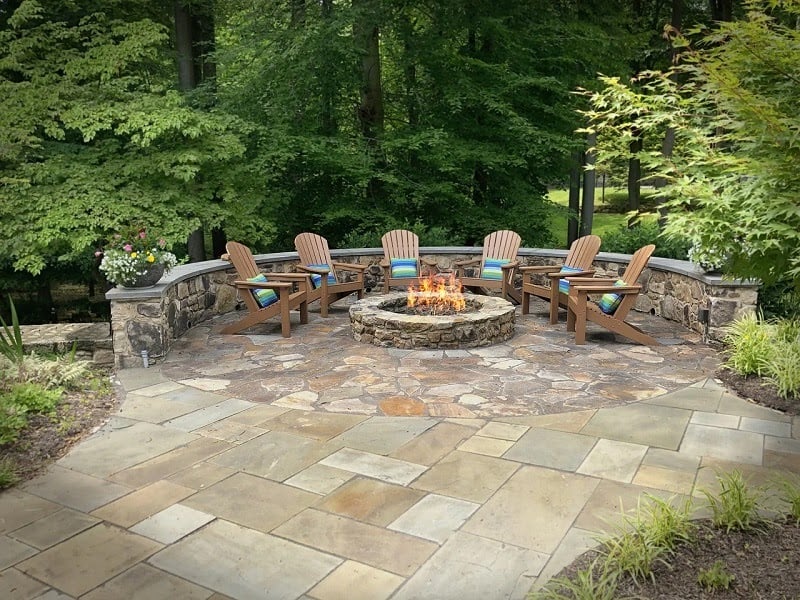
If you’re thinking of aedificationem af *ira pit in diam tuam, lagenas utendo considera ut spatium vivum efficiat rusticum velit. Eodem typo et colore potes uti ad patio/sessionis circa foveam ignis et ipsum foveam ignis inconsutilem aspectum vel colores oppositos pro insigniore, edgy consilio utere.
 African
 Albanian
 Aethiopica
 Arabice
 Armenian
 Azerbaijani
 Basque
 Belarusian
 Bengalica
 Bosnian
 Bulgarica
 Catalan
 Cebuano
 China
 China (Taiwan)
 Corsica
 Croatian
 Czech
 Danica
 Batavica
 Anglicus
 Esperanto
 Estonian
 Finnicum
 Gallica
 Frisian
 Gallician
 Georgian
 German
 Graeca
 Gujarati
 Haitian Creole
 hausa
 hawaiian
 hebraice
 non
 Miao
 Hungarica
 Islandic
 igbo
 Indonesiaca
 hibernica
 Italian
 Iaponica
 Javanese
 Kannada
 kazakh
 Khmer
 Rwandan
 Coreanica
 Kurdish
 Kyrgyz
 TB
 Latinus
 Latvian
 Lithuanian
 Luxemburgish
 macedonicum
 Malgashi
 Malay
 Malayalam
 Melitensis
 Maori
 Marathi
 Mongolica
 Myanmar
 Nepalica
 Norvegica
 Norvegica
 Occitan
 Pashto
 Persae
 Polonica
 Portuguese
 Punjabi
 Romanian
 Russian
 Samoanice
 Scotica Gaelic
 Serbian
 Anglicus
 Shona
 Sindhi
 Sinhala
 Moravica
 Slovenian
 Somali
 hispanice
 Sundanese
 Swahili
 Swedish
 Tagalog
 Tajik
 Tamil
 Tatar
 Telugu
 Thai
 Turcicum
 Turci
 Ucraina
 Urdu
 Uighur
 Uzbek
 Vietnamica
 Cambrica