

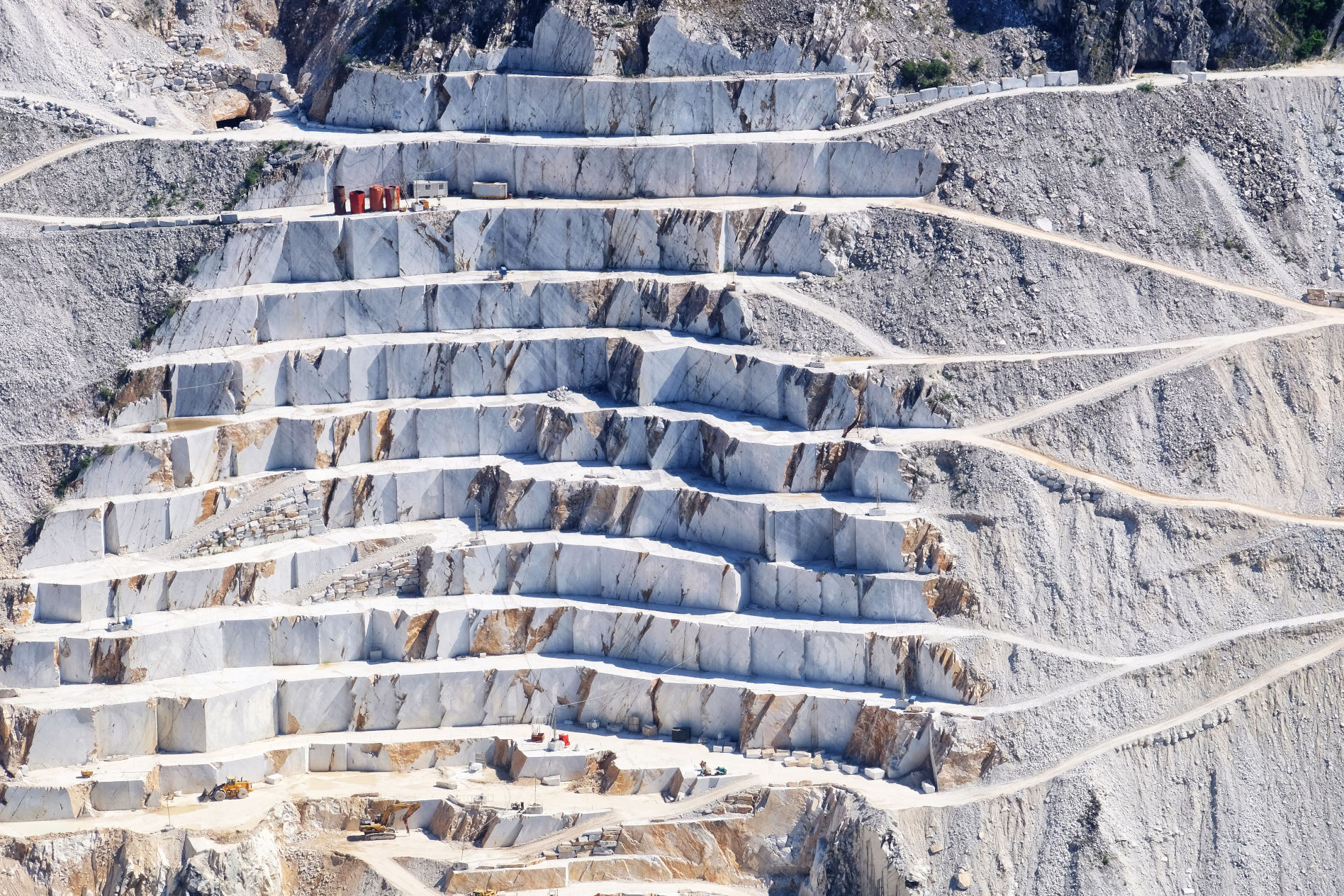
Yen sampeyan mandheg mikir babagan iki, watu alam dadi dhasar peradaban modern kita kanthi cara sing gedhe. Saka bangunan sing kita urip, kerja lan toko menyang lemah sing kita lewati lan nyopir, urip tanpa sumber daya alam sing penting iki angel dibayangake.
Lelampahan sing macem-macem formulir saka watu alam take from the depths of the earth and into the construction of homes, commercial buildings and roads is a fascinating one. Let us dive in and explore the origins of natural stone and how it’s made.
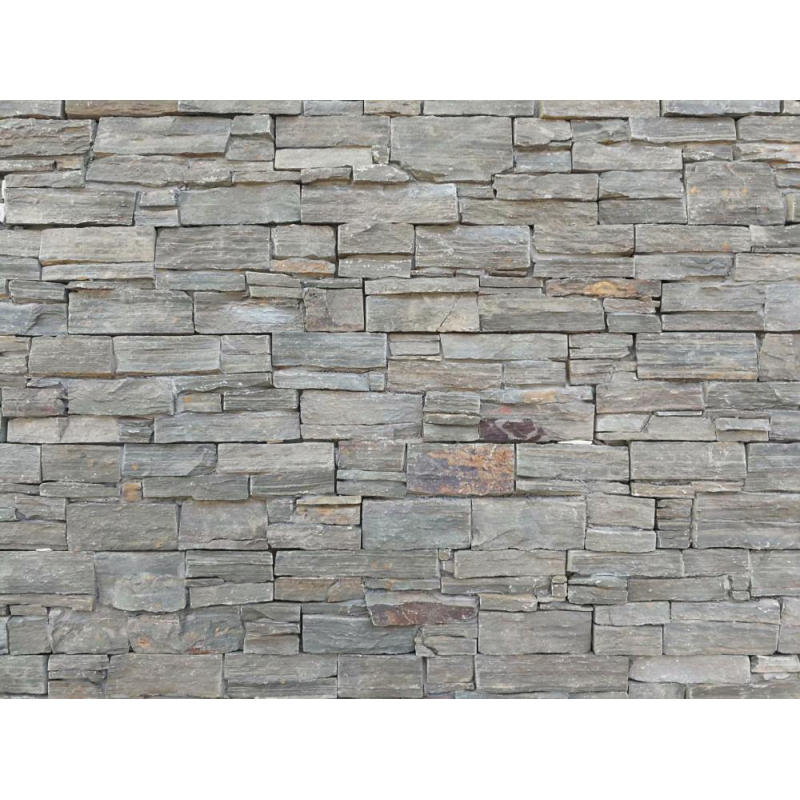
Watu alam bisa dikategorikake kanthi telung cara: Igneous, Sedimentary lan Metamorphic.
Igneous rocks are the result of magma or lava solidifying and cooling, either beneath the earth’s surface or ejected from volcanoes and left to cool above-ground. Granite is the most common form of igneous stone but other kinds include basalt, dunite, rhyolite and gabbro.
Sedimentary rocks form through a combination of fragments from other rocks, along with the remains of plants, animals and other organic materials. These materials accumulate in deserts, oceans and lakes before they are compressed into their final form by the weight of the earth above them. Limestone is the most common sedimentary rock with siltstone, dolomite and shale comprising other variations.
Metamorphic rocks previously existed as igneous or sedimentary stones and were then transformed due to heat and pressure applied through exposure to magma, the weight of earth above them when buried deep underground, or a combination of both. Marble is the most famous stone of the metamorphic variety and quartzite, soapstone, gneiss and jade, among others, round out this fascinating category.
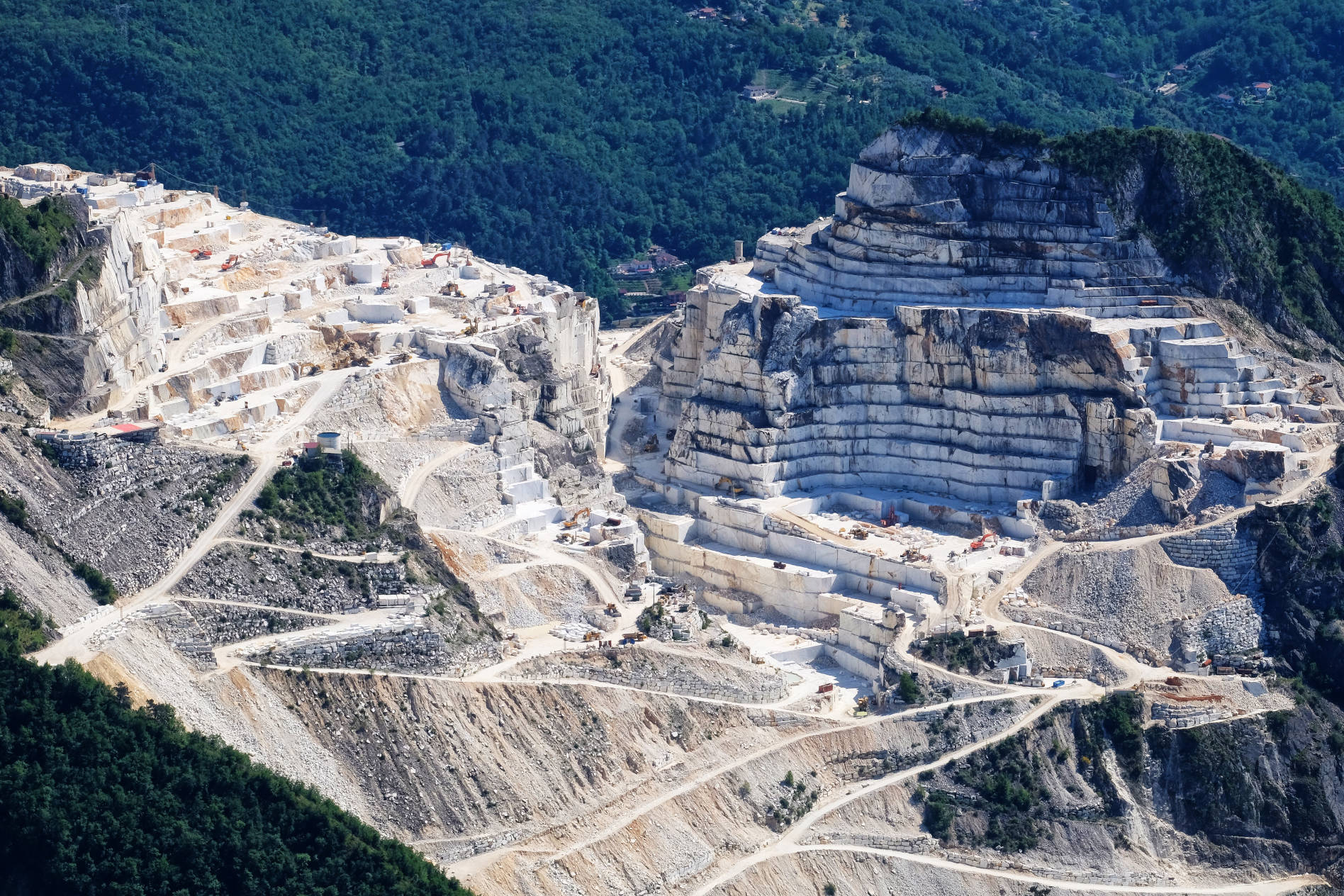
Tambang Marmer ing Tuscany
Sawise alam njupuk care saka langkah pisanan ing bener mbentuk watu, langkah sabanjure njabut lan re-purposing watu kanggo nggunakake rampung dening tangan manungsa ing quarry watu kabeh ndonya.
Proses quarrying watu ekstensif lan mbutuhake mesin kuat bebarengan karo buruh quarry trampil. Sadurunge watu bisa disentuh, ana dhaptar dawa tumindak sing kudu ditindakake.
Kaping pisanan, tim ahli geologi kudu nemokake singkapan watu ing tambang sing bisa diteliti. Sabanjure, sampel watu kasebut dijupuk kanthi ngebor menyang watu kanthi mata bor berlian. Sampel kasebut banjur dianalisis kanggo nemokake yen nduweni karakteristik sing dikarepake kanggo digunakake minangka bahan bangunan.
Yen watu kasebut cocog karo tagihan kanggo tujuan konstruksi, proses sing dawa lan asring ditarik kanggo entuk lisensi lan ijin saka pamrentah lokal diwiwiti. Gumantung ing negara lan negara, iki bisa njupuk taun nganti rampung.
Sawise persetujuan pungkasan diturunake, karya wiwit ngresiki lebu, rereget lan alangan liyane sing bakal ngalangi proses penggalian. Nambah kangelan iki kasunyatan sing akeh quarries dumunung ing wilayah adoh lan ora bisa diakses, mbutuhake kabeh dalan lan trowongan kanggo dibangun sadurunge karya nyata bisa miwiti.
Kombinasi gergaji kawat berlian, obor kanthi daya dhuwur lan detonasi bledosan wektu digunakake kanggo misahake watu saka permukaan tambang. Pamblokiran massive sing diasilake, sing asring bobote nganti patang puluh ton, banjur diangkut menyang fasilitas kanggo nglereni lan diproses luwih lanjut.
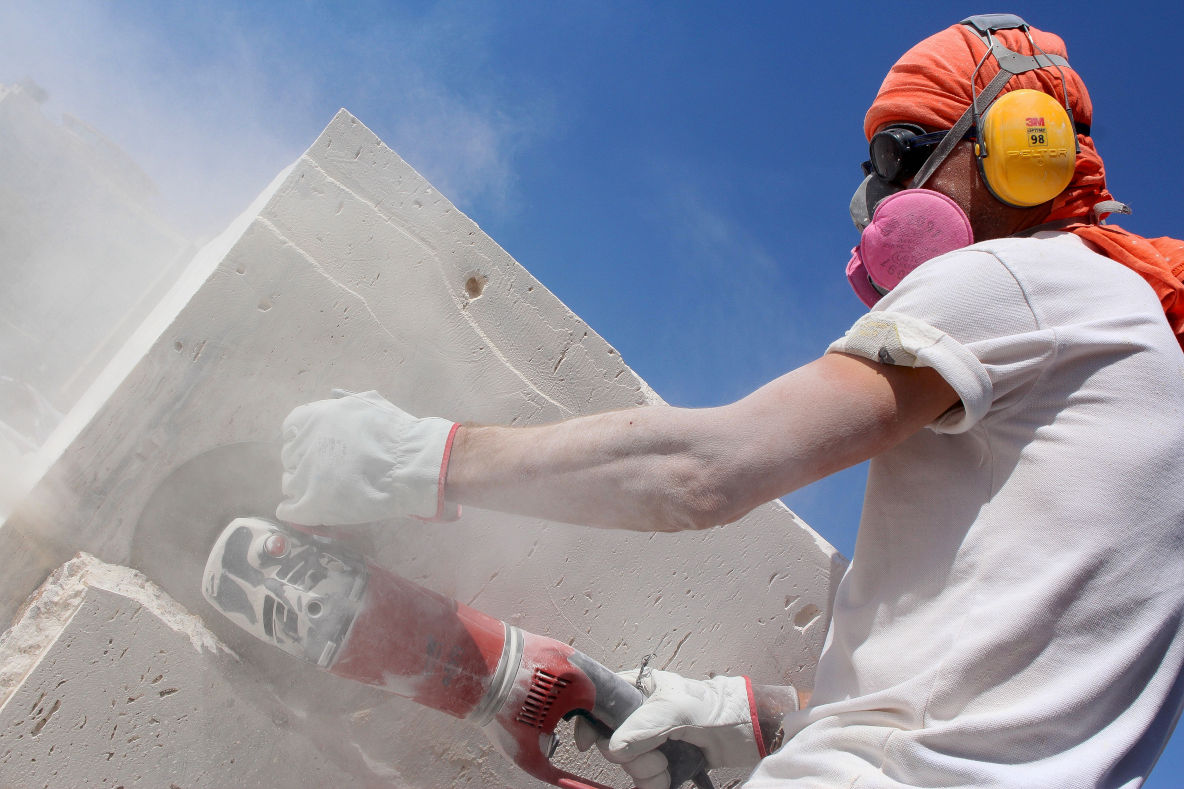
Pekerja Tambang Batu
Ing fasilitas pangolahan, pamblokiran watu banjur dipotong dadi slab kanthi gergaji geng kacepetan dhuwur sing uga ngeculake banyu nalika ngethok kanggo nyuda emisi bledug. Senadyan kacepetan ing kang padha operate, geng saws biasane njupuk watara rong dina kanggo rampung nglereni 20-ton blok watu.
Sabanjure, slabs dikirim liwat mesin polishing kanggo menehi finish sing dikarepake. Dipoles minangka finish sing paling umum karo honed, leathered lan disapu resik minangka pilihan liyane sing nyedhiyakake macem-macem tekstur ing permukaan watu.
Now that the slabs are cut to the correct size and have the desired finish, the final stage in a natural stone’s journey into your home takes place at the fabricator’s facility. Here, the stone slabs are further cut to specification for each individual project which includes shaping of the edges into the detail required for installation.
Now that you know the incredible journey that natural stone takes from deep inside the earth and into your kitchen, I’m sure you’ll agree that it is certainly worth the wait. Thanks to advancements in the industry over the years and the demand that exists for natural stone of all kinds, you don’t actually have to sit around while your marble, quartzite or granite is quarried and processed.
 Afrika
  basa Albania
  Amharic
  Arab
Arab  wong Armenia
  Azerbaijan
  Basque
  Belarusia
  Bengali
  Bosnia
  basa Bulgaria
  Katalan
  Cebuano
  Cina
Cina  China (Taiwan)
  Korsika
  basa Kroasia
  Ceko
Ceko  Danish
  Walanda
  Inggris
  Esperanto
  basa Estonia
  basa Finlandia
  Prancis
  Frisian
  Galician
  Georgian
  Jerman
  Yunani
  Gujarati
  Kreol Haiti
  hausa
hausa  hawaii
  basa Ibrani
  Ora
Ora  Miao
Miao  Hungaria
  basa Islandia
  igbo
igbo  basa Indonesia
  irlandia
  basa Italia
  Jepang
  basa jawa
  Kannada
  kazakh
  Khmer
Khmer  wong Rwanda
  Korea
Korea  Kurdi
Kurdi  Kyrgyz
  TB
TB  latin
latin  Latvia
  Lithuania
  Luksemburg
  Makedonia
  Malgashi
  Melayu
  Malayalam
  wong Malta
  Maori
Maori  Marathi
  Mongolian
  Myanmar
  Nepali
  basa Norwegia
  basa Norwegia
  Occitan
  Pashto
  Persia
  Polandia
  Portugis
  Punjabi
  basa Rumania
  Rusian
  Samoan
  Gaelik Skotlandia
  basa Serbia
  Inggris
  Shona
Shona  Sindhi
  Sinhala
  basa Slowakia
  basa Slovenia
  Somali
  Spanyol
  Sundha
  Swahili
  Swedia
  Tagalog
  Tajik
Tajik  Tamil
Tamil  Tatar
Tatar  Telugu
  Thai
Thai  basa Turki
  Turkmen
  Ukrainia
  Basa Urdu
  Uighur
  Uzbek
Uzbek  Vietnam
  Welsh
Welsh 




