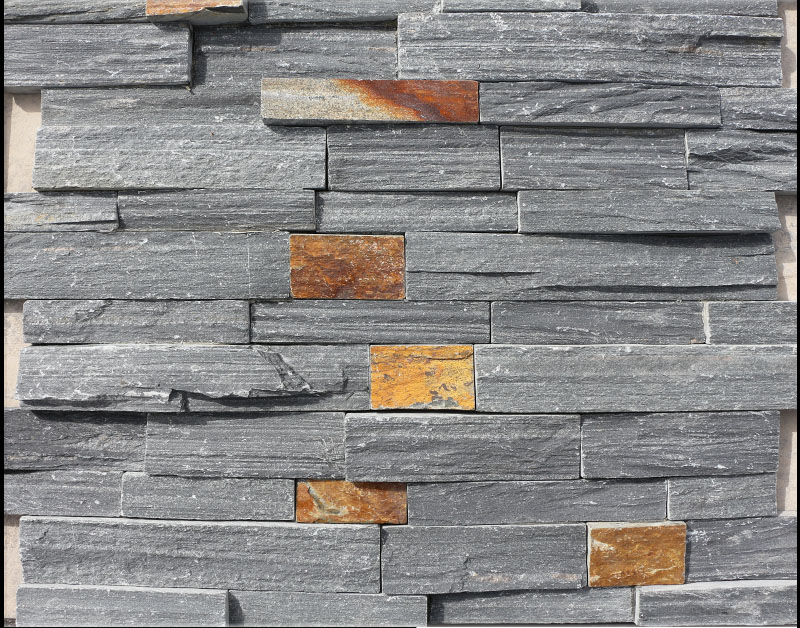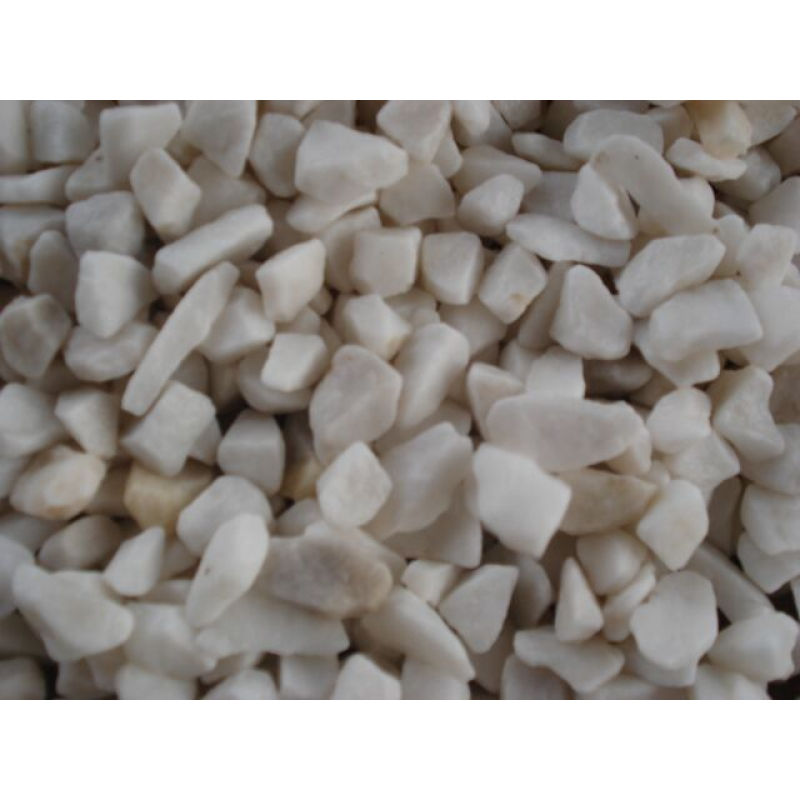
Ka mutu koe ki te whakaaro mo tena, ko te kohatu taiao te turanga o to tatou ao hou. Mai i nga whare e noho ana tatou, e mahi ana, e hokohoko ana ki te whenua e hikoi ana tatou, e peia ana, he uaua ki te whakaaro te noho me te kore o tenei rawa taiao.
Ko te haerenga e nga momo ahua o kohatu maori take from the depths of the earth and into the construction of homes, commercial buildings and roads is a fascinating one. Let us dive in and explore the origins of natural stone and how it’s made.
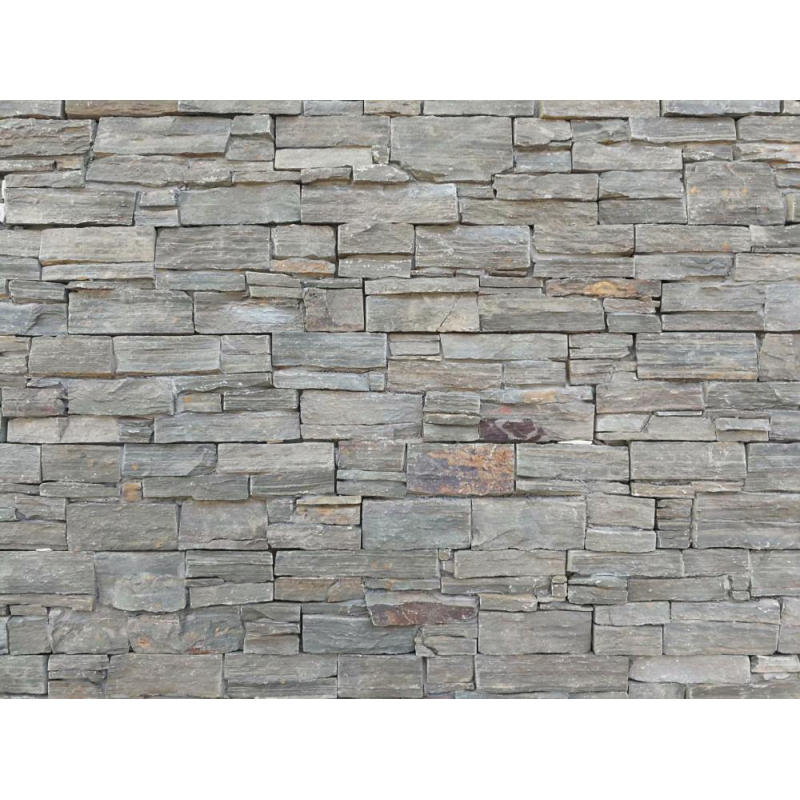
Ka taea te wehewehe i nga kohatu taiao e toru nga huarahi: Igneous, Sedimentary and Metamorphic.
Igneous rocks are the result of magma or lava solidifying and cooling, either beneath the earth’s surface or ejected from volcanoes and left to cool above-ground. Granite is the most common form of igneous stone but other kinds include basalt, dunite, rhyolite and gabbro.
Sedimentary rocks form through a combination of fragments from other rocks, along with the remains of plants, animals and other organic materials. These materials accumulate in deserts, oceans and lakes before they are compressed into their final form by the weight of the earth above them. Limestone is the most common sedimentary rock with siltstone, dolomite and shale comprising other variations.
Metamorphic rocks previously existed as igneous or sedimentary stones and were then transformed due to heat and pressure applied through exposure to magma, the weight of earth above them when buried deep underground, or a combination of both. Marble is the most famous stone of the metamorphic variety and quartzite, soapstone, gneiss and jade, among others, round out this fascinating category.
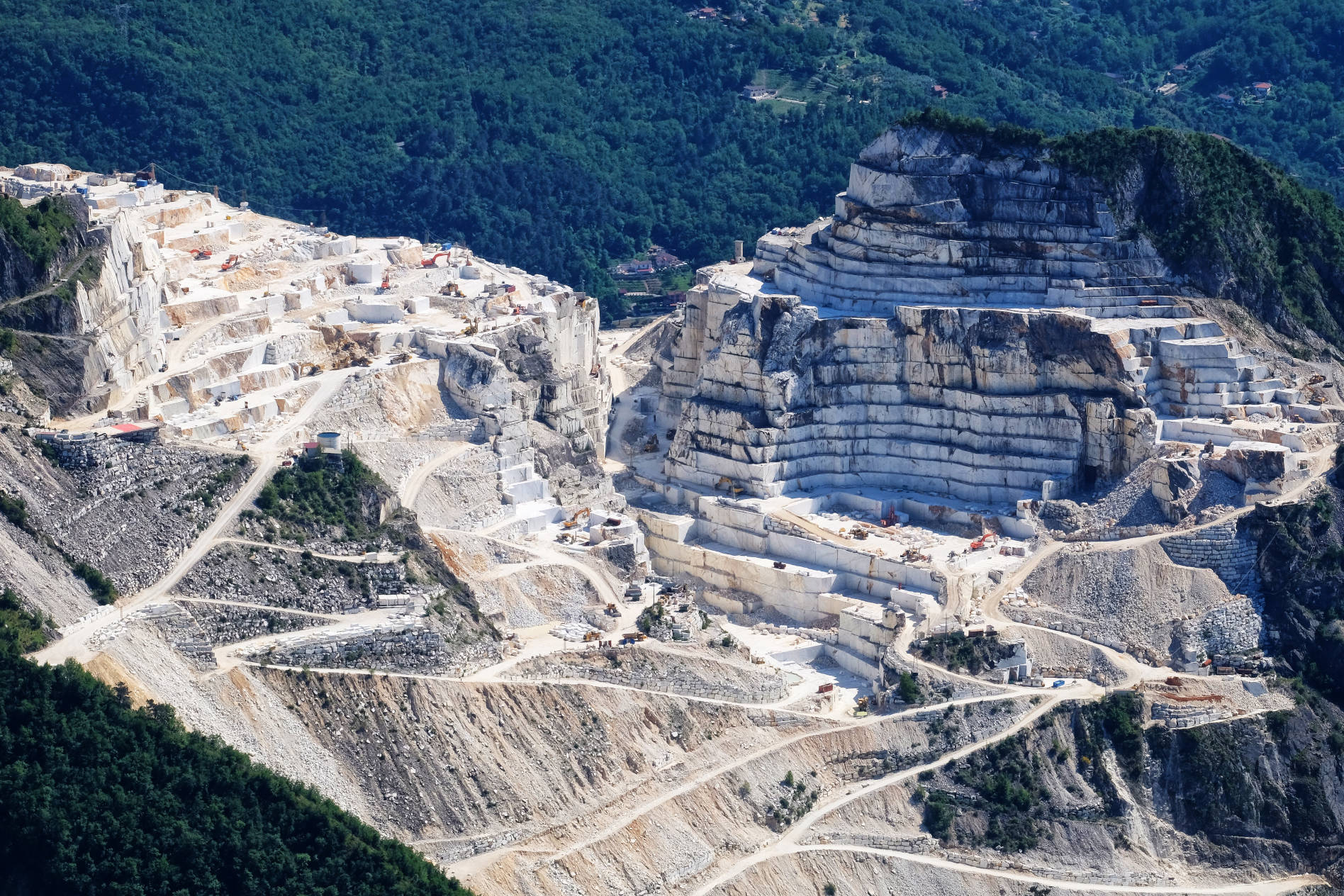
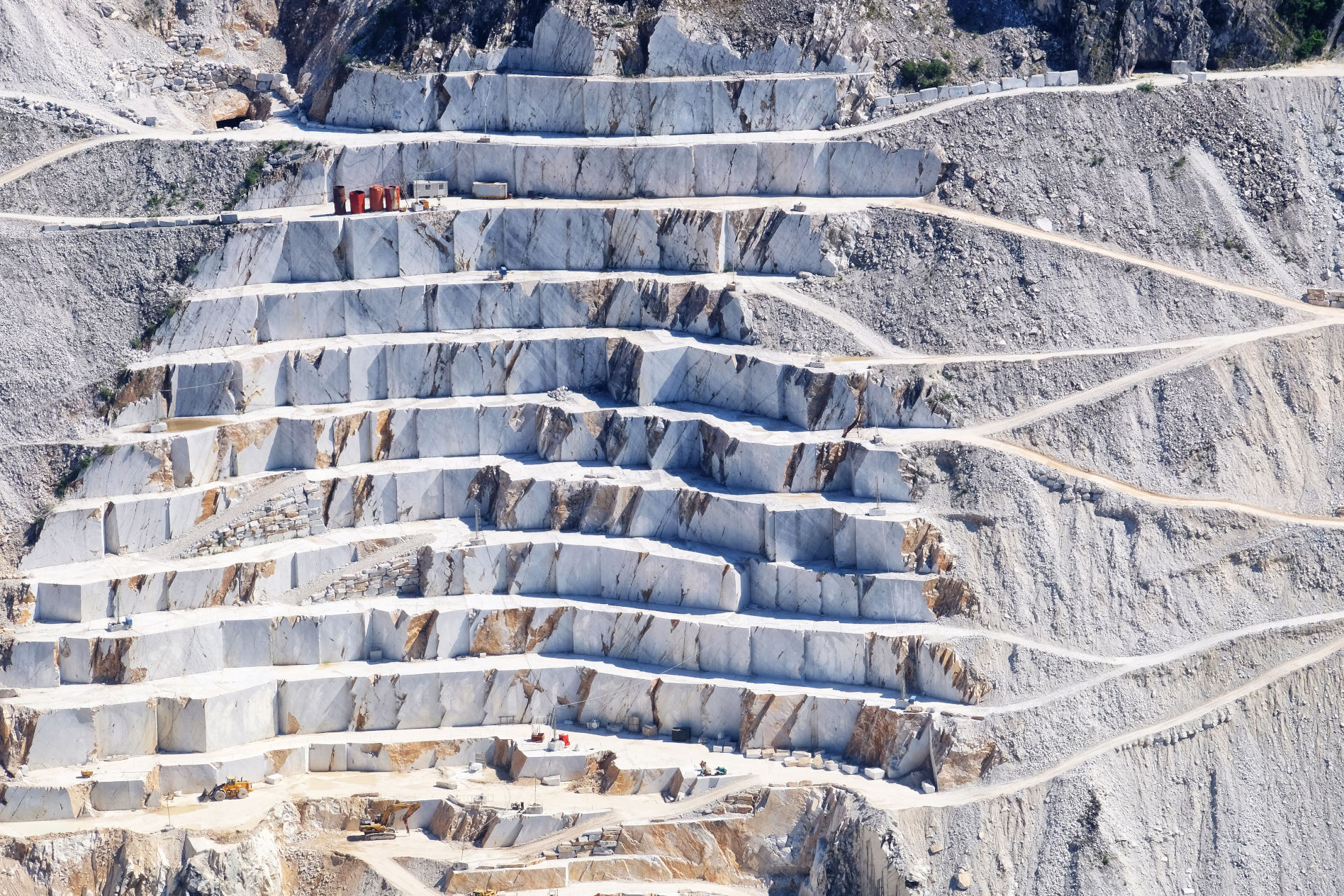
Marble Quarry i Tuscany
I muri i te tiaki a te natura i te mahi tuatahi ki te hanga i te kohatu, ko te mahi e whai ake nei mo te tango me te whakarite ano i te kohatu hei whakamahi ma nga ringaringa tangata i nga keri kohatu puta noa i te ao.
He whanui te mahi keri kohatu, me nga miihini kaha me nga kaimahi mohio. I mua i te pa ki te kohatu, he rarangi roa o nga mahi hei mahi.
Tuatahi, me kimi e te roopu o nga kai-taiao whenua nga toka kohatu ki tetahi keri ka taea te tirotiro. Whai muri, ka tangohia he tauira o te kowhatu ma te keri ki roto i te toka me nga parati keri taimana. Ka wetewetehia te tauira kia kitea mena kei a ia nga ahuatanga e hiahiatia ana hei hanga whare.
Ki te whakaaro he pai te kohatu ki te pire mo nga kaupapa hangahanga, ka timata te mahi roa me te maha o nga wa ki te whiwhi raihana tika me nga whakaaetanga mai i te kawanatanga o te rohe. I runga i te whenua me te kawanatanga, ka roa pea nga tau ka tae ki te otinga.
Kia tukuna te whakaaetanga whakamutunga, ka timata te mahi ki te whakakore i nga otaota, te paru me etahi atu arai ka kore e aukati i te mahi keri. Ka taapiri atu ki tenei uauatanga ko te maha o nga keri keri e takoto ana i nga waahi mamao me te kore e taea te uru atu, me hanga katoa nga rori me nga kauhanga i mua i te tiimata o te mahi tuturu.
Ko te huinga o nga kani taimana-waea, nga rama hiko teitei me nga pupuhi pupuhi i te wa ka whakamahia hei wehe i nga kohatu mai i te mata o te keri. Ko nga poraka nunui ka puta, ka eke ki te wha tekau tone te taumaha, ka haria atu ki tetahi whare mo te tapahi me te tukatuka.
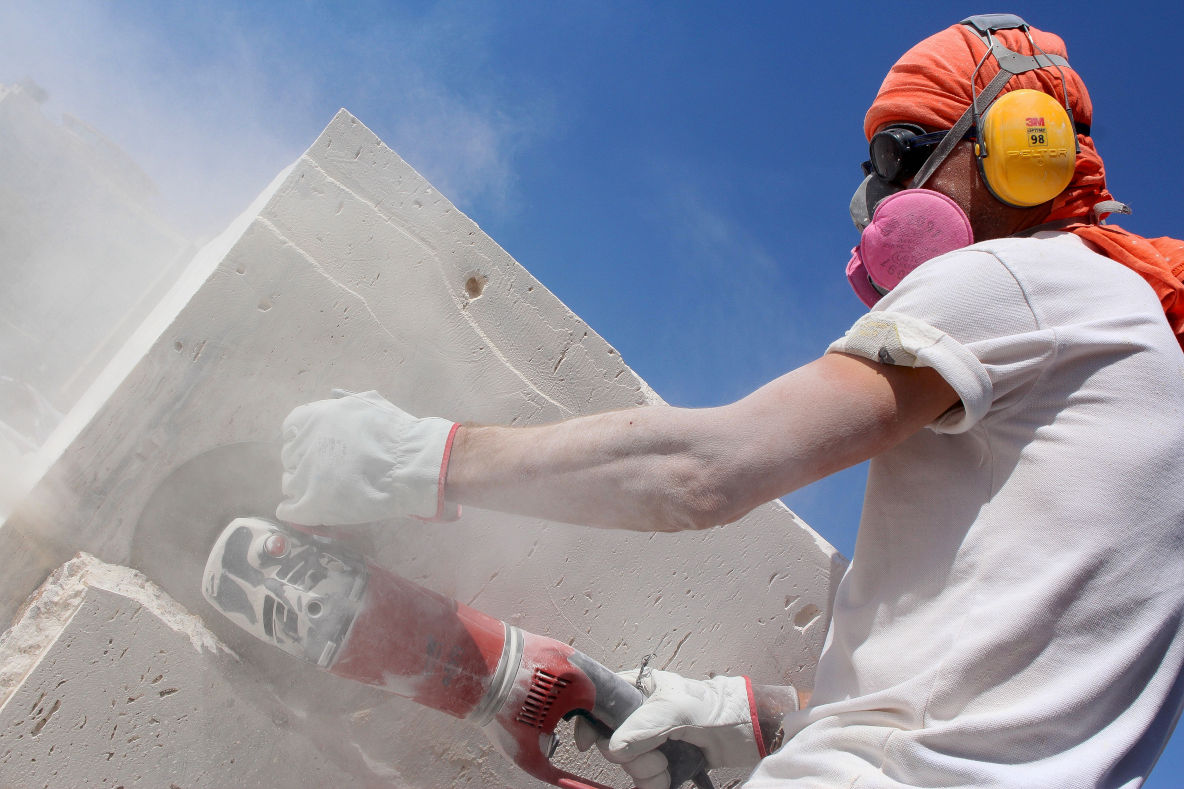
Kaimahi Keri Kohatu tapahi
I te waahi tukatuka, ka tapahia nga poraka kohatu ki roto i nga papaa e te tere tere o nga keepi ka tukuna ano te wai i te wa e tapahi ana hei whakaiti i te tukunga o te puehu. Ahakoa te tere o ta ratou mahi, ko te nuinga o nga ra e rua nga ra ka mutu te tapahi i tetahi poraka kohatu 20 tana te roa.
I muri mai, ka tukuna nga papa ki roto i te miihini whakakoi hei hoatu i te otinga e hiahiatia ana. Ko te whakakorikori te mea tino noa ki te whakakoi, ki te hiako me te paraihe etahi atu whiringa e whakarato ana i nga tohu kakano rereke ki te mata o te kohatu.
Now that the slabs are cut to the correct size and have the desired finish, the final stage in a natural stone’s journey into your home takes place at the fabricator’s facility. Here, the stone slabs are further cut to specification for each individual project which includes shaping of the edges into the detail required for installation.
Now that you know the incredible journey that natural stone takes from deep inside the earth and into your kitchen, I’m sure you’ll agree that it is certainly worth the wait. Thanks to advancements in the industry over the years and the demand that exists for natural stone of all kinds, you don’t actually have to sit around while your marble, quartzite or granite is quarried and processed.
 Awherika
  Albanian
  Amharic
  Arapi
Arapi  Arameina
  Azerbaijani
  Basque
  Belarusian
  Bengali
  Bosniana
  Bulgarian
  Katarana
  Cebuano
  Haina
Haina  Haina (Taiwan)
  Korihika
  Koroatiana
  Czech
Czech  Teniana
  Tatimana
  Ingarihi
  Esperanto
  Estonian
  Finnish
  Wīwī
Wīwī  Frisian
  Kariri
  Georgian
  Tiamana
  Kariki
  Gujarati
  Haiti Creole
  hausa
hausa  hawaii
  Hiperu
  Kao
Kao  Miao
Miao  Hungarian
  Tiorangi
  igbo
igbo  Initonia
  Irish
Irish  Itariana
  Hapanihi
  Hawaana
  Kannada
  Kazakh
  Khmer
Khmer  Rwandan
  Koreana
  Kurdish
  Kyrgyz
  TB
TB  Latina
  Latvian
  Lithuania
  Luxembourgish
  Makeronia
  Malgashi
  Malay
Malay  Malayalam
  Marite
  Maori
Maori  Mareti
  Mongolian
  Myanmar
  Nepali
  Norewai
  Norewai
  Occitan
  Pashto
  Pahia
Pahia  Porohia
  Potiti
  Punjabi
  Romanian
  Ruhia
Ruhia  Hamoa
Hamoa  Scottish Gaelic
  Serbian
  Ingarihi
  Shona
Shona  Sindhi
  Sinhala
  Slovak
  Slovenian
  Somali
  Paniora
  Hatana
  Swahili
  Huitene
  Tagalog
  Tajik
Tajik  Tamil
Tamil  Tatara
  Telugu
  Thai
Thai  Turiki
  Turkmen
  Iukereiniana
  Urdu
Urdu  Uighur
  Uzbek
Uzbek  Vietnamese
  Welsh
Welsh