Iyo uhagaritse kubitekerezaho, ibuye risanzwe rigize ishingiro ryimico yacu igezweho muburyo bunini. Kuva ku nyubako tubamo, dukora no guhaha kugeza hasi tugenda kandi tugenda, kubaho nta mutungo kamere wingenzi biragoye kubitekereza.
Urugendo uburyo butandukanye bwa ibuye risanzwe take from the depths of the earth and into the construction of homes, commercial buildings and roads is a fascinating one. Let us dive in and explore the origins of natural stone and how it’s made.
Ibuye risanzwe rishobora gushyirwa mubice bitatu: Igneous, Sedimentary na Metamorphic.
Igneous rocks are the result of magma or lava solidifying and cooling, either beneath the earth’s surface or ejected from volcanoes and left to cool above-ground. Granite is the most common form of igneous stone but other kinds include basalt, dunite, rhyolite and gabbro.
Sedimentary rocks form through a combination of fragments from other rocks, along with the remains of plants, animals and other organic materials. These materials accumulate in deserts, oceans and lakes before they are compressed into their final form by the weight of the earth above them. Limestone is the most common sedimentary rock with siltstone, dolomite and shale comprising other variations.
Metamorphic rocks previously existed as igneous or sedimentary stones and were then transformed due to heat and pressure applied through exposure to magma, the weight of earth above them when buried deep underground, or a combination of both. Marble is the most famous stone of the metamorphic variety and quartzite, soapstone, gneiss and jade, among others, round out this fascinating category.
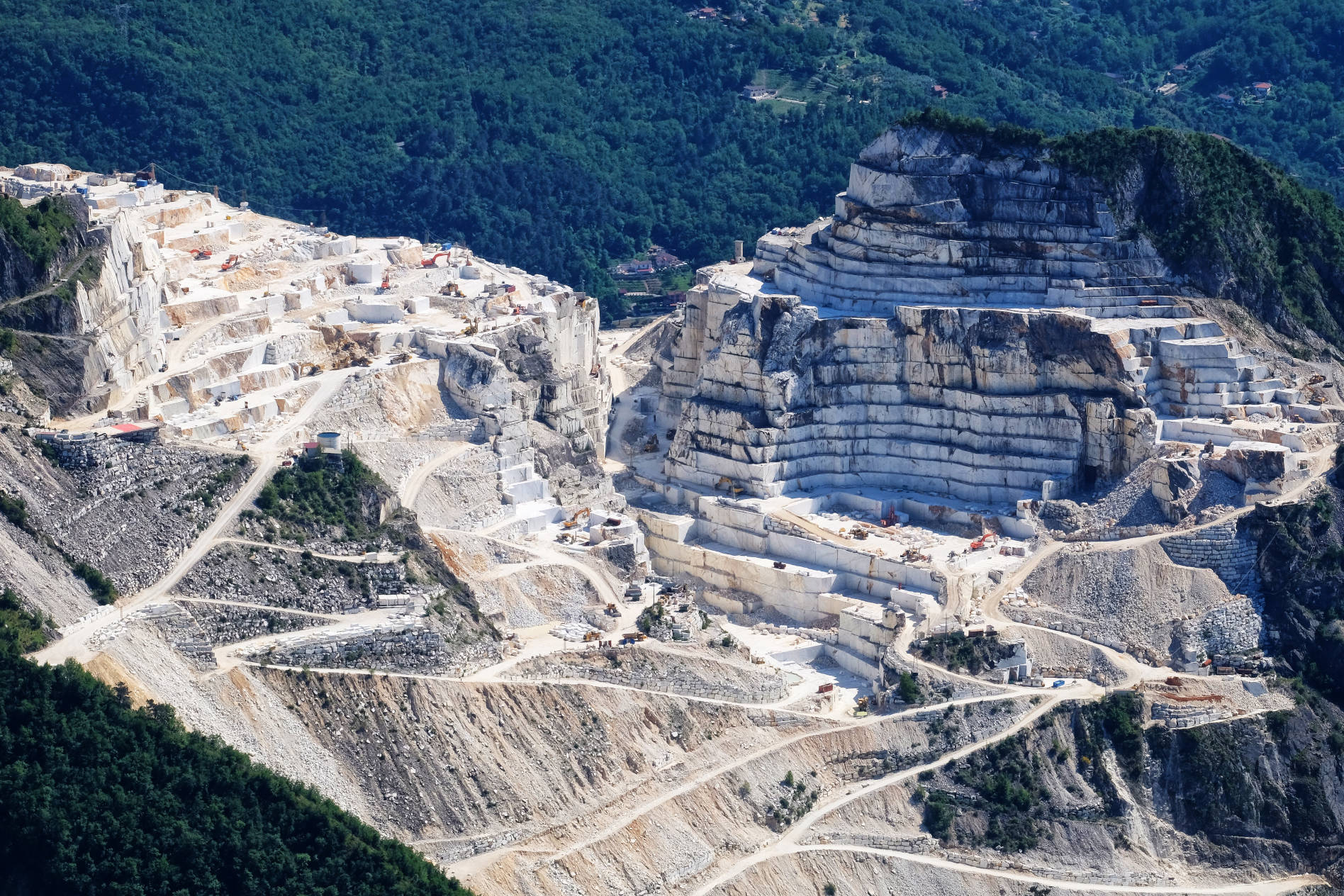
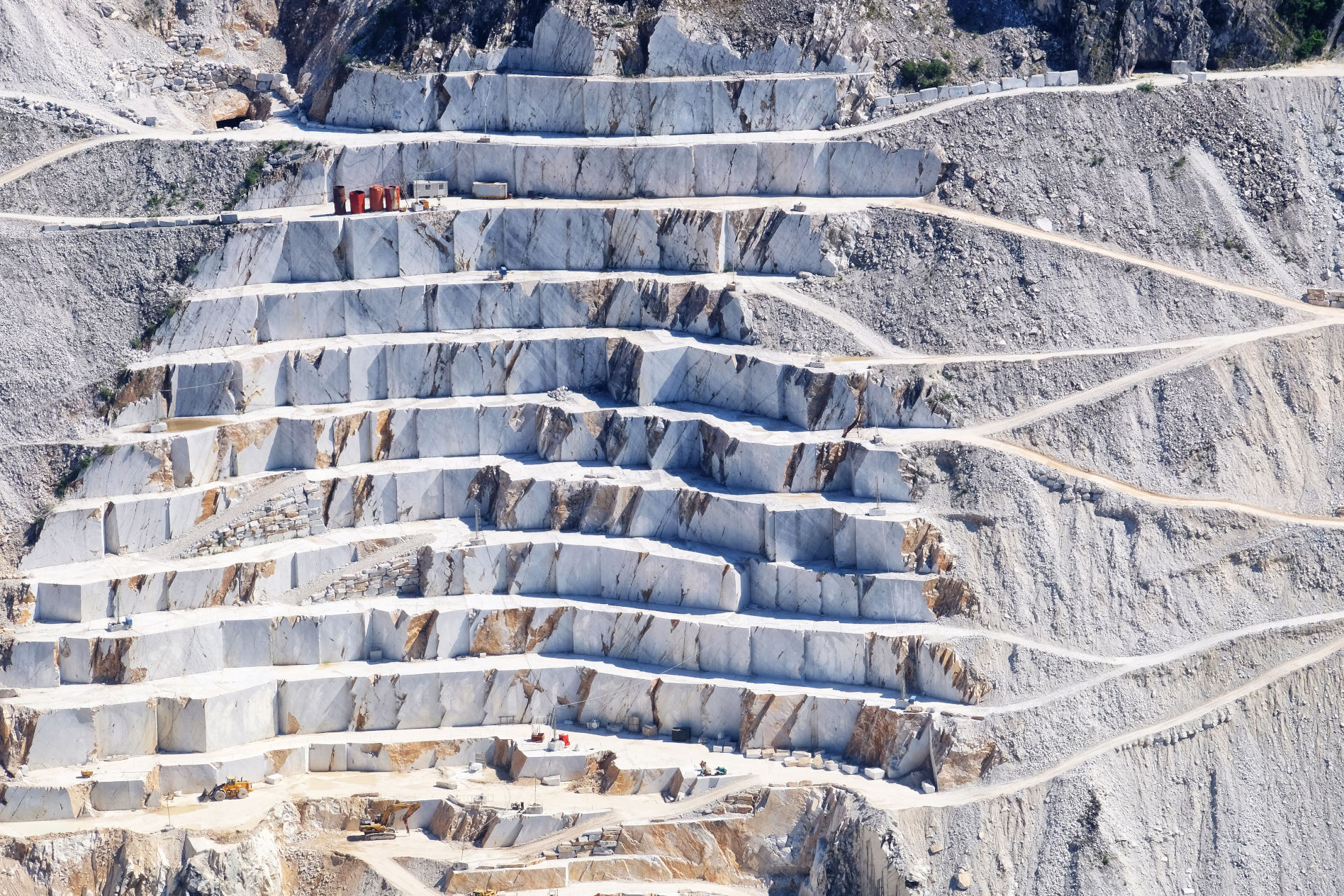
Marble Quarry muri Tuscany
Nyuma yuko ibidukikije byita ku ntambwe yambere mu gukora ibuye, intambwe ikurikira yo gukuraho no kongera gutegura ibuye kugirango ikoreshwe bikorwa n'amaboko y'abantu kuri kariyeri yamabuye kwisi yose.
Igikorwa cyo gucukura amabuye ni kinini kandi gisaba imashini zikomeye hamwe nabakozi ba kariyeri kabuhariwe. Mbere yuko ibuye rishobora no gukorwaho, hari urutonde rurerure rwibikorwa bigomba kubaho.
Ubwa mbere, itsinda ryaba geologiya rigomba gusanga amabuye kuri kariyeri ashobora gusuzumwa. Ibikurikira, icyitegererezo cyibuye gifatwa mugucukura urutare hamwe na bits ya diyama. Icyitegererezo noneho kirasesengurwa kugirango hamenyekane niba gifite ibimenyetso bifuza gukoreshwa nkibikoresho byubaka.
Dufate ko ibuye rihuye na fagitire igamije kubaka, inzira ndende kandi akenshi yashushanijwe yo kubona impushya zemewe n'impushya zitangwa n'inzego z'ibanze iratangira. Ukurikije igihugu na leta, ibi birashobora gufata imyaka kugirango birangire.
Icyemezo cya nyuma kimaze gutangwa, akazi gatangira gukuraho imyanda yose, umwanda nizindi nzitizi zose zabangamira inzira ya kariyeri. Kwiyongera kuriyi ngorane nukuri ko kariyeri nyinshi ziryamye ahantu hitaruye kandi zitagerwaho, bisaba ko imihanda yose hamwe na tunel byubakwa mbere yuko imirimo nyayo itangira.
Ikomatanyirizo ryibiti bya diyama, itara rifite ingufu nyinshi hamwe nigihe cyo guturika biturika bikoreshwa mugutandukanya amabuye mumaso ya kariyeri. Inzitizi nini zavuyemo, akenshi zipima hejuru ya toni mirongo ine, noneho zijyanwa mu kigo kugirango gikorwe kandi gitunganywe.
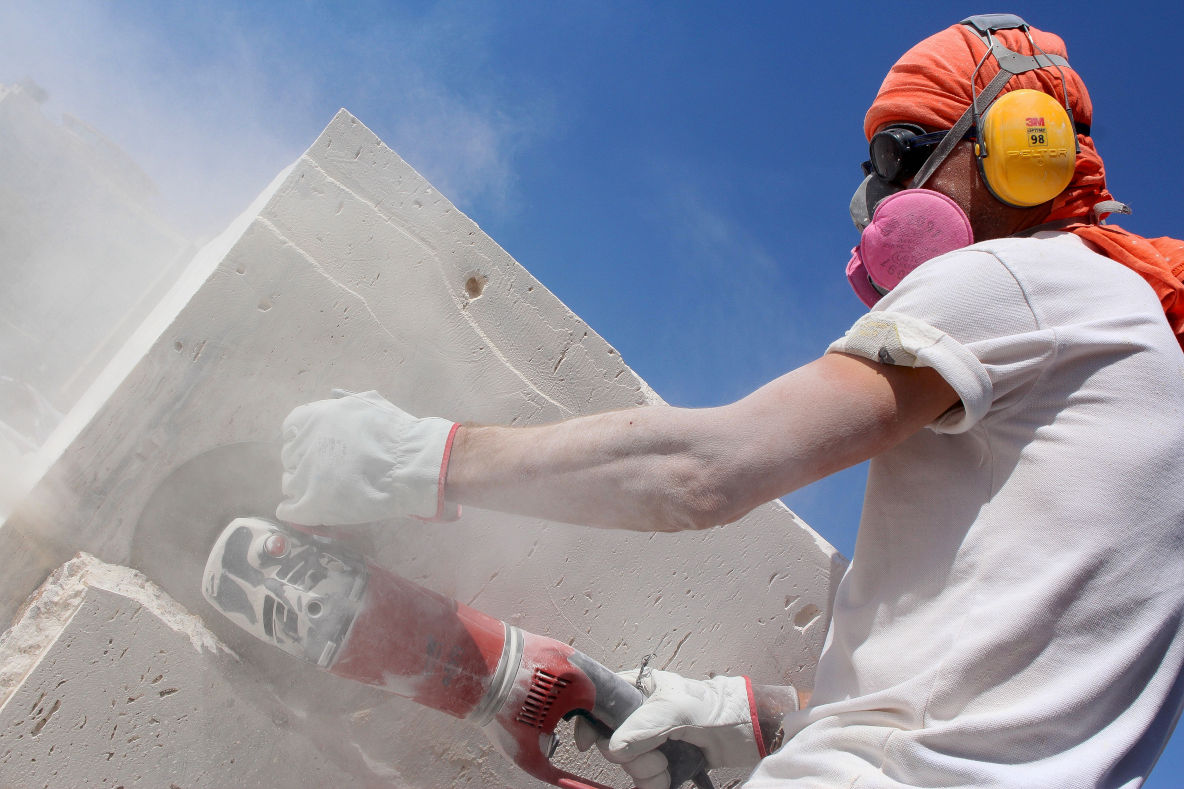
Umukozi wa Quarry Gukata Ibuye
Mu kigo gitunganyirizwamo, amabuye ahita acibwa mu bisate n’udutsiko twihuta tw’agatsiko na two turekura amazi mu gihe tugabanya kugabanya imyanda. Nubwo umuvuduko bakoramo, udutsiko twagatsiko dusanzwe dufata iminsi ibiri kugirango turangize guca toni 20 yamabuye.
Ibikurikira, ibisate byoherejwe binyuze mumashini isya kugirango itange icyifuzo. Isukuye nikisanzwe kirangizwa hamwe nicyubahiro, uruhu kandi rwogejwe nubundi buryo butanga impamyabumenyi zitandukanye zitandukanye hejuru yibuye.
Now that the slabs are cut to the correct size and have the desired finish, the final stage in a natural stone’s journey into your home takes place at the fabricator’s facility. Here, the stone slabs are further cut to specification for each individual project which includes shaping of the edges into the detail required for installation.
Now that you know the incredible journey that natural stone takes from deep inside the earth and into your kitchen, I’m sure you’ll agree that it is certainly worth the wait. Thanks to advancements in the industry over the years and the demand that exists for natural stone of all kinds, you don’t actually have to sit around while your marble, quartzite or granite is quarried and processed.
 Umunyafurika
  Ikinyalubaniya
  Amharic
  Icyarabu
  Ikinyarumeniya
  Azaribayijan
  Basque
  Biyelorusiya
  Ikibengali
  Bosiniya
  Buligariya
  Igikatalani
  Cebuano
  Ubushinwa
  Ubushinwa (Tayiwani)
  Corsican
  Igikorowasiya
  Ceki
Ceki  Danemark
  Ikidage
  Icyongereza
  Esperanto
  Esitoniya
  Igifinilande
  Igifaransa
  Igifaransa
  Abagalatiya
  Jeworujiya
  Ikidage
  Ikigereki
  Gujarati
  Igikerewole
  hausa
hausa  hawaiian
  Igiheburayo
  Oya
Oya  Miao
Miao  Hongiriya
  Isilande
  igbo
igbo  Indoneziya
  irish
irish  Umutaliyani
  Ikiyapani
  Javanese
  Kannada
  kazakh
  Khmer
Khmer  Rwanda
  Igikoreya
  Kurdish
  Kirigizisitani
  Igituntu
  Ikilatini
  Ikilatini
  Lituwaniya
  Luxembourgish
  Abanyamakedoniya
  Malgashi
  Malayika
  Malayalam
  Maltese
  Maori
Maori  Marathi
  Mongoliya
  Miyanimari
  Nepali
  Noruveje
  Noruveje
  Occitan
  Pashto
  Persian
  Igipolonye
  Igiporutugali
  Punjabi
  Ikinyarumaniya
  Ikirusiya
  Samoan
  Abanya-Gaelic
  Igiseribiya
  Icyongereza
  Shona
Shona  Sindhi
  Sinhala
  Igisilovakiya
  Igisiloveniya
  Somaliya
  Icyesipanyoli
  Sundanese
  Igiswahiri
  Igisuwede
  Tagalog
  Tajik
Tajik  Tamil
Tamil  Tatar
Tatar  Telugu
  Tayilande
  Turukiya
  Abanyaturukiya
  Ukraine
  Urdu
Urdu  Uighur
  Uzbek
Uzbek  Abanya Vietnam
  Welsh
Welsh