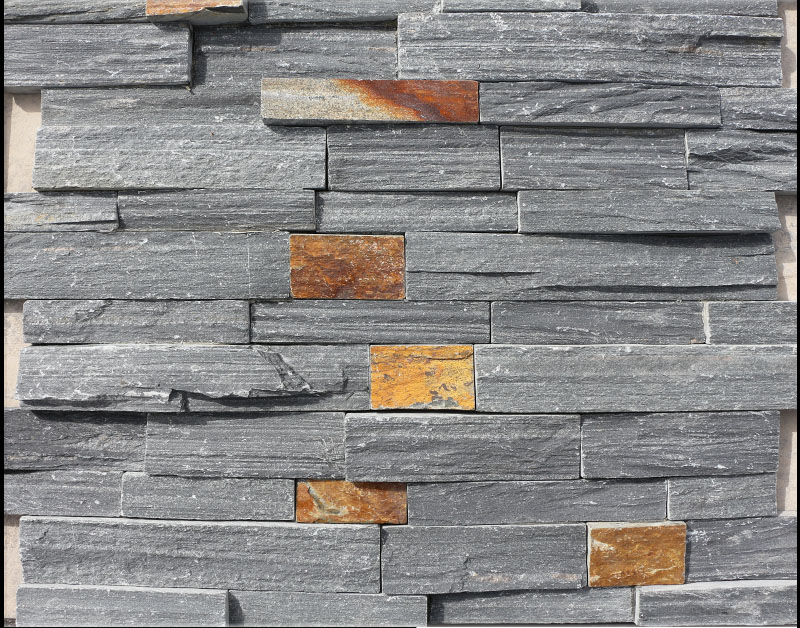
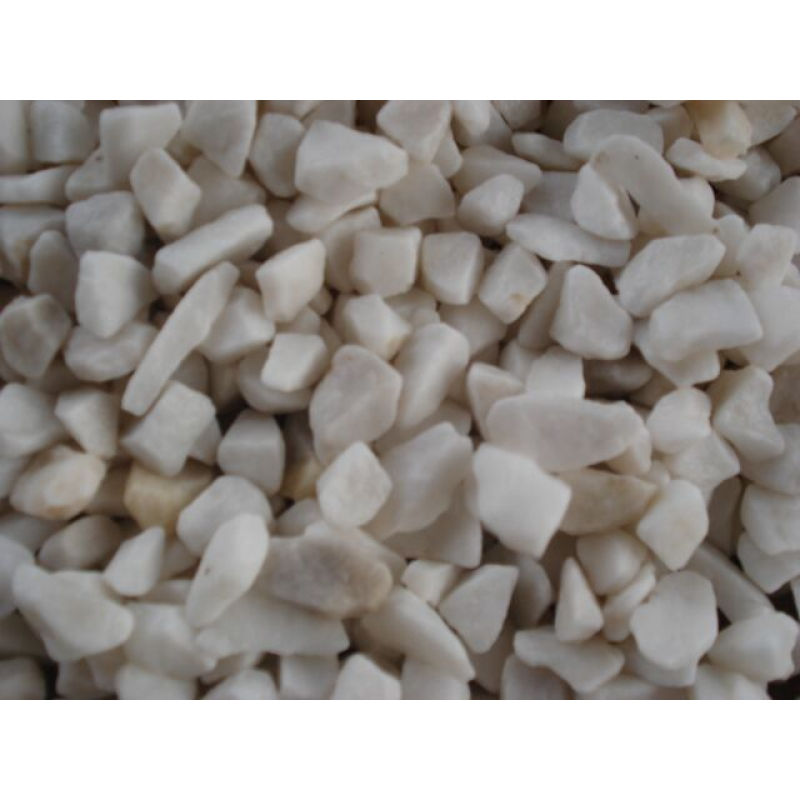
This DIY article; and the rest of the how-to section of my blog, cover most of the basics of how to properly build a flagstone patio. These articles provide general guidance, or at least advice, useful for hobbyists, DIY landscape designers/builders, and professional builders alike. So, what type of foundation should we build for our flagstone patio: sand, cement, or gravel? Short answer: It depends. Quarry screening (if one is available in your area) is usually best done under flagstone. Screening is also one of the best options among gemstones, but there are other options available to achieve different aesthetics. First, we'll address the structural question of "what to use under the slab." Cement - at some point it (may) break. It may last a long time, but when it does break down, fixing it will be a lot more work than repairing dry slate. Sand – ants will dig it up and leave it everywhere…sand can also be washed away, causing rocks to settle. Gravel – There’s really no problem here, just use the right type of gravel. Even better, use modified gravel as a base and then stone powder (aka quarry screening, aka grit, aka quarry dust) as the final leveling agent. Okay, so let's be more specific.
The cement (may) crack. Especially grade cement. Especially in a winter climate like ours here in Pennsylvania. A worse method is to lay the slabs on a bed of gravel and then cement the joints between the stones. Terrible idea. The gravel base is elastic and will move slightly during freezing and thawing. Well, if the foundation is not done well, the movement may be more slight, but let's assume the foundation is done well. The gravel base definitely moves around a bit - you would never know it looking at any of my patios, but the movement does happen. Cement is rigid - if you put a rigid top on a flexible base, systematic cracking is inevitable. If the flagstone happens to be sitting on a concrete foundation, then cement is certainly a good joint-filling material. But why on earth would you want a concrete foundation? The concrete itself will eventually crack. In northern climates, it could rupture within a decade - and the likelihood of rupture within the next three years is also quite high. The environmental impact of concrete production is no small issue either. I personally prefer dry stone work anyway. More harmonious, warmer, just better. In my opinion, the feel you get from a well done dry laid flagstone patio is better than a cement flagstone patio. my thoughts. A cement-lined flagstone patio can certainly look great and last a long time. I've built a lot of things that look great - years later. But if there is cement between the joints, it is better to have a concrete foundation. I was serious. Sand...well, if you use really heavy sand, you might get away with it. However, most sand sold in packages is too fine. Of course, you can use coarse sand under the flagstone. When I used to build brick patios, I would alternate between using coarse sand or a quarry screen, which worked fine. Their patio still looks great. However, these are brick patios, and the spaces between the paving units are about a quarter-inch wide. The problem with sand is that it gets washed away by water, blown away by wind, and carried away by ants. That's why stone dust (aka screen, aka decomposed granite) works better than sand for underneath flagstone. Not as nice as my flagstone patio though! The problem with using uniform sand under flagstone is that the bricks are of uniform thickness. So it's not too much trouble to get your gravel base nearly perfect and then proceed to dig out an inch of sand for your bricks to sit on. With flagstone, however, the thickness varies too much—one stone may need half an inch of sand, while another needs 2 inches of sand. If you are using sand then changes in thickness can cause problems. Screening is almost the same as modified gravel - they are really one of the two components of modified gravel... they are heavy enough that using 2 inches on one stone and half an inch on the other is really no problem - ten Years later, that patio still looks sharp.
Occasionally I see paver patios cluttered with ants. However, ants will always attack a flagstone patio laid in sand. I imagine this is because the joints of the slabs will inevitably be wider and/or because the slabs are of different thicknesses, meaning that in some places you will end up with deeper sand. Regardless of the exact cause, I can tell you that every flagstone patio I've ever seen laid in sand eventually became infested with ants. Another reason to use screen is that screen is also an excellent caulking material. You don’t want to use sand, even coarse sand, between the joints of your flagstones because it will wash away—unless, of course, your flagstones are very tight. For pattern cut flagstone, yes you can use sand as a joint filler. Just make sure the base is coarse sand, not fine sand. However, since the seams are too tight, you will need to use fine sand. Again, ants love fine sand - but in this application, pattern cut stone, tiny seams - fine sand wouldn't be the end of the world - as long as the base is of course. This applies to pattern cut slate - or any slate with very tight joints - in which case you may be able to go without sand as long as you follow the guidelines I set earlier in this paragraph. For irregular slate, or any slate with joints wider than a quarter-inch, you really should try to avoid sand and use stone dust instead.
Your own native soil – If your own native subsoil is made up of about 20-40% clay, with the rest mostly sand and gravel, then that soil is fine. And for ten years without any interruption. Then you already have a good solid base 🙂 You could definitely take the clay out of your subsoil, work out how much sand and gravel it already contains, then calculate how much gravel you should add, and then get some gravel from elsewhere nearby. What I'm talking about here is using in situ materials to try to mimic the performance characteristics of a road base and/or create a gravel core soil mix that is well drained, compacted, and stable. This type of work is still in the R&D stage for me. More on this as the research progresses. Suffice to say, yes, it can be done, but it's a bit complicated and beyond the scope of this article.
Tagasi maskeerimise juurde – kui kasutate plaatide vahel tasandus- ja tihendusmaski, loote hea stseeni. Kui kivi all oleva ekraaniga on mingeid väiksemaid probleeme, ei tohiks see olla liiga kriitiline, kuna pahtel settib ja täidab plaadi all olevad tühimikud. Seal on linastused üles ja alla ning efekt on väga hea. Võite eeldada, et saate ühe näituse lõpetada esimese aasta jooksul – väike osa settib või uhutakse minema. Pole probleemi, lihtsalt pühkige sisse mõni uus materjal. Pärast seda on teil järgmised paar aastat kõik korras. Minu parim nõuanne on, et kliendid palkaksid mind korra aastas paar tundi hooldust tegema – see pole kindlasti vajalik, aga mulle meeldib, kui mu töö särab. Tõepoolest. Vaata, mida mu varasemad kliendid minu töö kohta ütlevad. Üks asi, mida ma selles artiklis ei käsitlenud, on polümeerliiv. Kui olete polüsandi vastu uudishimulik, juhin teid nüüd teisele hardscape-juhiste ajaveebi postitusele. Kui olete uudishimulik, siis see on. Peaksin ilmselt ka lisama, et ülaltoodud süsteemi kasutades pole mul kunagi ühtegi kiviterrassi ebaõnnestunud. Olgu, võib-olla kivil on veidi settimist - selle saab mõne minutiga parandada (mida juhtub harva), kuid suuri probleeme ei teki. Olen ka seda mõnda aega teinud. Oma suurimal kiviterrassil soovitan tavaliselt 3-tunnist hooldusseanssi iga paari aasta tagant. See hoiab terrassi optimaalses vormis. Olen väga valiv ja tahan, et mu töö näeks alati täiuslik välja. Sageli naasen aastate pärast kliendi majja ja see on endiselt ideaalses korras. Hooldus puudub! Tavaliselt peaks terrass pälvima 5 või 10 aasta jooksul tähelepanu.
 Aafrika
  albaanlane
  amhari
  araabia keel
  armeenlane
  Aserbaidžaan
  baski keel
  valgevenelane
  bengali
  bosnia keel
  bulgaaria keel
  katalaani
  Cebuano
  Hiina
Hiina  Hiina (Taiwan)
  Korsika
  Horvaatia
  tšehhi
  taani keel
  hollandi keel
  Inglise
  esperanto
  eesti keel
  soome keel
  prantsuse keel
  friisi keel
  Galicia
  Gruusia keel
  saksa keel
  kreeka keel
  gudžarati
  Haiti kreool
  hausa
hausa  havai
havai  heebrea keel
  Ei
Ei  Miao
Miao  ungari
  islandi
  igbo
igbo  Indoneesia
  iirlane
  itaalia keel
  Jaapani
  jaava keel
  kannada
  kasahhi
  khmeerid
  Rwanda
  korea keel
  kurdi
kurdi  kirgiisi
  TB
TB  ladina keel
  lätlane
  Leedu
Leedu  Luksemburgi keel
  makedoonlane
  Malgashi
  malai
malai  malajalami
  malta keel
  maoorid
  marati
  mongoli keel
  Myanmar
  Nepali
  norra keel
  norra keel
  oksitaan
  puštu
puštu  pärslane
  poola keel
  portugali keel
  pandžabi
  rumeenlane
  vene keel
  Samoa
Samoa  šoti gaeli keel
  serblane
  Inglise
  Shona
Shona  Sindhi
  singali keel
  slovaki
  Sloveenia
  Somaalia
  hispaania keel
  sundalane
  suahiili keel
  rootsi keel
  tagalog
  tadžiki
  tamili keel
  tatarlane
  telugu
  Tai
Tai  türgi keel
  türkmeen
  ukrainlane
  urdu
urdu  uiguurid
  usbeki
  vietnamlane
  kõmri
kõmri