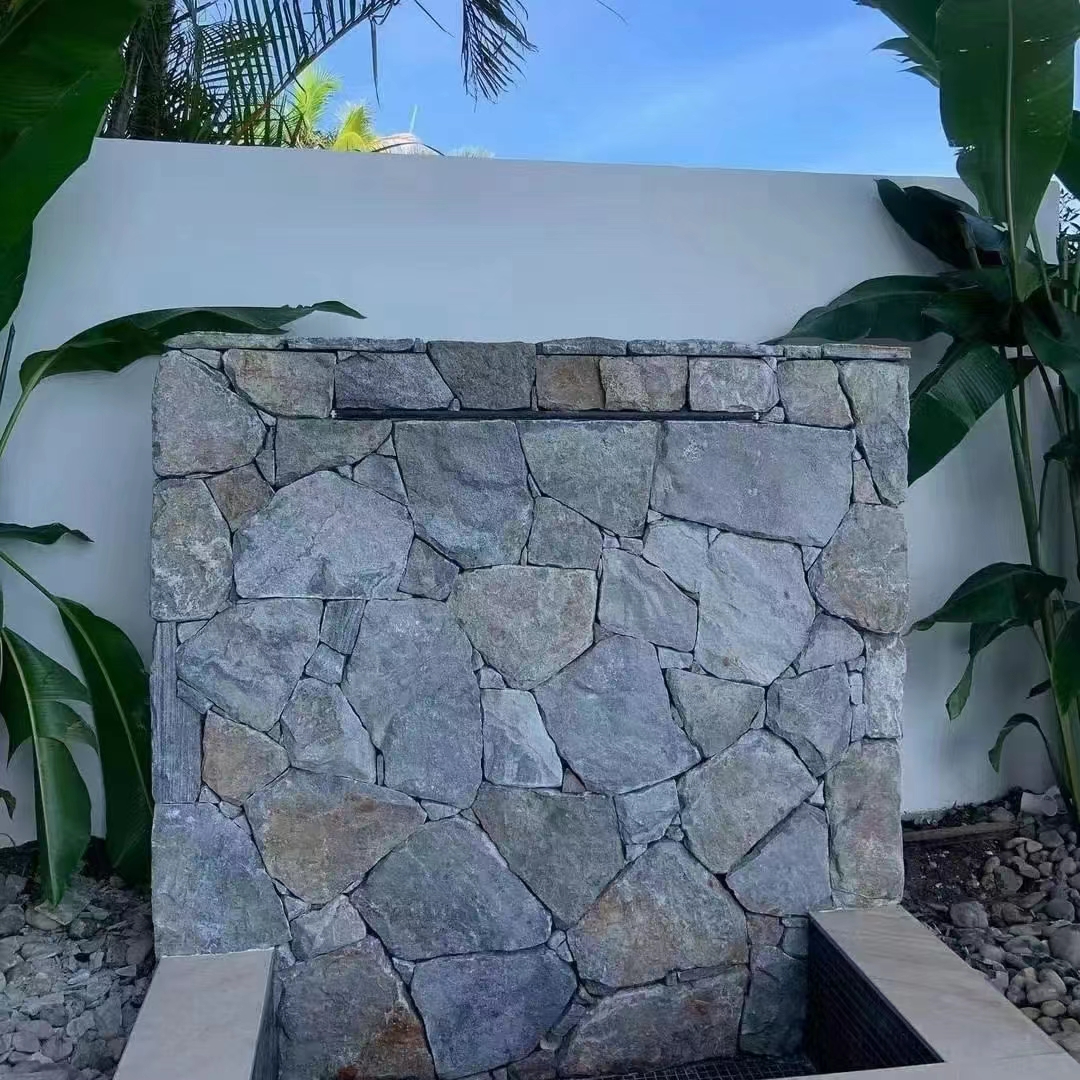
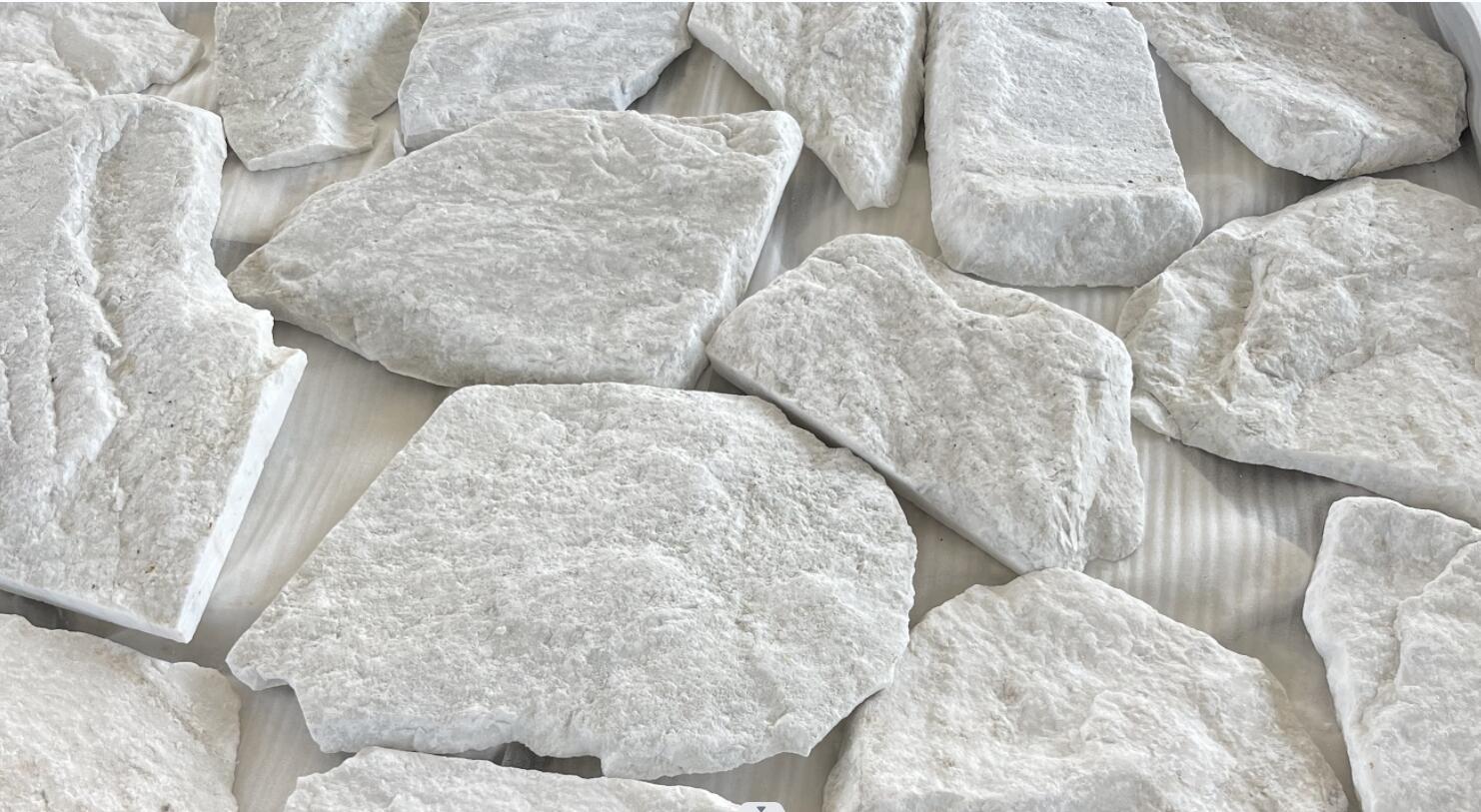
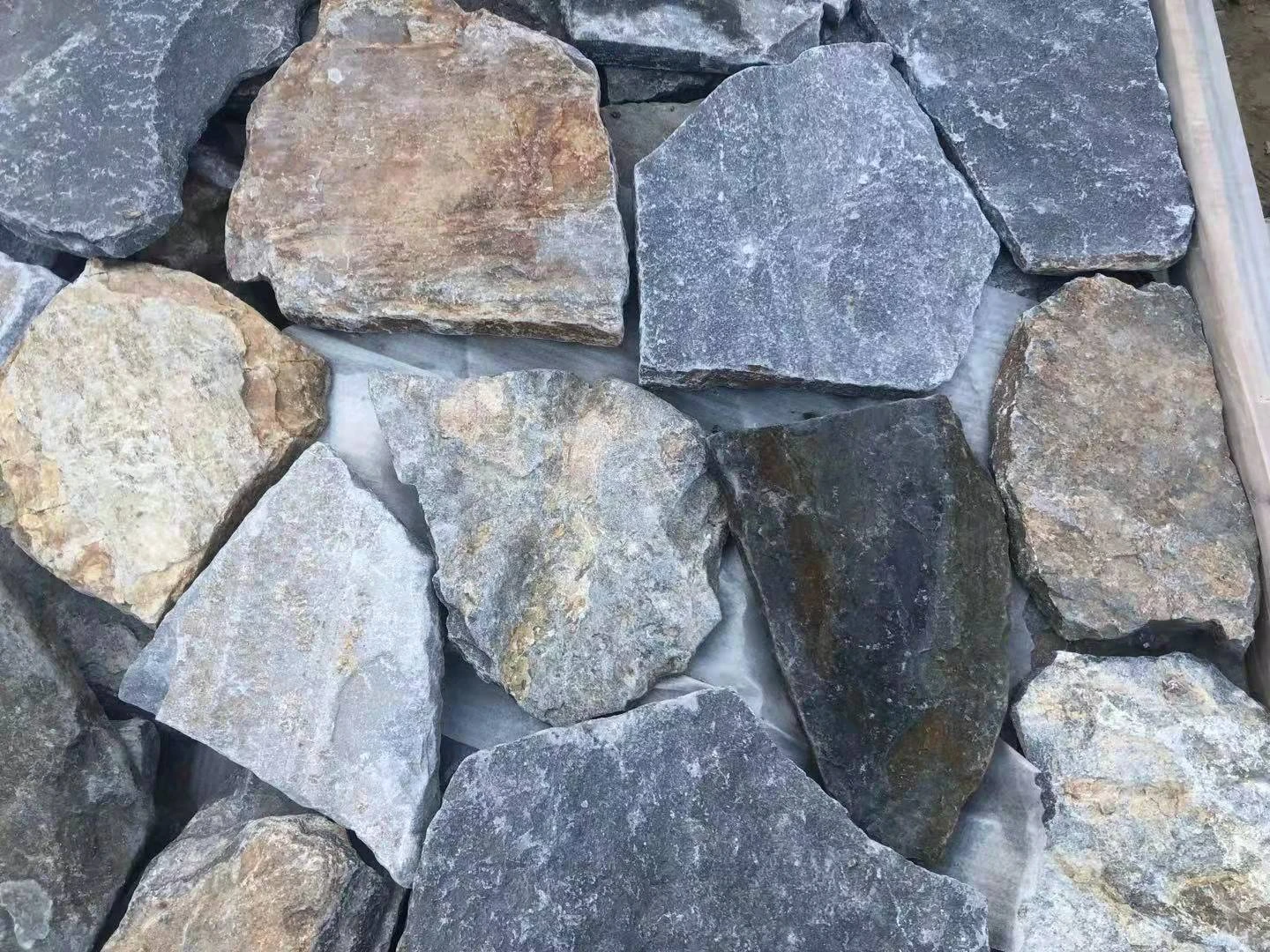
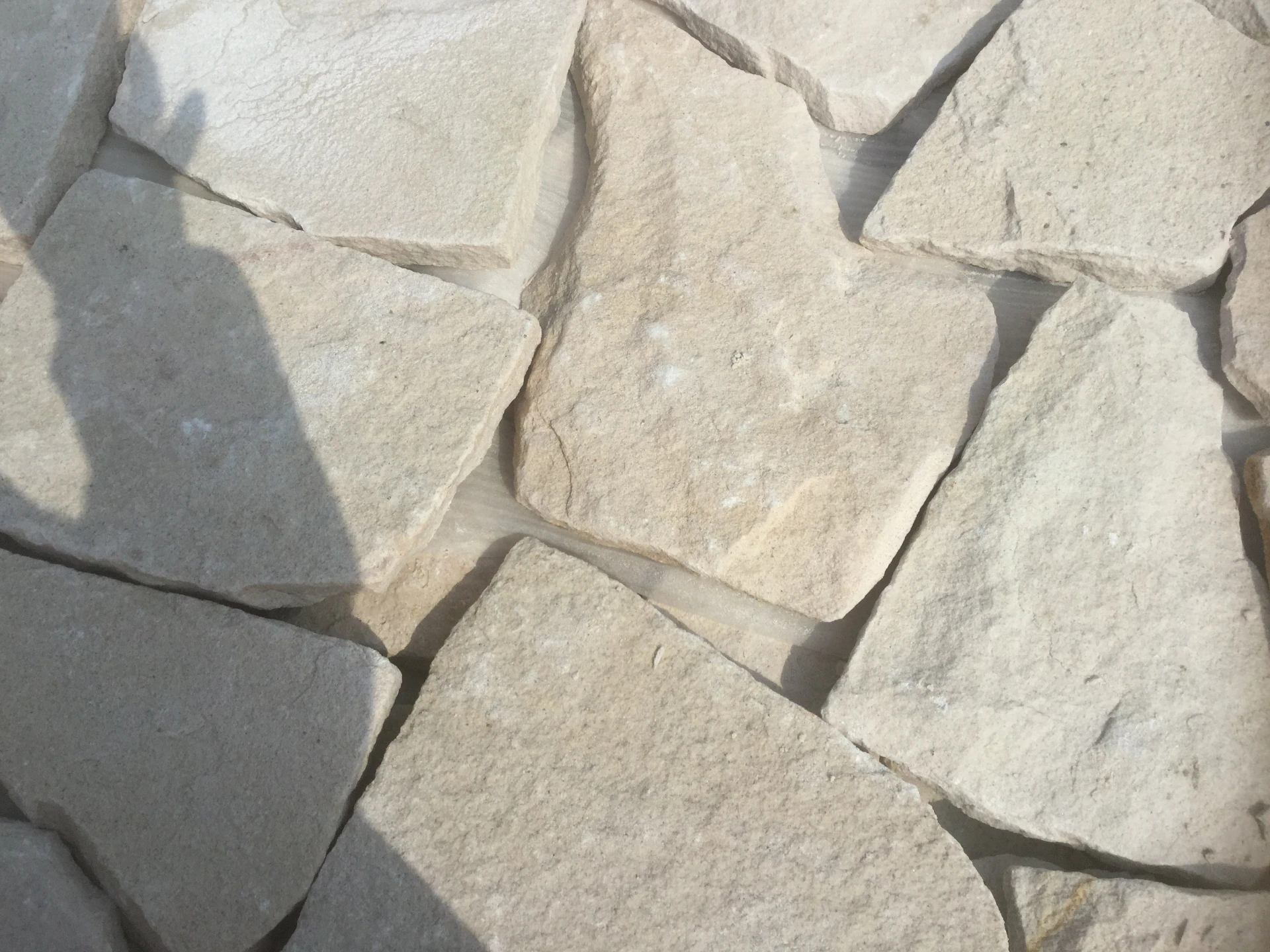
This DIY article; and the rest of the how-to section of my blog, cover most of the basics of how to properly build a flagstone patio. These articles provide general guidance, or at least advice, useful for hobbyists, DIY landscape designers/builders, and professional builders alike. So, what type of foundation should we build for our flagstone patio: sand, cement, or gravel? Short answer: It depends. Quarry screening (if one is available in your area) is usually best done under flagstone. Screening is also one of the best options among gemstones, but there are other options available to achieve different aesthetics. First, we'll address the structural question of "what to use under the slab." Cement - at some point it (may) break. It may last a long time, but when it does break down, fixing it will be a lot more work than repairing dry slate. Sand – ants will dig it up and leave it everywhere…sand can also be washed away, causing rocks to settle. Gravel – There’s really no problem here, just use the right type of gravel. Even better, use modified gravel as a base and then stone powder (aka quarry screening, aka grit, aka quarry dust) as the final leveling agent. Okay, so let's be more specific.
The cement (may) crack. Especially grade cement. Especially in a winter climate like ours here in Pennsylvania. A worse method is to lay the slabs on a bed of gravel and then cement the joints between the stones. Terrible idea. The gravel base is elastic and will move slightly during freezing and thawing. Well, if the foundation is not done well, the movement may be more slight, but let's assume the foundation is done well. The gravel base definitely moves around a bit - you would never know it looking at any of my patios, but the movement does happen. Cement is rigid - if you put a rigid top on a flexible base, systematic cracking is inevitable. If the flagstone happens to be sitting on a concrete foundation, then cement is certainly a good joint-filling material. But why on earth would you want a concrete foundation? The concrete itself will eventually crack. In northern climates, it could rupture within a decade - and the likelihood of rupture within the next three years is also quite high. The environmental impact of concrete production is no small issue either. I personally prefer dry stone work anyway. More harmonious, warmer, just better. In my opinion, the feel you get from a well done dry laid flagstone patio is better than a cement flagstone patio. my thoughts. A cement-lined flagstone patio can certainly look great and last a long time. I've built a lot of things that look great - years later. But if there is cement between the joints, it is better to have a concrete foundation. I was serious. Sand...well, if you use really heavy sand, you might get away with it. However, most sand sold in packages is too fine. Of course, you can use coarse sand under the flagstone. When I used to build brick patios, I would alternate between using coarse sand or a quarry screen, which worked fine. Their patio still looks great. However, these are brick patios, and the spaces between the paving units are about a quarter-inch wide. The problem with sand is that it gets washed away by water, blown away by wind, and carried away by ants. That's why stone dust (aka screen, aka decomposed granite) works better than sand for underneath flagstone. Not as nice as my flagstone patio though! The problem with using uniform sand under flagstone is that the bricks are of uniform thickness. So it's not too much trouble to get your gravel base nearly perfect and then proceed to dig out an inch of sand for your bricks to sit on. With flagstone, however, the thickness varies too much—one stone may need half an inch of sand, while another needs 2 inches of sand. If you are using sand then changes in thickness can cause problems. Screening is almost the same as modified gravel - they are really one of the two components of modified gravel... they are heavy enough that using 2 inches on one stone and half an inch on the other is really no problem - ten Years later, that patio still looks sharp.
Occasionally I see paver patios cluttered with ants. However, ants will always attack a flagstone patio laid in sand. I imagine this is because the joints of the slabs will inevitably be wider and/or because the slabs are of different thicknesses, meaning that in some places you will end up with deeper sand. Regardless of the exact cause, I can tell you that every flagstone patio I've ever seen laid in sand eventually became infested with ants. Another reason to use screen is that screen is also an excellent caulking material. You don’t want to use sand, even coarse sand, between the joints of your flagstones because it will wash away—unless, of course, your flagstones are very tight. For pattern cut flagstone, yes you can use sand as a joint filler. Just make sure the base is coarse sand, not fine sand. However, since the seams are too tight, you will need to use fine sand. Again, ants love fine sand - but in this application, pattern cut stone, tiny seams - fine sand wouldn't be the end of the world - as long as the base is of course. This applies to pattern cut slate - or any slate with very tight joints - in which case you may be able to go without sand as long as you follow the guidelines I set earlier in this paragraph. For irregular slate, or any slate with joints wider than a quarter-inch, you really should try to avoid sand and use stone dust instead.
Your own native soil – If your own native subsoil is made up of about 20-40% clay, with the rest mostly sand and gravel, then that soil is fine. And for ten years without any interruption. Then you already have a good solid base 🙂 You could definitely take the clay out of your subsoil, work out how much sand and gravel it already contains, then calculate how much gravel you should add, and then get some gravel from elsewhere nearby. What I'm talking about here is using in situ materials to try to mimic the performance characteristics of a road base and/or create a gravel core soil mix that is well drained, compacted, and stable. This type of work is still in the R&D stage for me. More on this as the research progresses. Suffice to say, yes, it can be done, but it's a bit complicated and beyond the scope of this article.
Maskelemeye geri dönelim; levhalar arasında tesviye ve kalafat maskeleme kullandığınızda iyi bir sahne yaratıyorsunuz. Taşın altındaki perdeyle ilgili küçük sorunlar varsa, kalafat yerleşip levhanın altındaki boşlukları dolduracağından bu çok kritik olmamalıdır. Aşağı yukarı gösterimler var ve etkisi çok iyi. Bir gösteriyi ilk yıl içinde tamamlamayı bekleyebilirsiniz; küçük bir kısmı yerleşecek veya silinip gidecek. Hiç sorun değil, sadece yeni materyaller ekleyin. Bundan sonra, önümüzdeki birkaç yıl boyunca iyi olacaksınız. Müşterilerime verebileceğim en iyi tavsiye, yılda bir kez belki birkaç saatlik bakım yapmam için beni işe almalarıdır; bu kesinlikle gerekli değil, ama işimin ışıldamasını seviyorum. Aslında. Geçmiş müşterilerimin işim hakkında neler söylediğini görün. Bu makalede tartışmadığım şeylerden biri polimer kumdur. Polisand'ı merak ediyorsanız, şimdi sizi başka bir hardscape nasıl yapılır blog yazısına yönlendiriyorum. Eğer çok meraklıysanız, öyle. Muhtemelen şunu da eklemeliyim ki, yukarıdaki sistemi kullanarak hiçbir zaman tek bir kaldırım taşı verandasında arıza yaşamadım. Tamam, belki bir taşta hafif bir çökelme olabilir; bu birkaç dakika içinde çözülebilir (ki bu nadiren olur), ancak herhangi bir büyük sorun olmayacaktır. Ben de bir süredir bunu yapıyorum. En büyük kaldırım taşı verandamda, genellikle birkaç yılda bir 3 saatlik bir bakım seansı öneriyorum. Bu verandayı en iyi durumda tutacaktır. Çok seçiciyim ve işimin her zaman mükemmel görünmesini istiyorum. Çoğunlukla yıllar sonra bir müşterimin evine döndüğümde ev hala mükemmel durumdadır. Bakım gerektirmez! Tipik olarak 5 veya 10 yıl içinde bir verandaya biraz dikkat çekilmelidir.
 Afrikalı
  Arnavut
  Amharca
  Arapça
  Ermeni
  Azerice
  Bask
Bask  Belarusça
  Bengalce
  Boşnakça
  Bulgarca
  Katalanca
  Cebuano
  Çin
Çin  Çin (Tayvan)
  Korsikalı
  Hırvat
  Çek
Çek  Danimarka
  Flemenkçe
  İngilizce
  Esperanto
  Estonyalı
  Fince
Fince  Fransızca
  Frizce
  Galiçyaca
  Gürcü
Gürcü  Almanca
  Yunan
Yunan  Gujarati dili
  Haiti Kreyolu
  Hausa
Hausa  Hawaii dili
  İbranice
  Hayır
Hayır  Miao
Miao  Macarca
  İzlandaca
  İbo
İbo  Endonezya dili
  İrlandalı
  İtalyan
  Japonca
  Cava
Cava  Kannadaca
  Kazak
Kazak  Kmer
Kmer  Ruanda
  Koreli
  Kürt
Kürt  Kırgız
  verem
verem  Latince
  Letonca
  Litvanyalı
  Lüksemburgca
  Makedonca
  Malgaşi
  Malayca
  Malayalam
  Malta dili
  Maori
Maori  Marathi
  Moğolca
  Myanmar
  Nepalce
  Norveççe
  Norveççe
  Oksitanca
  Peştuca
  Farsça
  Lehçe
Lehçe  Portekizce
  Pencap
  Romen
Romen  Rusça
Rusça  Samoalı
  İskoç Galcesi
  Sırpça
  İngilizce
  Shona
Shona  Sindhi
  Sinhala
  Slovak
  Slovence
  Somalili
  İspanyol
  Sundan dili
  Svahili
  İsveççe
  Tagalogca
  Tacikçe
  Tamilce
  Tatar
Tatar  Telugu
  Tay dili
  Türkçe
  Türkmence
  Ukrayna
  Urduca
  Uygur
Uygur  Özbekçe
  Vietnam
  Galce
Galce