

This DIY article; and the rest of the how-to section of my blog, cover most of the basics of how to properly build a flagstone patio. These articles provide general guidance, or at least advice, useful for hobbyists, DIY landscape designers/builders, and professional builders alike. So, what type of foundation should we build for our flagstone patio: sand, cement, or gravel? Short answer: It depends. Quarry screening (if one is available in your area) is usually best done under flagstone. Screening is also one of the best options among gemstones, but there are other options available to achieve different aesthetics. First, we'll address the structural question of "what to use under the slab." Cement - at some point it (may) break. It may last a long time, but when it does break down, fixing it will be a lot more work than repairing dry slate. Sand – ants will dig it up and leave it everywhere…sand can also be washed away, causing rocks to settle. Gravel – There’s really no problem here, just use the right type of gravel. Even better, use modified gravel as a base and then stone powder (aka quarry screening, aka grit, aka quarry dust) as the final leveling agent. Okay, so let's be more specific.
The cement (may) crack. Especially grade cement. Especially in a winter climate like ours here in Pennsylvania. A worse method is to lay the slabs on a bed of gravel and then cement the joints between the stones. Terrible idea. The gravel base is elastic and will move slightly during freezing and thawing. Well, if the foundation is not done well, the movement may be more slight, but let's assume the foundation is done well. The gravel base definitely moves around a bit - you would never know it looking at any of my patios, but the movement does happen. Cement is rigid - if you put a rigid top on a flexible base, systematic cracking is inevitable. If the flagstone happens to be sitting on a concrete foundation, then cement is certainly a good joint-filling material. But why on earth would you want a concrete foundation? The concrete itself will eventually crack. In northern climates, it could rupture within a decade - and the likelihood of rupture within the next three years is also quite high. The environmental impact of concrete production is no small issue either. I personally prefer dry stone work anyway. More harmonious, warmer, just better. In my opinion, the feel you get from a well done dry laid flagstone patio is better than a cement flagstone patio. my thoughts. A cement-lined flagstone patio can certainly look great and last a long time. I've built a lot of things that look great - years later. But if there is cement between the joints, it is better to have a concrete foundation. I was serious. Sand...well, if you use really heavy sand, you might get away with it. However, most sand sold in packages is too fine. Of course, you can use coarse sand under the flagstone. When I used to build brick patios, I would alternate between using coarse sand or a quarry screen, which worked fine. Their patio still looks great. However, these are brick patios, and the spaces between the paving units are about a quarter-inch wide. The problem with sand is that it gets washed away by water, blown away by wind, and carried away by ants. That's why stone dust (aka screen, aka decomposed granite) works better than sand for underneath flagstone. Not as nice as my flagstone patio though! The problem with using uniform sand under flagstone is that the bricks are of uniform thickness. So it's not too much trouble to get your gravel base nearly perfect and then proceed to dig out an inch of sand for your bricks to sit on. With flagstone, however, the thickness varies too much—one stone may need half an inch of sand, while another needs 2 inches of sand. If you are using sand then changes in thickness can cause problems. Screening is almost the same as modified gravel - they are really one of the two components of modified gravel... they are heavy enough that using 2 inches on one stone and half an inch on the other is really no problem - ten Years later, that patio still looks sharp.
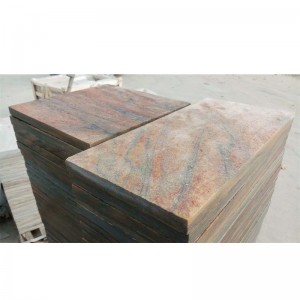
Occasionally I see paver patios cluttered with ants. However, ants will always attack a flagstone patio laid in sand. I imagine this is because the joints of the slabs will inevitably be wider and/or because the slabs are of different thicknesses, meaning that in some places you will end up with deeper sand. Regardless of the exact cause, I can tell you that every flagstone patio I've ever seen laid in sand eventually became infested with ants. Another reason to use screen is that screen is also an excellent caulking material. You don’t want to use sand, even coarse sand, between the joints of your flagstones because it will wash away—unless, of course, your flagstones are very tight. For pattern cut flagstone, yes you can use sand as a joint filler. Just make sure the base is coarse sand, not fine sand. However, since the seams are too tight, you will need to use fine sand. Again, ants love fine sand - but in this application, pattern cut stone, tiny seams - fine sand wouldn't be the end of the world - as long as the base is of course. This applies to pattern cut slate - or any slate with very tight joints - in which case you may be able to go without sand as long as you follow the guidelines I set earlier in this paragraph. For irregular slate, or any slate with joints wider than a quarter-inch, you really should try to avoid sand and use stone dust instead.
Your own native soil – If your own native subsoil is made up of about 20-40% clay, with the rest mostly sand and gravel, then that soil is fine. And for ten years without any interruption. Then you already have a good solid base 🙂 You could definitely take the clay out of your subsoil, work out how much sand and gravel it already contains, then calculate how much gravel you should add, and then get some gravel from elsewhere nearby. What I'm talking about here is using in situ materials to try to mimic the performance characteristics of a road base and/or create a gravel core soil mix that is well drained, compacted, and stable. This type of work is still in the R&D stage for me. More on this as the research progresses. Suffice to say, yes, it can be done, but it's a bit complicated and beyond the scope of this article.
Takaisin naamiointiin - kun käytät tasoitus- ja tiivistemaskia laattojen välissä, luot hyvän kohtauksen. Jos kiven alla olevassa seulassa on pieniä ongelmia, sen ei pitäisi olla liian kriittinen, koska tiiviste laskeutuu ja täyttää laatan alla olevat aukot. Seulontoja on ylös ja alas, ja vaikutus on erittäin hyvä. Voit odottaa saavasi yhden esityksen loppuun ensimmäisen vuoden aikana - pieni osa laskeutuu tai huuhtoutuu pois. Ei hätää, pyyhkäise vain uutta materiaalia. Sen jälkeen, muutaman seuraavan vuoden ajan, voit hyvin. Paras neuvoni on, että asiakkaat palkkaavat minut tekemään ehkä muutaman tunnin huoltotöitä kerran vuodessa - se ei todellakaan ole välttämätöntä, mutta pidän työni kimaltelevan. Todellakin. Katso mitä aiemmilla asiakkaillani on sanottavaa työstäni. Yksi asia, jota en käsitellyt tässä artikkelissa, on polymeerihiekka. Jos olet utelias polysandista, osoitan sinut nyt toiseen hardscape-ohjeblogiviestiin. Jos olet moniutelias, niin se on. Minun pitäisi luultavasti myös lisätä, että minulla ei ole koskaan ollut yksikään paasivika käyttämällä yllä olevaa järjestelmää. Okei, ehkä kivi laskeutuu hieman - se voidaan korjata muutamassa minuutissa (mitä tapahtuu harvoin), mutta suuria ongelmia ei tule. Tätäkin tehnyt jonkin aikaa. Suurimmalla paasiterassillani suosittelen yleensä 3 tunnin huoltoa muutaman vuoden välein. Tämä pitää terassin optimaalisessa kunnossa. Olen erittäin nirso ja haluan työni aina näyttävän täydelliseltä. Usein palaan asiakkaan kotiin vuosia myöhemmin ja se on edelleen täydellisessä kunnossa. Ei vaadi huoltoa! Tyypillisesti 5 tai 10 vuoden sisällä terassin pitäisi saada huomiota.
 afrikkalainen
  albanialainen
  amhara
  arabialainen
  armenialainen
  Azerbaidžani
  baski
baski  valkovenäläinen
  bengali
  bosnialainen
  bulgarialainen
  katalaani
  Cebuano
  Kiina
Kiina  Kiina (Taiwan)
  Korsikalainen
  kroatialainen
  Tšekki
  Tanskan kieli
  Hollannin kieli
  Englanti
  esperanto
  Virolainen
  Suomalainen
  Ranskan kieli
  friisi
  Galicialainen
  Georgian
  Saksan kieli
  kreikkalainen
  gudžarati
  Haitin kreoli
  hausa
hausa  havaijilainen
  heprealainen
  Ei
Ei  Miao
Miao  Unkarin kieli
  islantilainen
  igbo
igbo  Indonesialainen
  irlantilainen
  italialainen
  japanilainen
  jaavalainen
  kannada
  kazakki
  khmerit
  Ruanda
  Korealainen
  kurdi
kurdi  Kirgisia
  TB
TB  Latina
  Latvialainen
  liettualainen
  luxemburgilainen
  makedonialainen
  Malgashi
  malaiji
  malajalami
  maltalainen
  maori
maori  marathi
  mongolialainen
  Myanmar
  Nepali
  Norjan kieli
  Norjan kieli
  Oksitaani
  pashto
  persialainen
  Kiillottaa
  Portugalin kieli
  Punjabi
  romanialainen
  Venäjän kieli
  samoalainen
  Skotlannin gaeli
  serbia
  Englanti
  Shona
Shona  Sindhi
  sinhala
  Slovakian
  slovenialainen
  somali
  Espanja
  sundalainen
  swahili
  Ruotsin kieli
  Tagalog
  tadžiki
  tamili
  tatari
  telugu
  thaimaalainen
  turkkilainen
  Turkmenistan
  ukrainalainen
  urdu
urdu  uiguuri
  uzbekki
  vietnam
  Walesin




