

This DIY article; and the rest of the how-to section of my blog, cover most of the basics of how to properly build a flagstone patio. These articles provide general guidance, or at least advice, useful for hobbyists, DIY landscape designers/builders, and professional builders alike. So, what type of foundation should we build for our flagstone patio: sand, cement, or gravel? Short answer: It depends. Quarry screening (if one is available in your area) is usually best done under flagstone. Screening is also one of the best options among gemstones, but there are other options available to achieve different aesthetics. First, we'll address the structural question of "what to use under the slab." Cement - at some point it (may) break. It may last a long time, but when it does break down, fixing it will be a lot more work than repairing dry slate. Sand – ants will dig it up and leave it everywhere…sand can also be washed away, causing rocks to settle. Gravel – There’s really no problem here, just use the right type of gravel. Even better, use modified gravel as a base and then stone powder (aka quarry screening, aka grit, aka quarry dust) as the final leveling agent. Okay, so let's be more specific.
The cement (may) crack. Especially grade cement. Especially in a winter climate like ours here in Pennsylvania. A worse method is to lay the slabs on a bed of gravel and then cement the joints between the stones. Terrible idea. The gravel base is elastic and will move slightly during freezing and thawing. Well, if the foundation is not done well, the movement may be more slight, but let's assume the foundation is done well. The gravel base definitely moves around a bit - you would never know it looking at any of my patios, but the movement does happen. Cement is rigid - if you put a rigid top on a flexible base, systematic cracking is inevitable. If the flagstone happens to be sitting on a concrete foundation, then cement is certainly a good joint-filling material. But why on earth would you want a concrete foundation? The concrete itself will eventually crack. In northern climates, it could rupture within a decade - and the likelihood of rupture within the next three years is also quite high. The environmental impact of concrete production is no small issue either. I personally prefer dry stone work anyway. More harmonious, warmer, just better. In my opinion, the feel you get from a well done dry laid flagstone patio is better than a cement flagstone patio. my thoughts. A cement-lined flagstone patio can certainly look great and last a long time. I've built a lot of things that look great - years later. But if there is cement between the joints, it is better to have a concrete foundation. I was serious. Sand...well, if you use really heavy sand, you might get away with it. However, most sand sold in packages is too fine. Of course, you can use coarse sand under the flagstone. When I used to build brick patios, I would alternate between using coarse sand or a quarry screen, which worked fine. Their patio still looks great. However, these are brick patios, and the spaces between the paving units are about a quarter-inch wide. The problem with sand is that it gets washed away by water, blown away by wind, and carried away by ants. That's why stone dust (aka screen, aka decomposed granite) works better than sand for underneath flagstone. Not as nice as my flagstone patio though! The problem with using uniform sand under flagstone is that the bricks are of uniform thickness. So it's not too much trouble to get your gravel base nearly perfect and then proceed to dig out an inch of sand for your bricks to sit on. With flagstone, however, the thickness varies too much—one stone may need half an inch of sand, while another needs 2 inches of sand. If you are using sand then changes in thickness can cause problems. Screening is almost the same as modified gravel - they are really one of the two components of modified gravel... they are heavy enough that using 2 inches on one stone and half an inch on the other is really no problem - ten Years later, that patio still looks sharp.
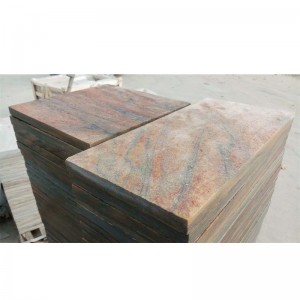
Occasionally I see paver patios cluttered with ants. However, ants will always attack a flagstone patio laid in sand. I imagine this is because the joints of the slabs will inevitably be wider and/or because the slabs are of different thicknesses, meaning that in some places you will end up with deeper sand. Regardless of the exact cause, I can tell you that every flagstone patio I've ever seen laid in sand eventually became infested with ants. Another reason to use screen is that screen is also an excellent caulking material. You don’t want to use sand, even coarse sand, between the joints of your flagstones because it will wash away—unless, of course, your flagstones are very tight. For pattern cut flagstone, yes you can use sand as a joint filler. Just make sure the base is coarse sand, not fine sand. However, since the seams are too tight, you will need to use fine sand. Again, ants love fine sand - but in this application, pattern cut stone, tiny seams - fine sand wouldn't be the end of the world - as long as the base is of course. This applies to pattern cut slate - or any slate with very tight joints - in which case you may be able to go without sand as long as you follow the guidelines I set earlier in this paragraph. For irregular slate, or any slate with joints wider than a quarter-inch, you really should try to avoid sand and use stone dust instead.
Your own native soil – If your own native subsoil is made up of about 20-40% clay, with the rest mostly sand and gravel, then that soil is fine. And for ten years without any interruption. Then you already have a good solid base 🙂 You could definitely take the clay out of your subsoil, work out how much sand and gravel it already contains, then calculate how much gravel you should add, and then get some gravel from elsewhere nearby. What I'm talking about here is using in situ materials to try to mimic the performance characteristics of a road base and/or create a gravel core soil mix that is well drained, compacted, and stable. This type of work is still in the R&D stage for me. More on this as the research progresses. Suffice to say, yes, it can be done, but it's a bit complicated and beyond the scope of this article.
Quay lại việc tạo mặt nạ - khi bạn sử dụng mặt nạ san bằng và trát kín giữa các tấm, bạn đang tạo ra một cảnh đẹp. Nếu có bất kỳ vấn đề nhỏ nào với tấm chắn dưới đá thì cũng không quá nghiêm trọng vì lớp trám sẽ lắng xuống và lấp đầy các khoảng trống dưới tấm đá. Có chiếu lên xuống, hiệu quả rất tốt. Bạn có thể mong đợi hoàn thành một công trình trưng bày trong năm đầu tiên - một phần nhỏ sẽ đọng lại hoặc bị cuốn trôi. Không vấn đề gì, chỉ cần quét một số tài liệu mới. Sau đó, trong vài năm tới, bạn sẽ ổn thôi. Lời khuyên tốt nhất của tôi là khách hàng nên thuê tôi làm công việc bảo trì có thể vài giờ mỗi năm một lần - điều đó chắc chắn là không cần thiết, nhưng tôi thích công việc của mình lấp lánh. Thực vậy. Hãy xem những khách hàng trước đây của tôi nói gì về công việc của tôi. Một điều tôi không đề cập trong bài viết này là cát polymer. Nếu bạn tò mò về polysand, bây giờ tôi sẽ chỉ cho bạn một bài đăng blog hướng dẫn về hardscape khác. Nếu bạn là người đa tò mò, đó là. Có lẽ tôi cũng nên nói thêm rằng tôi chưa bao giờ gặp phải một sai sót nào trên sân lát đá khi sử dụng hệ thống trên. Được rồi, có thể một hòn đá sẽ lắng xuống một chút - điều đó có thể được khắc phục trong vòng vài phút (điều này hiếm khi xảy ra), nhưng sẽ không có bất kỳ vấn đề lớn nào. Cũng làm cái này được một thời gian rồi. Trên sân lát đá lớn nhất của tôi, tôi thường khuyên bạn nên bảo trì 3 giờ một lần hoặc lâu hơn. Điều này sẽ giữ cho sân trong hình dạng tối ưu. Tôi rất kén chọn và muốn tác phẩm của mình luôn trông thật hoàn hảo. Thường thì nhiều năm sau tôi sẽ quay lại nhà khách hàng và nó vẫn ở tình trạng hoàn hảo. Không cần bảo trì! Thông thường, trong vòng 5 hoặc 10 năm tới, sân hiên sẽ được chú ý nhiều hơn.
 Người châu Phi
  tiếng Albania
  tiếng Amharic
  tiếng Ả Rập
  tiếng Armenia
  Tiếng Azerbaijan
  Tiếng Basque
  Người Belarus
  tiếng Bengali
  tiếng Bosnia
  tiếng Bungari
  tiếng Catalan
  Cebuano
  Trung Quốc
  Trung Quốc (Đài Loan)
  Corsican
  tiếng Croatia
  tiếng Séc
  người Đan Mạch
  tiếng Hà Lan
  Tiếng Anh
  Quốc tế ngữ
  tiếng Estonia
  tiếng Phần Lan
  người Pháp
  tiếng Frisia
  tiếng Galicia
  tiếng Gruzia
  tiếng Đức
  người Hy Lạp
  Gujarati
  Tiếng Creole Haiti
  hausa
hausa  người Hawaii
  tiếng Do Thái
  Không
Không  Miêu
Miêu  người Hungary
  tiếng Iceland
  igbo
igbo  tiếng Indonesia
  người Ailen
  người Ý
  tiếng Nhật
  tiếng Java
  tiếng Kannada
  tiếng Kazakhstan
  tiếng Khmer
  người Rwanda
  Hàn Quốc
  người Kurd
  Tiếng Kyrgyzstan
  Lao
Lao  Latin
Latin  tiếng Latvia
  tiếng Litva
  Tiếng Luxembourg
  Tiếng Macedonia
  Malgashi
  Mã Lai
  Mã Lai
  cây nho
  người Maori
  Tiếng Marathi
  tiếng Mông Cổ
  Myanmar
  tiếng Nepal
  người Na Uy
  người Na Uy
  tiếng Occitan
  Tiếng Pa-tô
  tiếng Ba Tư
  Đánh bóng
  tiếng Bồ Đào Nha
  Tiếng Punjab
  người Rumani
  tiếng Nga
  Tiếng Samoa
  Tiếng Gaelic của Scotland
  tiếng Serbia
  Tiếng Anh
  Shona
Shona  tiếng Sindhi
  Sinhala
  Tiếng Slovak
  tiếng Slovenia
  tiếng Somali
  người Tây Ban Nha
  Tiếng Sundan
  tiếng Swahili
  tiếng Thụy Điển
  Tagalog
  Tiếng Tajik
  Tiếng Tamil
  Tatar
Tatar  tiếng Telugu
  tiếng Thái
  tiếng Thổ Nhĩ Kỳ
  người Thổ Nhĩ Kỳ
  tiếng Ukraina
  tiếng Urdu
  người Duy Ngô Nhĩ
  tiếng Uzbek
  Tiếng Việt
  người xứ Wales




