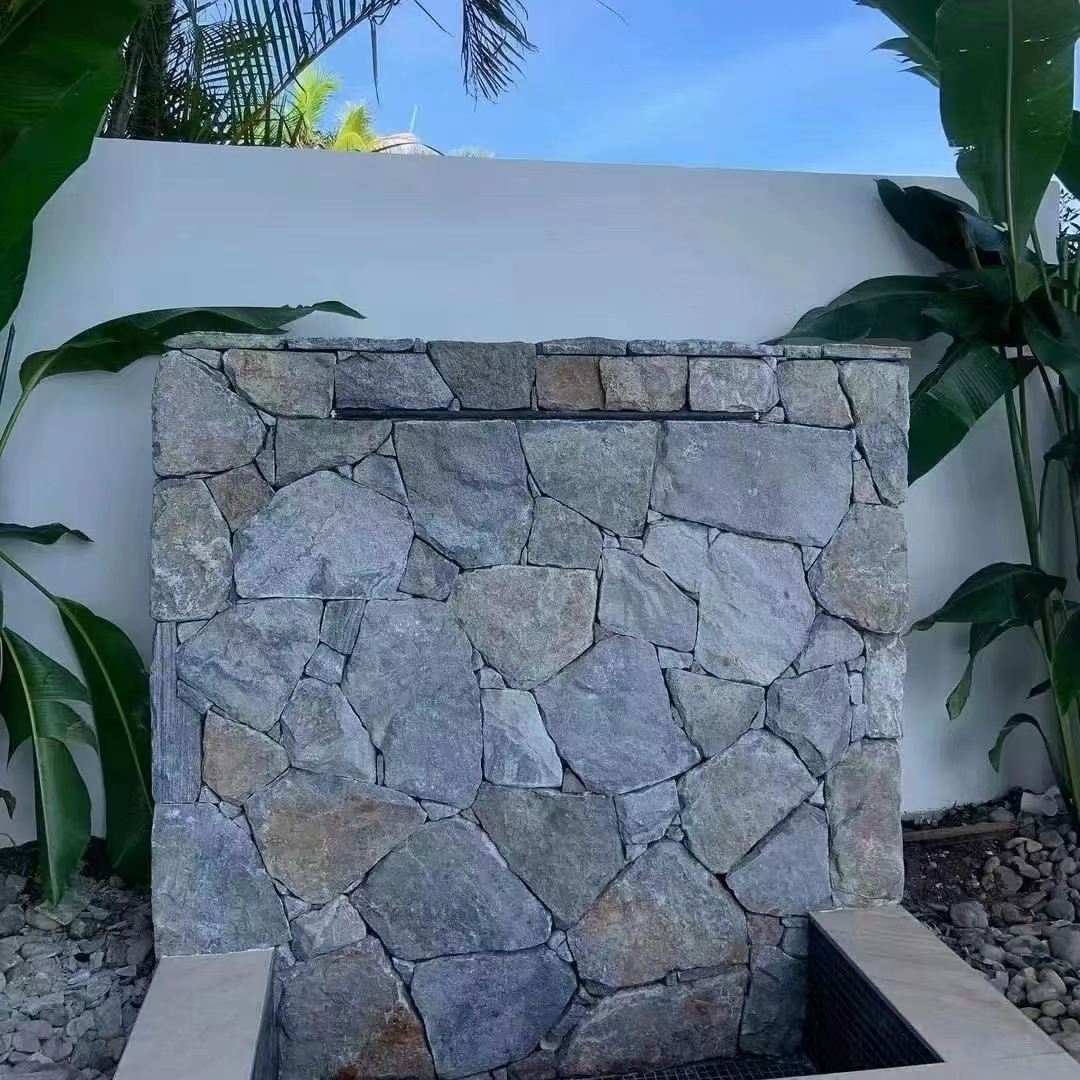
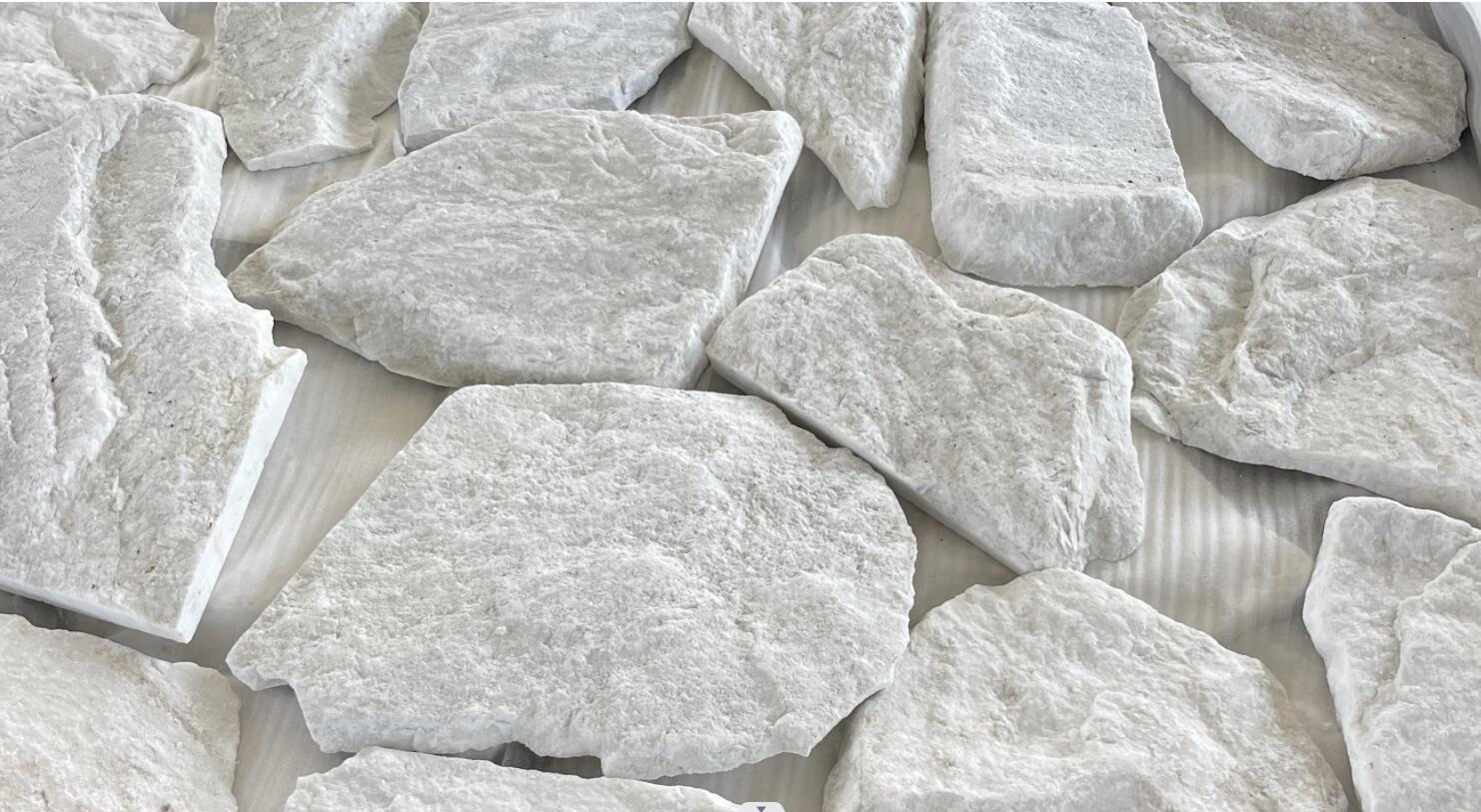
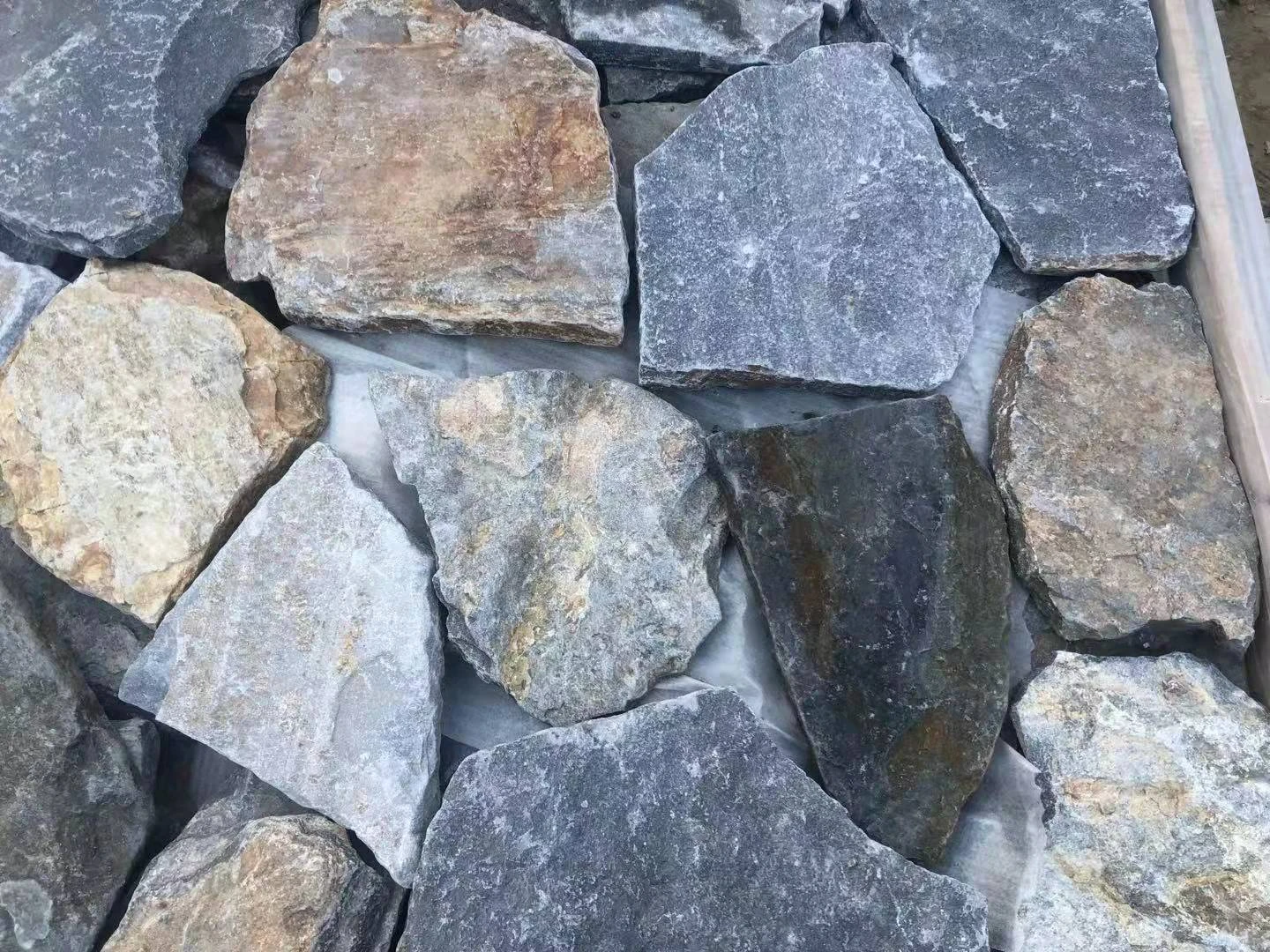
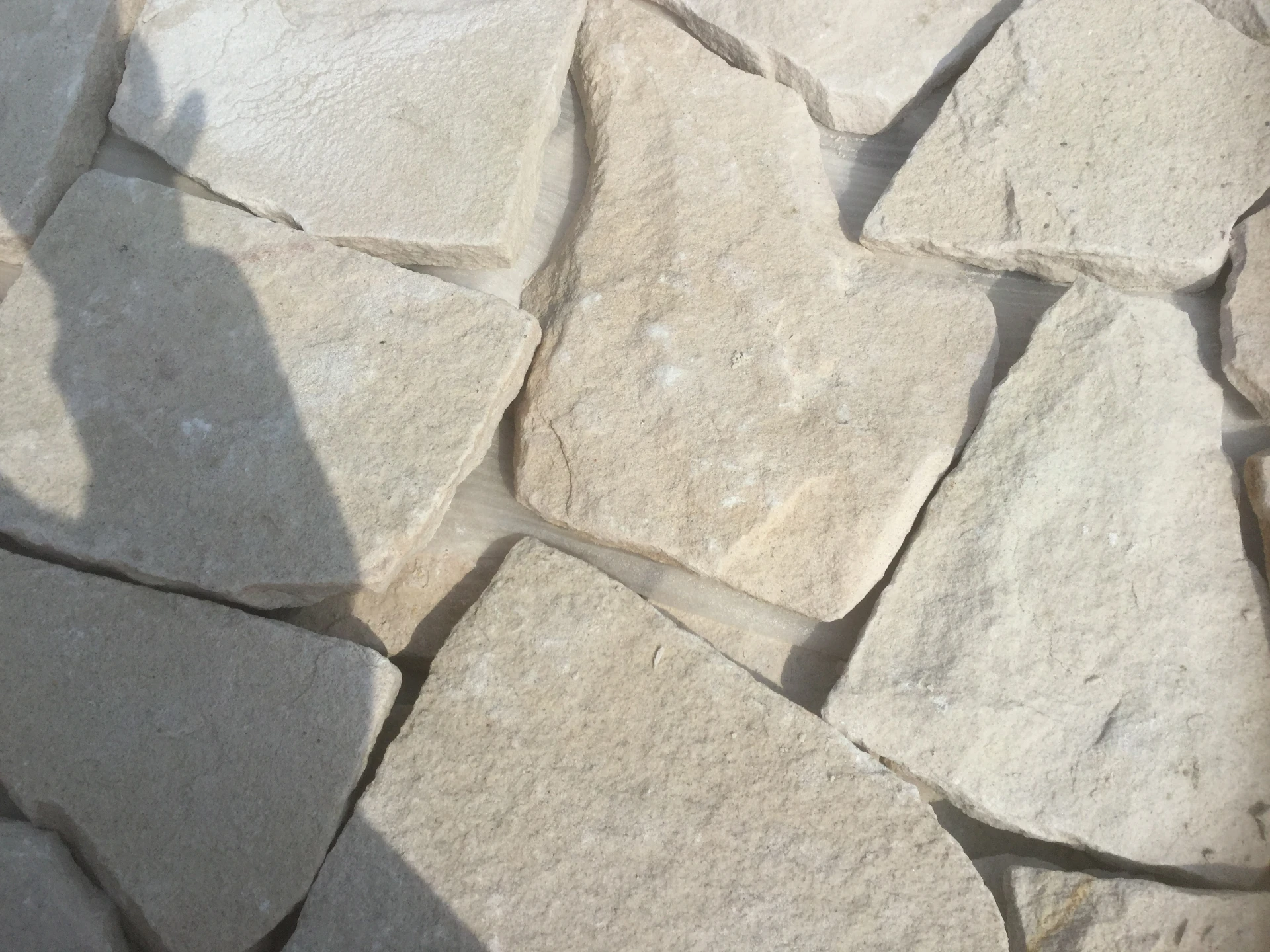
This DIY article; and the rest of the how-to section of my blog, cover most of the basics of how to properly build a flagstone patio. These articles provide general guidance, or at least advice, useful for hobbyists, DIY landscape designers/builders, and professional builders alike. So, what type of foundation should we build for our flagstone patio: sand, cement, or gravel? Short answer: It depends. Quarry screening (if one is available in your area) is usually best done under flagstone. Screening is also one of the best options among gemstones, but there are other options available to achieve different aesthetics. First, we'll address the structural question of "what to use under the slab." Cement - at some point it (may) break. It may last a long time, but when it does break down, fixing it will be a lot more work than repairing dry slate. Sand – ants will dig it up and leave it everywhere…sand can also be washed away, causing rocks to settle. Gravel – There’s really no problem here, just use the right type of gravel. Even better, use modified gravel as a base and then stone powder (aka quarry screening, aka grit, aka quarry dust) as the final leveling agent. Okay, so let's be more specific.
The cement (may) crack. Especially grade cement. Especially in a winter climate like ours here in Pennsylvania. A worse method is to lay the slabs on a bed of gravel and then cement the joints between the stones. Terrible idea. The gravel base is elastic and will move slightly during freezing and thawing. Well, if the foundation is not done well, the movement may be more slight, but let's assume the foundation is done well. The gravel base definitely moves around a bit - you would never know it looking at any of my patios, but the movement does happen. Cement is rigid - if you put a rigid top on a flexible base, systematic cracking is inevitable. If the flagstone happens to be sitting on a concrete foundation, then cement is certainly a good joint-filling material. But why on earth would you want a concrete foundation? The concrete itself will eventually crack. In northern climates, it could rupture within a decade - and the likelihood of rupture within the next three years is also quite high. The environmental impact of concrete production is no small issue either. I personally prefer dry stone work anyway. More harmonious, warmer, just better. In my opinion, the feel you get from a well done dry laid flagstone patio is better than a cement flagstone patio. my thoughts. A cement-lined flagstone patio can certainly look great and last a long time. I've built a lot of things that look great - years later. But if there is cement between the joints, it is better to have a concrete foundation. I was serious. Sand...well, if you use really heavy sand, you might get away with it. However, most sand sold in packages is too fine. Of course, you can use coarse sand under the flagstone. When I used to build brick patios, I would alternate between using coarse sand or a quarry screen, which worked fine. Their patio still looks great. However, these are brick patios, and the spaces between the paving units are about a quarter-inch wide. The problem with sand is that it gets washed away by water, blown away by wind, and carried away by ants. That's why stone dust (aka screen, aka decomposed granite) works better than sand for underneath flagstone. Not as nice as my flagstone patio though! The problem with using uniform sand under flagstone is that the bricks are of uniform thickness. So it's not too much trouble to get your gravel base nearly perfect and then proceed to dig out an inch of sand for your bricks to sit on. With flagstone, however, the thickness varies too much—one stone may need half an inch of sand, while another needs 2 inches of sand. If you are using sand then changes in thickness can cause problems. Screening is almost the same as modified gravel - they are really one of the two components of modified gravel... they are heavy enough that using 2 inches on one stone and half an inch on the other is really no problem - ten Years later, that patio still looks sharp.
Occasionally I see paver patios cluttered with ants. However, ants will always attack a flagstone patio laid in sand. I imagine this is because the joints of the slabs will inevitably be wider and/or because the slabs are of different thicknesses, meaning that in some places you will end up with deeper sand. Regardless of the exact cause, I can tell you that every flagstone patio I've ever seen laid in sand eventually became infested with ants. Another reason to use screen is that screen is also an excellent caulking material. You don’t want to use sand, even coarse sand, between the joints of your flagstones because it will wash away—unless, of course, your flagstones are very tight. For pattern cut flagstone, yes you can use sand as a joint filler. Just make sure the base is coarse sand, not fine sand. However, since the seams are too tight, you will need to use fine sand. Again, ants love fine sand - but in this application, pattern cut stone, tiny seams - fine sand wouldn't be the end of the world - as long as the base is of course. This applies to pattern cut slate - or any slate with very tight joints - in which case you may be able to go without sand as long as you follow the guidelines I set earlier in this paragraph. For irregular slate, or any slate with joints wider than a quarter-inch, you really should try to avoid sand and use stone dust instead.
Your own native soil – If your own native subsoil is made up of about 20-40% clay, with the rest mostly sand and gravel, then that soil is fine. And for ten years without any interruption. Then you already have a good solid base 🙂 You could definitely take the clay out of your subsoil, work out how much sand and gravel it already contains, then calculate how much gravel you should add, and then get some gravel from elsewhere nearby. What I'm talking about here is using in situ materials to try to mimic the performance characteristics of a road base and/or create a gravel core soil mix that is well drained, compacted, and stable. This type of work is still in the R&D stage for me. More on this as the research progresses. Suffice to say, yes, it can be done, but it's a bit complicated and beyond the scope of this article.
回到遮蔽问题 - 当您在板坯之间使用找平器和填缝剂遮蔽时,您正在创造一个良好的场景。如果石头下的筛网有任何小问题,那也不应该太严重,因为填缝剂会沉淀并填充板坯下的空隙。上下都有筛网,效果非常好。您可以期望在第一年内完成一次展示 - 一小部分会沉淀或被冲走。没问题,只需扫入一些新材料即可。之后,在接下来的几年里,你会没事的。我最好的建议是让客户雇用我每年做几个小时的维护 - 这绝对不是必要的,但我喜欢我的作品闪闪发光。确实如此。看看我过去的客户对我的作品有什么看法。我在这篇文章中没有讨论的一件事是聚合物砂。如果您对聚合物砂感兴趣,我现在会向您指出另一篇关于硬景观操作方法的博客文章。如果您对多种事物都很好奇的话。我可能还应该补充一点,使用上述系统,我从未遇到过任何一块石板露台出现故障的情况。好吧,也许一块石头会有轻微的下沉 - 可以在几分钟内修复(这种情况很少发生),但不会出现任何重大问题。我也这样做了一段时间。对于我最大的石板露台,我通常建议每隔几年进行 3 小时的维护。这将使露台保持最佳状态。我很挑剔,希望我的作品总是看起来完美无缺。很多时候,几年后我会回到客户家,它仍然完好无损。无需维护!通常,在 5 年或 10 年内,露台应该得到一些关注。
 非洲人
 阿尔巴尼亚语
 阿姆哈拉语
 阿拉伯
 亚美尼亚语
 阿塞拜疆语
 巴斯克
 白俄罗斯语
 孟加拉
 波斯尼亚语
 保加利亚语
 加泰罗尼亚语
 宿务语
 中国
 中国(台湾)
 科西嘉岛
 克罗地亚语
 捷克语
 丹麦语
 荷兰语
 英语
 世界语
 爱沙尼亚语
 芬兰
 法语
 弗里斯兰语
 加利西亚语
 格鲁吉亚语
 德语
 希腊语
 古吉拉特语
 海地克里奥尔语
 豪萨
 夏威夷人
 希伯来语
 没有
 苗族
 匈牙利
 冰岛的
 伊博语
 印度尼西亚
 爱尔兰语的
 意大利语
 日本人
 爪哇语
 卡纳达语
 哈萨克语
 高棉语
 卢旺达
 韩国人
 库尔德
 吉尔吉斯斯坦
 结核病
 拉丁
 拉脱维亚语
 立陶宛语
 卢森堡语
 马其顿语
 马尔加什
 马来语
 马拉雅拉姆语
 马耳他语
 毛利人
 马拉地语
 蒙
 缅甸
 尼泊尔语
 挪威
 挪威
 奥克语
 普什图语
 波斯语
 抛光
 葡萄牙语
 旁遮普语
 罗马尼亚语
 俄语
 萨摩亚人
 苏格兰盖尔语
 塞尔维亚
 英语
 绍纳语
 信德语
 僧伽罗语
 斯洛伐克语
 斯洛文尼亚语
 索马里
 西班牙语
 巽他语
 斯瓦希里语
 瑞典
 他加禄语
 塔吉克
 泰米尔语
 鞑靼人
 泰卢固语
 泰国
 土耳其
 土库曼语
 乌克兰
 乌尔都语
 维吾尔
 乌兹别克语
 越南语
 威尔士语