

石板是最常用的普通扁平石之一。它被认为是景观设计中真实性的最佳可持续传达材料。
这背后一个令人信服的原因是当你使用这些平板 石材,您将为您的院子营造出一种手工制作的感觉,而且看起来经久不衰。尽管现代和乡村风格的石板有很多变化,但您可以展现自己的个人品味和风格。
In this blog, you will first get to know the origins of this flagstone and learn about its creation. Afterward, you’ll learn about the different types and the best practices for using them. At length, you’ll gain valuable knowledge in the art and science of installing this material.
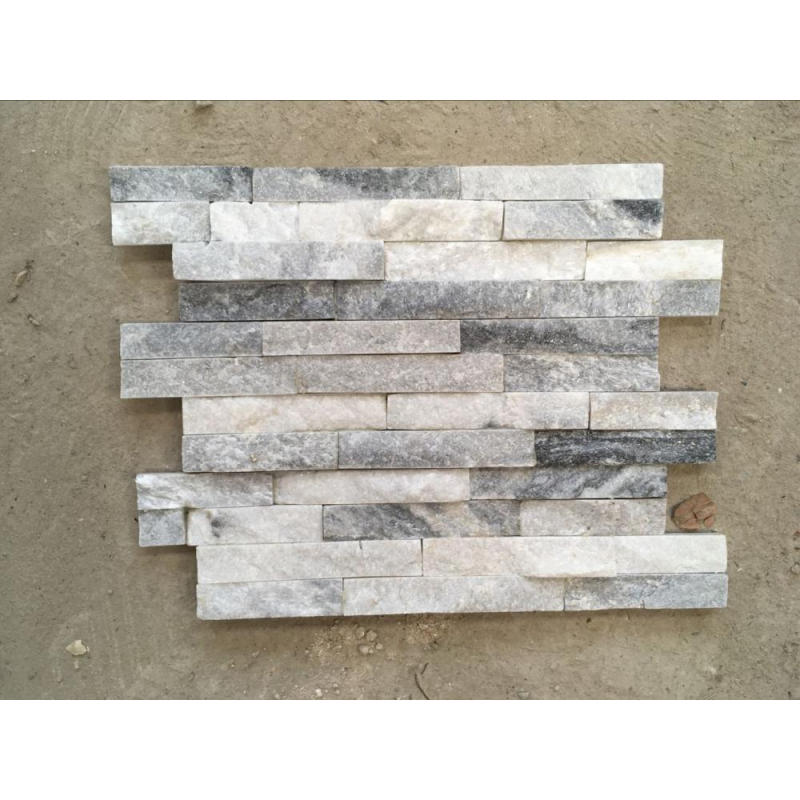
Flagstone is a generic term for many different types of rock. In the beginning, a stonemason chisels or strikes larger stones. And as a result, it breaks up into thick, flat sheets. Next, these thinner sheets are then broken up into flagstone-sized pieces. There are abundant varieties of rock that masons cut and then shape into flagstones.
最初,最软、最容易凿成形状的岩石是沉积岩,包括砂岩、页岩和石灰岩等种类。
其次,较硬的岩石包括花岗岩或玄武岩等火成岩。最后,最坚硬的岩石属于变质岩,例如石英岩和大理石。
主要有两种类型的 Flagstones: patio and select. Comparatively, Patio pieces type of Flagstone is smaller, ranging from 12” to 18” and thicker. And are most often used for stepping stones, outdoor pathways, or patios. Due to their smaller size, they are typically palletized lying down, preventing breakage during shipment. Contrarily, select flagstone, known as “standup,” comes in large, thin slabs of 18” to 36”. Due to their large size, they are usually palletized vertically. Flagstones generally make the formation of many shapes and sizes, including rectangular and square. Nevertheless, they are also available in more natural, jagged varieties.
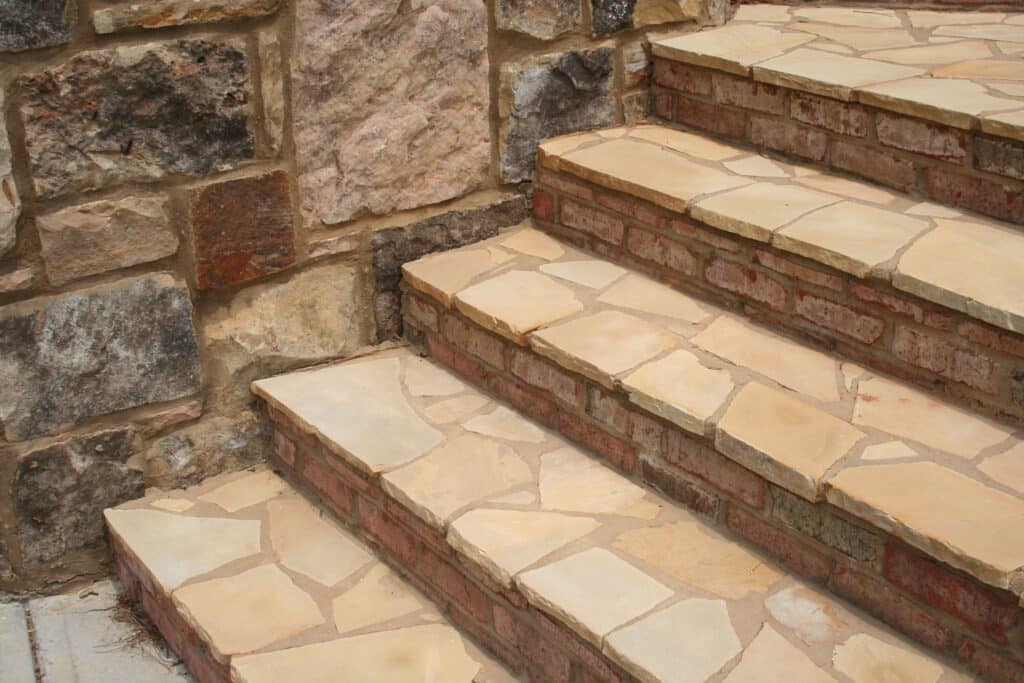
For more than hundreds of thousands of years, Flagstone has been used in various types of formation. Earlier in the 1900s, people saw it as an improvement over cobblestone, and it’s easy to see why. Whereas stonemasons can chisel it at ease by hand into a very flat surface, it is a simple way to create a flat paving surface. Its notable usages as countertop material or even as a paving substrate and as a walkway or roadway. People even use them as roofing and siding. Flagstone patios and Stepping stones are the most common applications of flagstones.
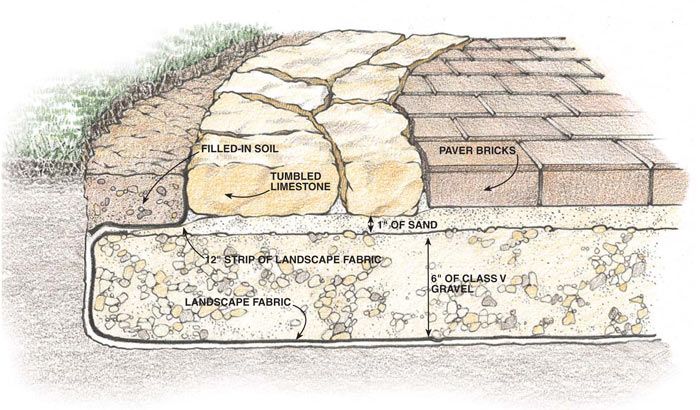
我们通常使用沙子作为石板的基材。首先,沙子非常容易安装,并且具有很好的排水优势。此外,它们还有助于防止杂草和植物在石头之间生长。但是,为了更持久的安装,请使用水泥。使用沙子基层,您将需要更厚的石板。砂浆还允许您使用更薄的石头,因为水泥基层有助于加固表面。
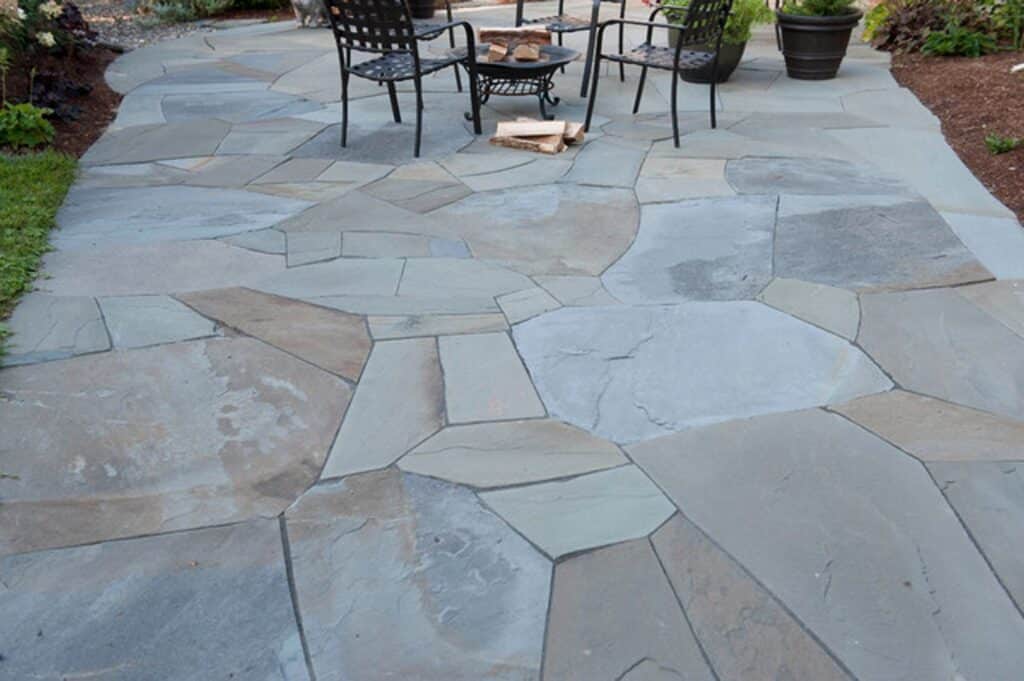
这种天然石材的最大优点是,您可以将其塑造成许多不同、独特的图案!不过,使用这种材料的唯一限制就是您的想象力。要解读您的想象,实际上,您需要做的就是将您的景观结合在一起。如果您想要一种现代、干净的外观,您需要确保坚持更严格、重复的图案,这是有道理的。另一方面,您可以选择不规则的尺寸和随机的形状,以获得质朴自然的外观。
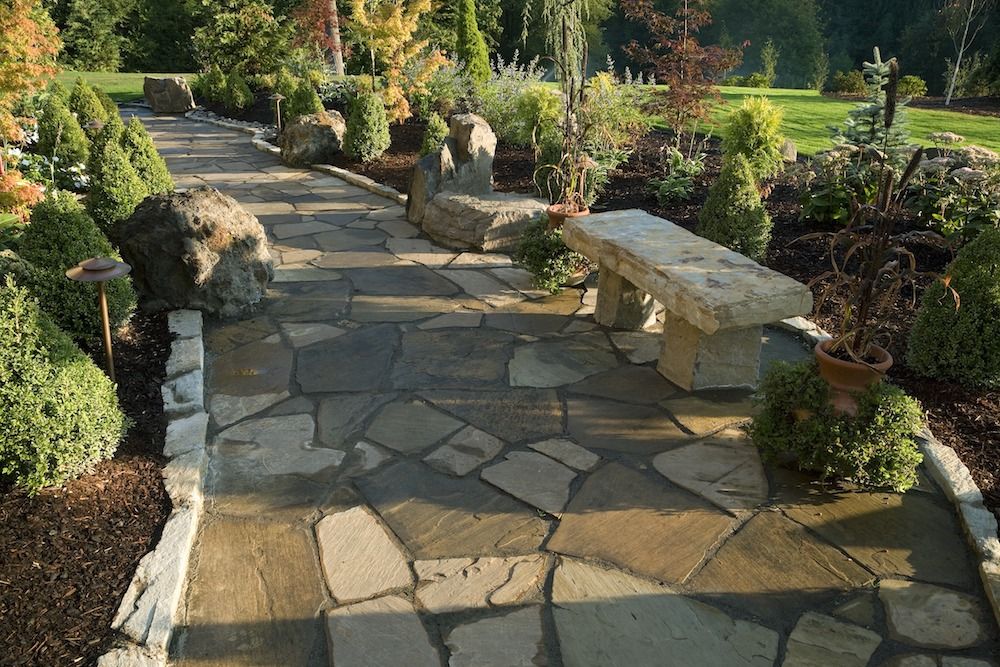
您可能出于多种原因而喜欢石板,其中包括: 石板 which are naturally flat, and it’s easy to use in so many different projects.
However, because flagstone is more of a generic term for many sedimentary rocks, it’s easy to misunderstand and underappreciate.
以下是您应该了解的一些事项:
Flagstone’s one of the beneficial advantages is that it’s relatively flat when mined, making it ideal in so many landscaping projects.
Second, it’s naturally non-slip. Whenever you are all set to starting a project where people will need to walk, a non-slip surface is essential for safety. Next, it’s strong and stable. When installed properly, it won’t break or crack.
一般来说,你可以找到各种光谱或色调 石板 并可获得任意色调。虽然大多数像大多数岩石一样具有灰色或棕褐色色调,但许多色调可以有粉红色、绿色、蓝色、金色,甚至接近白色。
这意味着您总是可以找到并挑选一块可以与其相辅相成或形成对比的石板,无论您的目标是什么,也无论您的家中已经采用了什么颜色。
特别是,您可以轻松混合多种颜色的石头,并创建独一无二的露台或走道。
安装灵活性也可以视为其众多优点之一。要安装露台,您可能需要考虑在石头之间使用砂浆进行安装。这肯定会让您的露台感觉完全平整和坚固,非常适合放置椅子和桌子。
Suppose you’re planning to construct a walkway across your lawn. You can install large stones directly on your dirt and install mulch or allow the grass to grow around it.
As an alternate, you can also create a walking path with gravel between the stones. It’s also a great option for building stairs. Nevertheless, you would want to use cement to ensure safety and stability.
From our long-entailed informative blog, we hope we have provided you a clear conception of how, no matter what project you’re planning, there are ways to incorporate this beautiful stone.
 非洲人
非洲人  阿尔巴尼亚语
  阿姆哈拉语
阿姆哈拉语  阿拉伯
阿拉伯  亚美尼亚语
亚美尼亚语  阿塞拜疆语
阿塞拜疆语  巴斯克
巴斯克  白俄罗斯语
白俄罗斯语  孟加拉
孟加拉  波斯尼亚语
波斯尼亚语  保加利亚语
保加利亚语  加泰罗尼亚语
  宿务语
宿务语  中国
中国  中国(台湾)
  科西嘉岛
科西嘉岛  克罗地亚语
克罗地亚语  捷克语
捷克语  丹麦语
丹麦语  荷兰语
荷兰语  英语
英语  世界语
世界语  爱沙尼亚语
爱沙尼亚语  芬兰
芬兰  法语
法语  弗里斯兰语
弗里斯兰语  加利西亚语
加利西亚语  格鲁吉亚语
格鲁吉亚语  德语
德语  希腊语
希腊语  古吉拉特语
古吉拉特语  海地克里奥尔语
  豪萨
豪萨  夏威夷人
夏威夷人  希伯来语
希伯来语  没有
没有  苗族
苗族  匈牙利
匈牙利  冰岛的
冰岛的  伊博语
伊博语  印度尼西亚
印度尼西亚  爱尔兰语的
爱尔兰语的  意大利语
意大利语  日本人
日本人  爪哇语
爪哇语  卡纳达语
卡纳达语  哈萨克语
哈萨克语  高棉语
高棉语  卢旺达
卢旺达  韩国人
韩国人  库尔德
库尔德  吉尔吉斯斯坦
  结核病
结核病  拉丁
拉丁  拉脱维亚语
拉脱维亚语  立陶宛语
立陶宛语  卢森堡语
卢森堡语  马其顿语
马其顿语  马尔加什
马尔加什  马来语
马来语  马拉雅拉姆语
  马耳他语
马耳他语  毛利人
毛利人  马拉地语
马拉地语  蒙
蒙  缅甸
缅甸  尼泊尔语
尼泊尔语  挪威
挪威  挪威
挪威  奥克语
奥克语  普什图语
普什图语  波斯语
波斯语  抛光
抛光  葡萄牙语
葡萄牙语  旁遮普语
旁遮普语  罗马尼亚语
罗马尼亚语  俄语
俄语  萨摩亚人
萨摩亚人  苏格兰盖尔语
  塞尔维亚
塞尔维亚  英语
英语  绍纳语
绍纳语  信德语
信德语  僧伽罗语
僧伽罗语  斯洛伐克语
斯洛伐克语  斯洛文尼亚语
  索马里
索马里  西班牙语
西班牙语  巽他语
巽他语  斯瓦希里语
斯瓦希里语  瑞典
瑞典  他加禄语
他加禄语  塔吉克
塔吉克  泰米尔语
泰米尔语  鞑靼人
鞑靼人  泰卢固语
泰卢固语  泰国
泰国  土耳其
土耳其  土库曼语
土库曼语  乌克兰
乌克兰  乌尔都语
乌尔都语  维吾尔
维吾尔  乌兹别克语
乌兹别克语  越南语
越南语  威尔士语
威尔士语 




