

LINIMASA:
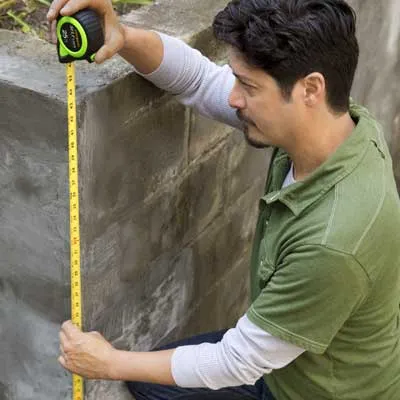
To calculate the number of universal corners to order, measure the height in inches of each outside wall corner, as shown, divide by 16, and round up to the nearest whole number. You’ll fill the area between the corners with flat panels. To calculate how many you’ll need, multiply the wall’s width by its height in feet and divide the resulting area by 2 (each panel covers 2 square feet). Subtract the number of universal corners from the result, then add 10 percent to your order of flat panels. Add one universal corner to be safe.
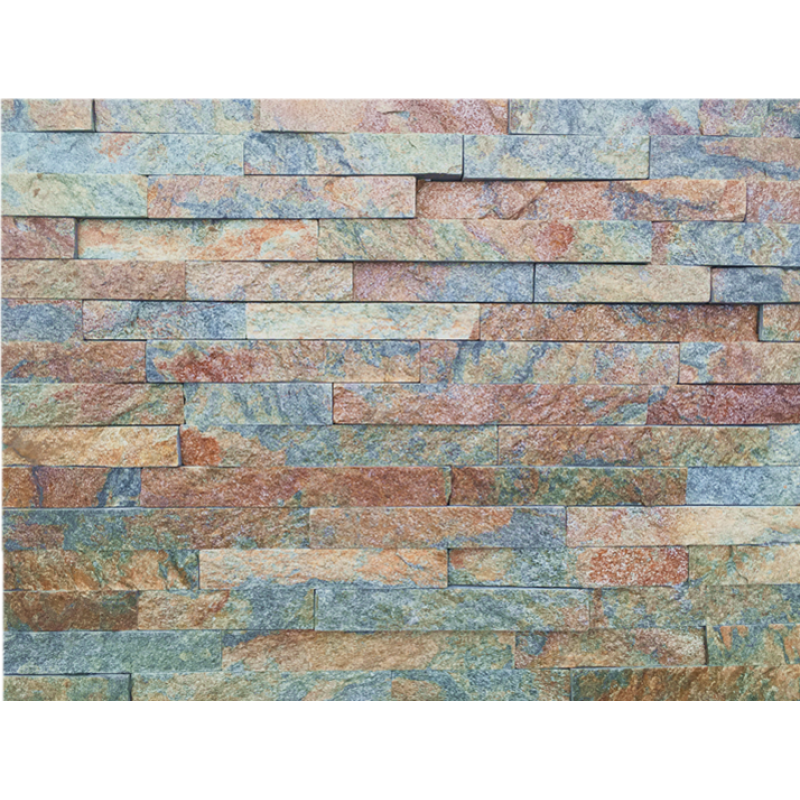
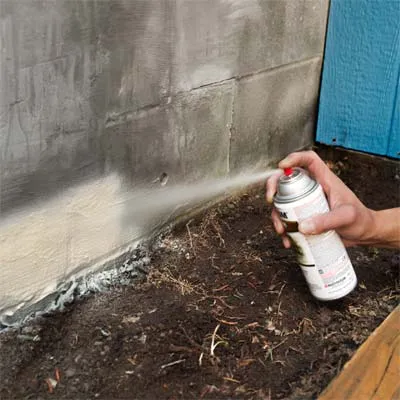
The panels must be installed above ground level, resting on a plastic support called a starter strip, so you’ll want to paint the wall below the strip to match the stone. Find a spray-paint color similar to the palette of your stone panels and paint the bottom few inches of the wall.
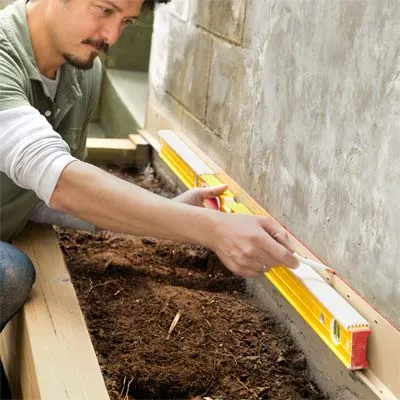
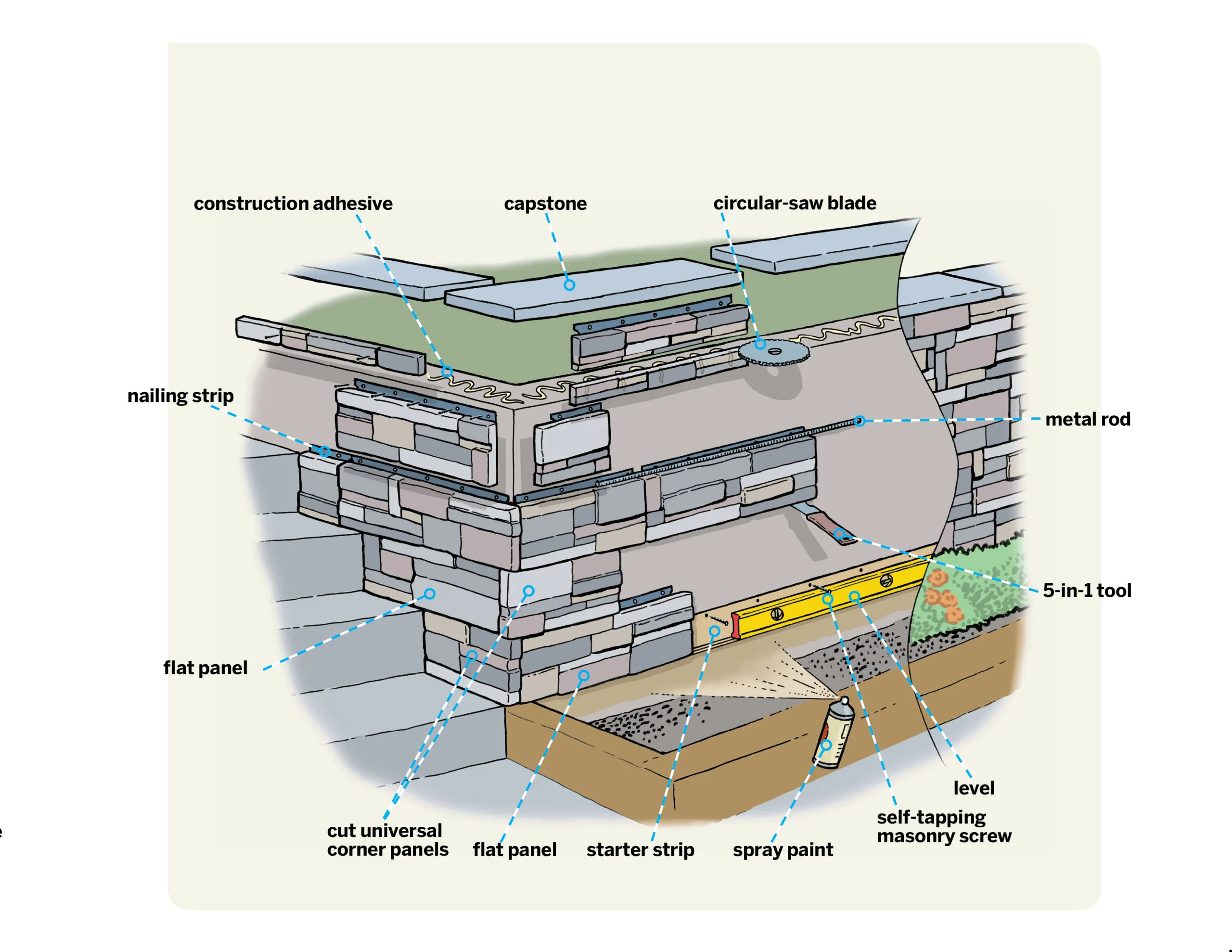
Set the location for the starter strip, at least 2 inches above any soil. Here, the strip’s lip aligns with the top of a stair on the adjacent side of the corner. Fit your drill/driver with a 3/16-inch masonry bit and drill a pilot hole through a slot in the strip near the corner and into the wall. Drive in a masonry screw to secure that end, then use the 4-foot level to bring the strip to level, and mark a line, as shown. Drill pilot holes and fasten the strip in two or three more spots, maintaining level.
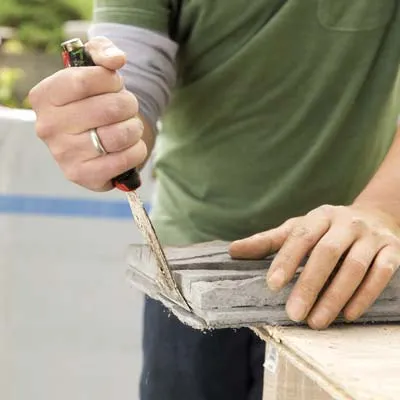
Panel datar memiliki tab di setiap sisinya yang menyatu dengan slot pada panel datar yang berdekatan tetapi harus dilepas dari ujung mana pun yang membentuk sudut. Letakkan panel menghadap ke atas pada permukaan kerja dan gunakan bilah alat 5-in-1 untuk melepaskan tab, seperti yang ditunjukkan. Tepi rata yang dihasilkan akan menghasilkan sudut yang rapat.
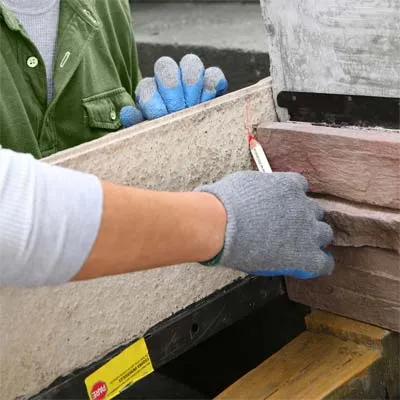
Setiap proses dimulai dari sebuah sudut, dengan ujung sudut universal yang telah selesai tumpang tindih dengan ujung panel datar (dengan tab dilepas). Pertama, sudut universal dipotong menjadi dua bagian; tepi akhir setiap bagian memulai jalurnya, dan tepi potongannya menyatu menjadi panel datar. Untuk estetika, potong sudut universal sehingga setiap bagian memiliki panjang minimal 8 inci. Atau, seperti dalam kasus kita, potong agar pas dengan anak tangga: Letakkan panel datar di sisi yang berdekatan pada strip starter, lalu putar sudut universal secara terbalik, tempelkan tepi akhir pada anak tangga, dan buat garis potong , seperti yang ditunjukkan.
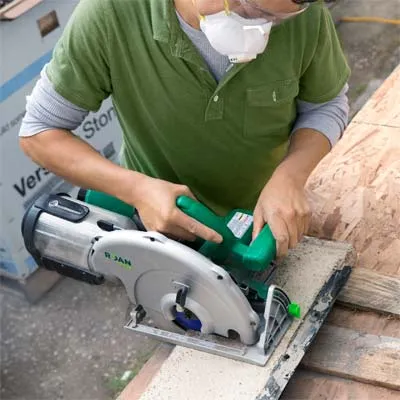
Letakkan panel yang ditandai menghadap ke bawah pada permukaan kerja dengan papan bekas di bawahnya pada kedua sisi garis potong. Gunakan penggaris-sejajar untuk menandai garis potong persegi di sepanjang titik tersempit dari garis yang digores. Pasangkan gergaji bundar dengan bilah berlian yang tersegmentasi dan potong sepanjang garis, menembus beton serta strip paku logam. Pastikan untuk memakai kacamata pengaman, masker debu, dan pelindung pendengaran.
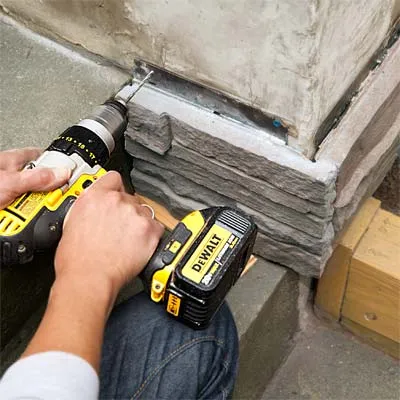
Hold the cut universal corner against the wall, bringing its finished end flush with the face of the adjacent flat panel so that the two pieces form a 90° outside corner. Level the universal corner, and drill pilot holes through the nailing strip, as shown, directly through the metal if necessary, in at least two places. Fasten the panel with 1¼-inch self-tapping masonry screws.
Tip: Jaga agar mata bor Anda tetap berputar untuk menghilangkan debu saat Anda memundurkan bor keluar dari lubang pilot, sehingga sekrup pasangan bata dapat masuk ke dalam beton.
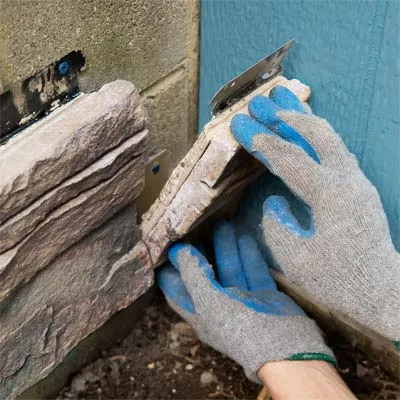
Lanjutkan memasang panel datar ukuran penuh, teruskan ke bawah. Saat Anda mendekati akhir, ukur dan potong sebagian panel untuk mengisi bagian akhir kursus. Jika potongan memiliki tab di kedua sisinya, gunakan alat 5-in-1 untuk melepaskannya. Pasangkan potongan pada tempatnya, bor lubang pilot, dan kencangkan ke dinding.

Use the cut half of the universal corner from the first course, positioned on the opposite side of the corner to stagger the joints. Slip the tongue on its bottom edge into the groove on top of the flat panel beneath. Position a flat panel, with its tab removed, atop the universal corner in the first course. Be sure it’s cut to a different length than the piece beneath, to offset the joints across the wall. Mark and drill pilot holes for the universal corner, secure it, and install the adjacent flat panel to complete the corner.
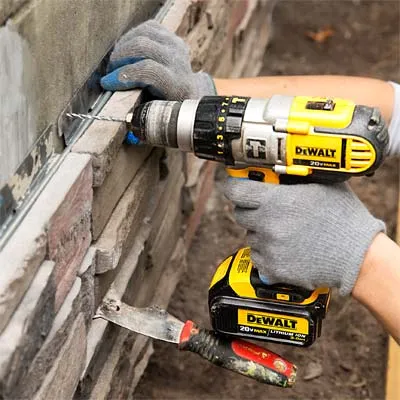
Work along the course, brushing out debris from the top groove to ensure that the panels fit together snugly. As you set each new panel, make sure that it’s aligned with the previous panel by nestling a ¼-inch metal rod in the groove along the top edge. The rod should lie flat and bridge the grooves in adjacent panels. If it doesn’t, use the 5-in-1 tool to shim the panel up, or back several screws out of the previous panel and adjust it. When the panels align, drill pilot holes and fasten them to the wall.

If the end of a panel falls in line with a joint on any of the previous courses, you’ll want to cut down its length slightly to maintain staggered joints. Hold the panel in place and mark the nailing strip at a different length. Transfer the mark to the back of the panel, cut it to size, and fasten it to the wall.
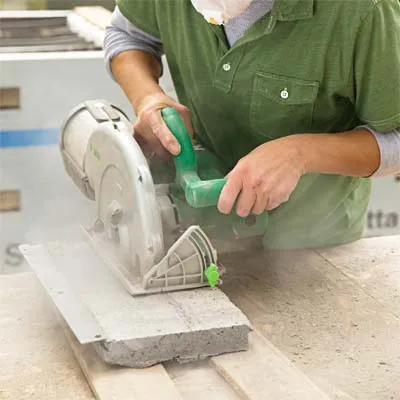
On the final course, you’ll need to cut down the height of the panels to fit, removing the nailing strip so that the stone reaches to the top of the wall. Rest a flat panel in place and scribe a cutline on the back at the height of the wall. Set the panel on a work surface, and use the circular saw to cut it to the proper height. You may want to cut your corner pieces to length first, then cut them to the proper height, as shown. Dry-fit the two pieces at the corner to check the fit.
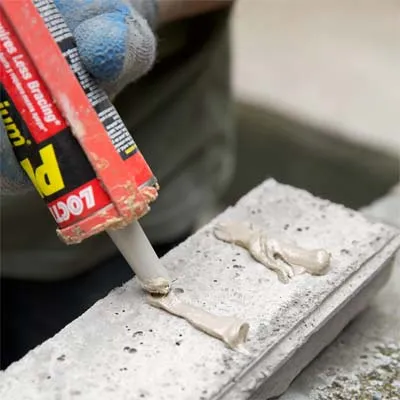
Lepaskan panel sudut dan oleskan butiran perekat konstruksi lurus di bagian belakang masing-masing bagian secara vertikal, seperti yang ditunjukkan, sehingga air bebas mengalir di belakang panel dan mengalir dengan baik. Tempatkan panel di dinding dan sesuaikan agar pas di sudut.
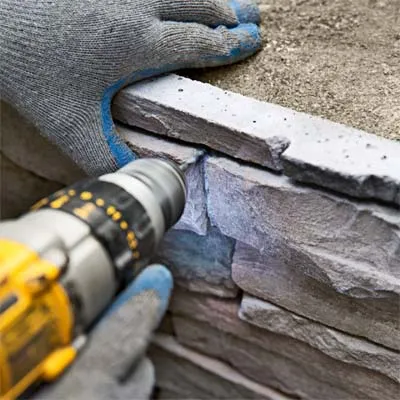
Untuk lebih mengamankan panel yang telah dipotong, carilah beberapa titik pada masing-masing panel di mana Anda dapat memasang pengikat secara tidak mencolok pada sambungan antar batu. Pegang potongan di tempatnya, bor lubang pilot melalui panel dan ke dinding. Pasang sekrup pasangan bata, tenggelamkan kepala di bawah permukaan panel. Tutupi kepala sekrup dengan dempul, kumpulkan debu dari meja potong, dan tiup ke dempul pengering untuk menyamarkannya. Anda dapat memperbaiki celah apa pun dengan cara yang sama. Selesaikan pemasangan panel pada kursus terakhir.
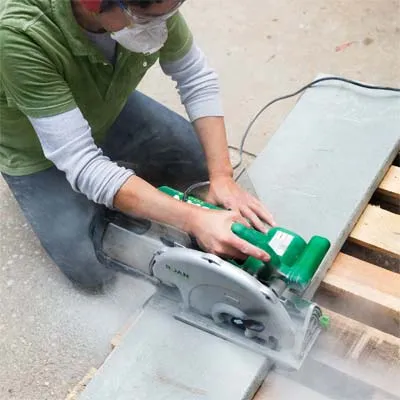
Pilih batu penjuru yang beberapa inci lebih lebar dari kedalaman dinding Anda untuk membuat overhang. Ukur dan tandai batu penjuru agar pas di sepanjang bagian atas dinding. Gunakan gergaji bundar dan mata pisau berlian untuk memotong memanjang, seperti yang ditunjukkan.

Bekerja sama dengan rekan, angkat batu penjuru dan keringkan di atas dinding. Lepaskan dan oleskan perekat konstruksi ke bagian atas dinding dan tepi veneer sebelum memasang kembali batu; atau, jika Anda lebih menyukai tampilan yang lebih autentik, letakkan di atas alas mortar yang kaku. Sekarang mundur selangkah dan kagumi tampilan mulusnya.
 Afrika
  bahasa Albania
  Amharik
  Arab
Arab  orang Armenia
  Azerbaijan
  Basque
  Belarusia
  Benggala
  Bosnia
  Bulgaria
  Katalan
  Cebuano
  Cina
Cina  Tiongkok (Taiwan)
  Korsika
  Kroasia
  Ceko
Ceko  Orang Denmark
  Belanda
  Bahasa inggris
  Esperanto
  Estonia
  Finlandia
  Perancis
  Frisian
  Galisia
  orang Georgia
  Jerman
  Orang yunani
  Gujarati
  Kreol Haiti
  hausa
hausa  Hawaii
  Ibrani
  Tidak
Tidak  Miao
Miao  Hongaria
  Islandia
  igbo
igbo  bahasa Indonesia
  orang Irlandia
  Italia
  Jepang
  Jawa
Jawa  Kannada
  kazakh
  Khmer
Khmer  Rwanda
  Korea
Korea  Kurdi
Kurdi  Kirgistan
  TBC
TBC  Latin
Latin  Latvia
  Lithuania
  Luksemburg
  Makedonia
  Malgashi
  Melayu
  Malayalam
  Malta
Malta  Maori
Maori  Marathi
  Mongolia
  Myanmar
  Nepal
Nepal  Norwegia
  Norwegia
  orang oksitan
  Pashto
  Orang Persia
  Polandia
  Portugis
  Punjabi
  Rumania
  Rusia
Rusia  Samoa
Samoa  Gaelik Skotlandia
  Orang Serbia
  Bahasa inggris
  Shona
Shona  Sindhi
  Sinhala
  Orang Slovakia
  Slovenia
  Somalia
  Orang Spanyol
  Sunda
Sunda  Swahili
  Orang Swedia
  Tagalog
  Tajik
Tajik  Tamil
Tamil  Tatar
Tatar  Telugu
  Thai
Thai  Turki
Turki  orang Turkmenistan
  Orang Ukraina
  Urdu
Urdu  Uighur
  Uzbekistan
  Orang Vietnam
  Welsh
Welsh 




