NAKONG:
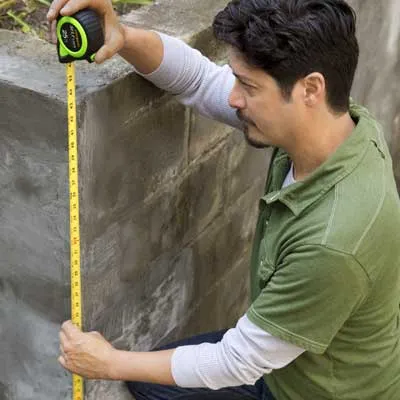
To calculate the number of universal corners to order, measure the height in inches of each outside wall corner, as shown, divide by 16, and round up to the nearest whole number. You’ll fill the area between the corners with flat panels. To calculate how many you’ll need, multiply the wall’s width by its height in feet and divide the resulting area by 2 (each panel covers 2 square feet). Subtract the number of universal corners from the result, then add 10 percent to your order of flat panels. Add one universal corner to be safe.
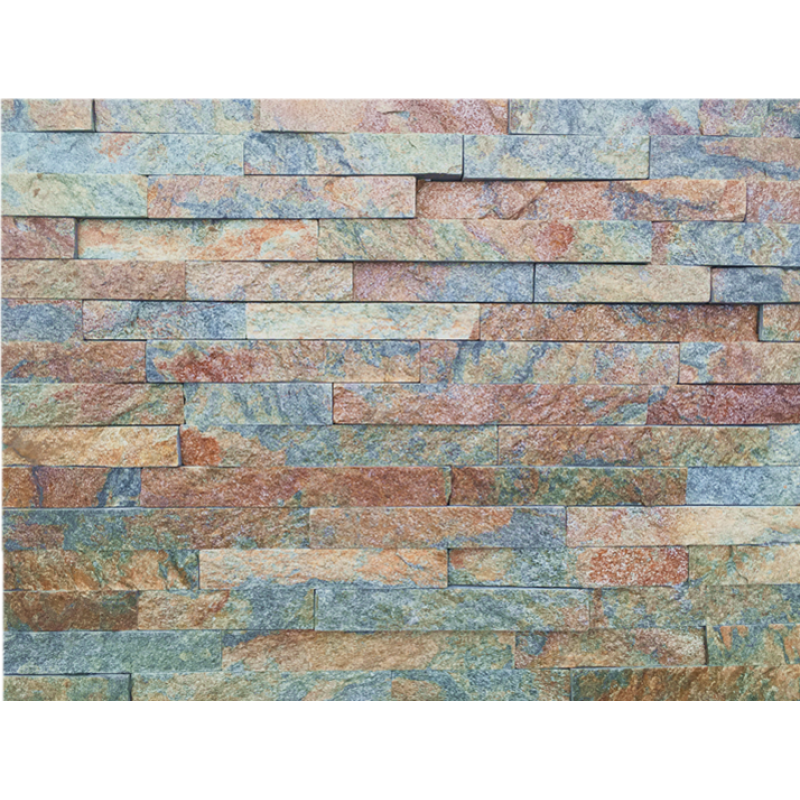
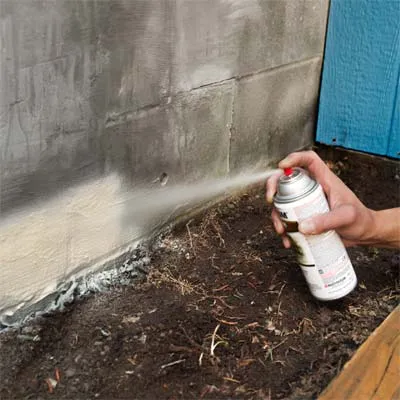
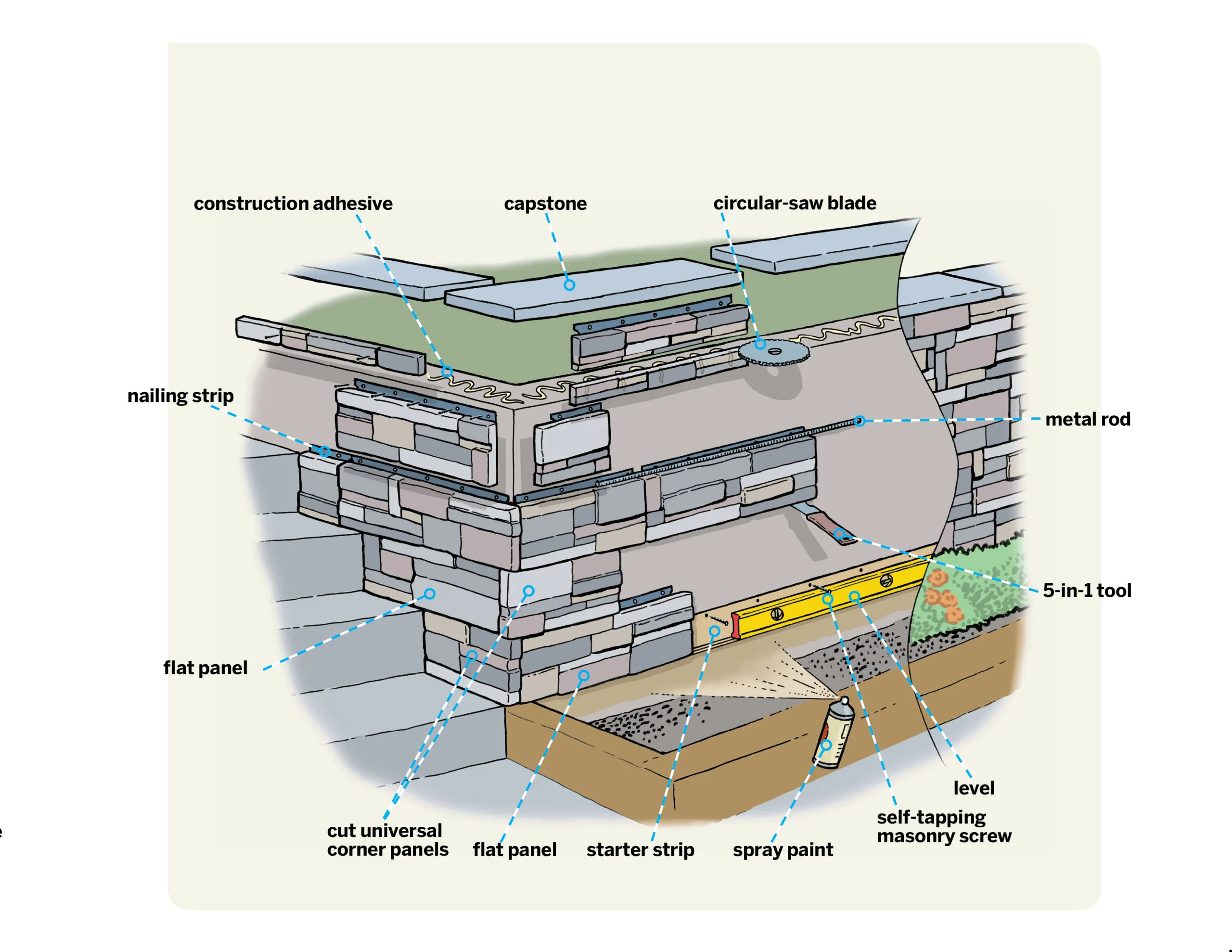
The panels must be installed above ground level, resting on a plastic support called a starter strip, so you’ll want to paint the wall below the strip to match the stone. Find a spray-paint color similar to the palette of your stone panels and paint the bottom few inches of the wall.
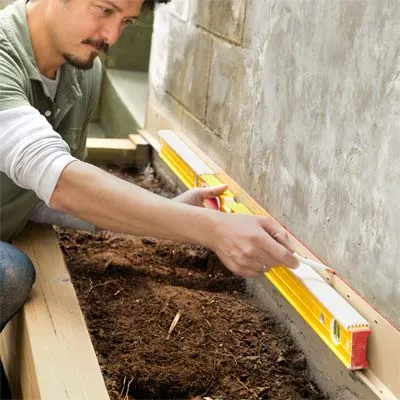
Set the location for the starter strip, at least 2 inches above any soil. Here, the strip’s lip aligns with the top of a stair on the adjacent side of the corner. Fit your drill/driver with a 3/16-inch masonry bit and drill a pilot hole through a slot in the strip near the corner and into the wall. Drive in a masonry screw to secure that end, then use the 4-foot level to bring the strip to level, and mark a line, as shown. Drill pilot holes and fasten the strip in two or three more spots, maintaining level.
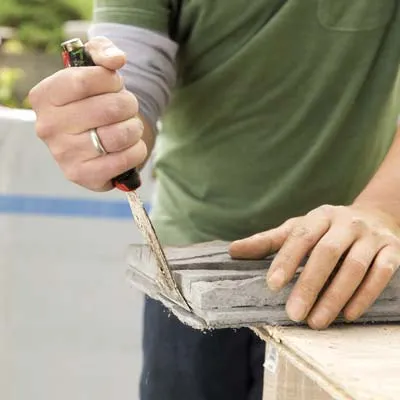
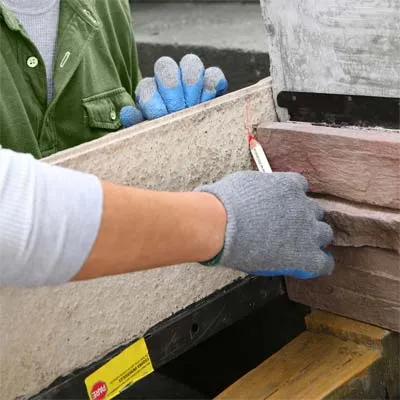
Liphanele tse bataletseng li na le tabo ka lehlakoreng le leng le le leng le nang le li-slots holim'a liphanele tse bataletseng empa li hloka ho tlosoa pheletsong efe kapa efe e etsang sekhutlo. Phomotsa sefahleho sa phanele sebakeng sa mosebetsi 'me u sebelise lehare la sesebelisoa sa 5-in-1 ho kokota tabo, joalo ka ha ho bonts'itsoe. Sephetho se bataletseng se tla etsa hore ho be le sekhutlo se thata.
Lebelo le leng le le leng le qala hukung, 'me pheletso e felileng ea sekhutlo sa bokahohle e fetang pheletsong ea phanele e bataletseng (tabo e tlositsoe). Ntlha ea pele, sekhutlo sa bokahohle se khaoloa likotoana tse peli; ntlha e phethiloeng ea sengoathoana ka seng e qala tsela, 'me moeli o sehiloeng o kenella ka phanele e bataletseng. Bakeng sa aesthetics, khaola sekhutlo sa bokahohle e le hore sengoathoana se seng le se seng se be le bolelele ba lisenthimithara tse 8. Kapa, joaloka molemong oa rona, e sehe hore e lekane khahlano le sethala sa litepisi: Beha phanele e bataletseng lehlakoreng le haufi le lebaleng la ho qala, ebe u thinyetsa huku ea bokahohleng e shebile fatše, u butse ntlha ea eona e felileng khahlano le sethala, ebe u ngola mola o sehiloeng. , joalokaha ho bontšitsoe.
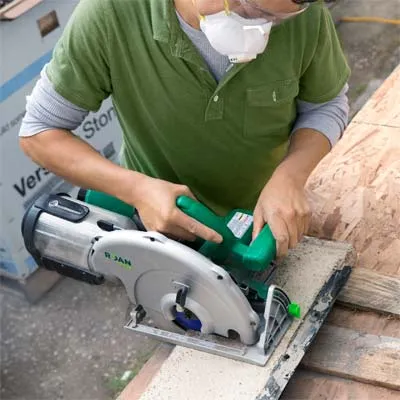
Beha phanele e tšoailoeng e shebile fatše sebakeng seo ho sebetsoang ho sona ka mapolanka a likhechana ka tlas'a eona ka mahlakoreng a mabeli a sehiloeng. Sebelisa tsela e otlolohileng ho tšoaea mola o sehiloeng o nang le lisekoere ntlheng e moqotetsane oa mola o ngotsoeng. Kopanya sakha e chitja ka lehare la daemane le arohaneng 'me u sehe haufi le mohala, u tsamaee ka konkreite hammoho le khoele ea lipekere tsa tšepe. Etsa bonnete ba hore u roala likhalase tsa tšireletso, maske a sireletsang lerole, le tšireletso ea kutlo.
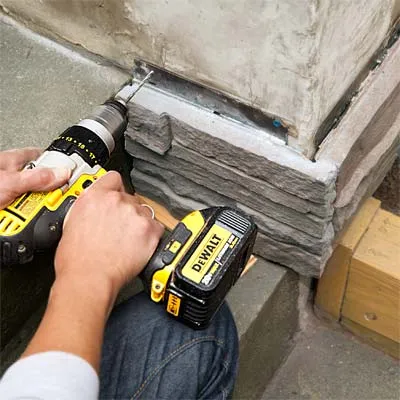
Hold the cut universal corner against the wall, bringing its finished end flush with the face of the adjacent flat panel so that the two pieces form a 90° outside corner. Level the universal corner, and drill pilot holes through the nailing strip, as shown, directly through the metal if necessary, in at least two places. Fasten the panel with 1¼-inch self-tapping masonry screws.
Keletso: Boloka sekoti sa hau se ntse se bilika ho tlosa lerōle ha u ntse u khutlisa boro ka ntle ho lesoba la sefofane, u lumelle sekoti sa masonry hore se kene ka har'a konkreite.
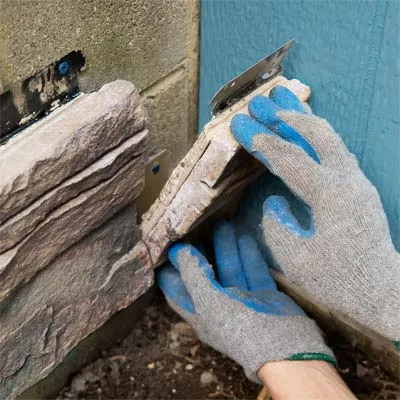
Tsoela pele ho kenya liphanele tse nang le boholo bo felletseng, u sebetsa ho theosa le thupelo. Ha u se u le haufi le ho qetela, lekanya le ho khaola karoloana ho tlatsa qetellong ea thupelo. Haeba sengoathoana se sehiloeng se na le tabo ka mahlakoreng ka bobeli, sebelisa sesebelisoa sa 5-in-1 ho se kokota. Beha sekhechana sebakeng seo, phunya masoba a sefofane, 'me u se phuthele leboteng.

Use the cut half of the universal corner from the first course, positioned on the opposite side of the corner to stagger the joints. Slip the tongue on its bottom edge into the groove on top of the flat panel beneath. Position a flat panel, with its tab removed, atop the universal corner in the first course. Be sure it’s cut to a different length than the piece beneath, to offset the joints across the wall. Mark and drill pilot holes for the universal corner, secure it, and install the adjacent flat panel to complete the corner.
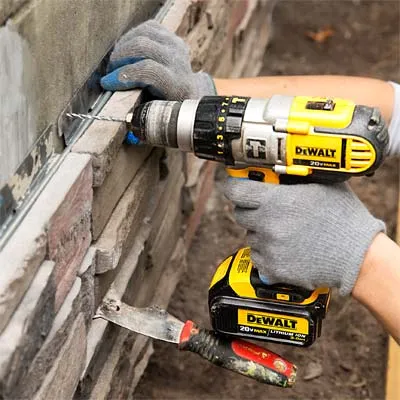
Work along the course, brushing out debris from the top groove to ensure that the panels fit together snugly. As you set each new panel, make sure that it’s aligned with the previous panel by nestling a ¼-inch metal rod in the groove along the top edge. The rod should lie flat and bridge the grooves in adjacent panels. If it doesn’t, use the 5-in-1 tool to shim the panel up, or back several screws out of the previous panel and adjust it. When the panels align, drill pilot holes and fasten them to the wall.

If the end of a panel falls in line with a joint on any of the previous courses, you’ll want to cut down its length slightly to maintain staggered joints. Hold the panel in place and mark the nailing strip at a different length. Transfer the mark to the back of the panel, cut it to size, and fasten it to the wall.
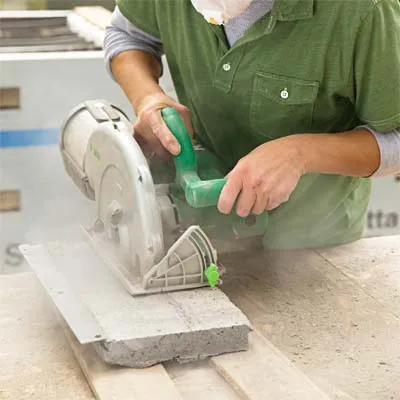
On the final course, you’ll need to cut down the height of the panels to fit, removing the nailing strip so that the stone reaches to the top of the wall. Rest a flat panel in place and scribe a cutline on the back at the height of the wall. Set the panel on a work surface, and use the circular saw to cut it to the proper height. You may want to cut your corner pieces to length first, then cut them to the proper height, as shown. Dry-fit the two pieces at the corner to check the fit.
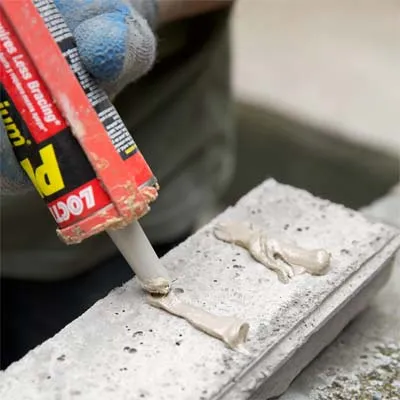
Tlosa liphanele tsa sekhutlo 'me u sebelise lifaha tse otlolohileng tsa sekhomaretsi sa kaho ka morao ea sengoathoana se seng le se seng ka litsela tse otlolohileng, joalokaha ho bontšitsoe, e le hore metsi a lokolohe ho phalla ka mor'a liphanele le ho phalla hantle. Beha liphanele sebakeng leboteng 'me u li lokise hore li lekane hantle hukung.
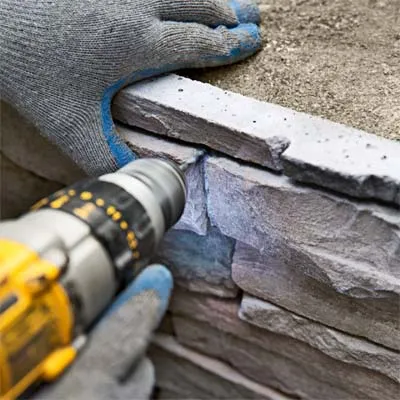
Ho boloka liphanele tse sehiloeng le ho feta, fumana matheba a 'maloa ho e' ngoe le e 'ngoe moo u ka tebisang seqhama ka mokhoa o sa bonahaleng manonyeletsong a pakeng tsa majoe. Ho tšoara sengoathoana sebakeng sa sona, phunya lesoba la sefofane ka phanele le leboteng. Khanna ka sekoti sa masonry, u tebise hlooho ka tlas'a bokaholimo ba phanele. Koahela li-screwheads ka caulk, bokella lerole ho tloha tafoleng e sehang, 'me u le bulule holim'a caulk e omisang ho e pata. U ka hlakola likheo life kapa life ka mokhoa o ts'oanang. Qetella ho kenya liphanele thupelong ea ho qetela.
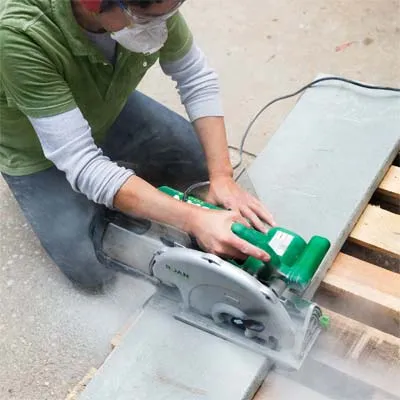
Khetha lejoe la sehlooho ka bophara ba lisenthimithara tse 'maloa ho feta botebo ba lebota la hao le koahetsoeng ho etsa overhang. Lekanya le ho tšoaea majoe a sehlooho hore a kene ka holim'a lerako. Sebelisa sakha e chitja le lehare la daemane le arohaneng ho ea bolelele, joalo ka ha ho bonts'itsoe.
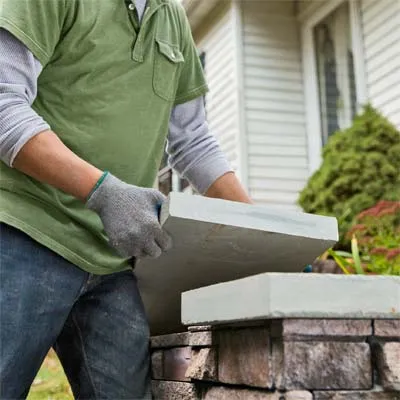
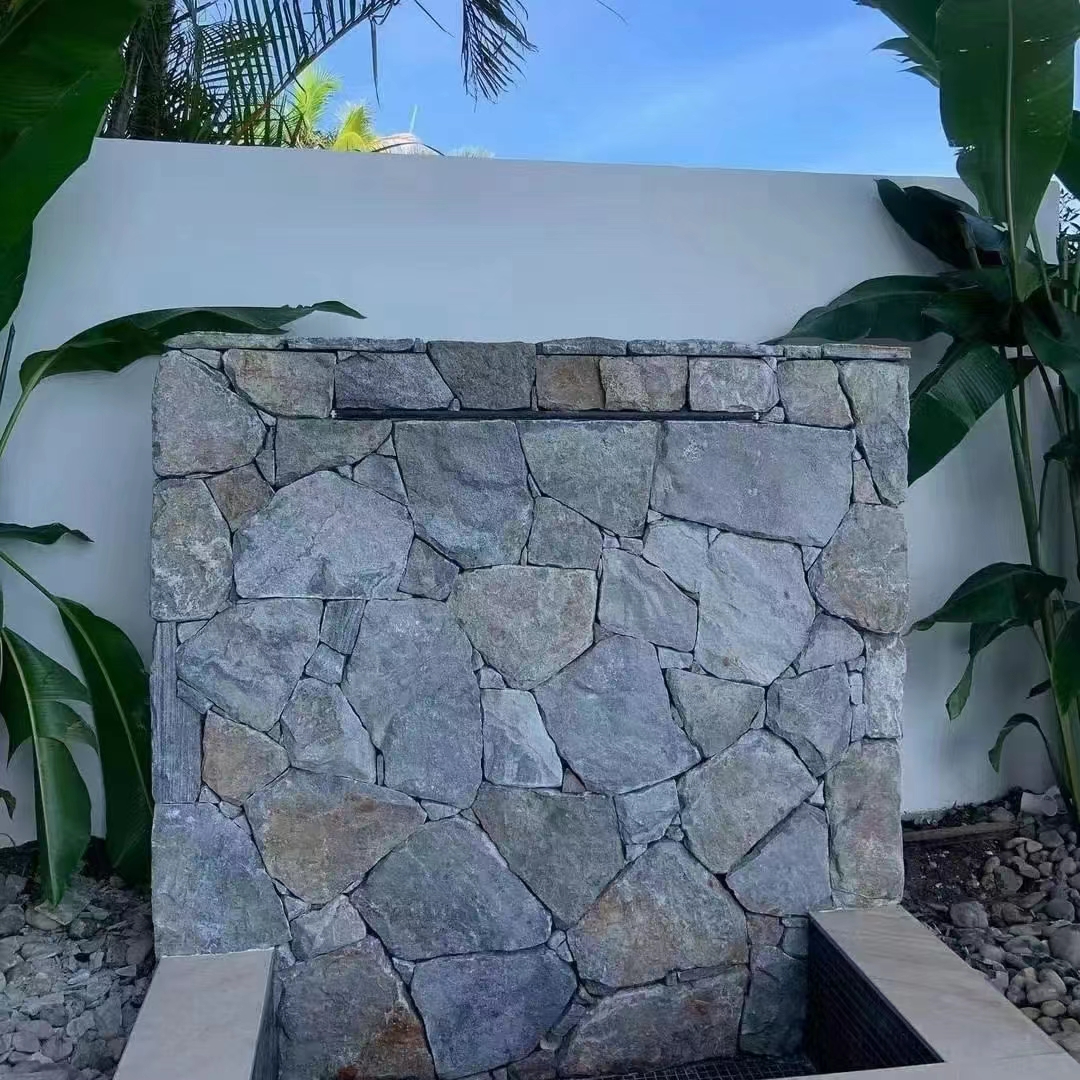
Ha u sebetsa le molekane, phahamisa li-capstones 'me u li omelle ka holim'a lerako. Li tlose 'me u sebelise sekhomaretsi sa kaho holim'a lerako le metse ka thōko ea veneer pele u tsosolosa majoe; kapa, haeba u khetha ponahalo ea 'nete le ho feta, li behe betheng e thata ea seretse. Joale khutlela morao 'me u hlolloe ke chebahalo e se nang moeli.
 Moafrika
  Sealbania
  Seamharic
  Searabia
  Searmenia
  Se-Azerbaijani
  Sebasque
  Sebelarusia
  Benghali
  Sebosnia
  Se-Bulgaria
  Secatalan
  Sebuano
  China
China  China (Taiwan)
  Corsican
  Secroatia
  Czech
Czech  Sedanishe
  Se-Dutch
  Senyesemane
  Esperanto
  Seestonia
  Sefinnishe
  Sefora
  Sefrisia
  Segalician
  Segeorgia
  Sejeremane
  Segerike
  Segujarati
  Secreole sa Haiti
  hausa
hausa  siwaiian
  Seheberu
  Che
Che  Miao
Miao  Se-Hungary
  Seiceland
  igbo
igbo  Seindonesia
  irish
irish  Setaliana
  Sejapane
  Se-Javanese
  Kannada
  kazakh
  Khmer
Khmer  Rwanda
  Sekorea
  Sekurdish
  Sekyrgyz
  Lefuba
  Selatine
  Selatvia
  Selithuania
  Se-Luxembourgish
  Semacedonia
  Malgashi
  Semalay
  Semalayalam
  Semalta
  Semaori
  Marathi
  Mongolian
  Myanmar
  tsa Nepali
  Norwegian
  Norwegian
  Occitan
  Sepashto
  Sepersia
  Sepolishe
  Sepotoketsi
  Sepunjabi
  Seromania
  Serussia
  Sesamoa
  Segaeli sa Scotland
  Seserbia
  Senyesemane
  Seshona
  Sindhi
  Sesinhala
  Seslovak
  Seslovenia
  Somalia
  Sepanish
  Sesundanese
  Seswahili
  Seswedishe
  Setagalog
  Se-Tajik
  Setamil
  Setatare
  Setelugu
  Sethai
  Se-Turkey
  Turkmen
  Seukraine
  Seurdu
  Uighur
  Seuzbek
  Sevietnam
  Welsh
Welsh