

.jpg "Top 10 Jinis Watu Digunakna ing Watu lanskap Konstruksi")
Saka piramida nganti Parthenon, manungsa wis mbangun kanthi watu nganti ewonan taun. Antarane watu alam sing paling akeh digunakake lan kondhang sing digunakake kanggo konstruksi yaiku basalt, watu gamping, travertine, lan slate. Sembarang arsitek, kontraktor, utawa masonry bakal ngandhani sampeyan watu alam iku luar biasa awet, nyediakake bali banget ing investasi.
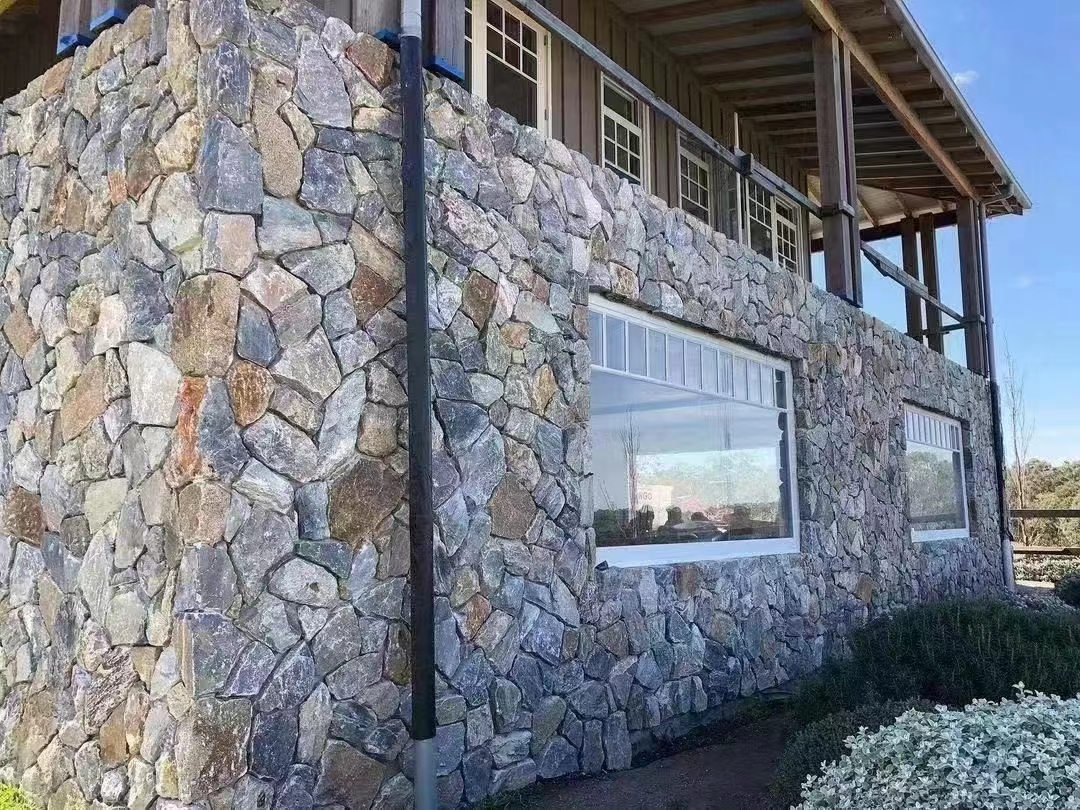
The technical characteristics of different stone such as porosity, compression strength, heat endurance thresholds, and frost resistance, will affect a stone’s application. Stones like basalt, granite, and sandstone fare well for massive construction projects like dams and bridges, whereas travertine, quartzite, and marble work better for interior construction and decoration.
In this blog, we’ll explore different stone types and uses to give you a broad overview of their unique qualities and applications.
While stone and rock are used interchangeably, they are different regarding internal structure and composition. Rocks form part of the earth’s crust and are found virtually everywhere, whereas stones are hard substances like limestone or sandstone extracted from rock, for example.
Bentenane utama yaiku watu luwih gedhe lan rusak kanggo njupuk unsur mineral, dene watu bisa disemen dadi komponen sing migunani kanggo konstruksi. Tanpa watu, ora bakal ana watu.
Whether igneous, metamorphic, or sedimentary, rocks used for building materials contain different types of stone that can construct some of the most magnificent architectural feats. There are three main types of rock. Let’s examine them more closely.
Named after the Latin word for fire, Igneous rocks form when hot, molten magma solidifies below the earth’s surface. This type of rock is divided into two groups, intrusive or extrusive, depending on where the molten rock solidifies. Intrusive igneous rock crystallizes below the earth’s surface, and extrusive rocks erupt onto the surface.
Watu beku kanggo konstruksi kalebu jinis watu iki:
Metamorphic rock starts as one type of rock but due to pressure, heat, and time, gradually transforms into a new rock type. Although it forms deep within the earth’s crust, it's often exposed on our planet’s surface after geological uplift and the erosion of rock and soil above it. These crystalline rocks tend to have a foliated texture.
Batu metamorf kanggo konstruksi kalebu jinis watu iki:
This rock is always formed in layers called “strata” and often contains fossils. Pieces of rock are loosened by weather, then transported to a basin or depression where the sediment is trapped, and lithification (compaction) takes place. The sediment is deposited in flat, horizontal layers, with the oldest layers on the bottom and younger layers on top.
Ing ngisor iki ana sepuluh jinis watu sing paling umum digunakake ing pirang-pirang abad lan terus dadi bagean lan digunakake ing jagad modern saiki.
This coarse-grained intrusive igneous rock is composed chiefly of quartz, feldspar, and plagioclase. Granite gets its signature color speckles from crystallization — the longer the molten rock has to cool, the larger the grains of color.
Available in white, pink, yellow, gray, and black, this building stone is lauded for its durability. As the earth’s most durable and common igneous rock, granit iku pilihan banget kanggo countertops, monumen, trotoar, kreteg, kolom, lan jubin.
watu pasir minangka watu sedimen klasik sing digawe saka butir silikat ukuran pasir kuarsa lan feldspar. Atos lan tahan cuaca, watu bahan bangunan iki asring digunakake kanggo cladding fasad lan tembok interior, uga bangku taman, bahan paving, meja teras, lan pinggir kolam renang.
Watu iki bisa wae warnane kaya wedhi, nanging warna sing paling umum yaiku coklat, abu-abu, putih, abang, lan kuning. Yen nduweni kandungan kuarsa sing dhuwur, watu pasir bisa uga diremuk lan digunakake minangka sumber silika kanggo manufaktur kaca.
Kasusun saka kalsit lan magnesium, watu sedimen alus iki biasane werna abu-abu nanging bisa uga putih, kuning, utawa coklat. Saka perspektif geologi, watu gamping dibentuk ing banyu segara sing jero utawa amarga penguapan banyu sajrone pembentukan guwa.
Fitur unik saka watu iki yaiku konstituen utama, kalsit, dibentuk utamane dening fosilisasi organisme urip sing ngasilake cangkang lan karang. Batu gamping minangka bahan bangunan digunakake ing aplikasi arsitektur kanggo tembok, trim dekoratif, lan veneer.
Dark and heavy, this extrusive, igneous rock makes up most of the planet’s oceanic crust. Basalt is black, but after extensive weathering, may turn green or brown. Additionally, it contains some light-colored minerals like feldspar and quartz, but these are difficult to see with the naked eye.
Sugih ing wesi lan magnesium, basalt digunakake ing konstruksi kanggo nggawe blok bangunan, cobblestones, ubin jogan, watu dalan, ballast rel, lan patung. 90% saka kabeh watu vulkanik yaiku basalt.
Ditresnani, ing salawas-lawase, amarga kemewahan lan kemewahan, marmer minangka watu metamorf sing apik sing dibentuk nalika watu gamping kena tekanan dhuwur utawa panas. Biasane ngemot mineral liyane kaya kuarsa, grafit, pirit, lan oksida wesi sing menehi macem-macem warna saka jambon nganti coklat, abu-abu, ijo, ireng, utawa werna-werna warna.
Amarga veining sing unik lan penampilan sing elegan, marmer minangka watu sing paling apik kanggo mbangun monumen, dekorasi interior, puncak meja, patung, lan barang anyar. Marmer putih sing paling bergengsi digali ing Carrara, Italia.
Slate minangka watu sedimen homogen, berfoliasi, sing asalé saka watu serpih sing kasusun saka lempung utawa awu vulkanik. Mineral lempung asli ing serpih ngganti micas nalika kena panas lan tekanan sing tambah.
Gray in color, slate contains quartz, feldspar, calcite, pyrite, and hematite, among other minerals. It’s a desirable building stone that’s been utilized in construction since ancient Egyptian times. Today, it’s used as roofing, flagging, decorative aggregates, and flooring because of its attractiveness and durability.
Pumice is a porous igneous rock produced during volcanic eruptions. It forms so rapidly that its atoms don’t have time to crystallize, essentially rendering it a solidified foam. While it occurs in various colors like white, gray, blue, cream, green, and brown, it is almost always pale.
Sanadyan wulune alus, lumahing watu iki kasar. Pumice bubuk digunakake minangka agregat ing beton entheng kanggo insulasi, minangka watu polishing, lan ing macem-macem produk industri lan konsumen, uga watu polishing.
Nalika watu pasir sing sugih kuarsa diowahi kanthi panas, tekanan, lan aktivitas kimia metamorfisme, dadi kuarsit. Sajrone proses kasebut, butir pasir lan semen silika diikat bebarengan, nyebabake jaringan butir kuarsa sing saling ngunci.
Quartzite biasane putih utawa werna cahya, nanging bahan tambahan sing digawa dening banyu soko njero lemah bisa menehi warna ijo, biru utawa wesi-abang. Iku salah siji saka watu paling apik kanggo construction saka countertops, jogan, gendheng gendheng, lan undhak-undhakan undhak-undhakan amarga katon marmer-kaya lan kekiatan granit-kaya.
Travertine minangka jinis watu gamping terestrial sing dibentuk saka endapan mineral ing cedhak sumber alam. Watu sedimen iki nduweni tampilan fibrous utawa konsentris lan nduweni warna putih, coklat, krim, lan teyeng. Tekstur sing unik lan nada bumi sing menarik ndadekake populer kanggo aplikasi bangunan.
This versatile stone variety is commonly used for indoor and outdoor flooring, spa walls, ceilings, facades, and wall cladding. It’s an affordable option compared to other natural stones like marble, yet still maintains a luxurious appeal.
Gipsum medium-hard, alabaster biasane putih lan tembus kanthi gandum seragam sing apik.
Its small natural grain is visible when held up to the light. Because it’s a porous mineral, this stone can be dyed in a variety of colors.
It has been used for centuries to make statues, carvings, and other decorative and ornamental work. While the splendor of alabaster is undeniable, it is a soft metamorphic rock that’s only really suitable for indoor applications.
The many natural stone products on the market and their unique characteristics can make it challenging for contractors and homeowners to select the correct ones for their projects. If you’re new to the process, the first thing to consider is the location of the stone installation. For instance, the type of stones for floor applications will differ if it’s indoors or outdoors.
Then you’ll need to evaluate the stone’s durability, the fabricator’s warranty, and its grade. There are three grades of natural stone: commercial, standard, and first choice. Standard grade is a good fit for interior applications, like countertops, whereas commercial-grade, may be better for apartment or hotel projects where only a portion of slab is required, and large imperfections can be avoided.
There’s a lot to consider, right? As well-seasoned experts in the stone business, our team at Stone Center can help you with stone selection for residential and commercial stone projects, regardless of their scale. Why not start by taking a look at our extensive catalog of premium watu bangunan?
 Afrika
  basa Albania
  Amharic
  Arab
Arab  wong Armenia
  Azerbaijan
  Basque
  Belarusia
  Bengali
  Bosnia
  basa Bulgaria
  Katalan
  Cebuano
  Cina
Cina  China (Taiwan)
  Korsika
  basa Kroasia
  Ceko
Ceko  Danish
  Walanda
  Inggris
  Esperanto
  basa Estonia
  basa Finlandia
  Prancis
  Frisian
  Galician
  Georgian
  Jerman
  Yunani
  Gujarati
  Kreol Haiti
  hausa
hausa  hawaii
  basa Ibrani
  Ora
Ora  Miao
Miao  Hungaria
  basa Islandia
  igbo
igbo  basa Indonesia
  irlandia
  basa Italia
  Jepang
  basa jawa
  Kannada
  kazakh
  Khmer
Khmer  wong Rwanda
  Korea
Korea  Kurdi
Kurdi  Kyrgyz
  TB
TB  latin
latin  Latvia
  Lithuania
  Luksemburg
  Makedonia
  Malgashi
  Melayu
  Malayalam
  wong Malta
  Maori
Maori  Marathi
  Mongolian
  Myanmar
  Nepali
  basa Norwegia
  basa Norwegia
  Occitan
  Pashto
  Persia
  Polandia
  Portugis
  Punjabi
  basa Rumania
  Rusian
  Samoan
  Gaelik Skotlandia
  basa Serbia
  Inggris
  Shona
Shona  Sindhi
  Sinhala
  basa Slowakia
  basa Slovenia
  Somali
  Spanyol
  Sundha
  Swahili
  Swedia
  Tagalog
  Tajik
Tajik  Tamil
Tamil  Tatar
Tatar  Telugu
  Thai
Thai  basa Turki
  Turkmen
  Ukrainia
  Basa Urdu
  Uighur
  Uzbek
Uzbek  Vietnam
  Welsh
Welsh 




