

.jpg "Top 10 Aarte vu Steen benotzt am Bau Landschaftssteen")
Vun de Pyramiden bis zum Parthenon baue Mënschen zënter Dausende vu Joer mat Steng. Ënnert de meescht benotzten a bekannte natierleche Steng, déi fir de Bau benotzt ginn, sinn Basalt, Kalksteen, Travertin a Schiefer. All Architekt, Optraghueler oder Mauerwierk wäert Iech dat soen natierlech Steen ass aussergewéinlech haltbar, bitt en exzellente Rendement op Investitioun.
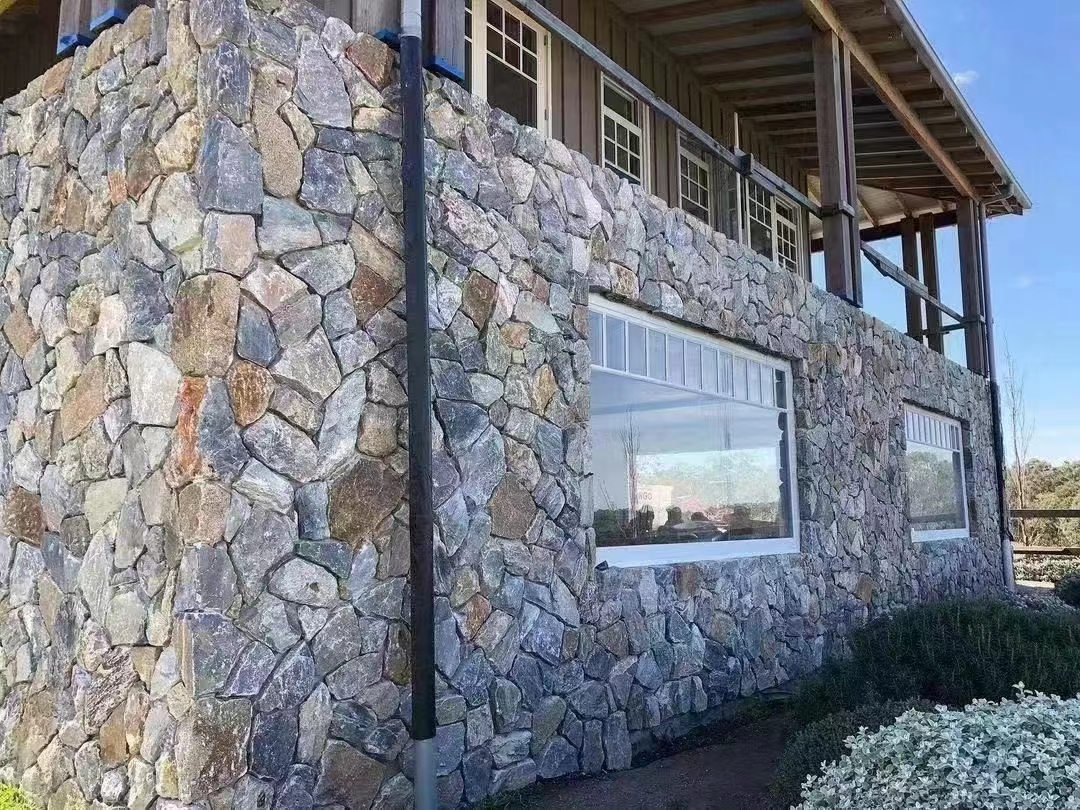
The technical characteristics of different stone such as porosity, compression strength, heat endurance thresholds, and frost resistance, will affect a stone’s application. Stones like basalt, granite, and sandstone fare well for massive construction projects like dams and bridges, whereas travertine, quartzite, and marble work better for interior construction and decoration.
In this blog, we’ll explore different stone types and uses to give you a broad overview of their unique qualities and applications.
While stone and rock are used interchangeably, they are different regarding internal structure and composition. Rocks form part of the earth’s crust and are found virtually everywhere, whereas stones are hard substances like limestone or sandstone extracted from rock, for example.
Den Haaptunterschied ass datt de Fiels méi grouss ass an ofgebrach ass fir Mineralelementer ze recuperéieren, wärend Steen zesummenzementéiert ka ginn fir Komponenten ze bilden déi nëtzlech sinn fir de Bau. Ouni Fiels wier et keng Steng.
Whether igneous, metamorphic, or sedimentary, rocks used for building materials contain different types of stone that can construct some of the most magnificent architectural feats. There are three main types of rock. Let’s examine them more closely.
Named after the Latin word for fire, Igneous rocks form when hot, molten magma solidifies below the earth’s surface. This type of rock is divided into two groups, intrusive or extrusive, depending on where the molten rock solidifies. Intrusive igneous rock crystallizes below the earth’s surface, and extrusive rocks erupt onto the surface.
Igneous Rock fir Bau enthält dës Zorte vu Steen:
Metamorphic rock starts as one type of rock but due to pressure, heat, and time, gradually transforms into a new rock type. Although it forms deep within the earth’s crust, it's often exposed on our planet’s surface after geological uplift and the erosion of rock and soil above it. These crystalline rocks tend to have a foliated texture.
Metamorphesche Fiels fir de Bau beinhalt dës Steenarten:
This rock is always formed in layers called “strata” and often contains fossils. Pieces of rock are loosened by weather, then transported to a basin or depression where the sediment is trapped, and lithification (compaction) takes place. The sediment is deposited in flat, horizontal layers, with the oldest layers on the bottom and younger layers on top.
Drënner sinn déi zéng meescht üblech Aarte vu Steen, déi zënter Jorhonnerte benotzt goufen a weiderhin en Deel vun eiser moderner Welt bilden an haut benotzt ginn.
This coarse-grained intrusive igneous rock is composed chiefly of quartz, feldspar, and plagioclase. Granite gets its signature color speckles from crystallization — the longer the molten rock has to cool, the larger the grains of color.
Available in white, pink, yellow, gray, and black, this building stone is lauded for its durability. As the earth’s most durable and common igneous rock, granit ass eng exzellent Wiel fir countertops, Monumenter, Trottoiren, Brécke, Sailen, a Biedem.
Sandsteen ass e klassesche sedimentäre Fiels aus Sand-Gréisst Silikatkäre vu Quarz a Feldspat. Hard a resistent géint Wieder, dëse Baumaterial Steen gëtt dacks benotzt fir Fassaden an bannenzeg Maueren ze bekleeden, souwéi Gaardebänken, Pavématerial, Patio Dëscher a Schwämmkanten.
Dëse Steen kann all Faarf wéi Sand sinn, awer déi meescht üblech Faarwen si brong, brong, gro, wäiss, rout a giel. Wann et en héije Quarzgehalt huet, kann Sandsteen souguer zerquetscht ginn an als Quell vu Silica fir d'Glasfabrikatioun benotzt ginn.
Zesummegesat aus Kalzit a Magnesium, ass dëse mëllen sedimentäre Fiels normalerweis gro, awer kann och wäiss, giel oder brong sinn. Aus enger geologescher Perspektiv gëtt Kalksteen entweder am déiwe Miereswaasser geformt oder duerch Waasserverdampfung wärend der Höhlbildung.
Eng eenzegaarteg Feature vun dësem Fiels ass datt säi primäre Bestanddeel, Kalkit, haaptsächlech duerch d'Fossiliatioun vu Shell-produzéierten a Korallenbauende liewegen Organismen geformt gëtt. Kalkstein als Baumaterial gëtt an architektoneschen Uwendungen fir Maueren, dekorativen Trimm, a Furnier benotzt.
Dark and heavy, this extrusive, igneous rock makes up most of the planet’s oceanic crust. Basalt is black, but after extensive weathering, may turn green or brown. Additionally, it contains some light-colored minerals like feldspar and quartz, but these are difficult to see with the naked eye.
Räich un Eisen a Magnesium, Basalt gëtt am Bau benotzt fir Bausteng, Cobblestones, Buedemplécke, Stroossesteen, Eisebunnsballasten a Statuen ze maachen. 90% vun alle vulkanesche Fielsen ass Basalt.
Beléift, duerch d'Joer, fir säi Luxus an Opulenz, Marmer ass e schéine metamorphesche Fiels, dee sech formt wann Kalksteen ënner héijen Drock oder Hëtzt ënnerworf gëtt. Et enthält normalerweis aner Mineralstoffer wéi Quarz, Grafit, Pyrit, an Eisenoxiden, déi et eng Rei vu Faarwen vu rosa bis brong, gro, gréng, schwaarz oder variegéiert Faarf ginn.
Wéinst senger eenzegaarteger Vene an eleganter Erscheinung ass Marmer dee beschte Steen fir Monumenter ze bauen, Bannendekoratioun, Dëscher, Skulpturen an Neiheeten. Dee prestigiéistste wäisse Marmer gëtt zu Carrara, Italien gebaut.
Schiefer ass e feinkornegen, foliéierten, homogene sedimentäre Fiels ofgeleet aus Schifersteen aus Lehm oder Vulkanasche. Déi ursprénglech Lehmmineraler am Schifer veränneren sech op Micas wann se un d'Erhéijung vun Hëtzt an Drock ausgesat sinn.
Gray in color, slate contains quartz, feldspar, calcite, pyrite, and hematite, among other minerals. It’s a desirable building stone that’s been utilized in construction since ancient Egyptian times. Today, it’s used as roofing, flagging, decorative aggregates, and flooring because of its attractiveness and durability.
Pumice is a porous igneous rock produced during volcanic eruptions. It forms so rapidly that its atoms don’t have time to crystallize, essentially rendering it a solidified foam. While it occurs in various colors like white, gray, blue, cream, green, and brown, it is almost always pale.
Och wann et feinkorneg ass, ass d'Uewerfläch vun dësem Steen rau. Powdered Pumice gëtt als Aggregat a liicht Beton fir Isolatioun benotzt, als Polierstee, an a verschiddenen Industrie- a Konsumproduiten, souwéi e Polierstee.
Wann Quarz-räiche Sandsteen duerch Hëtzt, Drock an der chemescher Aktivitéit vum Metamorphismus geännert gëtt, gëtt et a Quarzit. Wärend dem Prozess binde Sandkorn a Silikazement zesummen, wat zu engem formidabele Netz vu verbreet Quarzkorn resultéiert.
Quarzit ass normalerweis wäiss oder hellfaarweg, awer zousätzlech Materialien, déi vum Grondwaasser gedroe ginn, kënnen Téin vu gréng, blo oder Eisenrout vermëttelen. Et ass ee vun de beschte Steng fir de Bau vun countertops, Buedem, Daach Plättercher, an Trap Schrëtt wéinst sengem marmor-ähnlechen Erscheinung a granit-ähnlechen Haltbarkeet.
Travertin ass eng Zort terrestresch Kalksteen geformt duerch Mineraloflagerungen bei natierleche Quellen. Dëse sedimentäre Fiels huet e fibrous oder konzentrescht Erscheinungsbild a kënnt a Schatten vu wäiss, brong, Crème a Rost. Seng eenzegaarteg Textur an attraktiv Äerdtéin maachen et populär fir Gebai Uwendungen.
This versatile stone variety is commonly used for indoor and outdoor flooring, spa walls, ceilings, facades, and wall cladding. It’s an affordable option compared to other natural stones like marble, yet still maintains a luxurious appeal.
E mëttelharte Gips, Alabaster ass normalerweis wäiss a transluzent mat engem feine uniforméierte Kär.
Its small natural grain is visible when held up to the light. Because it’s a porous mineral, this stone can be dyed in a variety of colors.
It has been used for centuries to make statues, carvings, and other decorative and ornamental work. While the splendor of alabaster is undeniable, it is a soft metamorphic rock that’s only really suitable for indoor applications.
The many natural stone products on the market and their unique characteristics can make it challenging for contractors and homeowners to select the correct ones for their projects. If you’re new to the process, the first thing to consider is the location of the stone installation. For instance, the type of stones for floor applications will differ if it’s indoors or outdoors.
Then you’ll need to evaluate the stone’s durability, the fabricator’s warranty, and its grade. There are three grades of natural stone: commercial, standard, and first choice. Standard grade is a good fit for interior applications, like countertops, whereas commercial-grade, may be better for apartment or hotel projects where only a portion of slab is required, and large imperfections can be avoided.
There’s a lot to consider, right? As well-seasoned experts in the stone business, our team at Stone Center can help you with stone selection for residential and commercial stone projects, regardless of their scale. Why not start by taking a look at our extensive catalog of premium Bausteen?
 afrikanesch
  Albanesch
  Amharesch
  Arabesch
  Armenesch
  Aserbaidschan
  Baskesch
  wäissrussesch
  Bengalesch
  Bosnesch
  Bulgarescg
  katalanesch
  Cebuano
  China
China  China (Taiwan)
  korsesch
  Kroatesch
  Tschechesch
  Dänesch
  Hollänesch
  Englesch
  esperanto
  Estonesch
  Finnesch
  Franséisch
  friesesch
  Galizesch
  Georgesch
  Däitsch
  Griichesch
  Gujarati
  Haitescht Creole
  Haussa
  Hawaianesch
  Hebräesch
  Nee
Nee  Miao
Miao  Ungaresch
  Islännesch
  igbo
igbo  Indonesesch
  Iresch
  Italienesch
  Japanesch
  Javanesesch
  Kannada
  kasachesch
  Khmer
Khmer  Rwandaner
  Koreanesch
  kurdesch
  kirgisesch
  TB
TB  laténgesch
  Lettesch
  litauesch
  lëtzebuergesch
  Mazedonesch
  Malgashi
  Malaiesch
  Malajalam
  Maltesesch
  maoresch
  Marathi
  mongolesch
  Myanmar
  Nepalesesch
  Norweegesch
  Norweegesch
  Okzitanesch
  pashtu
  Persesch
  Polnesch
  Portugisesch
  pundschabi
  Rumänesch
  Russesch
  Samoanesch
  Schottesch Gaelesch
  serbesch
  Englesch
  Shona
Shona  Sindhi
  Sinhala
  Slowakesch
  Slowenesch
  somalesch
  Spuenesch
  Sundanesesch
  Swahili
  Schweedesch
  Tagalog
  Tadschikesch
  Tamil
Tamil  Tataresch
  Telugu
  Thai
Thai  tierkesch
  turkmenesch
  Ukrainesch
  Urdu
Urdu  Uighur
  Usbekesch
  Vietnamesesch
  Waliser




