

.jpg "Nangungunang 10 Uri ng Bato na Ginamit sa Konstruksyon na landscape stone")
Mula sa mga piramide hanggang sa Parthenon, ang mga tao ay nagtatayo gamit ang mga bato sa loob ng libu-libong taon. Kabilang sa mga pinaka ginagamit at kilalang natural na mga bato na ginagamit para sa pagtatayo ay basalt, limestone, travertine, at slate. Ang sinumang arkitekto, kontratista, o pagmamason ay magsasabi nito sa iyo natural na bato ay lubhang matibay, na nagbibigay ng mahusay na return on investment.
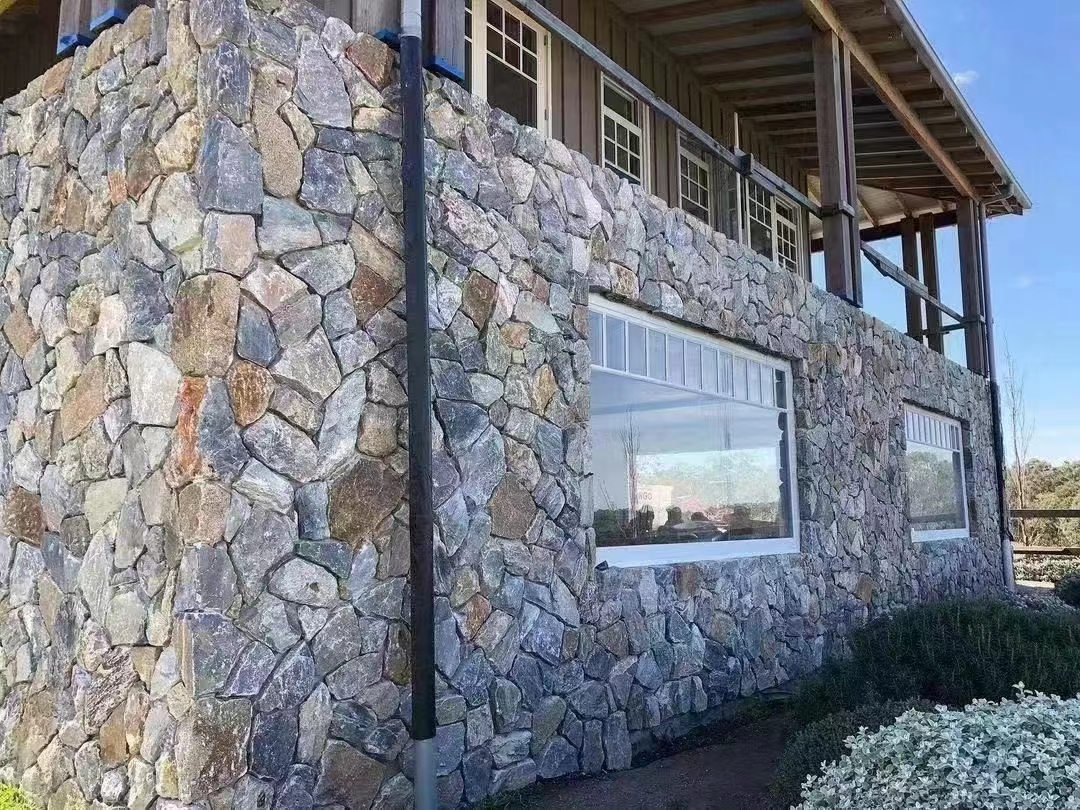
The technical characteristics of different stone such as porosity, compression strength, heat endurance thresholds, and frost resistance, will affect a stone’s application. Stones like basalt, granite, and sandstone fare well for massive construction projects like dams and bridges, whereas travertine, quartzite, and marble work better for interior construction and decoration.
In this blog, we’ll explore different stone types and uses to give you a broad overview of their unique qualities and applications.
While stone and rock are used interchangeably, they are different regarding internal structure and composition. Rocks form part of the earth’s crust and are found virtually everywhere, whereas stones are hard substances like limestone or sandstone extracted from rock, for example.
Ang pangunahing pagkakaiba ay ang bato ay mas malaki at pinaghiwa-hiwalay upang kunin ang mga elemento ng mineral, habang ang bato ay maaaring pagsama-samahin upang bumuo ng mga sangkap na kapaki-pakinabang para sa pagtatayo. Kung walang bato, walang mga bato.
Whether igneous, metamorphic, or sedimentary, rocks used for building materials contain different types of stone that can construct some of the most magnificent architectural feats. There are three main types of rock. Let’s examine them more closely.
Named after the Latin word for fire, Igneous rocks form when hot, molten magma solidifies below the earth’s surface. This type of rock is divided into two groups, intrusive or extrusive, depending on where the molten rock solidifies. Intrusive igneous rock crystallizes below the earth’s surface, and extrusive rocks erupt onto the surface.
Kasama sa igneous rock para sa pagtatayo ang mga ganitong uri ng bato:
Metamorphic rock starts as one type of rock but due to pressure, heat, and time, gradually transforms into a new rock type. Although it forms deep within the earth’s crust, it's often exposed on our planet’s surface after geological uplift and the erosion of rock and soil above it. These crystalline rocks tend to have a foliated texture.
Ang metamorphic na bato para sa pagtatayo ay kinabibilangan ng mga uri ng batong ito:
This rock is always formed in layers called “strata” and often contains fossils. Pieces of rock are loosened by weather, then transported to a basin or depression where the sediment is trapped, and lithification (compaction) takes place. The sediment is deposited in flat, horizontal layers, with the oldest layers on the bottom and younger layers on top.
Nasa ibaba ang sampung pinakakaraniwang uri ng bato na ginamit sa loob ng maraming siglo at patuloy na bumubuo ng bahagi at ginagamit sa ating modernong mundo ngayon.
This coarse-grained intrusive igneous rock is composed chiefly of quartz, feldspar, and plagioclase. Granite gets its signature color speckles from crystallization — the longer the molten rock has to cool, the larger the grains of color.
Available in white, pink, yellow, gray, and black, this building stone is lauded for its durability. As the earth’s most durable and common igneous rock, granite ay isang mahusay na pagpipilian para sa mga countertop, monumento, pavement, tulay, haligi, at sahig.
Sandstone ay isang klasikong sedimentary rock na gawa sa sand-sized na silicate na butil ng quartz at feldspar. Matigas at lumalaban sa lagay ng panahon, ang materyal na gusaling bato na ito ay kadalasang ginagamit para sa mga cladding na facade at panloob na mga dingding, gayundin sa mga bangko sa hardin, paving material, patio table, at mga gilid ng swimming pool.
Ang batong ito ay maaaring anumang kulay tulad ng buhangin, ngunit ang pinakakaraniwang kulay ay kayumanggi, kayumanggi, kulay abo, puti, pula, at dilaw. Kung ito ay may mataas na nilalaman ng quartz, ang sandstone ay maaaring madurog at magamit bilang isang mapagkukunan ng silica para sa paggawa ng salamin.
Binubuo ng calcite at magnesium, ang malambot na sedimentary rock na ito ay karaniwang kulay abo ngunit maaari ding puti, dilaw, o kayumanggi. Mula sa isang geological na pananaw, ang limestone ay nabuo alinman sa malalim na tubig sa dagat o dahil sa pagsingaw ng tubig sa panahon ng pagbuo ng kuweba.
Ang kakaibang katangian ng batong ito ay ang pangunahing sangkap nito, ang calcite, ay pangunahing nabuo sa pamamagitan ng fossilization ng mga nabubuhay na organismo na gumagawa ng shell at coral-building. Limestone bilang isang materyales sa gusali ay ginagamit sa mga aplikasyon sa arkitektura para sa mga dingding, pampalamuti, at pakitang-tao.
Dark and heavy, this extrusive, igneous rock makes up most of the planet’s oceanic crust. Basalt is black, but after extensive weathering, may turn green or brown. Additionally, it contains some light-colored minerals like feldspar and quartz, but these are difficult to see with the naked eye.
Mayaman sa iron at magnesium, ang basalt ay ginagamit sa konstruksyon upang gumawa ng mga bloke ng gusali, mga cobblestone, mga tile sa sahig, bato sa kalsada, mga ballast ng riles, at mga estatwa. 90% ng lahat ng bulkan na bato ay basalt.
Minamahal, sa buong panahon, para sa kanyang karangyaan at kasaganaan, ang marmol ay isang magandang metamorphic na bato na nabubuo kapag ang limestone ay sumasailalim sa mataas na presyon o init. Karaniwan itong naglalaman ng iba pang mineral tulad ng quartz, graphite, pyrite, at iron oxides na nagbibigay dito ng hanay ng mga kulay mula pink hanggang kayumanggi, kulay abo, berde, itim, o sari-saring kulay.
Dahil sa kakaibang ugat at eleganteng hitsura nito, ang marmol ay ang pinakamagandang bato para sa pagtatayo ng mga monumento, panloob na dekorasyon, table-top, eskultura, at mga bagong bagay. Ang pinakaprestihiyosong puting marmol ay na-quarry sa Carrara, Italy.
Ang slate ay isang fine-grained, foliated, homogenous sedimentary rock na nagmula sa shale rock na binubuo ng clay o volcanic ash. Ang orihinal na clay mineral sa shale ay nagbabago sa micas kapag nalantad sa pagtaas ng antas ng init at presyon.
Gray in color, slate contains quartz, feldspar, calcite, pyrite, and hematite, among other minerals. It’s a desirable building stone that’s been utilized in construction since ancient Egyptian times. Today, it’s used as roofing, flagging, decorative aggregates, and flooring because of its attractiveness and durability.
Pumice is a porous igneous rock produced during volcanic eruptions. It forms so rapidly that its atoms don’t have time to crystallize, essentially rendering it a solidified foam. While it occurs in various colors like white, gray, blue, cream, green, and brown, it is almost always pale.
Bagama't pino ang butil, magaspang ang ibabaw ng batong ito. Ang powdered pumice ay ginagamit bilang isang pinagsama-samang sa magaan na kongkreto para sa pagkakabukod, bilang isang buli na bato, at sa iba't ibang mga produktong pang-industriya at consumer, pati na rin ang isang buli na bato.
Kapag ang quartz-rich sandstone ay binago ng init, presyon, at ang kemikal na aktibidad ng metamorphism, ito ay nagiging quartzite. Sa panahon ng proseso, ang mga butil ng buhangin at silica na semento ay nagbubuklod, na nagreresulta sa isang mabigat na network ng magkakaugnay na mga butil ng quartz.
Ang Quartzite ay karaniwang puti o mapusyaw na kulay, ngunit ang mga karagdagang materyales na dala ng tubig sa lupa ay maaaring magbigay ng mga kulay ng berde, asul o pula-bakal. Isa ito sa pinakamagagandang bato para sa pagtatayo ng mga countertop, flooring, roofing tile, at hagdanan dahil sa mala-marmol nitong anyo at parang granite na tibay.
Travertine ay isang uri ng terrestrial limestone na nabuo sa pamamagitan ng mga deposito ng mineral malapit sa natural spring. Ang sedimentary rock na ito ay may fibrous o concentric na anyo at may kulay na puti, kayumanggi, cream, at kalawang. Ang kakaibang texture at kaakit-akit na mga earth tone nito ay nagpapasikat para sa mga application ng pagbuo.
This versatile stone variety is commonly used for indoor and outdoor flooring, spa walls, ceilings, facades, and wall cladding. It’s an affordable option compared to other natural stones like marble, yet still maintains a luxurious appeal.
Ang isang medium-hard gypsum, alabastro ay karaniwang puti at translucent na may pinong unipormeng butil.
Its small natural grain is visible when held up to the light. Because it’s a porous mineral, this stone can be dyed in a variety of colors.
It has been used for centuries to make statues, carvings, and other decorative and ornamental work. While the splendor of alabaster is undeniable, it is a soft metamorphic rock that’s only really suitable for indoor applications.
The many natural stone products on the market and their unique characteristics can make it challenging for contractors and homeowners to select the correct ones for their projects. If you’re new to the process, the first thing to consider is the location of the stone installation. For instance, the type of stones for floor applications will differ if it’s indoors or outdoors.
Then you’ll need to evaluate the stone’s durability, the fabricator’s warranty, and its grade. There are three grades of natural stone: commercial, standard, and first choice. Standard grade is a good fit for interior applications, like countertops, whereas commercial-grade, may be better for apartment or hotel projects where only a portion of slab is required, and large imperfections can be avoided.
There’s a lot to consider, right? As well-seasoned experts in the stone business, our team at Stone Center can help you with stone selection for residential and commercial stone projects, regardless of their scale. Why not start by taking a look at our extensive catalog of premium gusaling bato?
 African
  Albaniano
  Amharic
  Arabic
  Armenian
  Azerbaijani
  Basque
  Belarusian
  Bengali
  Bosnian
  Bulgarian
  Catalan
  Cebuano
  Tsina
Tsina  China (Taiwan)
  Corsican
  Croatian
  Czech
Czech  Danish
  Dutch
Dutch  Ingles
  Esperanto
  Estonian
  Finnish
  Pranses
  Frisian
  Galician
  Georgian
  Aleman
  Griyego
  Gujarati
  Haitian Creole
  hausa
hausa  hawaiian
  Hebrew
  Hindi
Hindi  Miao
Miao  Hungarian
  Icelandic
  igbo
igbo  Indonesian
  irish
irish  Italyano
  Hapon
Hapon  Javanese
  Kannada
  kazakh
  Khmer
Khmer  Rwandan
  Koreano
  Kurdish
  Kyrgyz
  TB
TB  Latin
Latin  Latvian
  Lithuanian
  Luxembourgish
  Macedonian
  Malgashi
  Malay
Malay  Malayalam
  Maltese
  Maori
Maori  Marathi
  Mongolian
  Myanmar
  Nepali
  Norwegian
  Norwegian
  Occitan
  Pashto
  Persian
  Polish
  Portuges
  Punjabi
  Romanian
  Ruso
Ruso  Samoan
  Scottish Gaelic
  Serbian
  Ingles
  Shona
Shona  Sindhi
  Sinhala
  Slovak
  Slovenian
  Somali
  Espanyol
  Sundanese
  Swahili
  Swedish
  Tagalog
  Tajik
Tajik  Tamil
Tamil  Tatar
Tatar  Telugu
  Thai
Thai  Turkish
  Turkmen
  Ukrainian
  Urdu
Urdu  Uighur
  Uzbek
Uzbek  Vietnamese
  Welsh
Welsh 




