

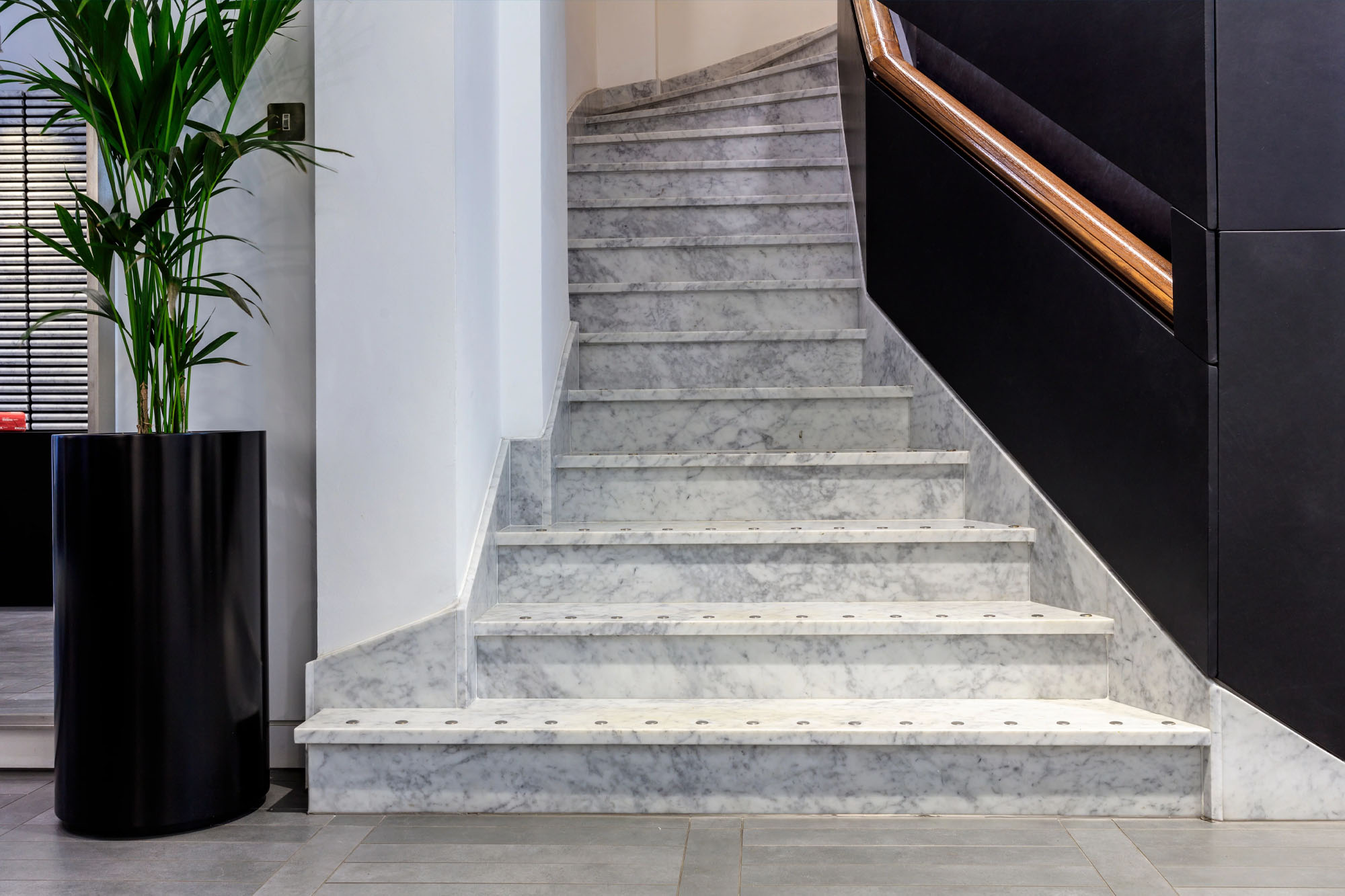
Kial iuj estas naturaj ŝtonoj considered to be soft when they all appear to be hard? The answer lies within ‘relative’ hardness. Mohs scale of hardness was invented in 1812 and compares the relative hardness of ten minerals. Diamond is the hardest and rates a 10, while granite is the toughest natural stone at 6. Limestone comes in at 3 as does its metamorphic counterpart, marble. Softer stone is easier to dress or carve but does not wear or weather quite as well as harder stone. Here we discuss some of the more popular soft stones along with suitable applications.
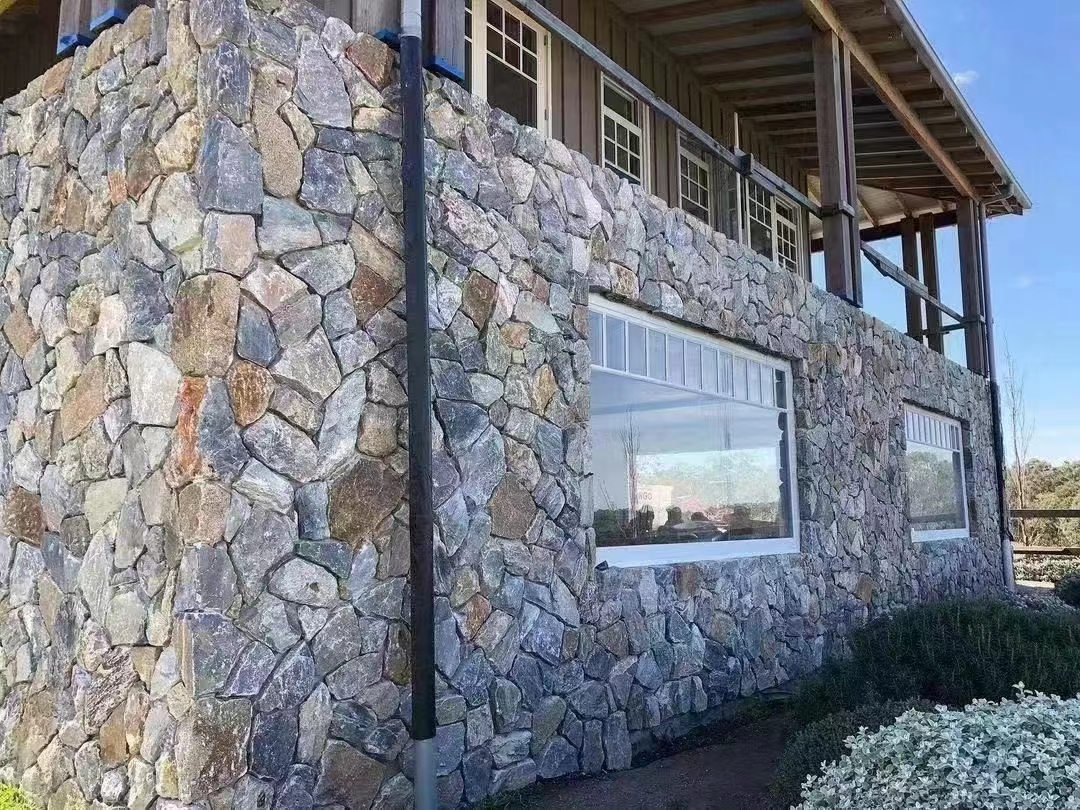
Kalkŝtono, grejso kaj ardezargilo estas la plej oftaj specoj de sedimenta roko. Tiuj estis formitaj tra grandega premo, dum milionoj da jaroj, portanta malsupren sur sedimento kiu falis al la oceanfundo.
The layers in slate are described as being “foliated” and they are easily split apart to create whatever thickness is required. UK slate is considered to be hard and was traditionally used as roofing, while soft slate is found in China, Spain, Italy and the USA. With a broad range of natural slate colours, a multiple array of designs can be achieved, from contemporary to classic, rustic to refined. Slate is often recommended for high traffic areas, thanks to its remarkably durable composition. It is also non-porous and does not easily react with acid liquids. It is fire proof, weather resistant and achieves good slip resistance dues to its riven finish.
Limestone is a very common building material and is formed mainly from the mineral calcite, derived from the calcium in bones and seashells deposited over the millennia and forced together through pressure. While it also contains magnesium, it is harder and more weather resistant, and can also be polished. Portland stone from the eponymous island in Dorset is probably the single most famous type of limestone and was used to build many of London’s great buildings. It is used for external cladding as well as paving, fireplaces and other internal and external decorative features. Its soft colours are its trademark visual attributes.
Grejso estis verŝajne la plej ofte uzita konstruŝtono antaŭ 1800, por ĉio de pontoj ĝis majestaj konstruaĵoj. Kiel oni povas konkludi el ĝia nomo, ĝi formiĝas kiam sablo, organika materio, kalcito kaj diversaj aliaj mineraloj estis kunfanditaj sub nekredebla premo dum la jarmiloj. Havebla kun aŭ kruda aŭ fajna teksturo kaj tradicie liveritaj en senbrila finaĵo. Ĉefe kremo, ruĝa aŭ griza en Britio, ĝia koloro dependas de la kromaj mineraloj enhavitaj en ĝi. Siliko donas blankecon, dum fero donos ruĝecbrunecan nuancon. Ĝiaj ĉefaj aplikaĵoj estas muroj kaj plankoj, aŭ ekstera pavimo.
Marmoro estas derivaĵo de kalkŝtono, formita tra la metamorfozo de kolosa varmo kaj premo dum milionoj da jaroj. Kvankam relative mola kompare kun aliaj ŝtonoj, marmoro tendencas poluri nekredeble bone. Tradicie marmoro estas uzata en pordoj kaj helpas krei altkvalitan finaĵon.
 afrikano
  albana
  Amhara
  la araba
  la armena
  Azerbajĝana
  eŭska
eŭska  Belarusian
  bengala
  bosnia
  bulgaro
  kataluna
  Cebuano
  Ĉinio
Ĉinio  Ĉinio (Tajvano)
  korsika
  kroata
  ĉeĥa
ĉeĥa  dana
dana  nederlanda
  la angla
  Esperanto
  estona
  finna
finna  franca
  frisa
frisa  galego
  kartvela
  germana
  greka
greka  Gujaratio
  Haitian Creole
  hausa
hausa  havajano
  la hebrea
  Ne
Ne  Miao
Miao  hungara
  islanda
  igbo
igbo  indonezia
  irlandano
  itala
itala  Japanoj
  la javano
  Kannada
  kazaĥo
  ĥmeroj
  Ruando
  korea
korea  kurda
kurda  Kirgizoj
  TB
TB  la latina
  latva
latva  litova
  luksemburga
  makedona
  Malgashi
  malaja
  la malajala
  malta
malta  maoria
  Maratio
  mongola
  Mjanmao
  nepala
  norvega
  norvega
  okcitana
  Paŝto
Paŝto  la persa
  pola
pola  portugala
  panĝaba
  rumana
  rusa
rusa  samoano
  Skotgaela
  serba
serba  la angla
  Ŝona
Ŝona  Sinda
Sinda  Sinhala
  la slovaka
  sloveno
  Somalo
  hispana
  Sundanese
  Svahila
  sveda
sveda  la tagaloga
  taĝiko
  la tamila
  tataro
  la telugua
  tajlanda
  Turka
Turka  turkmenoj
  ukraina
  Urdu
Urdu  ujgura
  uzbeko
  vjetnama
  kimra lingvo




