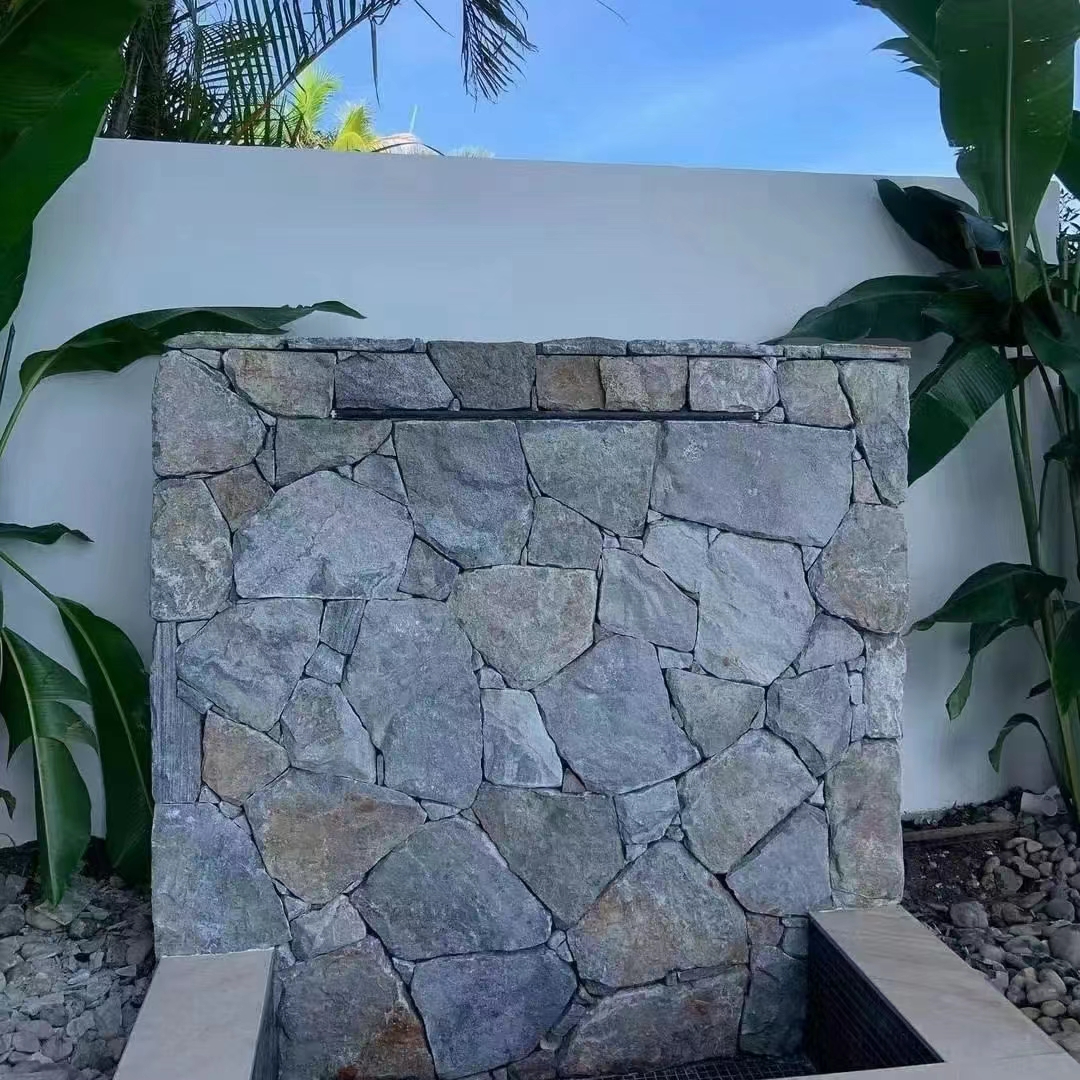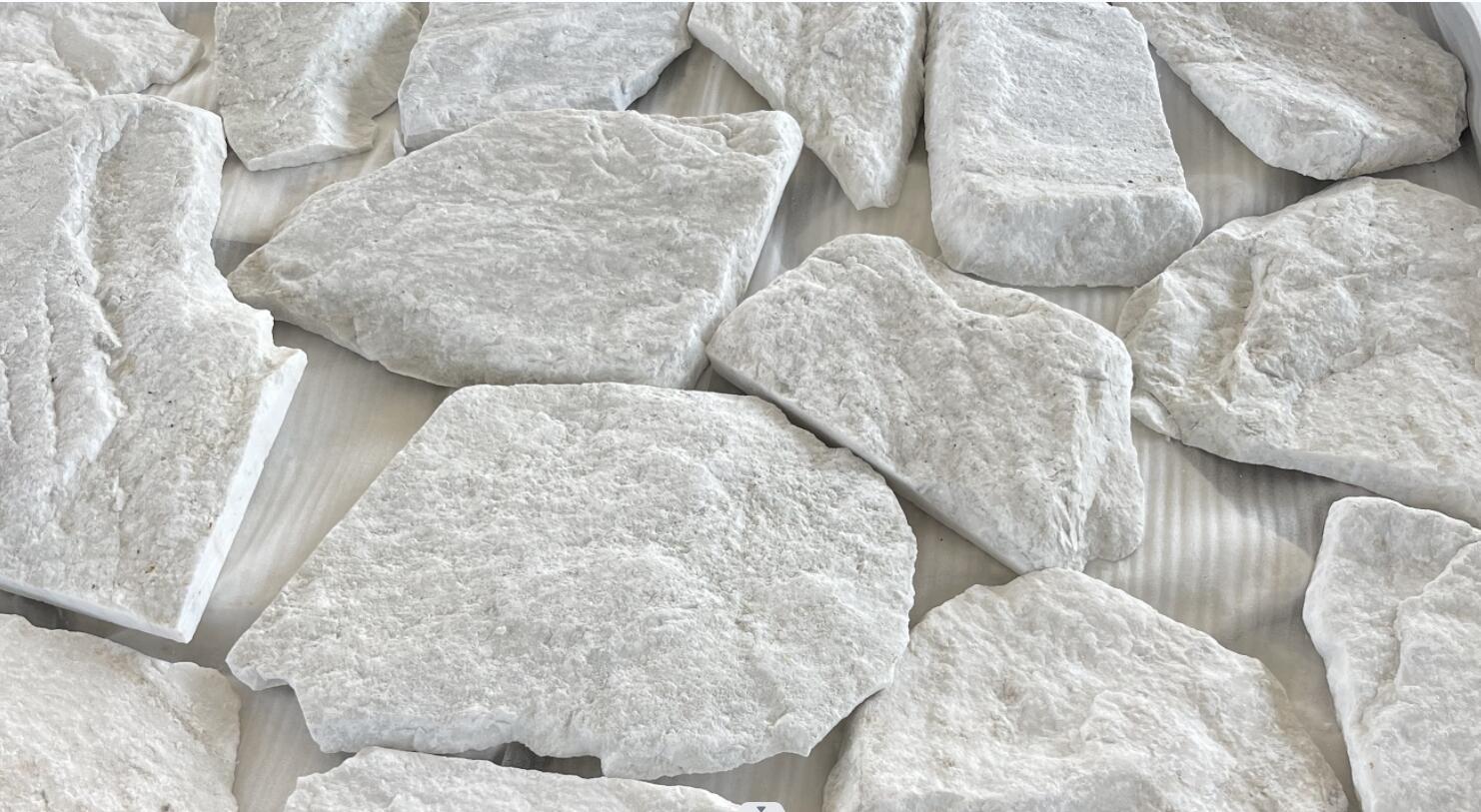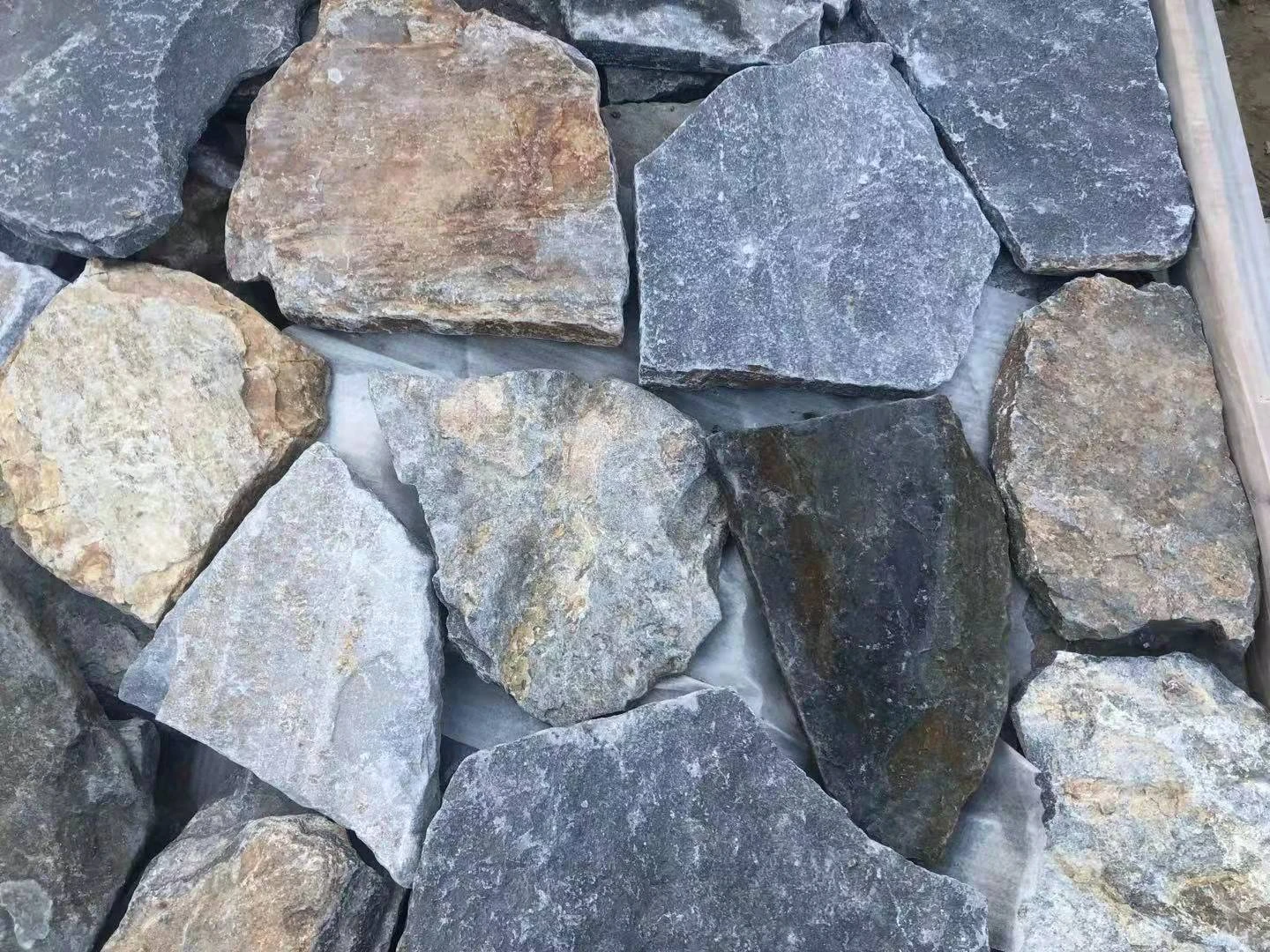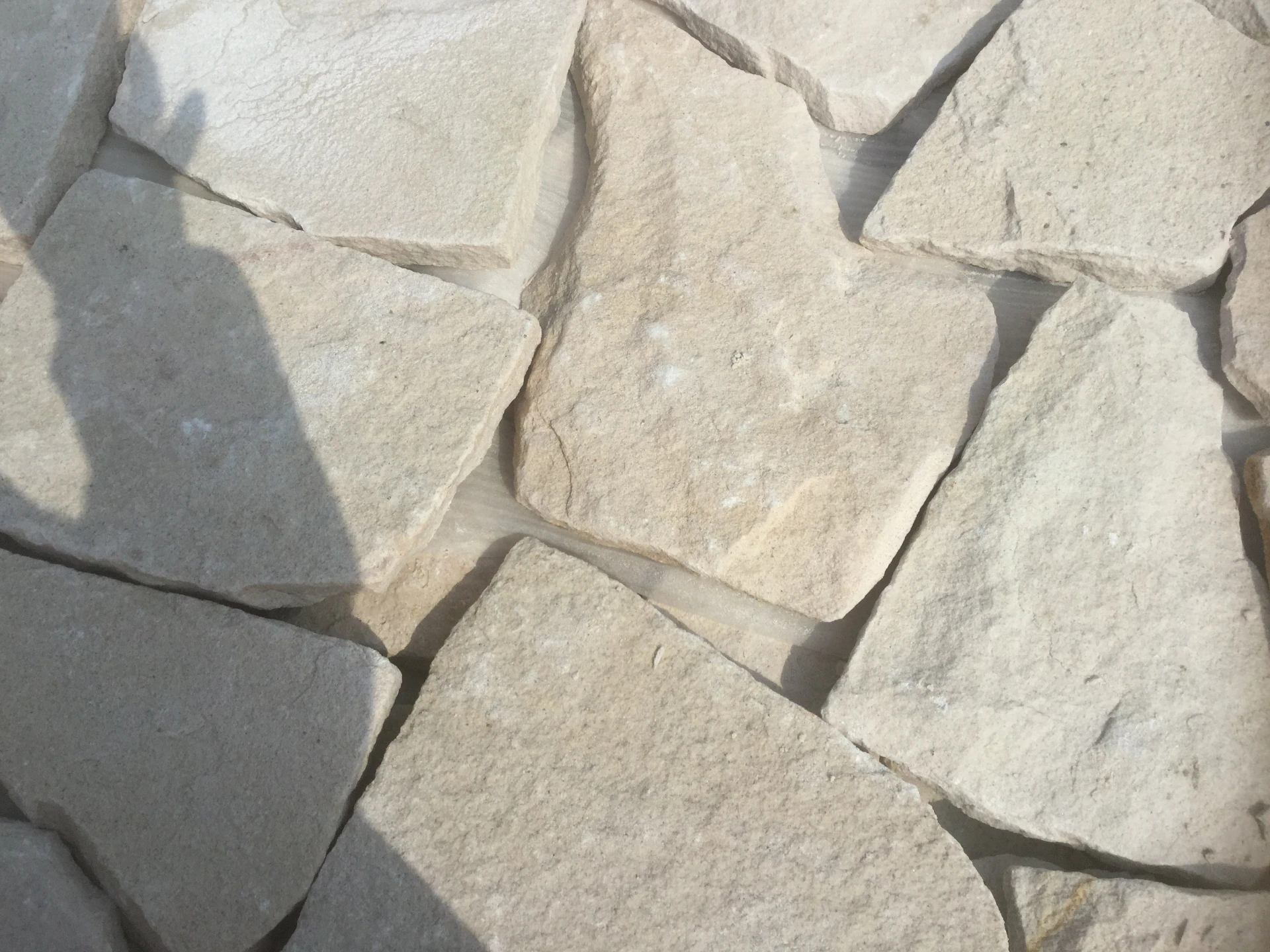
Vim li cas ib txhia ntuj pob zeb considered to be soft when they all appear to be hard? The answer lies within ‘relative’ hardness. Mohs scale of hardness was invented in 1812 and compares the relative hardness of ten minerals. Diamond is the hardest and rates a 10, while granite is the toughest natural stone at 6. Limestone comes in at 3 as does its metamorphic counterpart, marble. Softer stone is easier to dress or carve but does not wear or weather quite as well as harder stone. Here we discuss some of the more popular soft stones along with suitable applications.
Limestone, sandstone thiab shale yog cov feem ntau hom pob zeb sedimentary. Cov no tau tsim los ntawm kev ntxhov siab loj heev, ntau lab xyoo dhau los, ua rau cov pob zeb uas tau poob rau hauv dej hiav txwv.
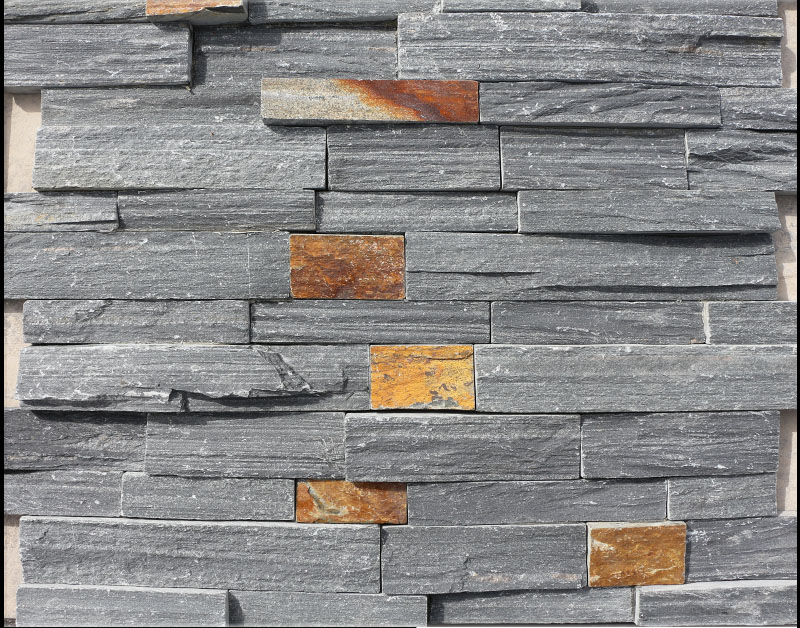
The layers in slate are described as being “foliated” and they are easily split apart to create whatever thickness is required. UK slate is considered to be hard and was traditionally used as roofing, while soft slate is found in China, Spain, Italy and the USA. With a broad range of natural slate colours, a multiple array of designs can be achieved, from contemporary to classic, rustic to refined. Slate is often recommended for high traffic areas, thanks to its remarkably durable composition. It is also non-porous and does not easily react with acid liquids. It is fire proof, weather resistant and achieves good slip resistance dues to its riven finish.
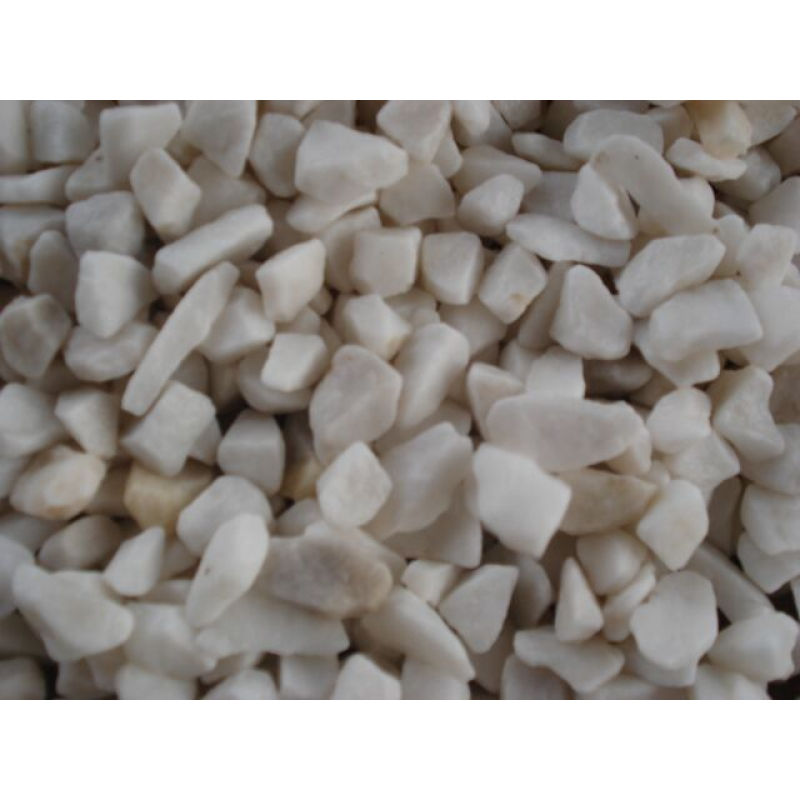
Limestone is a very common building material and is formed mainly from the mineral calcite, derived from the calcium in bones and seashells deposited over the millennia and forced together through pressure. While it also contains magnesium, it is harder and more weather resistant, and can also be polished. Portland stone from the eponymous island in Dorset is probably the single most famous type of limestone and was used to build many of London’s great buildings. It is used for external cladding as well as paving, fireplaces and other internal and external decorative features. Its soft colours are its trademark visual attributes.
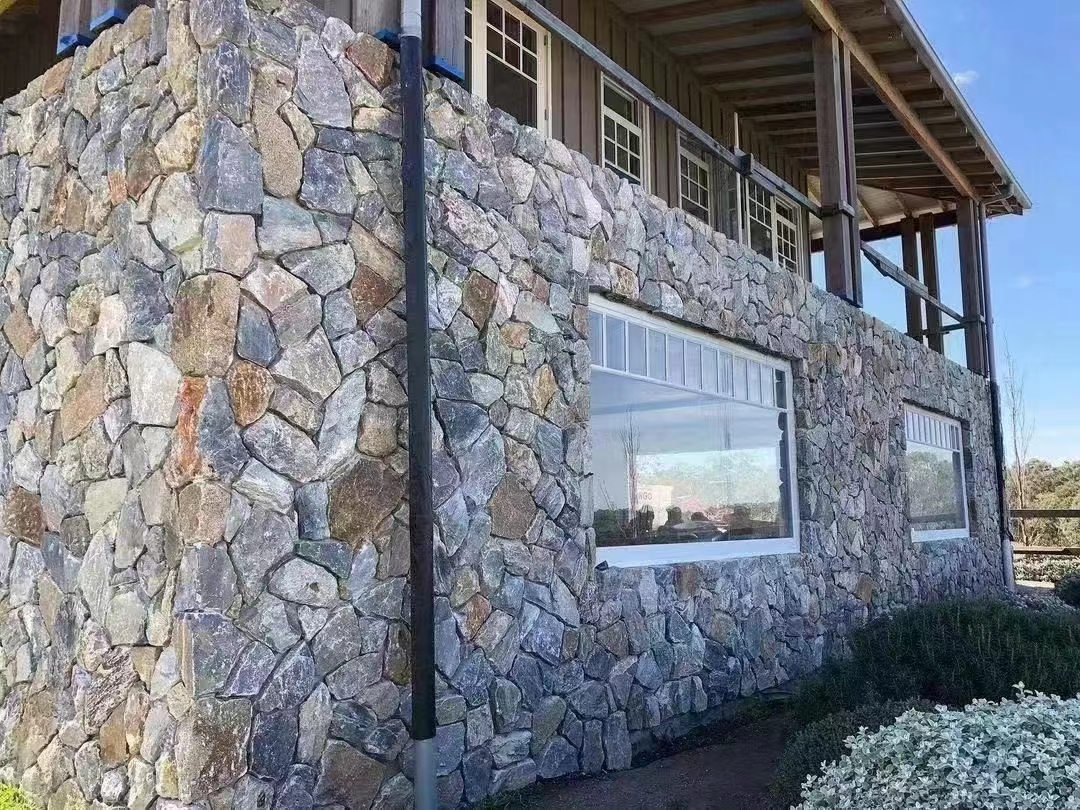
Sandstone yog tej zaum feem ntau siv lub tsev pob zeb ua ntej xyoo 1800, rau txhua yam los ntawm cov choj mus rau cov tsev zoo nkauj. Raws li tej zaum yuav inferred los ntawm nws lub npe, nws yog tsim thaum xuab zeb, organic teeb meem, calcite thiab ib tug ntau yam ntawm lwm yam minerals tau fused ua ke nyob rau hauv zoo kawg siab tshaj lub millennia. Muaj nrog cov ntxhib los yog zoo zoo nkauj thiab ib txwm muab tso rau hauv matt tiav. Feem ntau cov qab zib, liab lossis grey hauv UK, nws cov xim nyob ntawm cov zaub mov ntxiv uas muaj nyob hauv nws. Silica imparts whiteness, whilst hlau yuav muab ib tug reddish-xim av tint. Nws qhov chaw tseem ceeb ntawm daim ntawv thov yog phab ntsa thiab hauv pem teb, lossis sab nrauv paving.
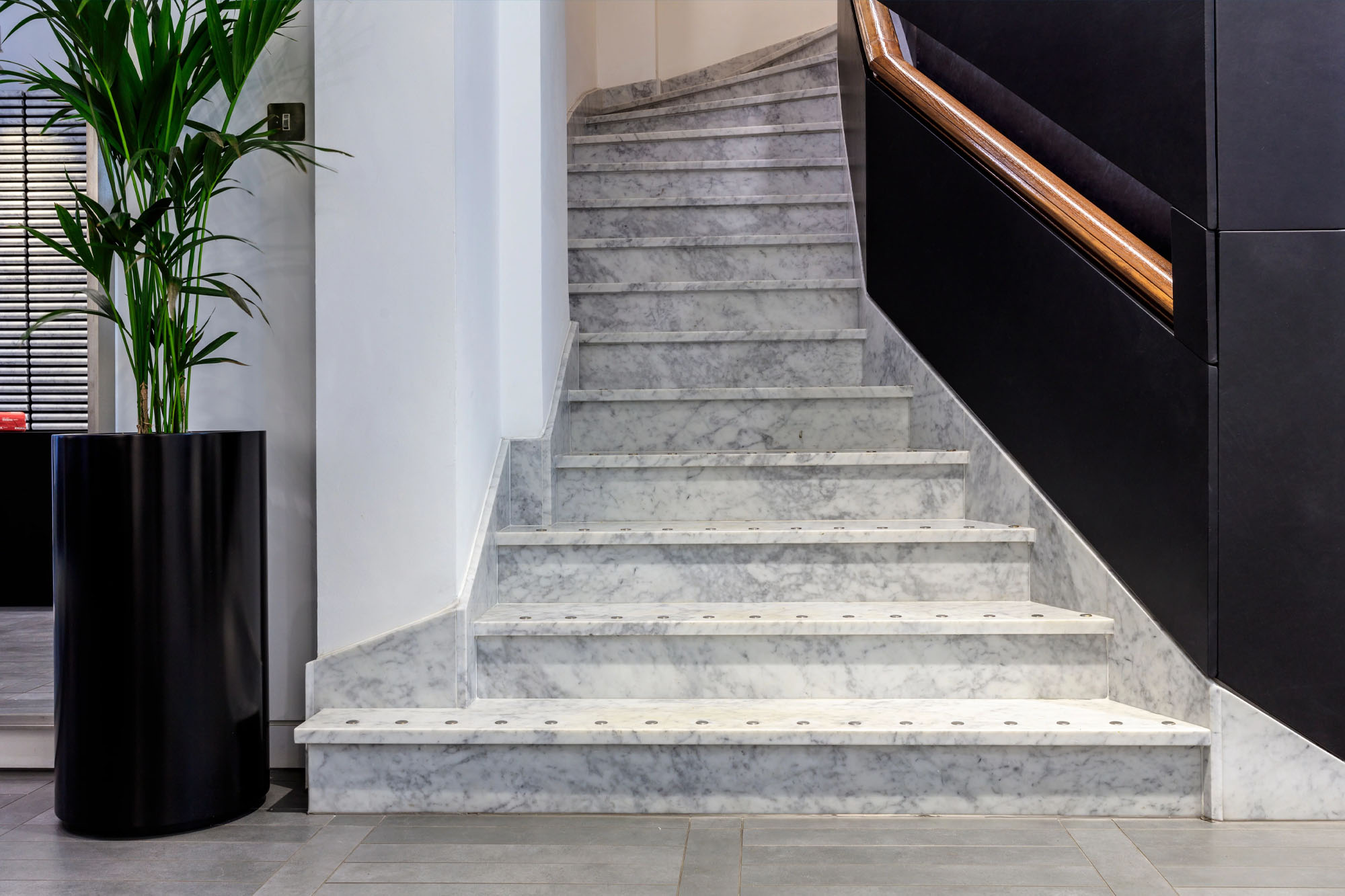
Marble yog ib qho derivative ntawm limestone, tsim los ntawm metamorphosis ntawm colossal tshav kub thiab siab ntau lab xyoo. Txawm hais tias tus mos mos piv rau lwm lub pob zeb, marble nyhav rau polish zoo kawg nkaus. Kev lig kev cai marble yog siv nyob rau hauv lub qhov rooj thiab pab tsim kom muaj ib tug high-end tiav.
 Neeg African
  Albanian
  Amharic
  Arabic
  Armenian
  Azerbaijani
  Basque
  Belarusian
  Bengali
  Bosnian
  Bulgarian
  Catalan
  Cebuano
  Tuam Tshoj
  Tuam Tshoj (Taiwan)
  Corsican
  Croatian
  Czech
Czech  Danish
  Dutch
Dutch  Lus Askiv
  Esperanto
  Estonian
  Finnish
  Fabkis
  Frisian
  Galician
  Georgian
  German
  Greek
Greek  Gujarati
  Haitian Creole
  haus
haus  hawaiian
  Hebrew
  Tsis yog
  Miao
Miao  Hungarian
  Icelandic
  ib igbo
  Indonesian
  irish
irish  Italian
  Nyiv
Nyiv  Javanese
  Kannada
  kazakh
  Khmer
Khmer  Rwandan
  Kauslim
  Kurdish
  Kyrgyz
  TB
TB  Latin
Latin  Latvian
  Lithuanian
  Luxembourgish
  Macedonian
  Malgashi
  Malay
Malay  Malayalam
  Maltese
  Maori
Maori  Marathi
  Mongolian
  Myanmar
  Nepali
  Norwegian
  Norwegian
  Occitan
  Pashto
  Persian
  Polish
  Portuguese
  Punjabi
  Romanian
  Lavxias
  Samoan
  Scottish Gaelic
  Serbian
  Lus Askiv
  Shona
Shona  Sindhi
  Sinhala
  Slovak
  Slovenian
  Somali
  Spanish
  Sundanese
  Swahili
  Swedish
  Tagalog
  Tajik
Tajik  Tamil
Tamil  Tatar
Tatar  Telugu
  Thaib
Thaib  Turkish
  Turkmen
  Ukrainian
  Urdu
Urdu  Uighur
  Uzbek
Uzbek  Nyab Laj
  Welsh
Welsh