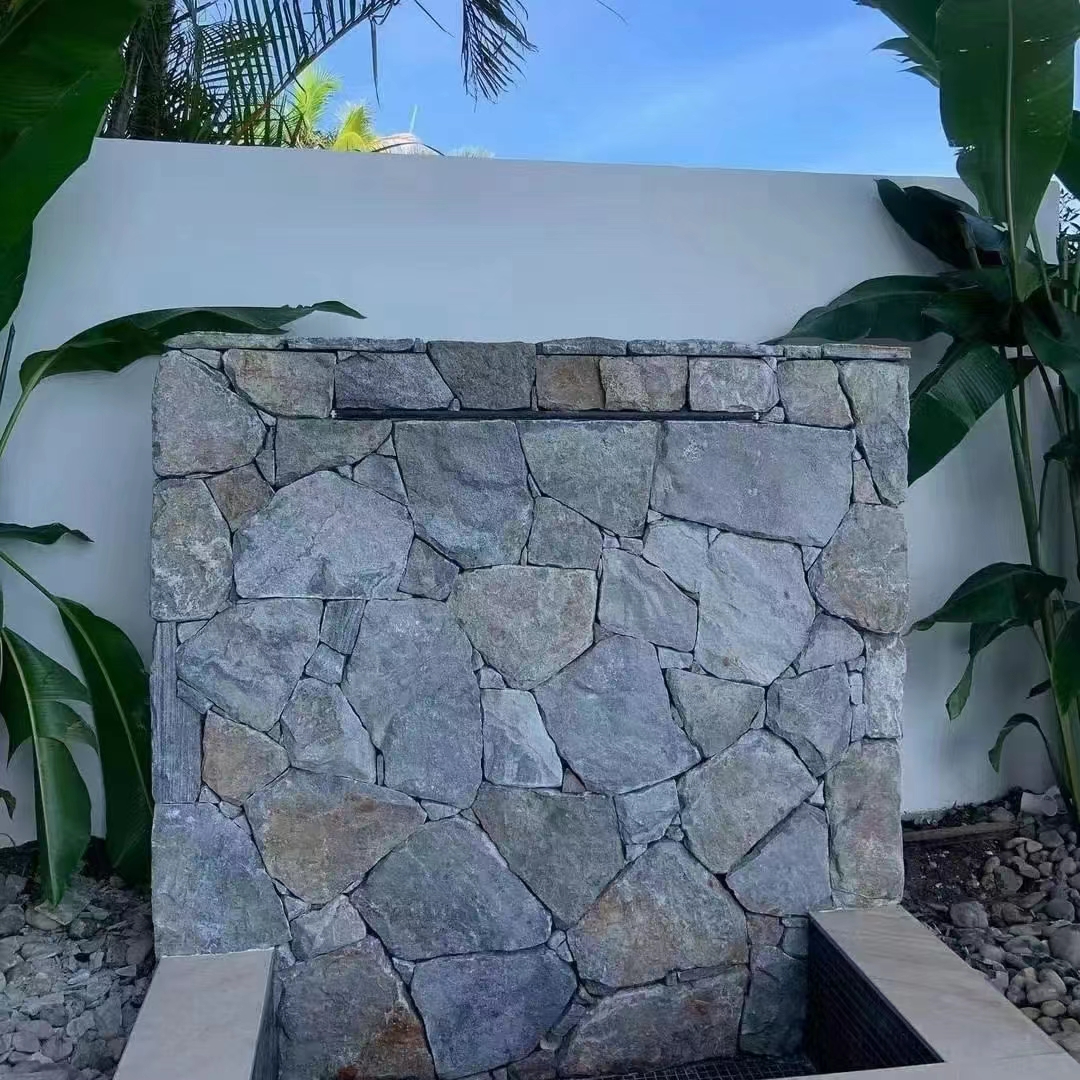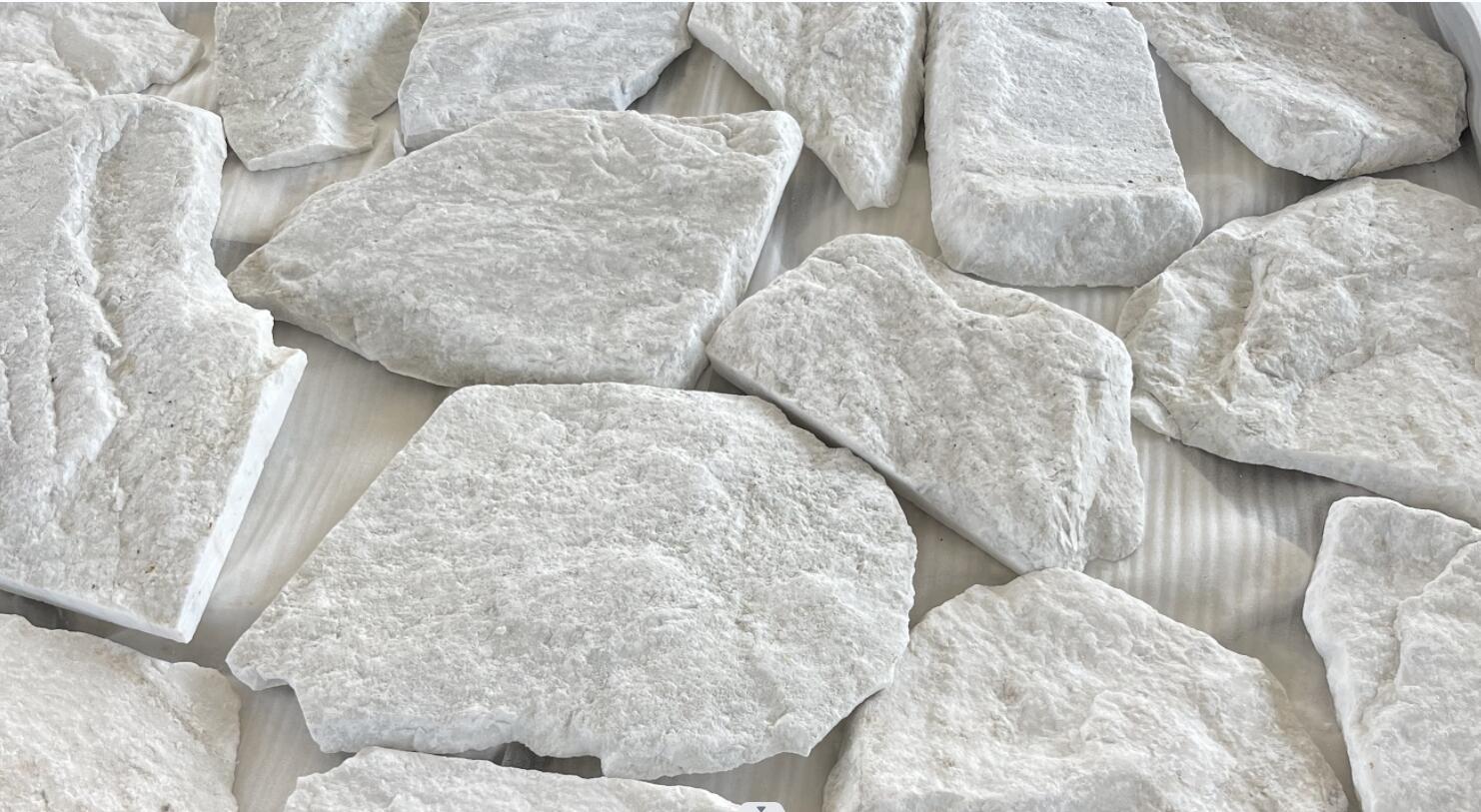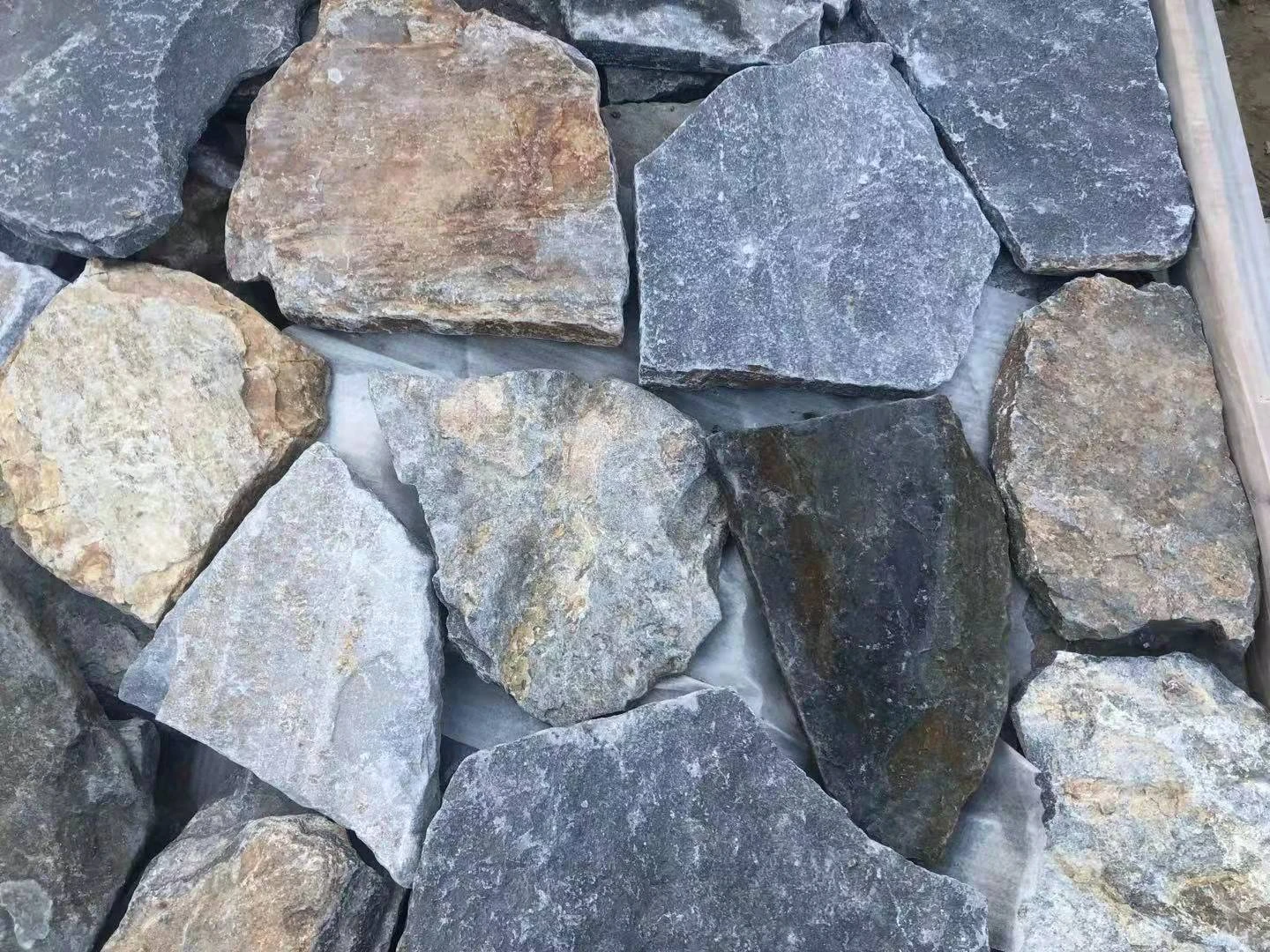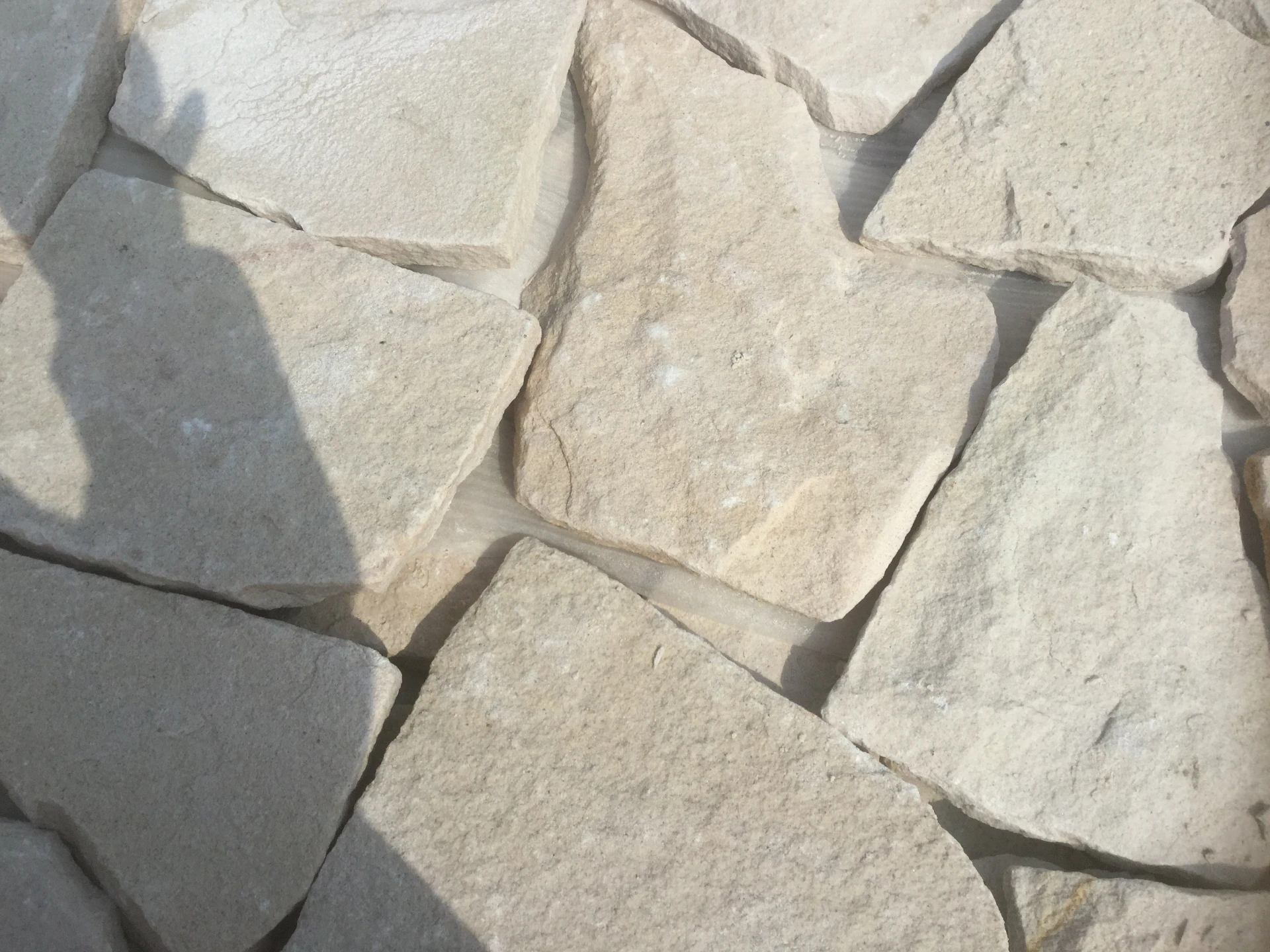
Pourquoi certains pierres naturelles considered to be soft when they all appear to be hard? The answer lies within ‘relative’ hardness. Mohs scale of hardness was invented in 1812 and compares the relative hardness of ten minerals. Diamond is the hardest and rates a 10, while granite is the toughest natural stone at 6. Limestone comes in at 3 as does its metamorphic counterpart, marble. Softer stone is easier to dress or carve but does not wear or weather quite as well as harder stone. Here we discuss some of the more popular soft stones along with suitable applications.
Le calcaire, le grès et le schiste sont les types de roches sédimentaires les plus courants. Ceux-ci se sont formés sous l’effet d’une pression énorme, au cours de millions d’années, qui s’est exercée sur les sédiments tombés au fond de l’océan.
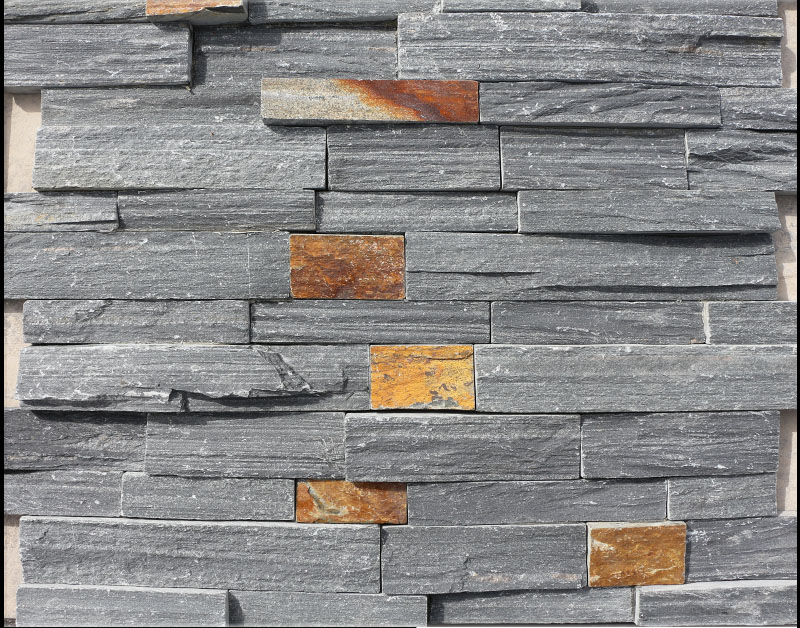
The layers in slate are described as being “foliated” and they are easily split apart to create whatever thickness is required. UK slate is considered to be hard and was traditionally used as roofing, while soft slate is found in China, Spain, Italy and the USA. With a broad range of natural slate colours, a multiple array of designs can be achieved, from contemporary to classic, rustic to refined. Slate is often recommended for high traffic areas, thanks to its remarkably durable composition. It is also non-porous and does not easily react with acid liquids. It is fire proof, weather resistant and achieves good slip resistance dues to its riven finish.
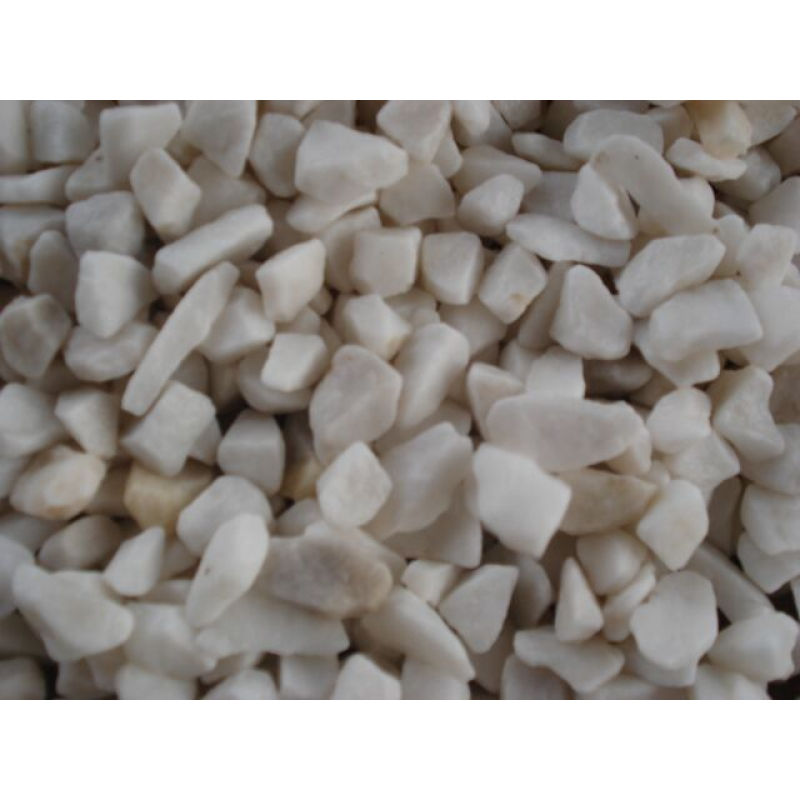
Limestone is a very common building material and is formed mainly from the mineral calcite, derived from the calcium in bones and seashells deposited over the millennia and forced together through pressure. While it also contains magnesium, it is harder and more weather resistant, and can also be polished. Portland stone from the eponymous island in Dorset is probably the single most famous type of limestone and was used to build many of London’s great buildings. It is used for external cladding as well as paving, fireplaces and other internal and external decorative features. Its soft colours are its trademark visual attributes.
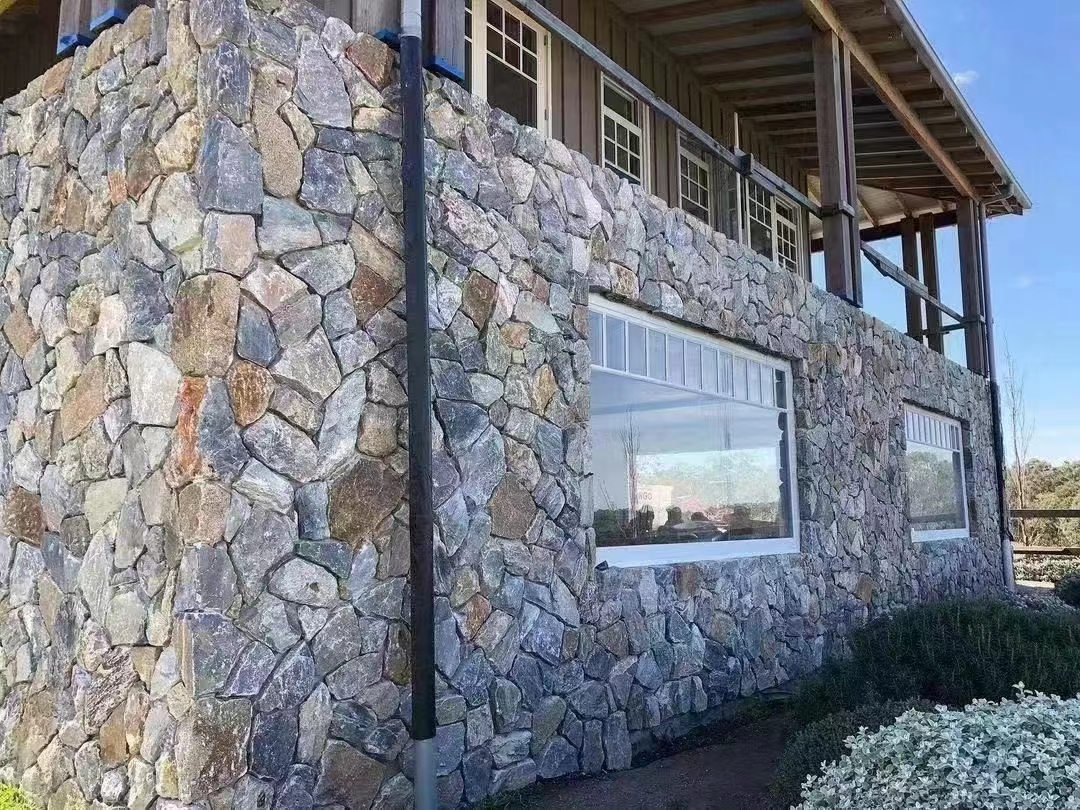
Le grès était probablement la pierre de construction la plus couramment utilisée avant 1800, pour tout, des ponts aux bâtiments majestueux. Comme son nom l’indique, il s’est formé lorsque du sable, de la matière organique, de la calcite et une variété d’autres minéraux ont fusionné sous une pression incroyable au cours des millénaires. Disponible avec une texture grossière ou fine et traditionnellement fourni dans une finition mate. Principalement crème, rouge ou gris au Royaume-Uni, sa couleur dépend des minéraux supplémentaires qu'il contient. La silice donne de la blancheur, tandis que le fer donne une teinte rouge-brunâtre. Ses principaux domaines d'application sont les murs et les revêtements de sol, ou encore les revêtements de sol extérieurs.
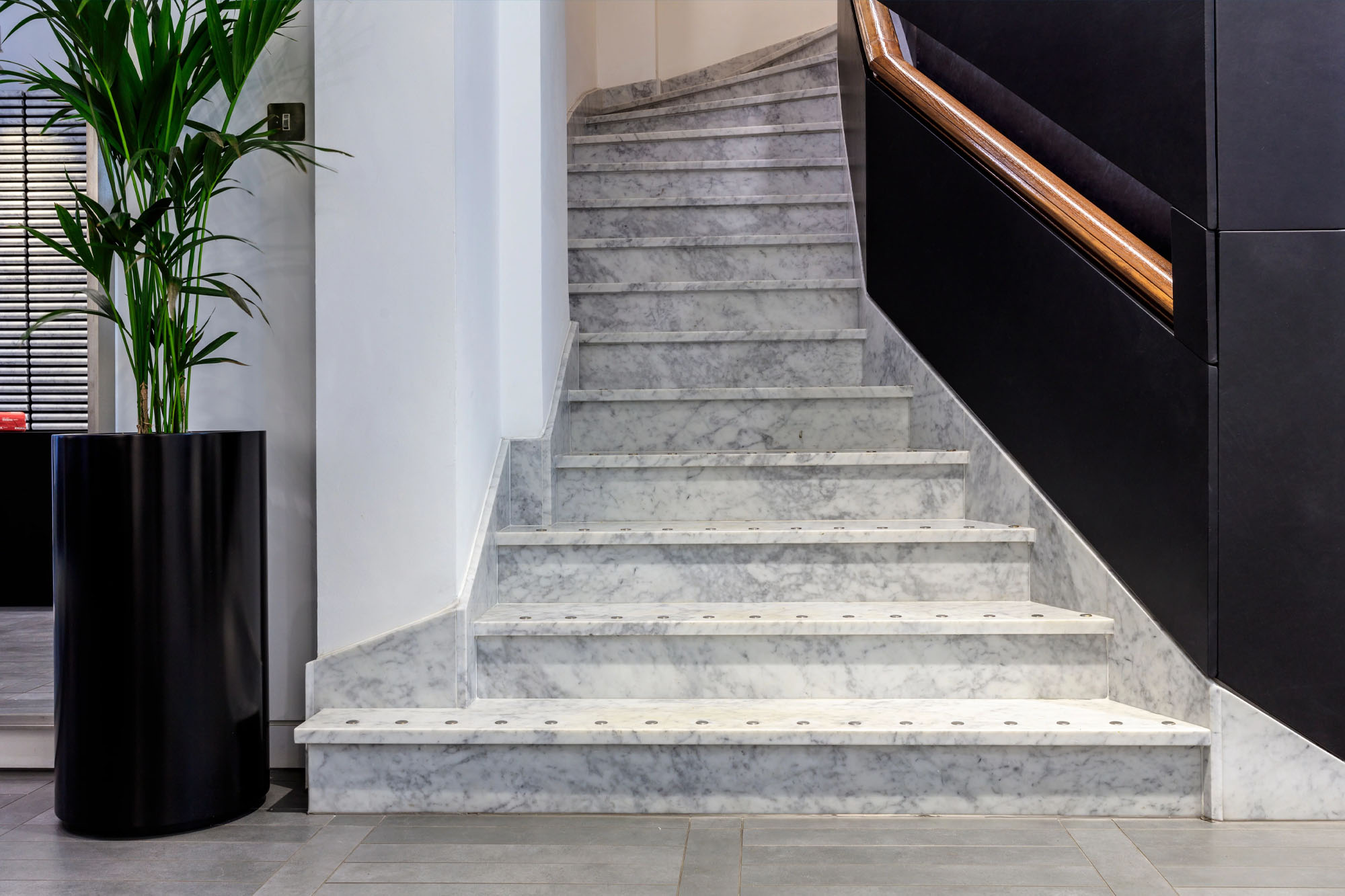
Le marbre est un dérivé du calcaire, formé par la métamorphose d’une chaleur et d’une pression colossales sur des millions d’années. Bien que relativement doux par rapport aux autres pierres, le marbre a tendance à se polir incroyablement bien. Traditionnellement, le marbre est utilisé dans les portes et contribue à créer une finition haut de gamme.
 africain
  albanais
  Amharique
  arabe
arabe  arménien
  azerbaïdjanais
  Basque
  biélorusse
  bengali
  bosniaque
  bulgare
  catalan
  Cebuano
  Chine
Chine  Chine (Taïwan)
  Corse
Corse  croate
  tchèque
  danois
  Néerlandais
  Anglais
  espéranto
  estonien
  finlandais
  Français
  frison
  Galicien
  géorgien
  Allemand
  grec
grec  Gujarati
  Créole haïtien
  haoussa
  hawaïen
  hébreu
  Non
Non  Miao
Miao  hongrois
  islandais
  igbo
igbo  indonésien
  irlandais
  italien
  Japonais
  Javanais
  Kannada
  kazakh
  Khmer
Khmer  Rwandais
  coréen
  kurde
kurde  Kirghize
  tuberculose
  Latin
Latin  letton
  lituanien
  luxembourgeois
  Macédonien
  Malgashi
  malais
  Malayalam
  maltais
  Maori
Maori  Marathi
  mongol
  Birmanie
  Népalais
  norvégien
  norvégien
  Occitan
  pachtou
  persan
  polonais
  Portugais
  Pendjabi
  roumain
  russe
russe  Samoan
  Gaélique écossais
  serbe
serbe  Anglais
  Shona
Shona  Sindhi
  Cinghalais
  slovaque
  slovène
  somali
  Espagnol
  Soundanais
  Swahili
  suédois
  Tagalog
  tadjik
  Tamil
Tamil  tatar
tatar  Télougou
  thaïlandais
  turc
turc  Turkmènes
  ukrainien
  Ourdou
  Ouïghour
  Ouzbek
  vietnamien
  gallois