

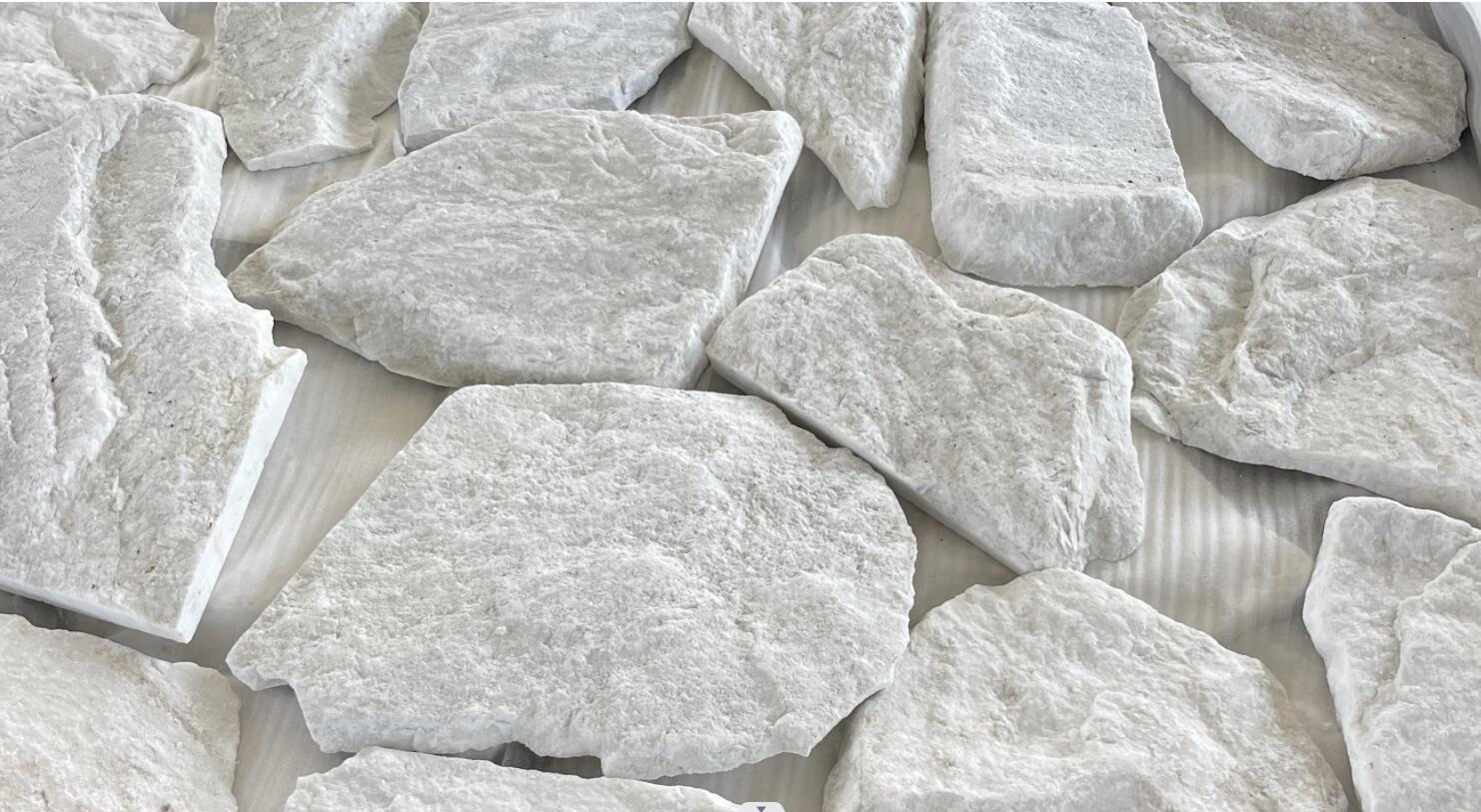
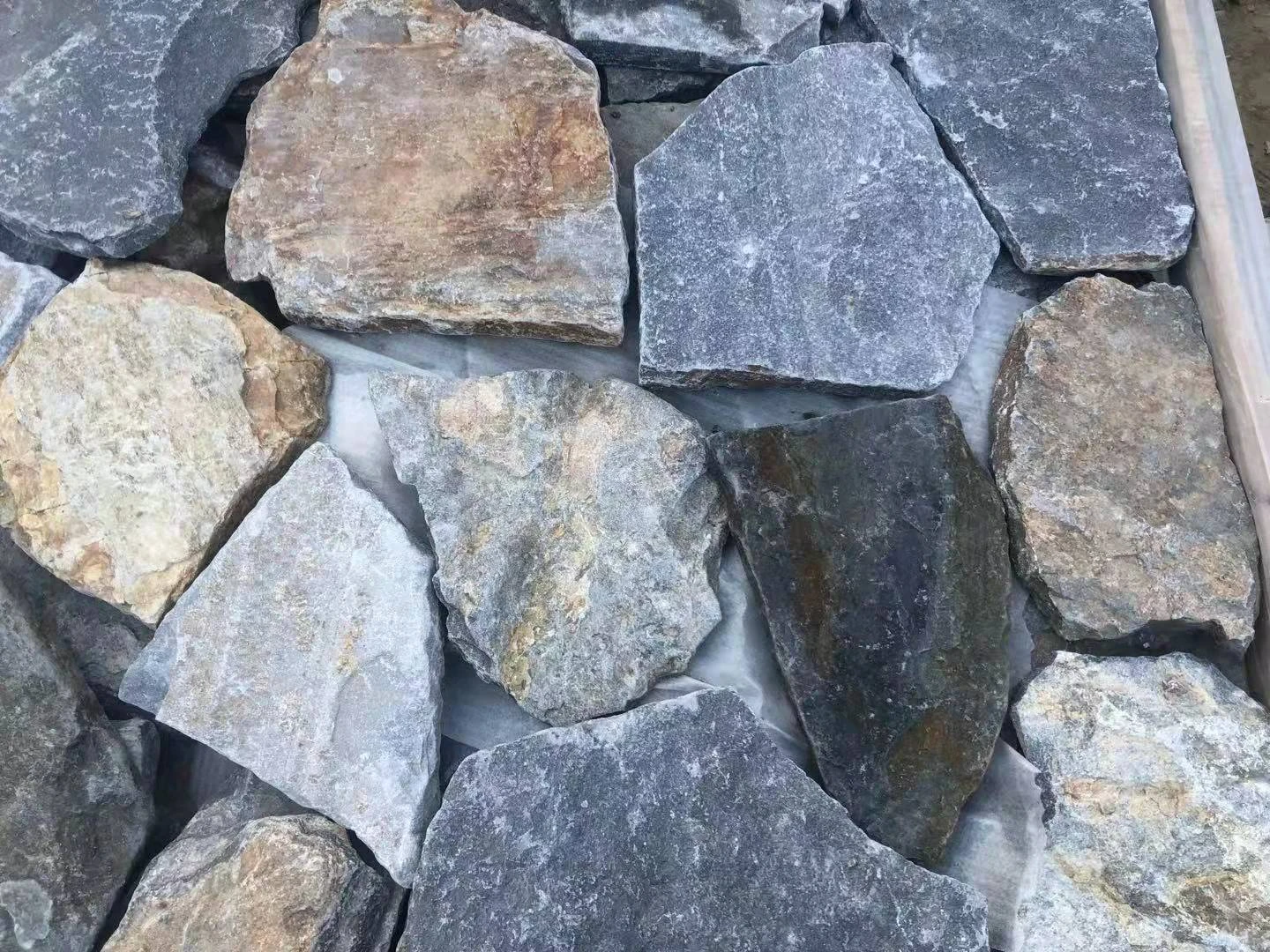
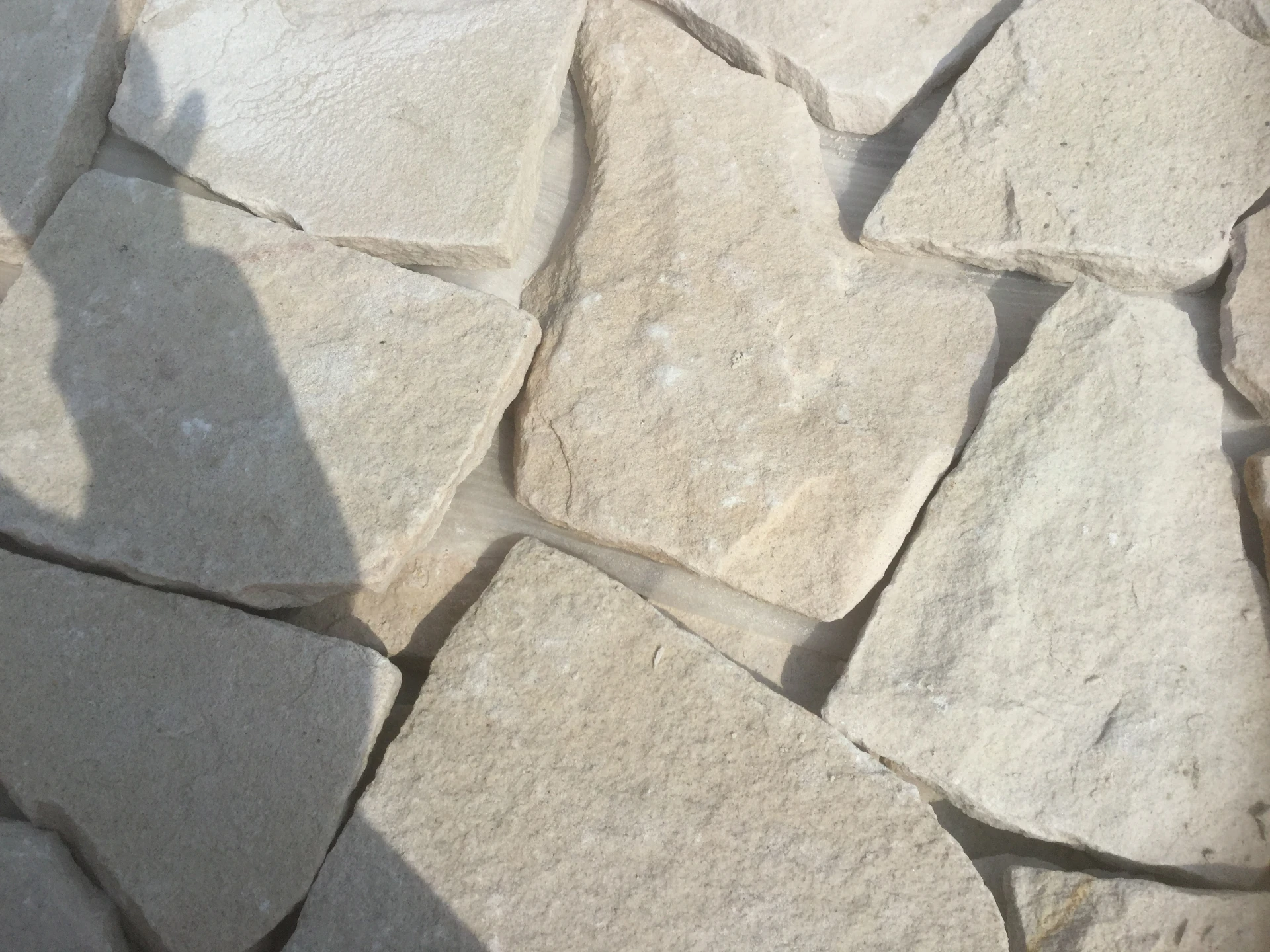
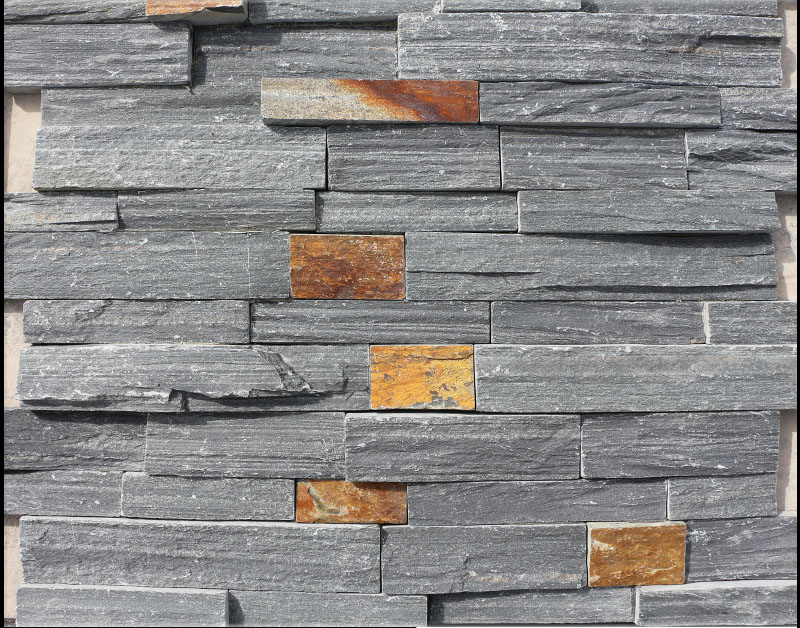
Geroeste teëls
Wil jy jou eie klip keermuur bou, maar onseker hoe om te begin? As jy 'n ongelyke tuin, kan 'n klip keermuur help om erosie te voorkom en bied 'n lekker plek om te plant. Lees verder om te leer hoe om jou eie saam te stel, van begin tot einde.
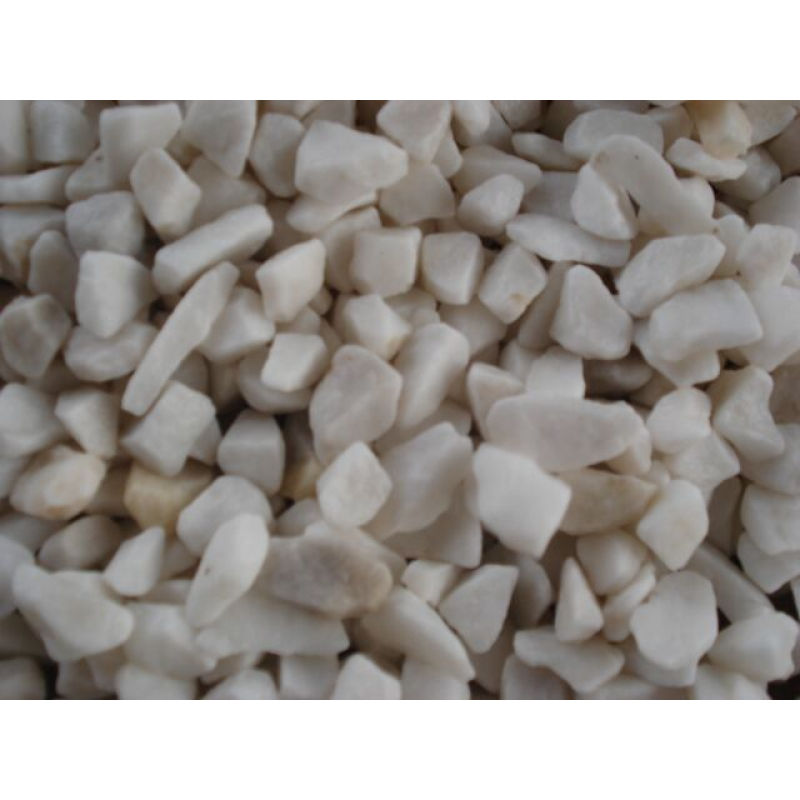
To figure out how much stone you’ll need, multiply your wall’s height times the depth times the length. If your wall is 2 feet high, 1-1/2 feet wide, and 20 feet long, you’ll need roughly 60 cubic feet of stone. Most stoneyards will deliver the stones for a slight charge; have them placed as close to the site of your retaining wall as possible.
Wat betref tools, you’ll need a shovel for digging your trench and backfilling, a mattock for attacking the grade, and a small sledgehammer for tamping soil. For marking your site and leveling rocks, you’ll need a line level, a few tall stakes, string, some flour, and a 4- or 8-foot level.
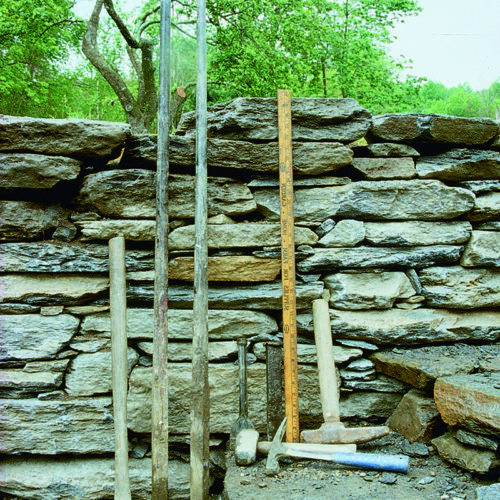
Now you can start digging. The easiest approach is to cut and fill—that is, dig into the slope where the wall will go and spread the earth below you to create a level terrace. When you cut and fill, the wall is backed by undisturbed soil, which is more stable than fill. For design reasons, however, you might choose to build a freestanding wall and fill behind it with soil from another site. Or you might do a partial cut and fill, which is somewhere between the two.
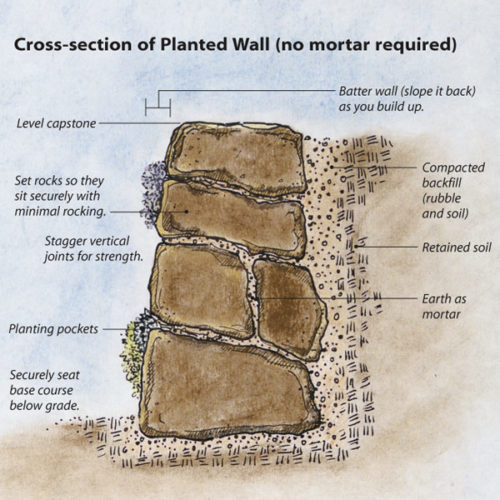
Mure word in bane gebou. The base course is structurally the most important, while the final course, the capstone, is the most challenging. For stability, walls should be at least 20 inches wide at the base. They can taper slightly toward the top, but you’ll want a wall that is at least two rocks wide in most places. This can be accomplished by mixing stones of different sizes or by backfilling with a combination of two-thirds rubble to one-third soil.
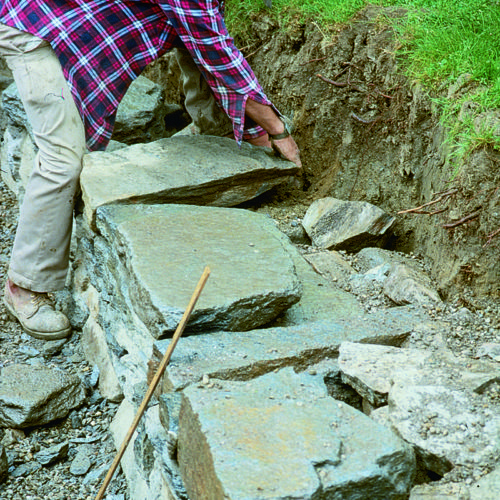
Grawe 'n sloot vir die basisbaan
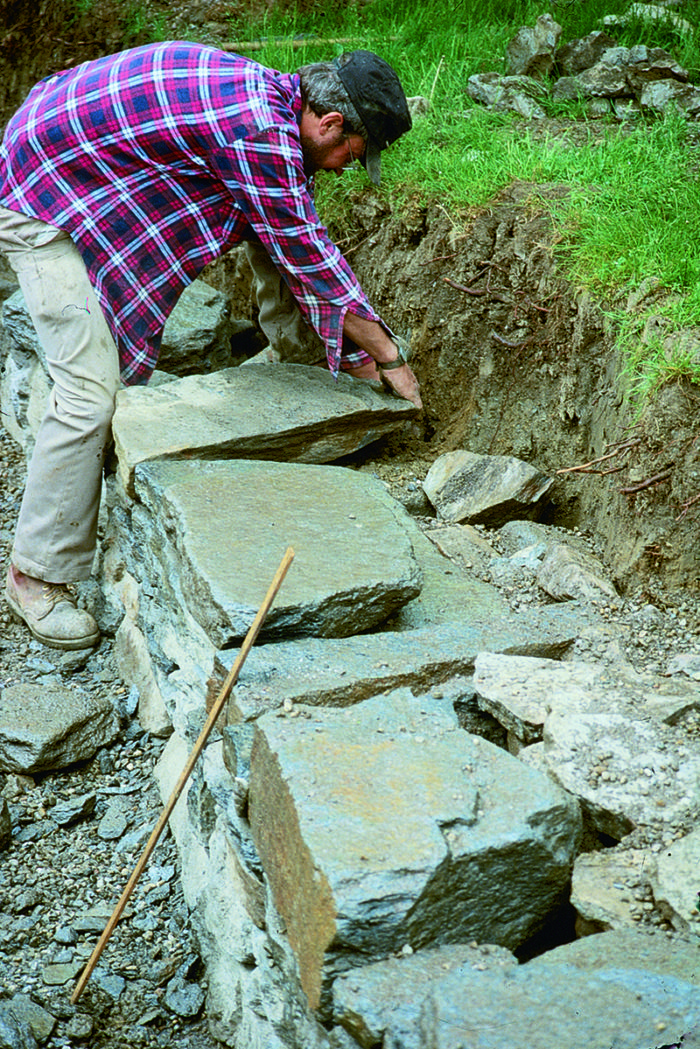
Start by digging a trench about 4 inches deep and at least 2 feet wide. A straightedged spade will give you a nice, even edge. The first course must be very solid and tightly fit because the weight of the wall will rest on it. Take the time to find rocks that lock into place, without leaving gaps. Randomly lay your largest rocks along the front edge of the trench. Set the first stone, shifting it around until it sits securely without being rocked easily, and then fill with the remaining stones. If you are using rectangular stones, you want the height of adjacent stones to be the same, or of a difference that can be made up with a smaller stone. If the rocks are irregular, then the stones will fit together leaving a triangular gap for the next course to fit into. I find irregular rocks easier to work with than flat ones; with flat rocks you have to be more precise. Find a stone that fits well and then continue for a few more feet. A rule of thumb, passed down from my wall-building teacher’s mentor, is to try a stone seven different ways. If it doesn’t fit by the seventh try, use another stone.
Skep dan grond agter die klippe en stamp die aarde in die spasies between, behind, and beneath the stones with top of the sledgehammer. This is an important step because the dirt becomes the mortar for the wall. I also recommend adding rubble (those stones you won’t use on the face of your wall) behind the face course to give greater strength to the wall. Pound the rubble and soil mix until you are satisfied that it is solid. Continue the first course until you reach the end of the wall. When you are done, test
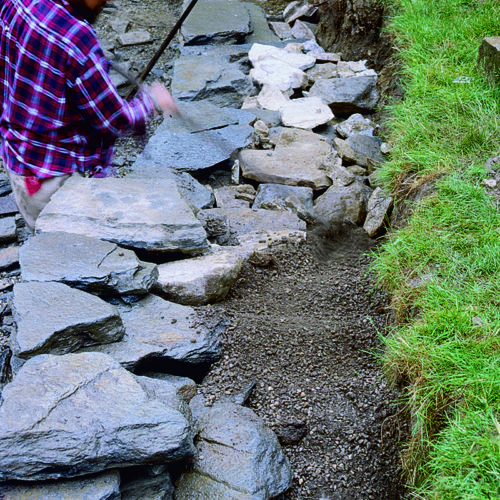
Om die tweede baan te begin, kies 'n klip wat die eerste voeg van die onderste baan sal oorbrug. Avoid having joints run up the face of the wall, and angle (batter) the courses backward—approximately 1 inch per vertical foot. This creates a stable wall. For added strength, intermittently place single stones that run the full depth of the wall. This will only work with rectangular rocks. For irregular rocks, place a large rock behind a face rock every 3 feet or so. As you set a course, you will come to situations, probably quite a few of them, where the rock placement is perfect on all sides but one. These are the planting opportunities that give life to a stone wall.
Continue building in this manner until you are one course away from the finished height. Fitting stones will get easier as you go, and you’ll likely discover that there’s a certain magic moment when you’re building a wall: you hear a thump that signals you’ve placed a rock perfec
Maak jou muur sithoogte
The ideal height for a dry-stacked retaining wall is 18 to 22 inches—so you can sit on it when your gardening chores are done. Even if
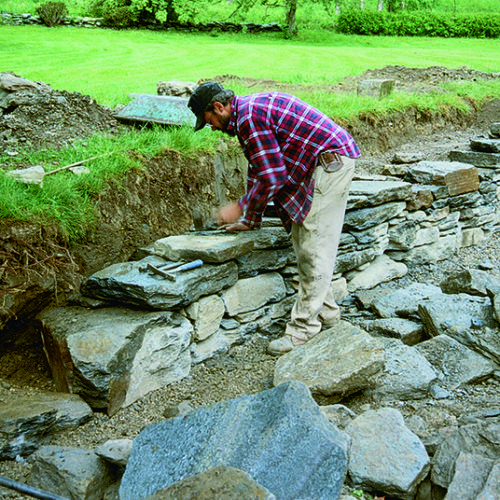
Bring baie geduld na die proses om die sluitsteen te lê; dit is 'n hoogtepunt van die vaardigheid wat jy tot op hierdie punt ontwikkel het. Dit moet ongeveer 15 tot 18 duim diep wees, saamgestel uit een tot drie klippe. Gebruik grond en goeie plasing om die klippe vas te maak, en net soos met muurvoege, vermy lang voeë in die deksteen. As jy op die muur wil sit, kies gladde, plat klippe. Of vul gapings met grond en plant geurige kruie vir kussings. 'n Geplante deksteen is 'n heerlike afronding aan 'n lewende muur.
 Afrikaans
 Albanees
 Amharies
 Arabies
 Armeens
 Azerbeidjans
 Baskies
 Wit-Russies
 Bengaals
 Bosnies
 Bulgaars
 Katalaans
 Cebuano
 Sjina
 China (Taiwan)
 Korsikaans
 Kroaties
 Tsjeggies
 Deens
 Nederlands
 Engels
 Esperanto
 Estnies
 Fins
 Frans
 Fries
 Galisies
 Georgies
 Duits
 Grieks
 Gujarati
 Haïtiaanse Kreools
 hausa
 hawaiian
 Hebreeus
 Nope
 Miao
 Hongaars
 Yslands
 igbo
 Indonesies
 iers
 Italiaans
 Japannese
 Javaans
 Kannada
 kazaks
 Khmer
 Rwandese
 Koreaans
 Koerdies
 Kirgisies
 TB
 Latyn
 Letties
 Litaus
 Luxemburgs
 Masedonies
 Malgashi
 Maleis
 Malabaars
 Maltees
 Maori
 Marathi
 Mongoolse
 Myanmar
 Nepalees
 Noors
 Noors
 Oksitaans
 Pasjto
 Persies
 Pools
 Portugees
 Punjabi
 Roemeens
 Russies
 Samoaans
 Skotse Gaelies
 Serwies
 Engels
 Shona
 Sindhi
 Sinhala
 Slowaaks
 Sloweens
 Somalies
 Spaans
 Soendanees
 Swahili
 Sweeds
 Tagalog
 Tadjieks
 Tamil
 Tataars
 Telugu
 Thai
 Turks
 Turkmeens
 Oekraïens
 Oerdoe
 Uighur
 Oezbeeks
 Viëtnamees
 Wallies