

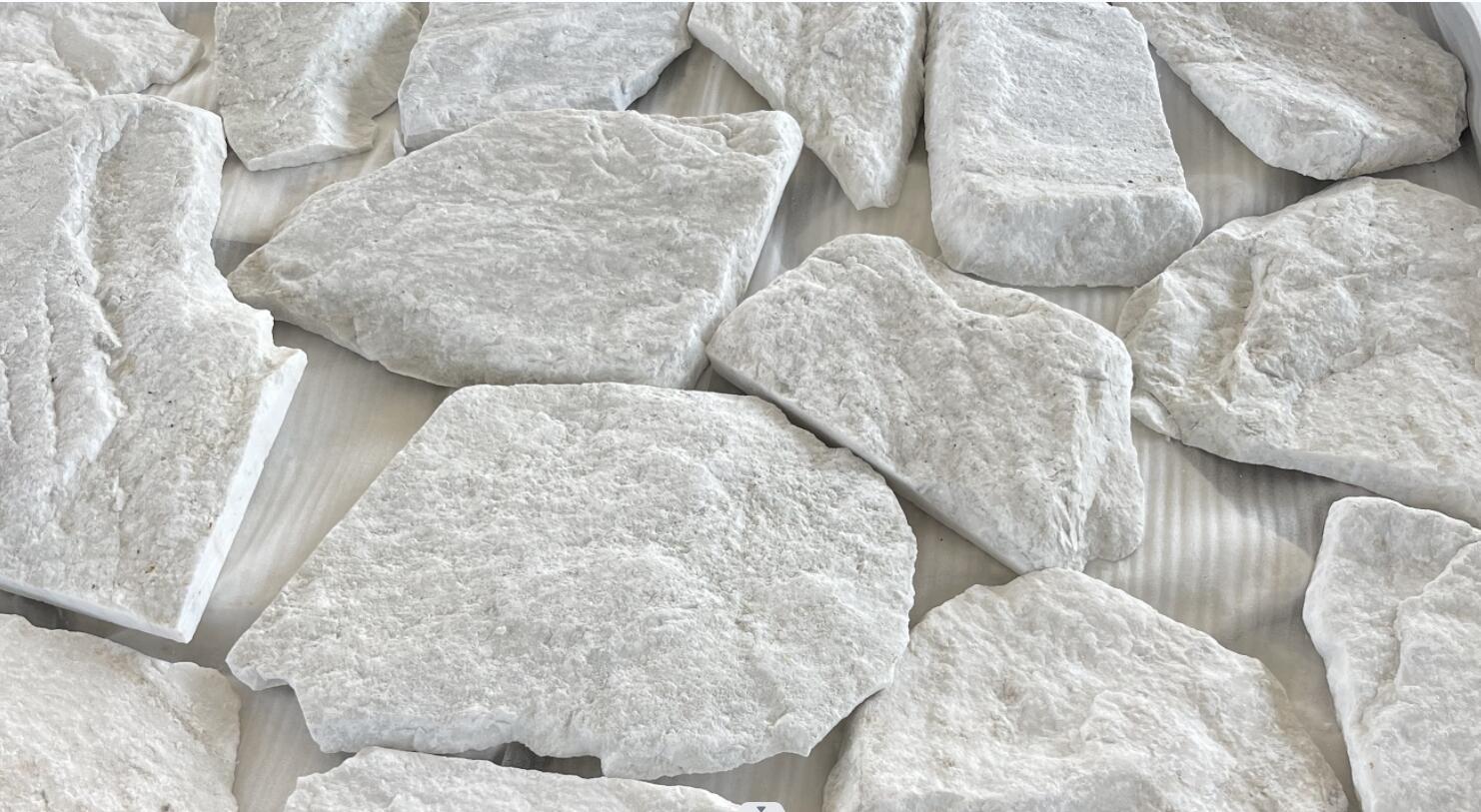
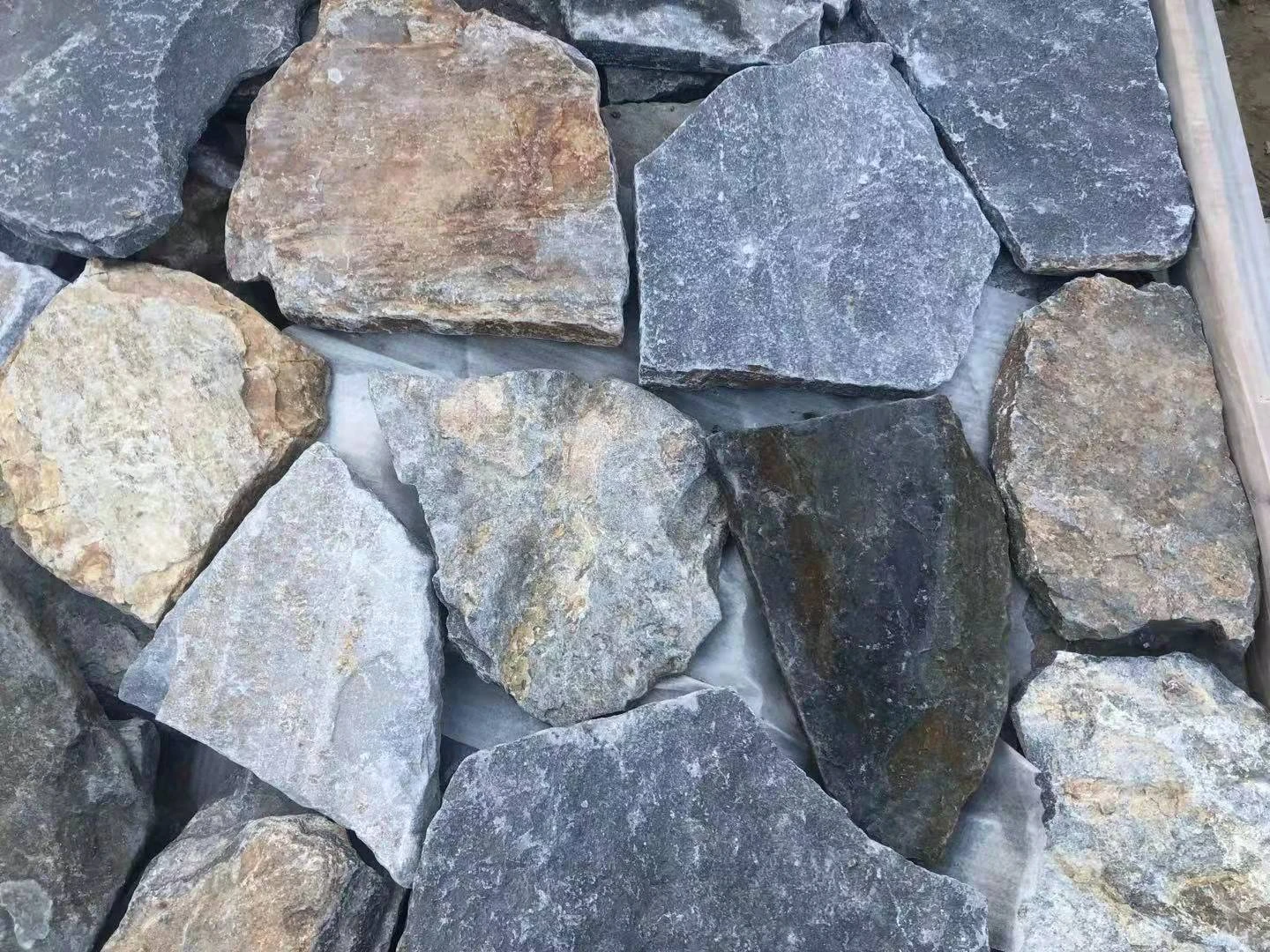
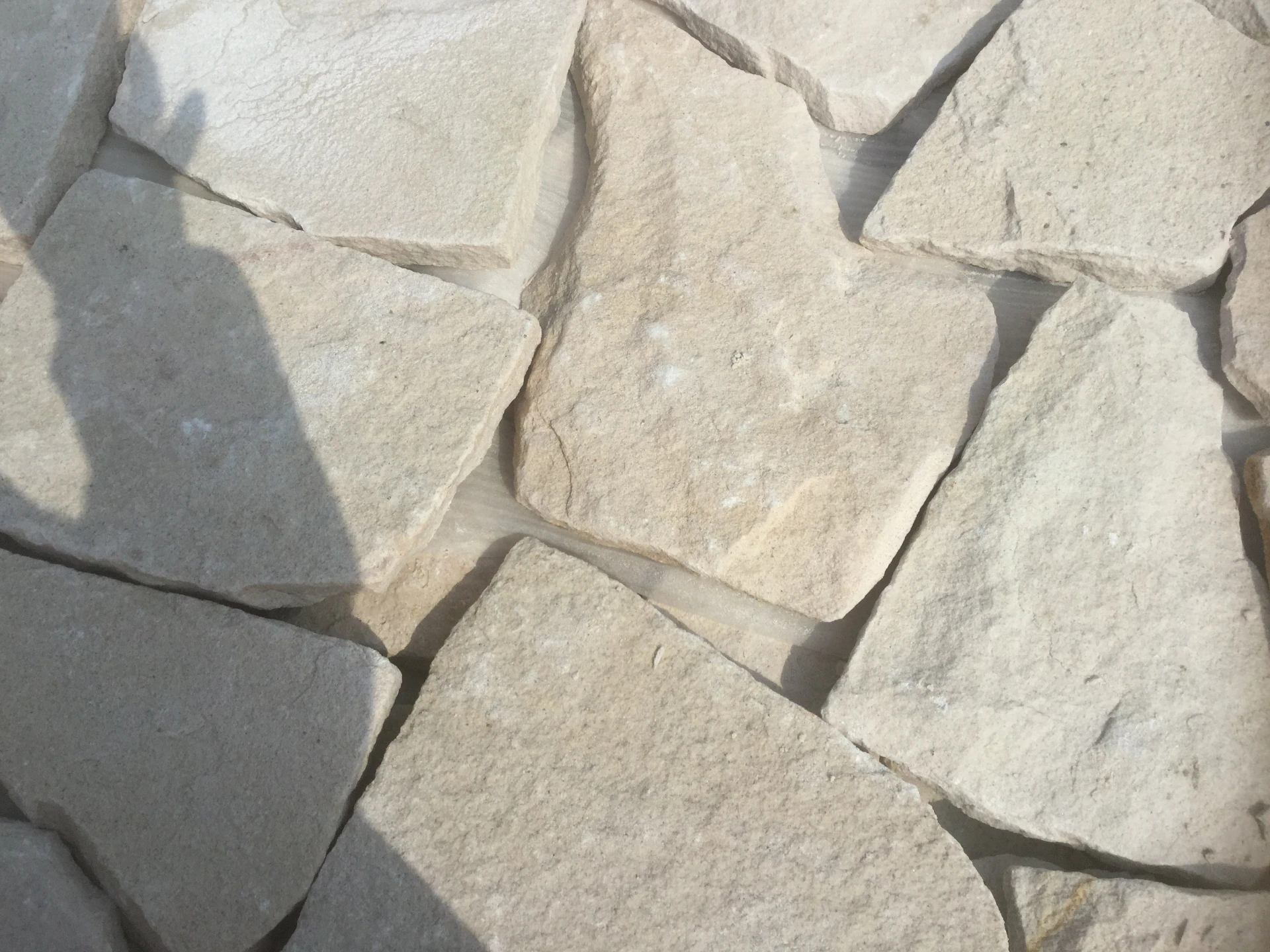
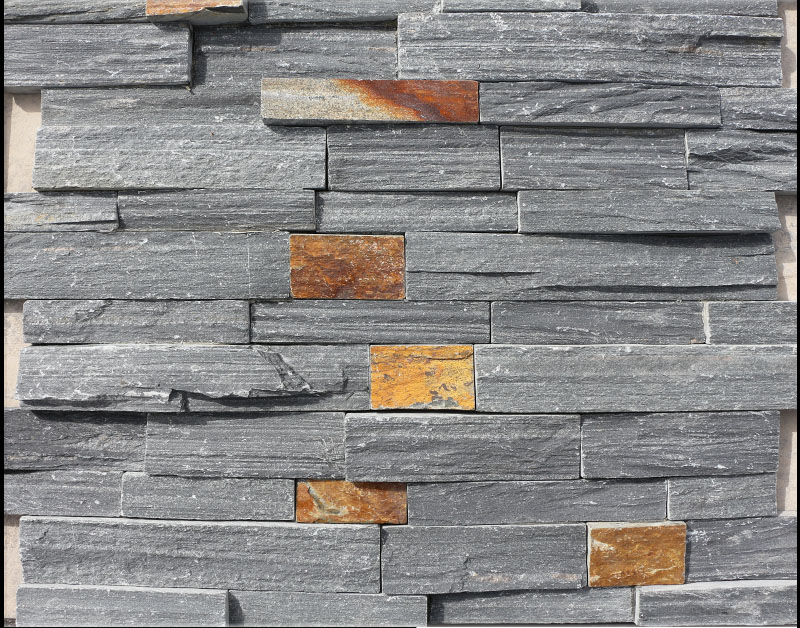
Placi ruginite
Vrei să-ți construiești propriul zid de sprijin din piatră, dar nu știi cum să începi? Dacă ai un denivelat curte, un zid de sprijin din piatră poate ajuta la prevenirea eroziunii și oferă un loc frumos pentru plantare. Pentru a învăța cum să-ți creezi propriile capetele, de la început până la sfârșit, citește mai departe.
To figure out how much stone you’ll need, multiply your wall’s height times the depth times the length. If your wall is 2 feet high, 1-1/2 feet wide, and 20 feet long, you’ll need roughly 60 cubic feet of stone. Most stoneyards will deliver the stones for a slight charge; have them placed as close to the site of your retaining wall as possible.
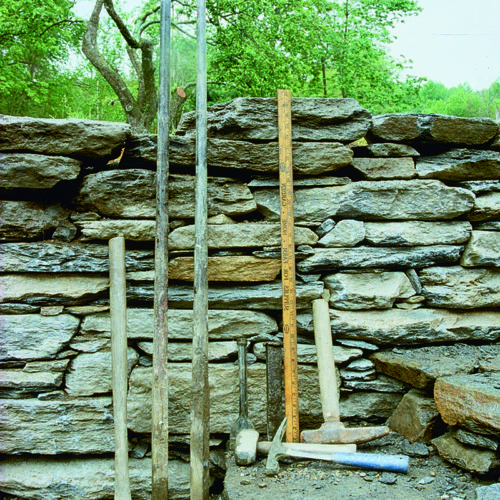
Cât despre tools, you’ll need a shovel for digging your trench and backfilling, a matock for attacking the grade, and a small sledgehammer for tamping soil. For marking your site and leveling rocks, you’ll need a line level, a few tall stakes, string, some flour, and a 4- or 8-foot level.
Now you can start digging. The easiest approach is to cut and fill—that is, dig into the slope where the wall will go and spread the earth below you to create a level terrace. When you cut and fill, the wall is backed by undisturbed soil, which is more stable than fill. For design reasons, however, you might choose to build a freestanding wall and fill behind it with soil from another site. Or you might do a partial cut and fill, which is somewhere between the two.
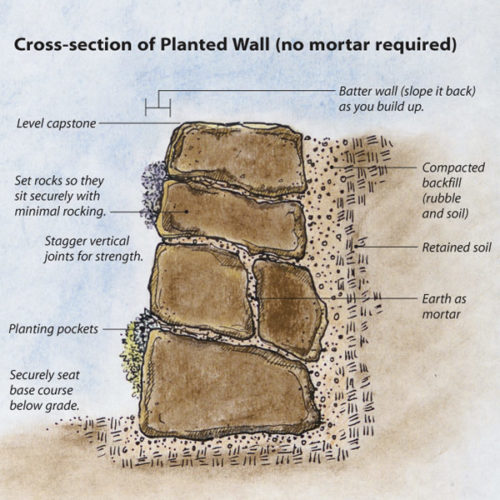
Zidurile sunt construite în cursuri. The base course is structurally the most important, while the final course, the capstone, is the most challenging. For stability, walls should be at least 20 inches wide at the base. They can taper slightly toward the top, but you’ll want a wall that is at least two rocks wide in most places. This can be accomplished by mixing stones of different sizes or by backfilling with a combination of two-thirds rubble to one-third soil.
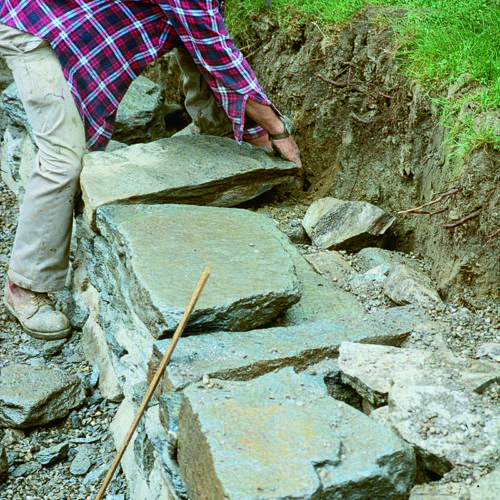
Săpați un șanț pentru cursul de bază
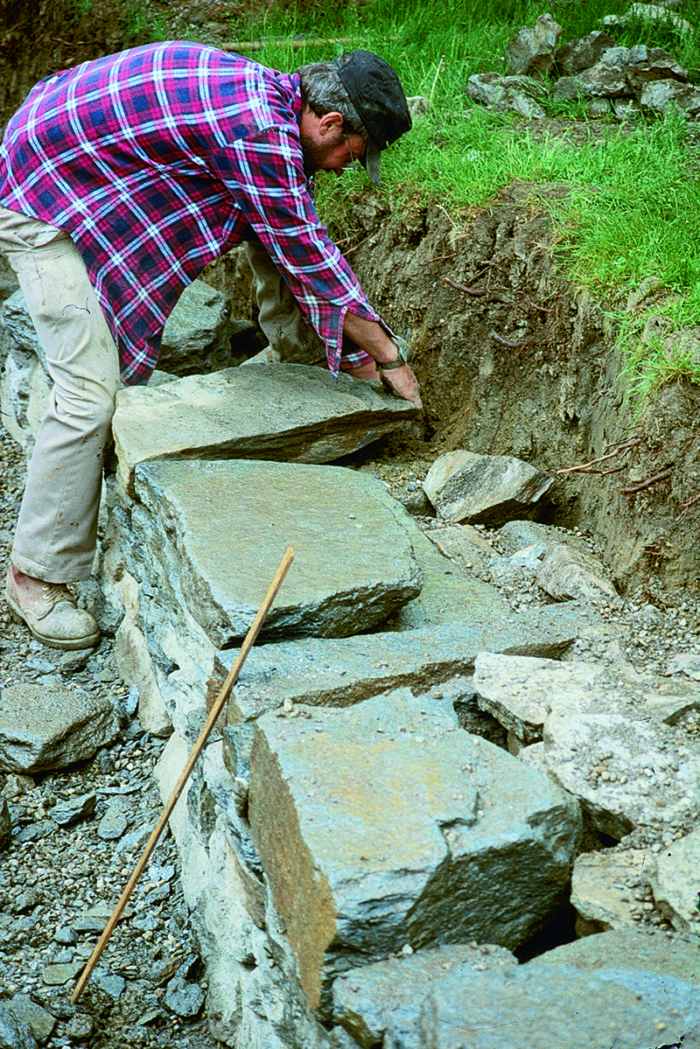
Start by digging a trench about 4 inches deep and at least 2 feet wide. A straightedged spade will give you a nice, even edge. The first course must be very solid and tightly fit because the weight of the wall will rest on it. Take the time to find rocks that lock into place, without leaving gaps. Randomly lay your largest rocks along the front edge of the trench. Set the first stone, shifting it around until it sits securely without being rocked easily, and then fill with the remaining stones. If you are using rectangular stones, you want the height of adjacent stones to be the same, or of a difference that can be made up with a smaller stone. If the rocks are irregular, then the stones will fit together leaving a triangular gap for the next course to fit into. I find irregular rocks easier to work with than flat ones; with flat rocks you have to be more precise. Find a stone that fits well and then continue for a few more feet. A rule of thumb, passed down from my wall-building teacher’s mentor, is to try a stone seven different ways. If it doesn’t fit by the seventh try, use another stone.
Apoi, lopați murdăria în spatele pietrelor și bate pământul în spații between, behind, and beneath the stones with top of the sledgehammer. This is an important step because the dirt becomes the mortar for the wall. I also recommend adding rubble (those stones you won’t use on the face of your wall) behind the face course to give greater strength to the wall. Pound the rubble and soil mix until you are satisfied that it is solid. Continue the first course until you reach the end of the wall. When you are done, test
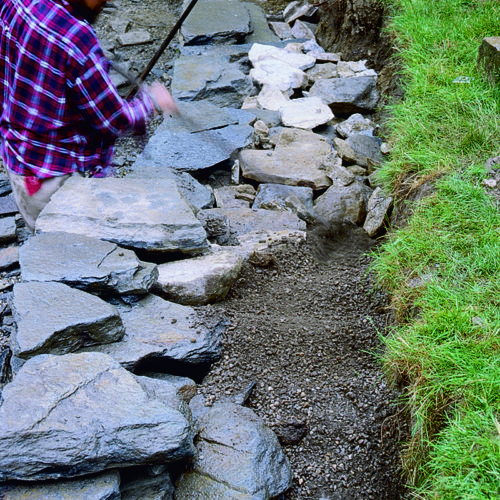
Pentru a începe cel de-al doilea curs, alegeți o piatră care va uni prima îmbinare a firului de jos. Avoid having joints run up the face of the wall, and angle (batter) the courses backward—approximately 1 inch per vertical foot. This creates a stable wall. For added strength, intermittently place single stones that run the full depth of the wall. This will only work with rectangular rocks. For irregular rocks, place a large rock behind a face rock every 3 feet or so. As you set a course, you will come to situations, probably quite a few of them, where the rock placement is perfect on all sides but one. These are the planting opportunities that give life to a stone wall.
Continue building in this manner until you are one course away from the finished height. Fitting stones will get easier as you go, and you’ll likely discover that there’s a certain magic moment when you’re building a wall: you hear a thump that signals you’ve placed a rock perfec
Faceți înălțimea amplasării peretelui
The ideal height for a dry-stacked retaining wall is 18 to 22 inches—so you can sit on it when your gardening chores are done. Even if
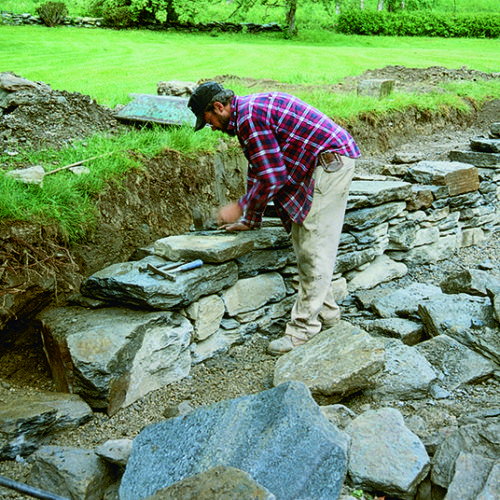
Aduceți multă răbdare în procesul de așezare a pietrei de capăt; este un punct culminant al abilității pe care le-ați dezvoltat până în acest moment. Ar trebui să aibă aproximativ 15 până la 18 inci adâncime, format din una până la trei pietre. Folosiți pământ și o poziționare bună pentru a fixa pietrele și, la fel ca în cazul îmbinărilor de perete, evitați rosturile lungi în piatra de capăt. Dacă vrei să stai pe perete, alege pietre netede, plate. Sau, umple golurile cu pământ și plantează ierburi parfumate pentru perne. O piatră de vârf plantată este o notă finală încântătoare pentru un perete viu.
 african
 albanez
 amharică
 arabic
 armean
 Azerbaidjan
 bască
bască Belarus
 bengaleză
  Bosniac
 bulgară
 catalan
 Cebuano
 China
China China (Taiwan)
 corsicană
 croat
croat ceh
ceh danez
danez olandeză
 Engleză
 esperanto
 estonă
 finlandeză
 limba franceza
 frizonă
 Galician
 georgian
 limba germana
 greacă
 Gujarati
 creolul haitian
 hausa
hausa hawaian
 ebraică
 nu
nu Miao
Miao maghiară
 islandez
 igbo
igbo indoneziană
 irlandez
 Italiană
 japonez
 javaneză
 Kannada
 kazah
kazah Khmer
Khmer ruandez
 coreeană
 kurdă
kurdă Kârgâz
 TB
TB latin
latin letonă
 lituanian
 luxemburghez
 macedonean
 Malgashi
 Malaeză
 Malayalam
 malteză
 maori
maori marathi
 mongol
 Myanmar
 nepaleză
 norvegian
 norvegian
 occitană
 Pashto
 persană
 Lustrui
 portugheză
  punjabi
 Română
 Rusă
Rusă samoană
 gaelic scoțian
 sârb
sârb Engleză
 Shona
Shona Sindhi
 Sinhala
 slovacă
 slovenă
 somalez
 Spaniolă
 Sundaneza
 Swahili
 suedez
 tagalog
 Tadjik
 tamil
tamil tătar
tătar Telugu
 thailandez
 turc
turc turkmeni
 ucrainean
 Urdu
Urdu Uighur
 uzbec
uzbec vietnamez
 galeză