

Paslı plitələr
Öz daş istinad divarınızı qurmaq istəyirsiniz, lakin necə başlayacağınızdan əmin deyilsiniz? Əgər qeyri-bərabər varsa həyətdə daş istinad divarı eroziyanın qarşısını almağa kömək edə bilər və əkmək üçün gözəl bir yer təmin edir. Başdan sona qədər özünüzü necə birləşdirəcəyinizi öyrənmək üçün oxuyun.
To figure out how much stone you’ll need, multiply your wall’s height times the depth times the length. If your wall is 2 feet high, 1-1/2 feet wide, and 20 feet long, you’ll need roughly 60 cubic feet of stone. Most stoneyards will deliver the stones for a slight charge; have them placed as close to the site of your retaining wall as possible.
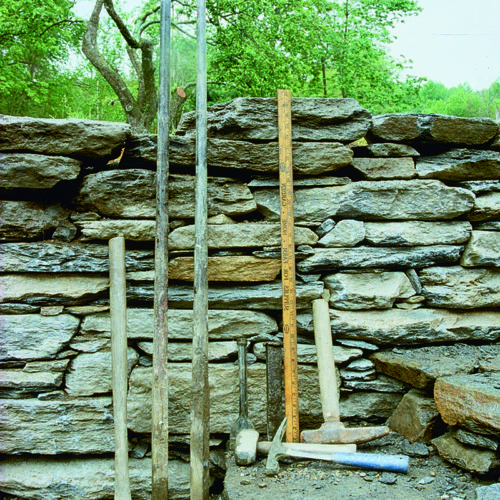
O ki qaldı tools, you’ll need a shovel for digging your trench and backfilling, a mattock for attacking the grade, and a small sledgehammer for tamping soil. For marking your site and leveling rocks, you’ll need a line level, a few tall stakes, string, some flour, and a 4- or 8-foot level.
Now you can start digging. The easiest approach is to cut and fill—that is, dig into the slope where the wall will go and spread the earth below you to create a level terrace. When you cut and fill, the wall is backed by undisturbed soil, which is more stable than fill. For design reasons, however, you might choose to build a freestanding wall and fill behind it with soil from another site. Or you might do a partial cut and fill, which is somewhere between the two.
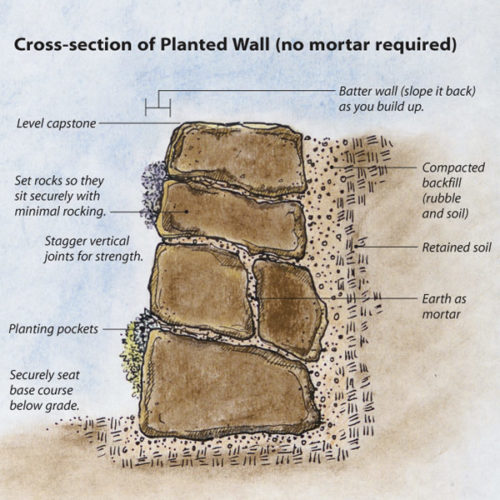
Divarlar kurslarla tikilir. The base course is structurally the most important, while the final course, the capstone, is the most challenging. For stability, walls should be at least 20 inches wide at the base. They can taper slightly toward the top, but you’ll want a wall that is at least two rocks wide in most places. This can be accomplished by mixing stones of different sizes or by backfilling with a combination of two-thirds rubble to one-third soil.
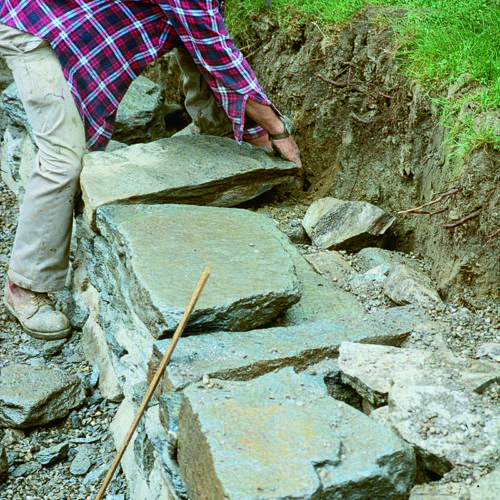
Əsas kurs üçün bir xəndək qazın
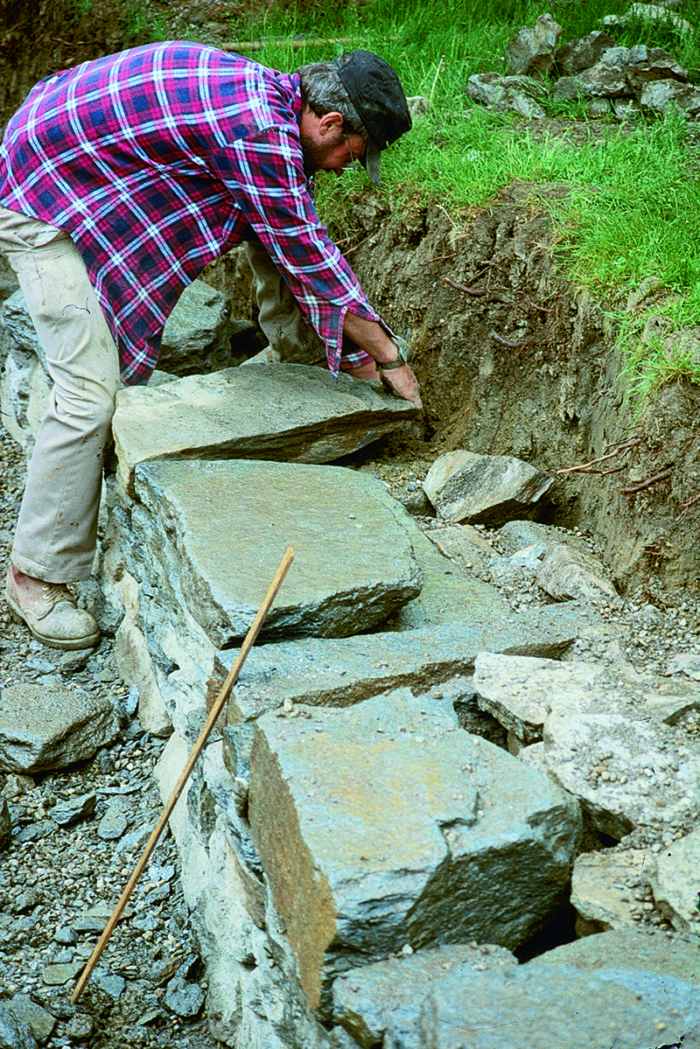
Start by digging a trench about 4 inches deep and at least 2 feet wide. A straightedged spade will give you a nice, even edge. The first course must be very solid and tightly fit because the weight of the wall will rest on it. Take the time to find rocks that lock into place, without leaving gaps. Randomly lay your largest rocks along the front edge of the trench. Set the first stone, shifting it around until it sits securely without being rocked easily, and then fill with the remaining stones. If you are using rectangular stones, you want the height of adjacent stones to be the same, or of a difference that can be made up with a smaller stone. If the rocks are irregular, then the stones will fit together leaving a triangular gap for the next course to fit into. I find irregular rocks easier to work with than flat ones; with flat rocks you have to be more precise. Find a stone that fits well and then continue for a few more feet. A rule of thumb, passed down from my wall-building teacher’s mentor, is to try a stone seven different ways. If it doesn’t fit by the seventh try, use another stone.
Sonra, daşların arxasındakı kirləri kürəkləyin və yerin boşluqlarına basdırın between, behind, and beneath the stones with top of the sledgehammer. This is an important step because the dirt becomes the mortar for the wall. I also recommend adding rubble (those stones you won’t use on the face of your wall) behind the face course to give greater strength to the wall. Pound the rubble and soil mix until you are satisfied that it is solid. Continue the first course until you reach the end of the wall. When you are done, test
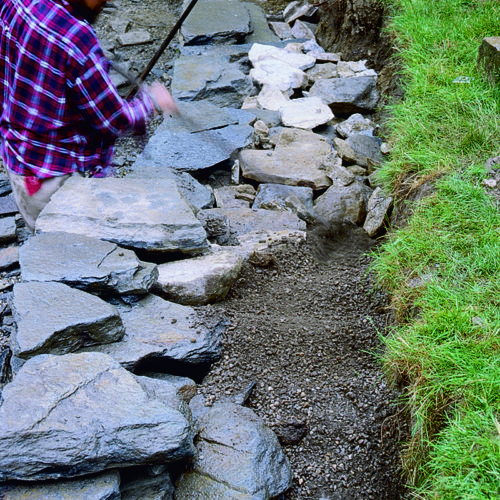
İkinci kursa başlamaq üçün, alt kursun ilk birləşməsini bağlayacaq bir daş seçin. Avoid having joints run up the face of the wall, and angle (batter) the courses backward—approximately 1 inch per vertical foot. This creates a stable wall. For added strength, intermittently place single stones that run the full depth of the wall. This will only work with rectangular rocks. For irregular rocks, place a large rock behind a face rock every 3 feet or so. As you set a course, you will come to situations, probably quite a few of them, where the rock placement is perfect on all sides but one. These are the planting opportunities that give life to a stone wall.
Continue building in this manner until you are one course away from the finished height. Fitting stones will get easier as you go, and you’ll likely discover that there’s a certain magic moment when you’re building a wall: you hear a thump that signals you’ve placed a rock perfec
Divarınızın hündürlüyünü düzəldin
The ideal height for a dry-stacked retaining wall is 18 to 22 inches—so you can sit on it when your gardening chores are done. Even if
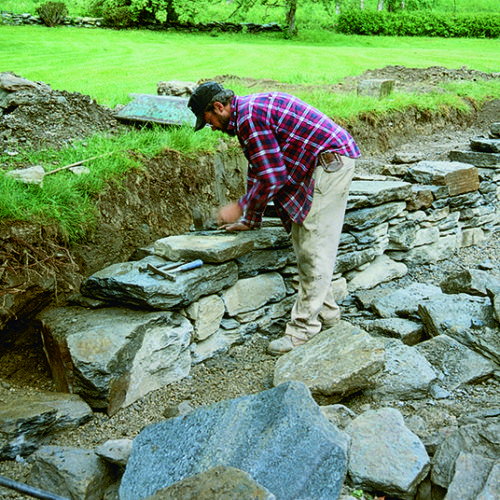
Baş daşının qoyulması prosesinə çoxlu səbr gətirin; bu, bu nöqtəyə qədər inkişaf etdirdiyiniz bacarığın kulminasiya nöqtəsidir. Təxminən 15-18 düym dərinlikdə, bir-üç daşdan ibarət olmalıdır. Daşları bərkitmək üçün torpaqdan və yaxşı yerləşdirmədən istifadə edin və divar birləşmələrində olduğu kimi, baş daşındakı uzun birləşmələrdən qaçın. Divarda oturmaq istəyirsinizsə, hamar, düz daşları seçin. Və ya boşluqları torpaqla doldurun və yastıqlar üçün ətirli otlar əkin. Əkilmiş qapaq daşı canlı divar üçün ləzzətli son toxunuşdur.






 afrikalı
 alban
alban amhar
amhar ərəb
ərəb erməni
 Azərbaycan
 bask dili
 belarus
 benqal dili
  bosniyalı
 bolqar
 katalan dili
 Cebuano
 Çin
Çin Çin (Tayvan)
 korsika
 xorvat
 çex
çex danimarka
 holland
 İngilis dili
 esperanto
 eston
eston fin
fin Fransız dili
 friz dili
 qalisian
 gürcü
gürcü alman
alman yunan
yunan qucarat dili
 Haiti Kreol
 hausa
hausa havaylı
 ivrit
ivrit Xeyr
Xeyr Miao
Miao macar
macar island
 iqbo
iqbo indoneziya dili
 irland
 italyan
 yapon
yapon yava dili
 Kannada
 qazax
qazax kxmer
kxmer Ruanda
 koreyalı
 kürd
kürd qırğız
 Vərəm
Vərəm latın
latın latış
latış litva
litva Lüksemburq
 makedon
 Malqaşi
 malay
malay malayalam
 maltalı
 maori
maori marati dili
 monqol
 Myanma
 nepal dili
 norveçli
 norveçli
 oksitan
 puştu
puştu fars
fars polyak
 portuqal
  Pəncabi
 rumın
rumın rus
rus samoa
samoa Şotlandiya Qael dili
 serb
serb İngilis dili
 Şona
Şona sindhi
 Sinhala
 slovak
 sloven
 Somali
 ispan dili
 sundan
 suahili
 isveçli
 taqaloq
 tacik
tacik tamil
tamil tatar
tatar teluqu dili
 Tay
Tay türk
türk türkmən
 ukraynalı
 Urdu
Urdu uyğur
uyğur özbək
özbək vyetnamlı
 uels
uels