

Ժանգոտ սալիկներ
Ցանկանու՞մ եք կառուցել ձեր սեփական քարե հենապատը, բայց չգիտեք, թե ինչպես սկսել: Եթե դուք ունեք անհավասար բակում, քարե հենապատը կարող է օգնել կանխել էրոզիան և լավ տեղ է ապահովում տնկելու համար: Սովորելու համար, թե ինչպես հավաքել ձեր սեփականը, սկզբից մինչև վերջ, կարդացեք:
To figure out how much stone you’ll need, multiply your wall’s height times the depth times the length. If your wall is 2 feet high, 1-1/2 feet wide, and 20 feet long, you’ll need roughly 60 cubic feet of stone. Most stoneyards will deliver the stones for a slight charge; have them placed as close to the site of your retaining wall as possible.
Ինչ վերաբերում է tools, you’ll need a shovel for digging your trench and backfilling, a mattock for attacking the grade, and a small sledgehammer for tamping soil. For marking your site and leveling rocks, you’ll need a line level, a few tall stakes, string, some flour, and a 4- or 8-foot level.
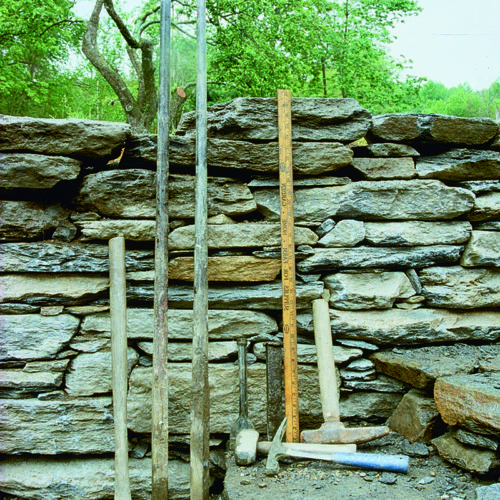
Now you can start digging. The easiest approach is to cut and fill—that is, dig into the slope where the wall will go and spread the earth below you to create a level terrace. When you cut and fill, the wall is backed by undisturbed soil, which is more stable than fill. For design reasons, however, you might choose to build a freestanding wall and fill behind it with soil from another site. Or you might do a partial cut and fill, which is somewhere between the two.
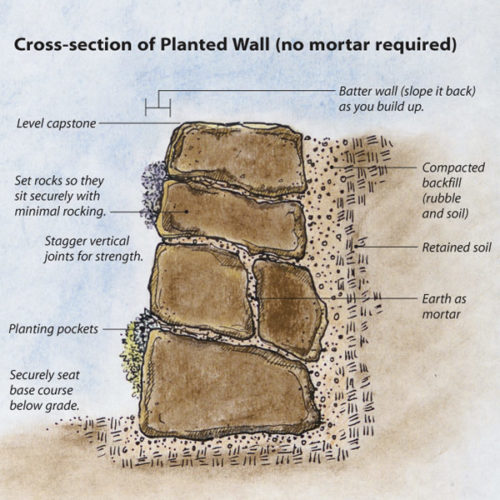
Պատերը կառուցված են դասընթացներով: The base course is structurally the most important, while the final course, the capstone, is the most challenging. For stability, walls should be at least 20 inches wide at the base. They can taper slightly toward the top, but you’ll want a wall that is at least two rocks wide in most places. This can be accomplished by mixing stones of different sizes or by backfilling with a combination of two-thirds rubble to one-third soil.
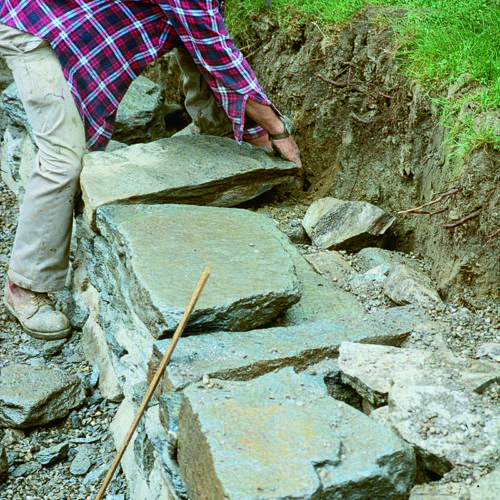
Հիմնական դասընթացի համար խրամատ փորեք
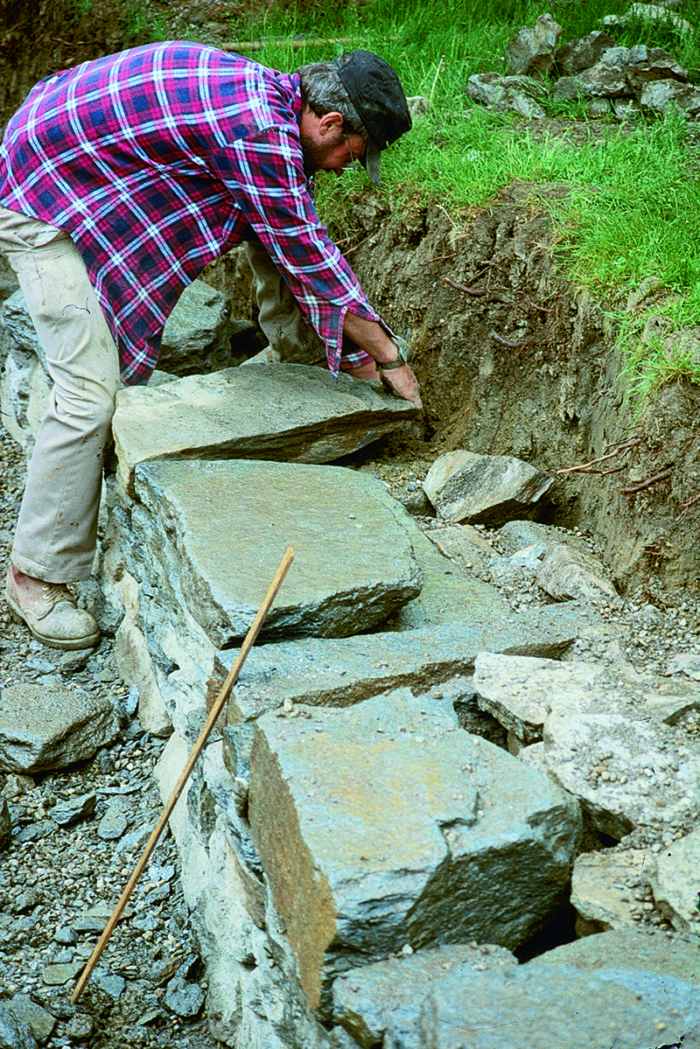
Start by digging a trench about 4 inches deep and at least 2 feet wide. A straightedged spade will give you a nice, even edge. The first course must be very solid and tightly fit because the weight of the wall will rest on it. Take the time to find rocks that lock into place, without leaving gaps. Randomly lay your largest rocks along the front edge of the trench. Set the first stone, shifting it around until it sits securely without being rocked easily, and then fill with the remaining stones. If you are using rectangular stones, you want the height of adjacent stones to be the same, or of a difference that can be made up with a smaller stone. If the rocks are irregular, then the stones will fit together leaving a triangular gap for the next course to fit into. I find irregular rocks easier to work with than flat ones; with flat rocks you have to be more precise. Find a stone that fits well and then continue for a few more feet. A rule of thumb, passed down from my wall-building teacher’s mentor, is to try a stone seven different ways. If it doesn’t fit by the seventh try, use another stone.
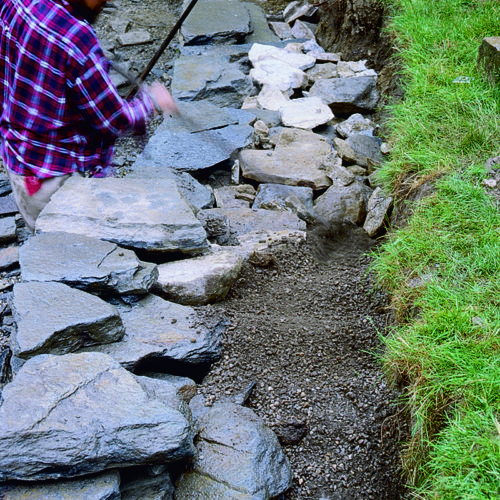
Հաջորդը, քարերի ետևում կեղտը թիակ թափեք և հողը ներծծեք տարածքների մեջ between, behind, and beneath the stones with top of the sledgehammer. This is an important step because the dirt becomes the mortar for the wall. I also recommend adding rubble (those stones you won’t use on the face of your wall) behind the face course to give greater strength to the wall. Pound the rubble and soil mix until you are satisfied that it is solid. Continue the first course until you reach the end of the wall. When you are done, test
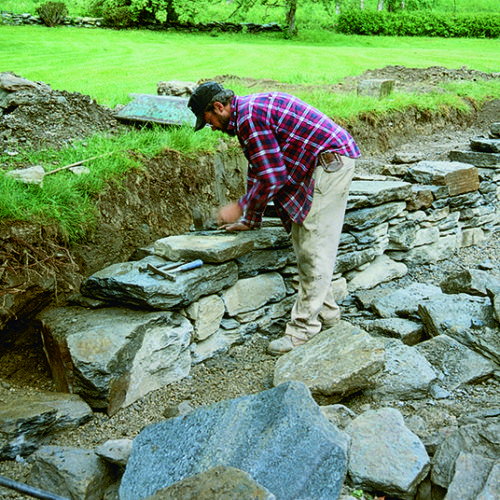
Երկրորդ դասընթացը սկսելու համար ընտրեք մի քար, որը կամրջելու է ներքևի դասընթացի առաջին հանգույցը: Avoid having joints run up the face of the wall, and angle (batter) the courses backward—approximately 1 inch per vertical foot. This creates a stable wall. For added strength, intermittently place single stones that run the full depth of the wall. This will only work with rectangular rocks. For irregular rocks, place a large rock behind a face rock every 3 feet or so. As you set a course, you will come to situations, probably quite a few of them, where the rock placement is perfect on all sides but one. These are the planting opportunities that give life to a stone wall.
Continue building in this manner until you are one course away from the finished height. Fitting stones will get easier as you go, and you’ll likely discover that there’s a certain magic moment when you’re building a wall: you hear a thump that signals you’ve placed a rock perfec
Դարձրեք ձեր պատի տեղադրման բարձրությունը
The ideal height for a dry-stacked retaining wall is 18 to 22 inches—so you can sit on it when your gardening chores are done. Even if
Մեծ համբերություն բերեք վերնաքարը դնելու գործընթացին. դա գագաթնակետն է այն հմտության, որը դուք զարգացրել եք այս կետում: Այն պետք է լինի մոտ 15-ից 18 դյույմ խորություն՝ կազմված մեկից երեք քարից: Քարերը ամրացնելու համար օգտագործեք հող և լավ տեղակայում, և ինչպես պատի հոդերի դեպքում, խուսափեք վերնաքարի երկար հոդերից: Եթե ցանկանում եք նստել պատին, ընտրեք հարթ, հարթ քարեր։ Կամ, լրացրեք բացերը հողով և տնկեք անուշահոտ խոտաբույսեր բարձիկների համար: Տնկված վերնաքարը հիանալի ավարտուն շոշափում է կենդանի պատին:
 Աֆրիկյան
 ալբանացի
 ամհարերեն
 արաբերեն
 հայերեն
 ադրբեջաներեն
 բասկերեն
 բելառուս
 Բենգալերեն
  բոսնիերեն
 բուլղարերեն
 կատալոներեն
 Սեբուանո
 Չինաստան
 Չինաստան (Թայվան)
 Կորսիկան
 խորվաթերեն
 չեխ
չեխ դանիերեն
 հոլանդերեն
 Անգլերեն
 Էսպերանտո
 էստոնական
 Ֆիններեն
 ֆրանսերեն
 ֆրիզ
ֆրիզ գալիցերեն
 վրաց
վրաց գերմաներեն
 հունարեն
 գուջարաթի
 Հայիթի կրեոլ
 հաուսա
 հավայական
 եբրայերեն
 ոչ
ոչ Միաո
Միաո հունգարերեն
 իսլանդերեն
 իգբո
իգբո Ինդոնեզերեն
 իռլանդական
 Իտալական
 ճապոներեն
 ճավայերեն
 Կաննադա
 ղազախ
ղազախ քմեր
քմեր Ռուանդա
 կորեերեն
 քրդական
 ղրղզ
ղրղզ ՏԲ
ՏԲ լատիներեն
 լատվիերեն
 լիտվերեն
 լյուքսեմբուրգերեն
 մակեդոնական
 Մալգաշի
 մալայերեն
 մալայալամ
 մալթերեն
 Մաորի
Մաորի Մարաթի
 Մոնղոլական
 Մյանմար
 Նեպալերեն
 նորվեգական
 նորվեգական
 Օքսիտանական
 փուշթու
 պարսկ
պարսկ լեհ
լեհ պորտուգալերեն
  փենջաբերեն
 ռումիներեն
 ռուսերեն
 Սամոան
 Շոտլանդական Գելերեն
 սերբերեն
 Անգլերեն
 Շոնա
Շոնա սինդի
սինդի Սինհալա
 սլովակ
 սլովեներեն
 Սոմալի
 իսպաներեն
 սունդաներեն
 Սուահիլի
 շվեդ
շվեդ տագալերեն
 Տաջիկ
Տաջիկ թամիլերեն
 թաթար
թաթար թելուգու
 թայերեն
 թուրքական
 թուրքմեն
 ուկրաինական
 ուրդու
 ույղուր
 Ուզբեկ
 Վիետնամերեն
 Ուելս
Ուելս