

Тот басқан плиткалар
Өзіңіздің тастан тіреу қабырғасын салғыңыз келеді, бірақ неден бастау керектігін білмейсіз бе? Егер сізде біркелкі емес болса аулада, тас тірек қабырға эрозияны болдырмауға көмектеседі және отырғызуға жақсы орын береді. Басынан аяғына дейін өз беттеріңізді біріктіруді үйрену үшін оқыңыз.
To figure out how much stone you’ll need, multiply your wall’s height times the depth times the length. If your wall is 2 feet high, 1-1/2 feet wide, and 20 feet long, you’ll need roughly 60 cubic feet of stone. Most stoneyards will deliver the stones for a slight charge; have them placed as close to the site of your retaining wall as possible.
болсақ tools, you’ll need a shovel for digging your trench and backfilling, a матток for attacking the grade, and a small sledgehammer for tamping soil. For marking your site and leveling rocks, you’ll need a line level, a few tall stakes, string, some flour, and a 4- or 8-foot level.
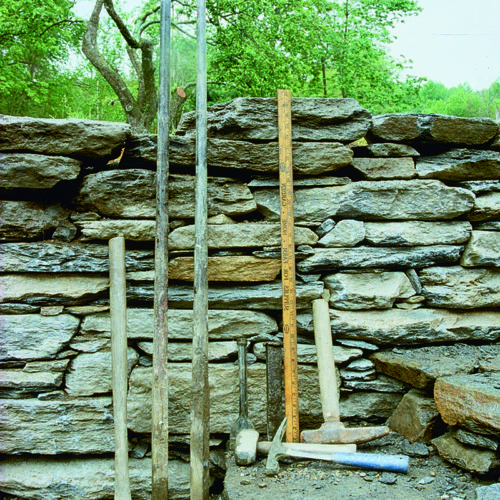
Now you can start digging. The easiest approach is to cut and fill—that is, dig into the slope where the wall will go and spread the earth below you to create a level terrace. When you cut and fill, the wall is backed by undisturbed soil, which is more stable than fill. For design reasons, however, you might choose to build a freestanding wall and fill behind it with soil from another site. Or you might do a partial cut and fill, which is somewhere between the two.
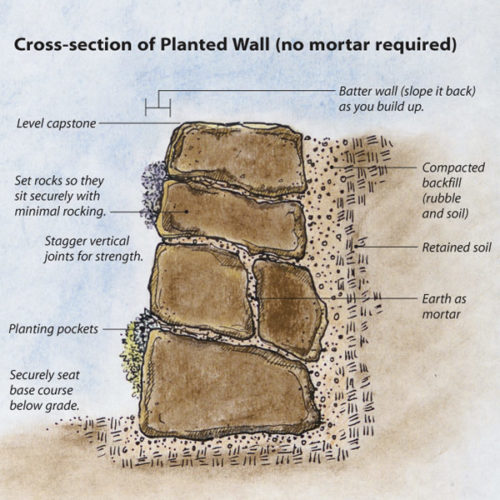
Қабырғалар курстарда салынған. The base course is structurally the most important, while the final course, the capstone, is the most challenging. For stability, walls should be at least 20 inches wide at the base. They can taper slightly toward the top, but you’ll want a wall that is at least two rocks wide in most places. This can be accomplished by mixing stones of different sizes or by backfilling with a combination of two-thirds rubble to one-third soil.
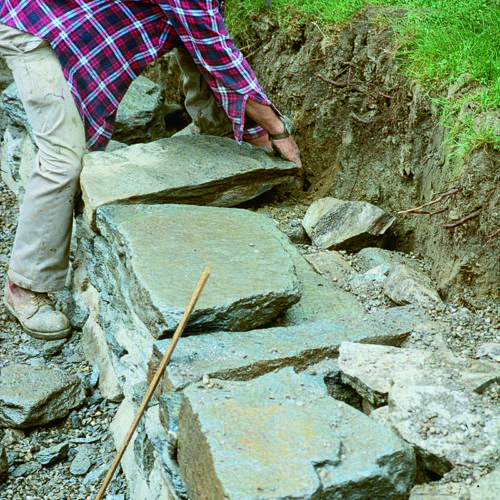
Негізгі курс үшін траншея қазыңыз
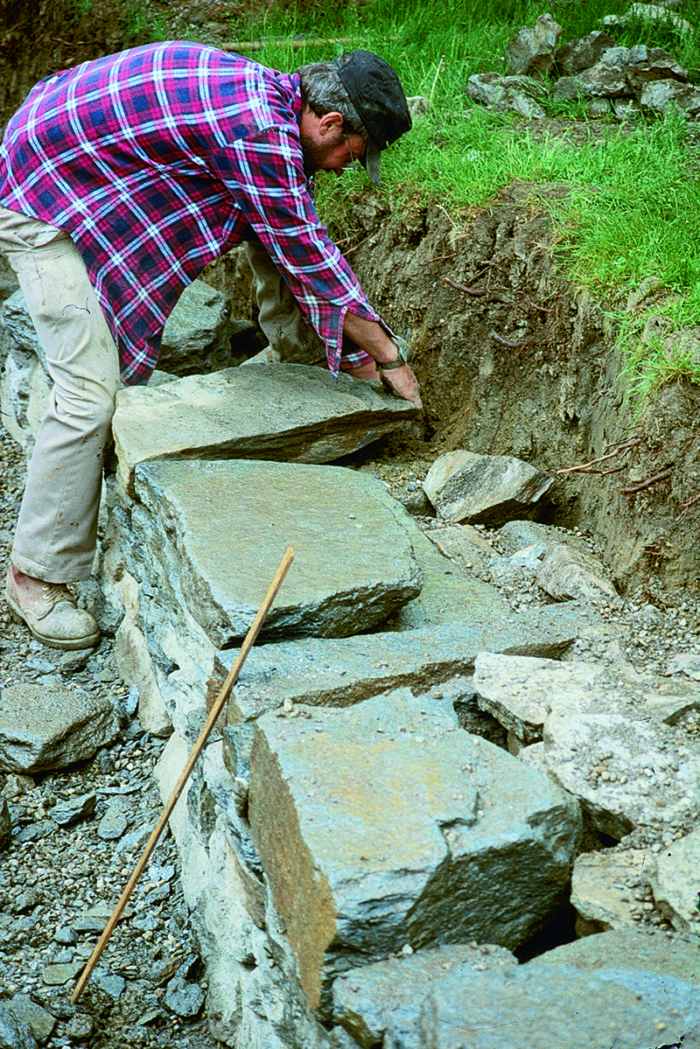
Start by digging a trench about 4 inches deep and at least 2 feet wide. A straightedged spade will give you a nice, even edge. The first course must be very solid and tightly fit because the weight of the wall will rest on it. Take the time to find rocks that lock into place, without leaving gaps. Randomly lay your largest rocks along the front edge of the trench. Set the first stone, shifting it around until it sits securely without being rocked easily, and then fill with the remaining stones. If you are using rectangular stones, you want the height of adjacent stones to be the same, or of a difference that can be made up with a smaller stone. If the rocks are irregular, then the stones will fit together leaving a triangular gap for the next course to fit into. I find irregular rocks easier to work with than flat ones; with flat rocks you have to be more precise. Find a stone that fits well and then continue for a few more feet. A rule of thumb, passed down from my wall-building teacher’s mentor, is to try a stone seven different ways. If it doesn’t fit by the seventh try, use another stone.
Әрі қарай, тастардың артындағы кірді тазалап, жерді бос орындарға сығыңыз between, behind, and beneath the stones with top of the sledgehammer. This is an important step because the dirt becomes the mortar for the wall. I also recommend adding rubble (those stones you won’t use on the face of your wall) behind the face course to give greater strength to the wall. Pound the rubble and soil mix until you are satisfied that it is solid. Continue the first course until you reach the end of the wall. When you are done, test
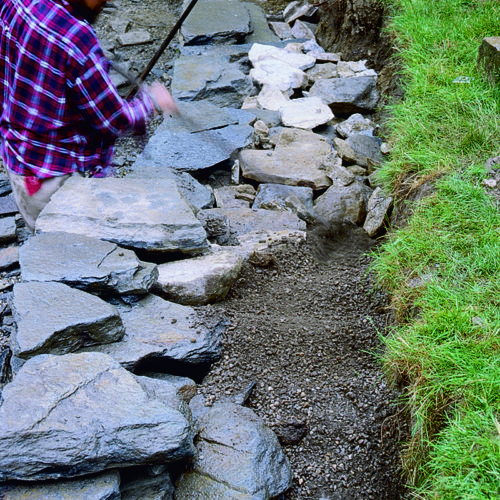
Екінші курсты бастау үшін төменгі курстың бірінші буынына көпір болатын тасты таңдаңыз. Avoid having joints run up the face of the wall, and angle (batter) the courses backward—approximately 1 inch per vertical foot. This creates a stable wall. For added strength, intermittently place single stones that run the full depth of the wall. This will only work with rectangular rocks. For irregular rocks, place a large rock behind a face rock every 3 feet or so. As you set a course, you will come to situations, probably quite a few of them, where the rock placement is perfect on all sides but one. These are the planting opportunities that give life to a stone wall.
Continue building in this manner until you are one course away from the finished height. Fitting stones will get easier as you go, and you’ll likely discover that there’s a certain magic moment when you’re building a wall: you hear a thump that signals you’ve placed a rock perfec
Қабырғаның биіктігін жасаңыз
The ideal height for a dry-stacked retaining wall is 18 to 22 inches—so you can sit on it when your gardening chores are done. Even if
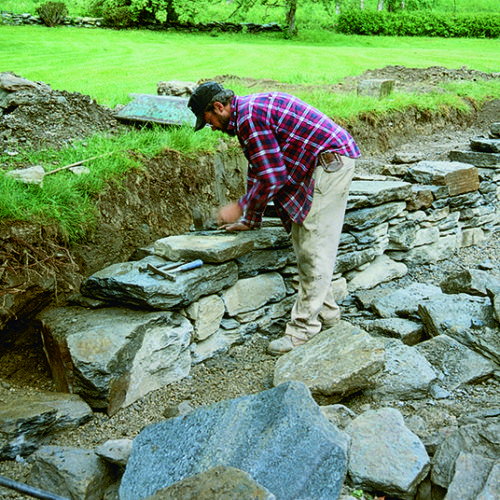
Қабық тасты төсеу процесіне көп шыдамдылық әкеліңіз; бұл сіздің осы уақытқа дейін дамытқан шеберлігіңіздің шыңы. Ол бір-үш тастан тұратын шамамен 15-18 дюйм тереңдікте болуы керек. Тастарды бекіту үшін топырақты және жақсы орналастыруды пайдаланыңыз және қабырғадағы түйіспелер сияқты, қақпақтағы ұзын буындардан аулақ болыңыз. Қабырғаға отырғыңыз келсе, тегіс, тегіс тастарды таңдаңыз. Немесе бос жерлерді топырақпен толтырып, жастықтар үшін хош иісті шөптерді отырғызыңыз. Отырғызылған тас - тірі қабырғаға керемет аяқтау.
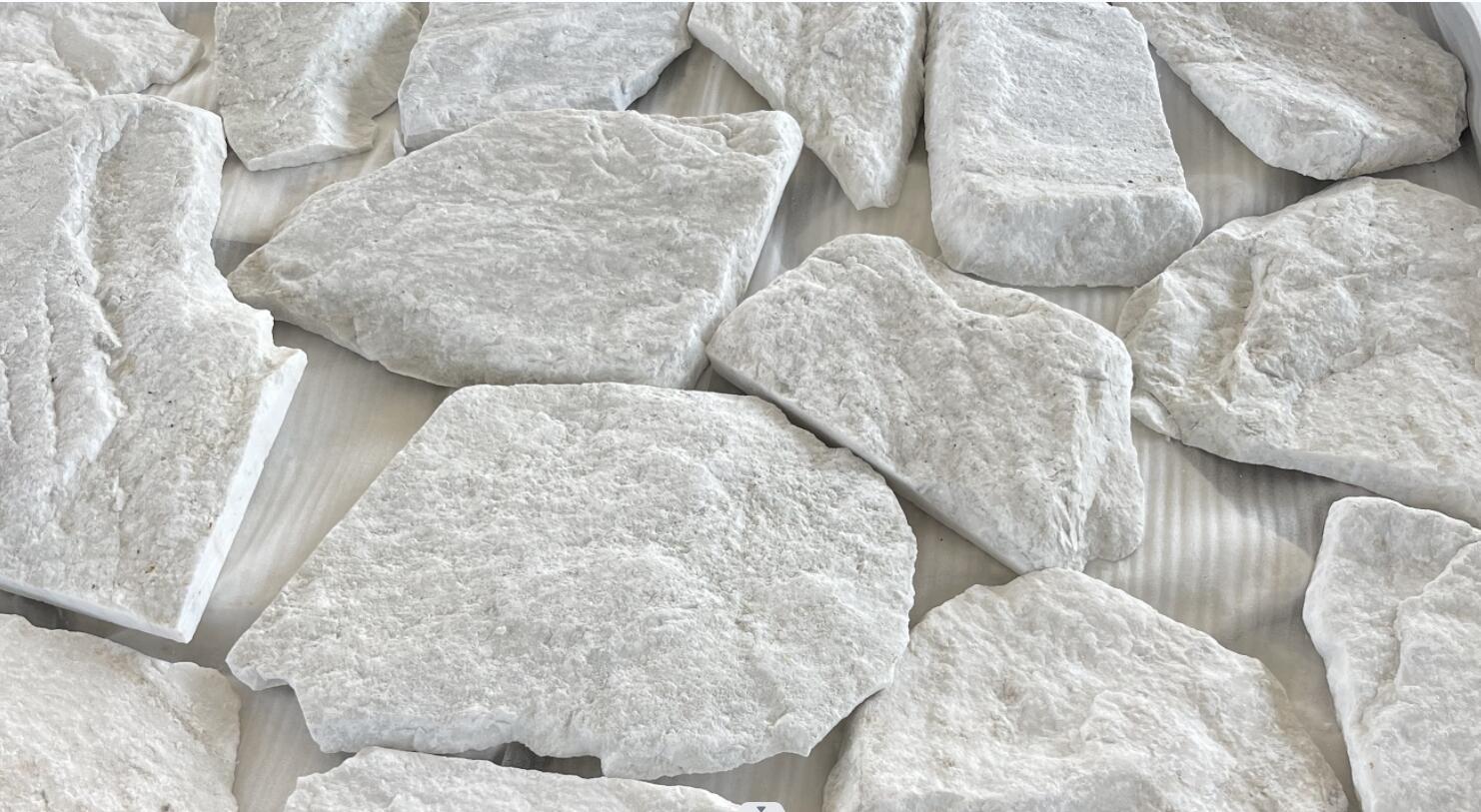
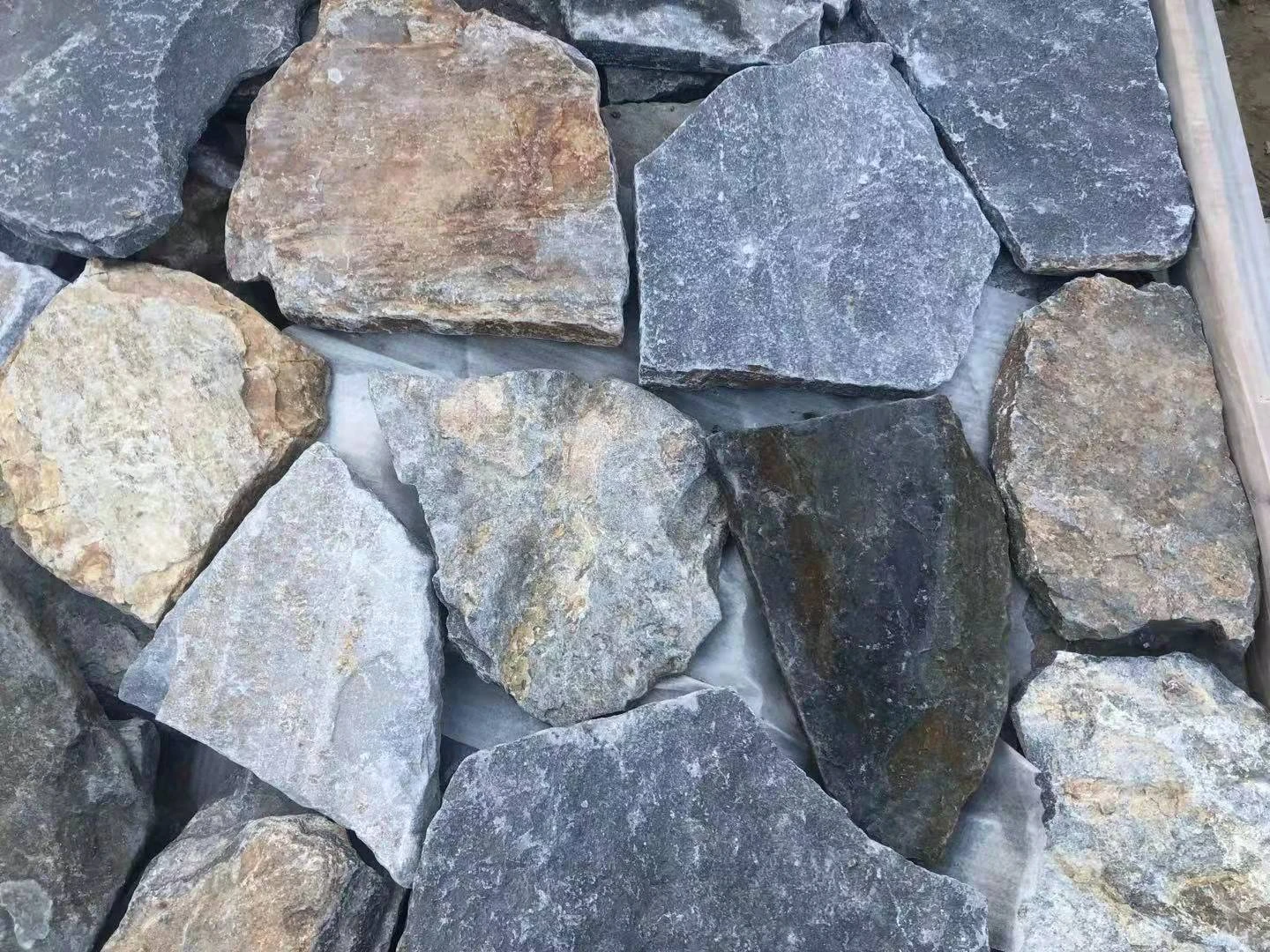
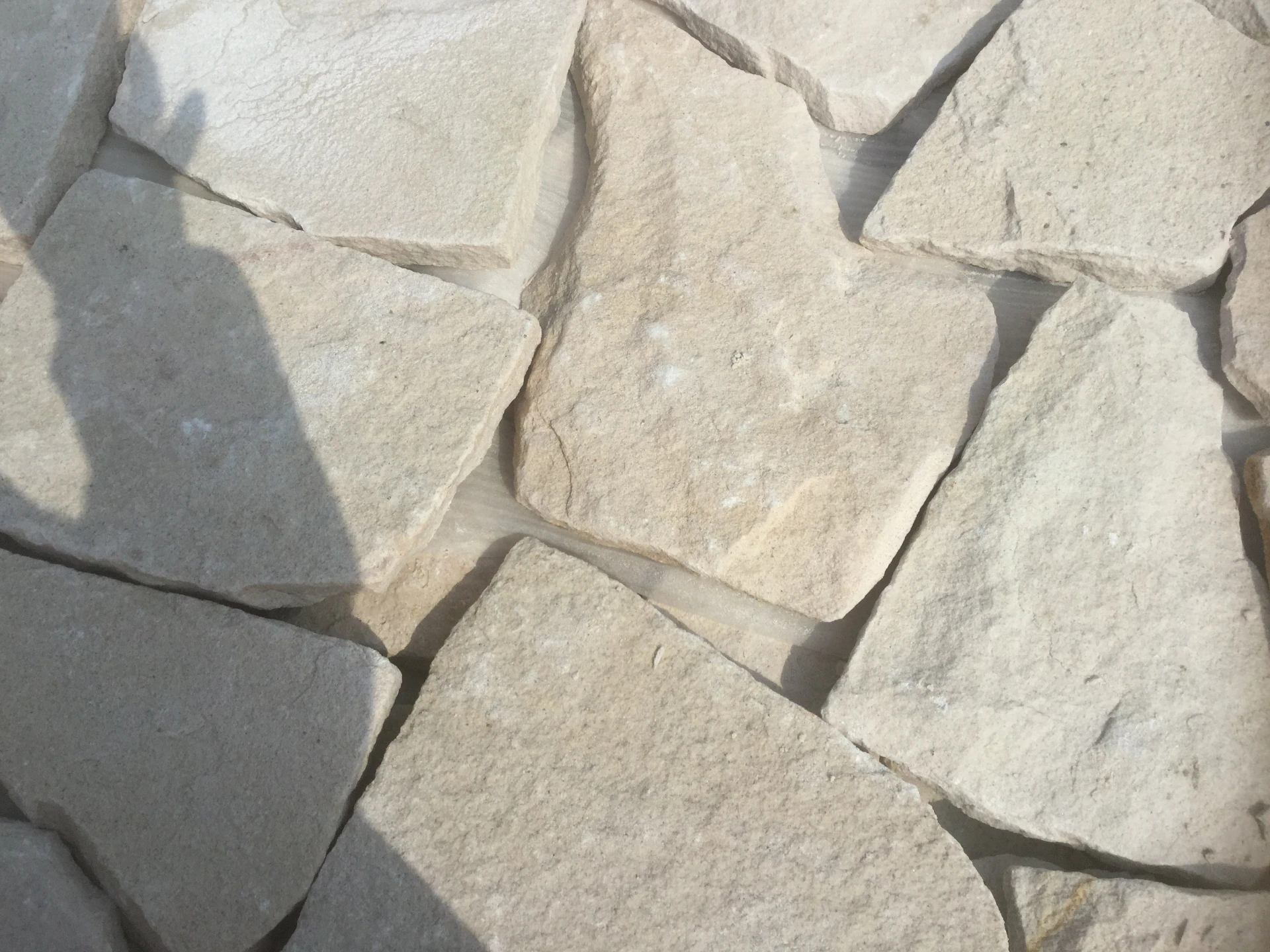
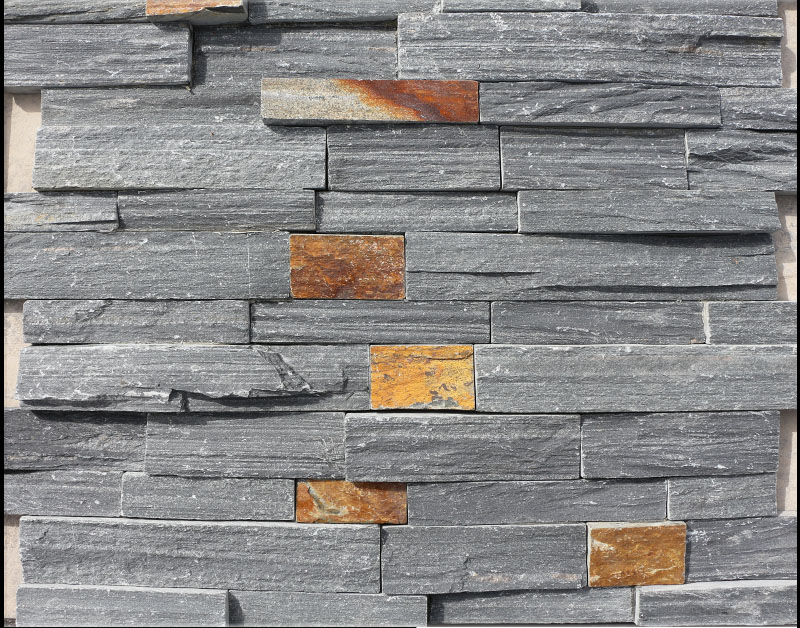
 африкалық
 албан
албан амхар
амхар араб
араб армян
армян әзірбайжан
 баск
баск белорус
 бенгал
  босниялық
 болгар
 каталон
 Себуано
 Қытай
Қытай Қытай (Тайвань)
 корсика
 хорват
 чех
чех дат
дат голланд
 Ағылшын
 эсперанто
 эстон
эстон фин
фин француз
 фриз
фриз галисиан
 грузин
 неміс
неміс грек
грек гуджарати
 Гаити креол
 хауса
хауса гавай
гавай иврит
иврит Жоқ
Жоқ Миао
Миао венгр
венгр исланд
 игбо
игбо индонезиялық
 ирланд
 итальян
 жапон
жапон Яван
Яван Каннада
 қазақ
қазақ кхмер
кхмер Руанда
 корей
корей күрд
күрд қырғыз
 туберкулез
 латын
латын латыш
латыш литва
литва Люксембург
 македон
 Малгаши
 малай
малай малаялам
 мальталық
 маори
маори Марати
 моңғол
 Мьянма
 Непал
Непал норвег
 норвег
 Окситан
 пушту
пушту парсы
парсы поляк
поляк португал тілі
  Пенджаби
 румын
румын орыс
орыс самоа
самоа Шотландтық гал
 серб
серб Ағылшын
 Шона
Шона Синди
Синди Сингал
 словак
 словен
 Сомали
 испан
испан сундан
 суахили
 швед
швед Тагалог
 тәжік
тәжік Тамил
Тамил татар
татар телугу
 тай
тай түрік
түрік түрікмен
 украин
 урду
урду ұйғыр
ұйғыр өзбек
өзбек вьетнамдық
 Уэльс
Уэльс