

Дат баскан плиткалар
Өзүңүздүн таш дубалыңызды кургуңуз келеби, бирок кантип баштоону билбей жатасызбы? Эгер сизде бирдей эмес болсо короодо, таш дубал эрозияны алдын алууга жардам берет жана отургузуу үчүн жакшы жерди камсыз кылат. Өзүңүздүн оюңузду кантип бириктирүүнү үйрөнүү үчүн, башынан аягына чейин окуп чыгыңыз.
To figure out how much stone you’ll need, multiply your wall’s height times the depth times the length. If your wall is 2 feet high, 1-1/2 feet wide, and 20 feet long, you’ll need roughly 60 cubic feet of stone. Most stoneyards will deliver the stones for a slight charge; have them placed as close to the site of your retaining wall as possible.
келсек tools, you’ll need a shovel for digging your trench and backfilling, a матток for attacking the grade, and a small sledgehammer for tamping soil. For marking your site and leveling rocks, you’ll need a line level, a few tall stakes, string, some flour, and a 4- or 8-foot level.
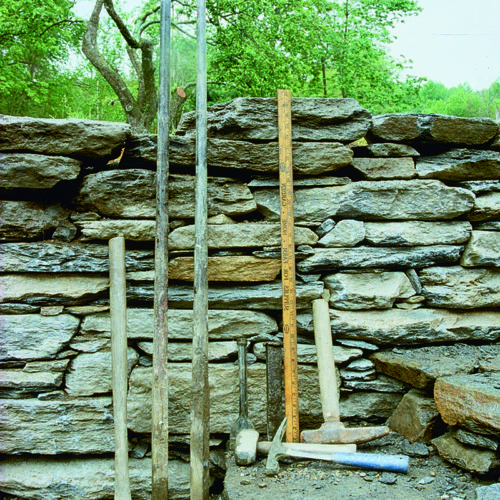
Now you can start digging. The easiest approach is to cut and fill—that is, dig into the slope where the wall will go and spread the earth below you to create a level terrace. When you cut and fill, the wall is backed by undisturbed soil, which is more stable than fill. For design reasons, however, you might choose to build a freestanding wall and fill behind it with soil from another site. Or you might do a partial cut and fill, which is somewhere between the two.
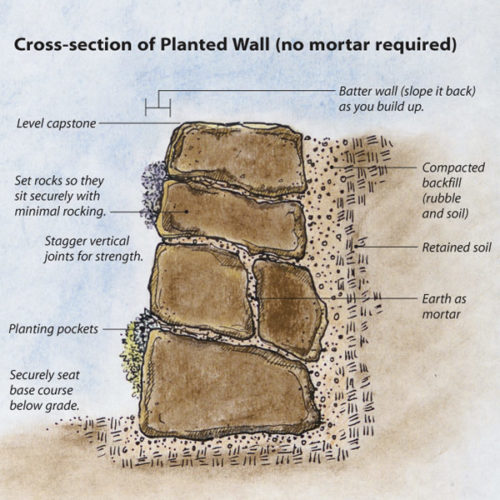
Дубалдар курстарда курулат. The base course is structurally the most important, while the final course, the capstone, is the most challenging. For stability, walls should be at least 20 inches wide at the base. They can taper slightly toward the top, but you’ll want a wall that is at least two rocks wide in most places. This can be accomplished by mixing stones of different sizes or by backfilling with a combination of two-thirds rubble to one-third soil.
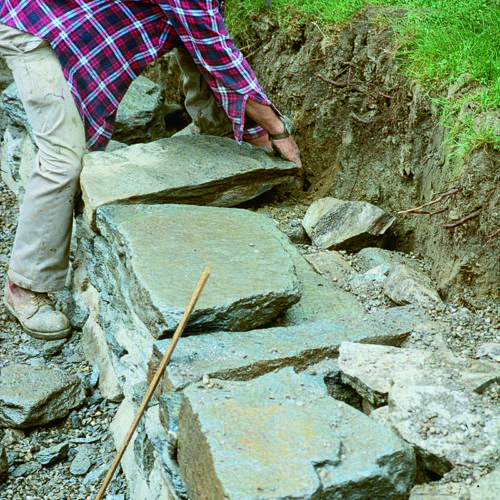
Негизги курс үчүн траншея казыңыз
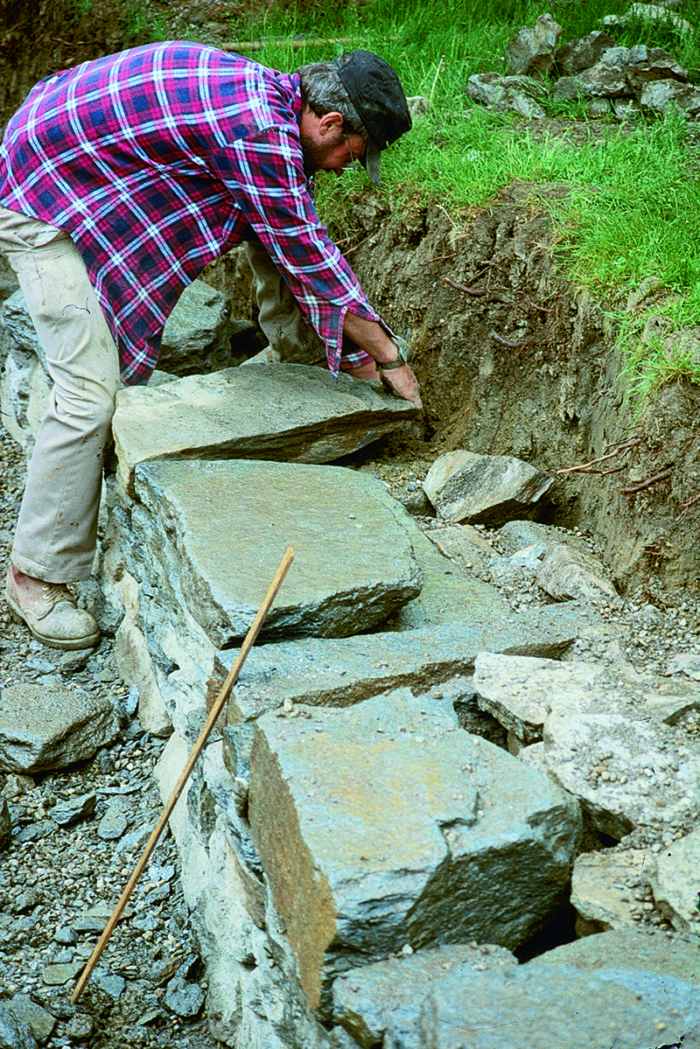
Start by digging a trench about 4 inches deep and at least 2 feet wide. A straightedged spade will give you a nice, even edge. The first course must be very solid and tightly fit because the weight of the wall will rest on it. Take the time to find rocks that lock into place, without leaving gaps. Randomly lay your largest rocks along the front edge of the trench. Set the first stone, shifting it around until it sits securely without being rocked easily, and then fill with the remaining stones. If you are using rectangular stones, you want the height of adjacent stones to be the same, or of a difference that can be made up with a smaller stone. If the rocks are irregular, then the stones will fit together leaving a triangular gap for the next course to fit into. I find irregular rocks easier to work with than flat ones; with flat rocks you have to be more precise. Find a stone that fits well and then continue for a few more feet. A rule of thumb, passed down from my wall-building teacher’s mentor, is to try a stone seven different ways. If it doesn’t fit by the seventh try, use another stone.
Андан кийин, таштардын артына топурак салып, жерди боштуктарга таптаңыз between, behind, and beneath the stones with top of the sledgehammer. This is an important step because the dirt becomes the mortar for the wall. I also recommend adding rubble (those stones you won’t use on the face of your wall) behind the face course to give greater strength to the wall. Pound the rubble and soil mix until you are satisfied that it is solid. Continue the first course until you reach the end of the wall. When you are done, test
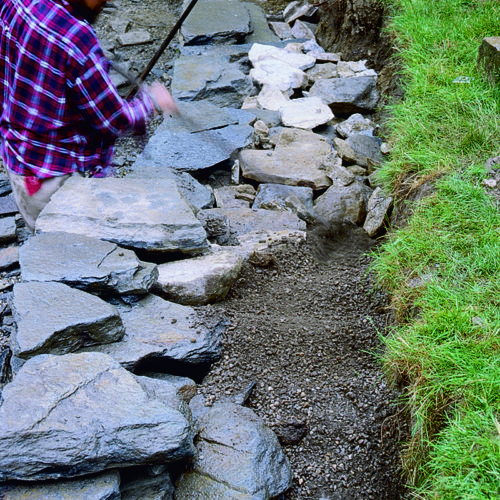
Экинчи курсту баштоо үчүн, астыңкы курстун биринчи муунуна көпүрө боло турган ташты тандаңыз. Avoid having joints run up the face of the wall, and angle (batter) the courses backward—approximately 1 inch per vertical foot. This creates a stable wall. For added strength, intermittently place single stones that run the full depth of the wall. This will only work with rectangular rocks. For irregular rocks, place a large rock behind a face rock every 3 feet or so. As you set a course, you will come to situations, probably quite a few of them, where the rock placement is perfect on all sides but one. These are the planting opportunities that give life to a stone wall.
Continue building in this manner until you are one course away from the finished height. Fitting stones will get easier as you go, and you’ll likely discover that there’s a certain magic moment when you’re building a wall: you hear a thump that signals you’ve placed a rock perfec
Дубалыңыздын бийиктигин жасаңыз
The ideal height for a dry-stacked retaining wall is 18 to 22 inches—so you can sit on it when your gardening chores are done. Even if
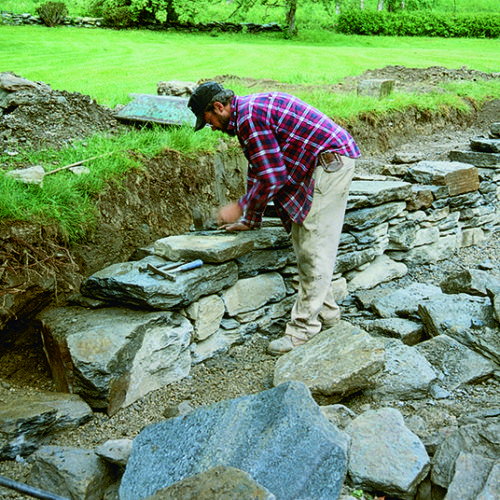
Капкакты коюу процессине көп чыдамкайлык келтириңиз; бул сиздин ушул кезге чейин иштеп чыккан чеберчилигиңиздин туу чокусу. Бул болжол менен 15-18 дюйм тереңдикте болушу керек, бирден үч таштан турат. Таштарды бекемдөө үчүн топурак жана жакшы жайгаштырууну колдонуңуз жана дубалдын бириккен жерлериндей эле, капкак таштагы узун муундардан качыңыз. Дубалга отургуңуз келсе, жылмакай, жалпак таштарды тандаңыз. Же болбосо, боштуктарды топурак менен толтуруп, жаздыктарга жыпар жыттуу чөптөрдү отургузуңуз. Отургузулган капкак таш - бул тирүү дубалдын сонун аякташы.
 африкалык
 Албанча
 Амхарча
 Арабча
 Армянча
 азербайжан
 Баскча
 Беларусча
 Бенгалча
  Бошнакча
 Болгарча
 Каталанча
 Себуано
 Кытай
Кытай Кытай (Тайвань)
 Корсикче
 Хорватча
 Чехче
Чехче Датча
Датча Нидерландча
 Англисче
 Эсперанто
 Эстончо
 Финче
Финче Франсузча
 фриз
фриз Галицияча
 Грузинче
 Немисче
 Грекче
 Гужаратиче
 Гаити креол
 Хаусача
 Гавайча
 Еврейче
 Жок
Жок Miao
Miao Венгерче
 Исландияча
 игбо
игбо Индонезияча
 Ирландча
 Итальянча
 Жапончо
 Жанавизче
 Каннадача
 Казакча
 кхмер
кхмер Руанда
 Корейче
 күрд
күрд Кыргызча
 ТБ
ТБ Латынча
 Латвияча
 Литвача
 Люксембургча
 Македонияча
 Малгаши
 Малайча
 Малаяламча
 Малтизче
 Маориче
 Маратиче
 Монголчо
 Мьянма
 Непаличе
 Норвежче
 Норвежче
 Occitan
 Пуштунча
 Парсча
 Полякча
 Португалча
  Пунжабиче
 Румынча
 Орусча
 самоа
самоа Шотландиялык галец
 Сербче
 Англисче
 Shona
Shona Синдиче
 Sinhala
 Словакча
 Словенияча
 Сомаличе
 Испанча
 сундан
 Свахиличе
 Шведче
 Тагалогчо
 тажик
тажик Тамилче
 татар
татар Телугуча
 Тайча
Тайча Түркчө
 Түркмөнчө
 Украинче
 Урдуча
 уйгур
уйгур Өзбекче
 Вьетнамча
 Валлийче