

Rezavé dlaždice
Chcete si postavit vlastní kamennou opěrnou zeď, ale nejste si jisti, jak začít? Pokud máte nerovný dvoře, může kamenná opěrná zeď pomoci zabránit erozi a poskytuje pěkné místo pro výsadbu. Chcete-li se naučit, jak sestavit svůj vlastní, od začátku do konce, čtěte dále.
To figure out how much stone you’ll need, multiply your wall’s height times the depth times the length. If your wall is 2 feet high, 1-1/2 feet wide, and 20 feet long, you’ll need roughly 60 cubic feet of stone. Most stoneyards will deliver the stones for a slight charge; have them placed as close to the site of your retaining wall as possible.
Pokud jde o tools, you’ll need a shovel for digging your trench and backfilling, a krumpáč for attacking the grade, and a small sledgehammer for tamping soil. For marking your site and leveling rocks, you’ll need a line level, a few tall stakes, string, some flour, and a 4- or 8-foot level.
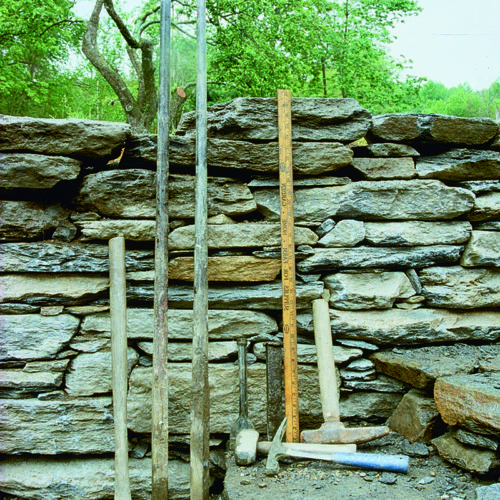
Now you can start digging. The easiest approach is to cut and fill—that is, dig into the slope where the wall will go and spread the earth below you to create a level terrace. When you cut and fill, the wall is backed by undisturbed soil, which is more stable than fill. For design reasons, however, you might choose to build a freestanding wall and fill behind it with soil from another site. Or you might do a partial cut and fill, which is somewhere between the two.
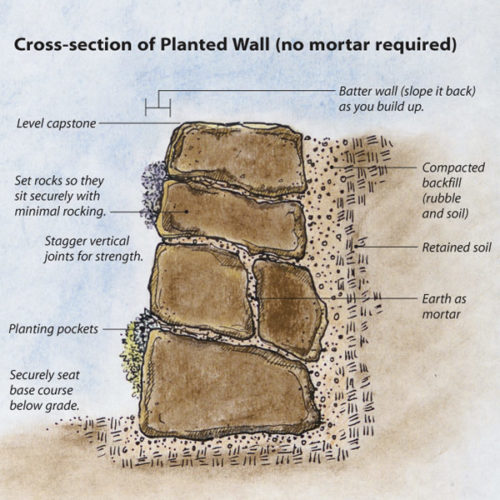
Stěny se staví v kurzech. The base course is structurally the most important, while the final course, the capstone, is the most challenging. For stability, walls should be at least 20 inches wide at the base. They can taper slightly toward the top, but you’ll want a wall that is at least two rocks wide in most places. This can be accomplished by mixing stones of different sizes or by backfilling with a combination of two-thirds rubble to one-third soil.
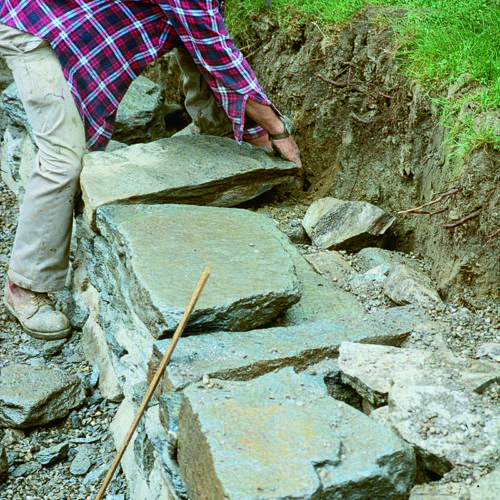
Vykopejte příkop pro základní hřiště
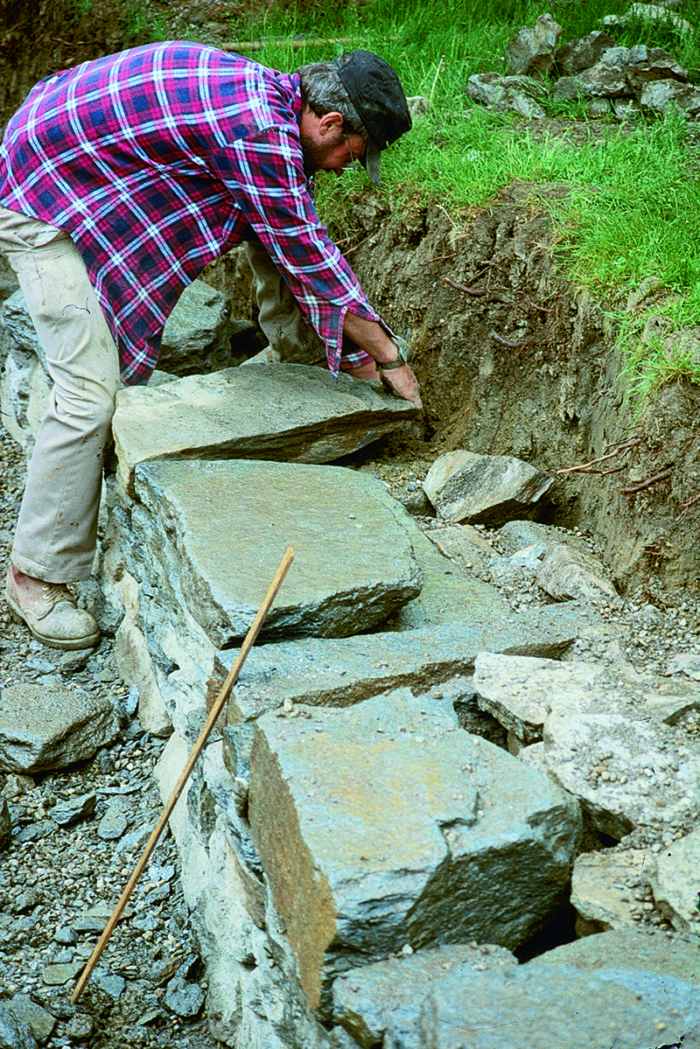
Start by digging a trench about 4 inches deep and at least 2 feet wide. A straightedged spade will give you a nice, even edge. The first course must be very solid and tightly fit because the weight of the wall will rest on it. Take the time to find rocks that lock into place, without leaving gaps. Randomly lay your largest rocks along the front edge of the trench. Set the first stone, shifting it around until it sits securely without being rocked easily, and then fill with the remaining stones. If you are using rectangular stones, you want the height of adjacent stones to be the same, or of a difference that can be made up with a smaller stone. If the rocks are irregular, then the stones will fit together leaving a triangular gap for the next course to fit into. I find irregular rocks easier to work with than flat ones; with flat rocks you have to be more precise. Find a stone that fits well and then continue for a few more feet. A rule of thumb, passed down from my wall-building teacher’s mentor, is to try a stone seven different ways. If it doesn’t fit by the seventh try, use another stone.
Dále lopatou odhrňte nečistoty za kameny a udusejte zeminu do mezer between, behind, and beneath the stones with top of the sledgehammer. This is an important step because the dirt becomes the mortar for the wall. I also recommend adding rubble (those stones you won’t use on the face of your wall) behind the face course to give greater strength to the wall. Pound the rubble and soil mix until you are satisfied that it is solid. Continue the first course until you reach the end of the wall. When you are done, test
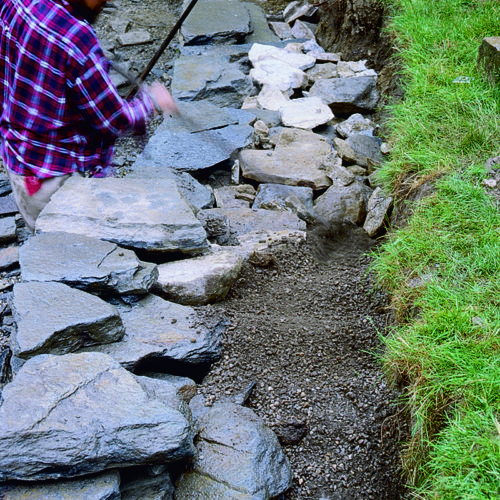
Chcete-li začít druhý kurz, vyberte kámen, který překlene první spáru spodního kurzu. Avoid having joints run up the face of the wall, and angle (batter) the courses backward—approximately 1 inch per vertical foot. This creates a stable wall. For added strength, intermittently place single stones that run the full depth of the wall. This will only work with rectangular rocks. For irregular rocks, place a large rock behind a face rock every 3 feet or so. As you set a course, you will come to situations, probably quite a few of them, where the rock placement is perfect on all sides but one. These are the planting opportunities that give life to a stone wall.
Continue building in this manner until you are one course away from the finished height. Fitting stones will get easier as you go, and you’ll likely discover that there’s a certain magic moment when you’re building a wall: you hear a thump that signals you’ve placed a rock perfec
Upravte si výšku umístění stěny
The ideal height for a dry-stacked retaining wall is 18 to 22 inches—so you can sit on it when your gardening chores are done. Even if
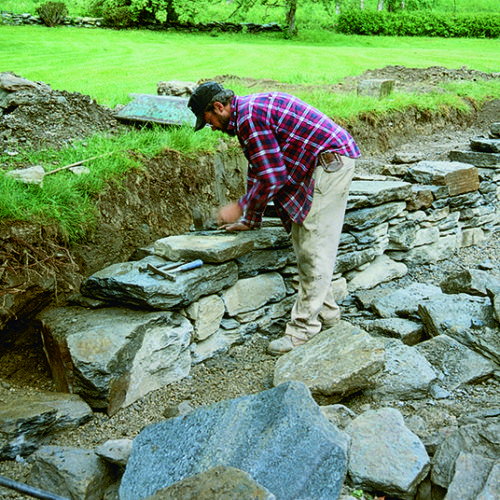
Přineste spoustu trpělivosti procesu pokládání vrchního kamene; je to vyvrcholení dovednosti, kterou jste si do tohoto bodu rozvinuli. Měla by být asi 15 až 18 palců hluboká, složená z jednoho až tří kamenů. Použijte zeminu a dobré umístění k zajištění kamenů a stejně jako u spojů stěn se vyhněte zdlouhavým spojům v horním kameni. Pokud chcete sedět na zdi, volte hladké, ploché kameny. Nebo vyplňte mezery zeminou a zasaďte vonné bylinky na polštáře. Zasazený vrcholový kámen je nádherným zakončením obývací stěny.






 Afričan
 albánský
 amharština
 arabština
 arménský
 ázerbájdžánský
 baskický
 běloruský
 bengálský
  bosenský
 bulharský
 katalánština
 Cebuano
 Čína
Čína Čína (Tchaj-wan)
 Korsičan
 chorvatský
 čeština
 dánština
 holandský
 Angličtina
 esperanto
 estonština
 finština
 francouzština
 fríský
 galicijský
 gruzínský
 Němec
Němec řecký
řecký Gudžarátština
 haitská kreolština
 hausa
hausa havajský
 hebrejština
 ani náhodou
 Miao
Miao maďarský
 islandský
 igbo
igbo indonéština
 irština
 italština
 japonský
 jávský
 Kannada
 kazašský
 khmerské
 Rwandské
 korejština
 kurdština
 kyrgyzština
 TBC
TBC latinský
 lotyšský
 litevský
 lucemburský
 makedonský
 Malgashi
 malajština
 malajálamština
 maltština
 maorští
 maráthština
 mongolský
 Myanmar
 nepálský
 norský
 norský
 okcitánština
 paštština
 Peršan
 polština
 portugalština
  pandžábština
 rumunština
 ruština
 Samoan
 skotská gaelština
 srbština
 Angličtina
 Shona
Shona Sindhi
 sinhálština
 Slovák
 slovinský
 somálský
 španělština
 sundánština
 svahilština
 švédský
 Tagalog
 tádžický
 tamilština
 Tatar
Tatar telugština
 thajština
 turečtina
 turkmenský
 ukrajinština
 Urdu
Urdu ujgurské
 uzbecký
 vietnamština
 velština