

Hrđave pločice
Želite izgraditi vlastiti kameni potporni zid, ali niste sigurni kako započeti? Ako imate neujednačenu dvorištu, kameni potporni zid može spriječiti eroziju i pružiti lijepo mjesto za sadnju. Čitajte dalje kako biste naučili kako sastaviti svoj vlastiti, od početka do kraja.
To figure out how much stone you’ll need, multiply your wall’s height times the depth times the length. If your wall is 2 feet high, 1-1/2 feet wide, and 20 feet long, you’ll need roughly 60 cubic feet of stone. Most stoneyards will deliver the stones for a slight charge; have them placed as close to the site of your retaining wall as possible.
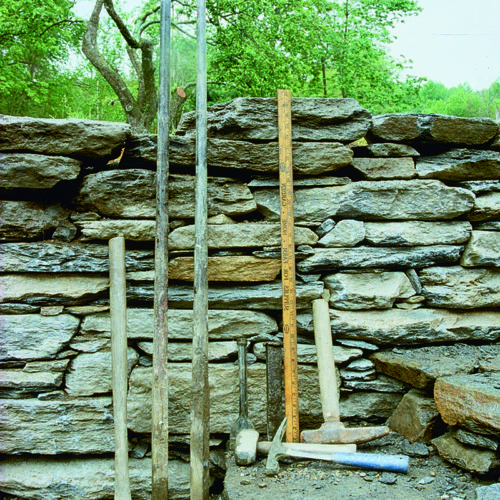
Što se tiče tools, you’ll need a shovel for digging your trench and backfilling, a pijuk for attacking the grade, and a small sledgehammer for tamping soil. For marking your site and leveling rocks, you’ll need a line level, a few tall stakes, string, some flour, and a 4- or 8-foot level.
Now you can start digging. The easiest approach is to cut and fill—that is, dig into the slope where the wall will go and spread the earth below you to create a level terrace. When you cut and fill, the wall is backed by undisturbed soil, which is more stable than fill. For design reasons, however, you might choose to build a freestanding wall and fill behind it with soil from another site. Or you might do a partial cut and fill, which is somewhere between the two.
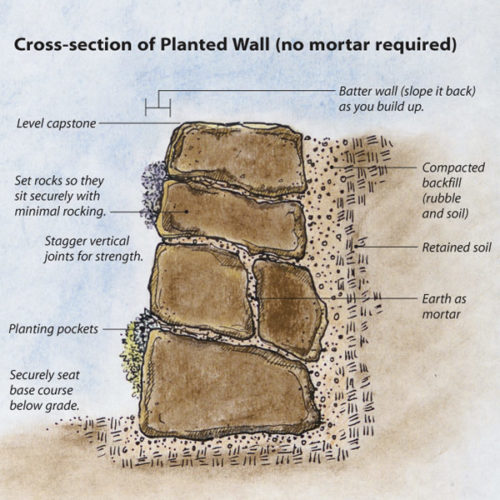
Zidovi se grade u slojevima. The base course is structurally the most important, while the final course, the capstone, is the most challenging. For stability, walls should be at least 20 inches wide at the base. They can taper slightly toward the top, but you’ll want a wall that is at least two rocks wide in most places. This can be accomplished by mixing stones of different sizes or by backfilling with a combination of two-thirds rubble to one-third soil.
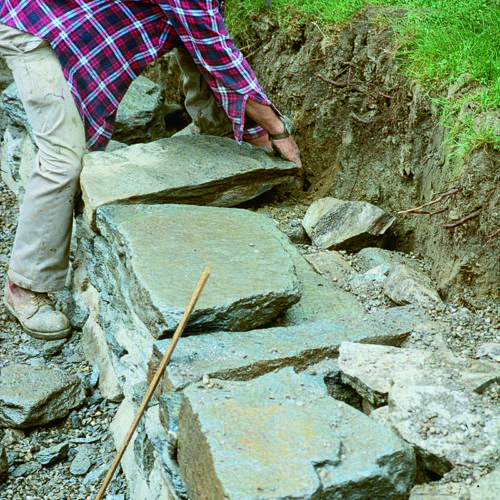
Iskopajte rov za temeljni sloj
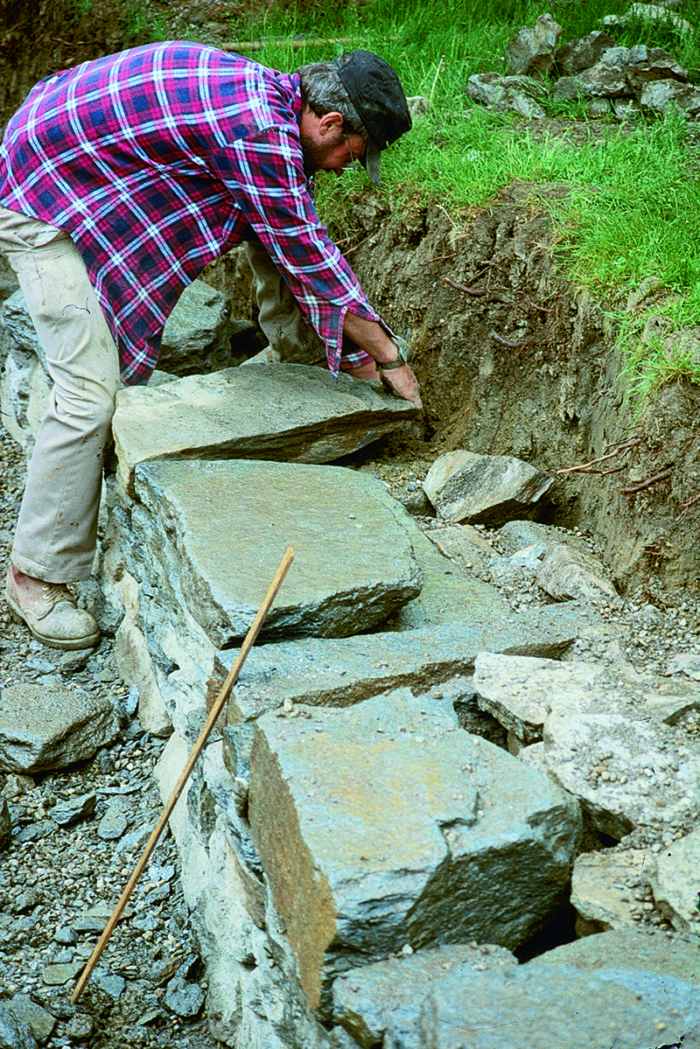
Start by digging a trench about 4 inches deep and at least 2 feet wide. A straightedged spade will give you a nice, even edge. The first course must be very solid and tightly fit because the weight of the wall will rest on it. Take the time to find rocks that lock into place, without leaving gaps. Randomly lay your largest rocks along the front edge of the trench. Set the first stone, shifting it around until it sits securely without being rocked easily, and then fill with the remaining stones. If you are using rectangular stones, you want the height of adjacent stones to be the same, or of a difference that can be made up with a smaller stone. If the rocks are irregular, then the stones will fit together leaving a triangular gap for the next course to fit into. I find irregular rocks easier to work with than flat ones; with flat rocks you have to be more precise. Find a stone that fits well and then continue for a few more feet. A rule of thumb, passed down from my wall-building teacher’s mentor, is to try a stone seven different ways. If it doesn’t fit by the seventh try, use another stone.
Zatim lopatom izbacite zemlju iza kamenja i nabijte zemlju u prostore between, behind, and beneath the stones with top of the sledgehammer. This is an important step because the dirt becomes the mortar for the wall. I also recommend adding rubble (those stones you won’t use on the face of your wall) behind the face course to give greater strength to the wall. Pound the rubble and soil mix until you are satisfied that it is solid. Continue the first course until you reach the end of the wall. When you are done, test
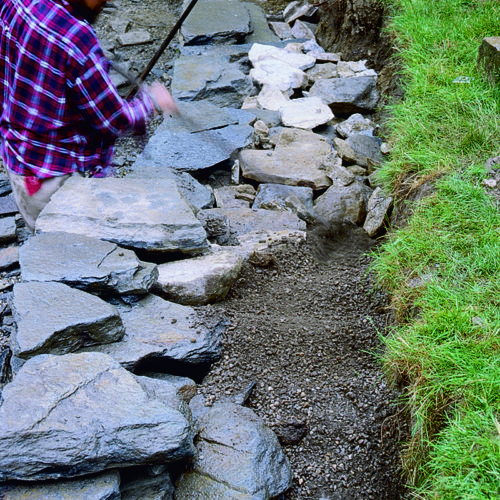
Za početak drugog sloja odaberite kamen koji će premostiti prvi spoj donjeg sloja. Avoid having joints run up the face of the wall, and angle (batter) the courses backward—approximately 1 inch per vertical foot. This creates a stable wall. For added strength, intermittently place single stones that run the full depth of the wall. This will only work with rectangular rocks. For irregular rocks, place a large rock behind a face rock every 3 feet or so. As you set a course, you will come to situations, probably quite a few of them, where the rock placement is perfect on all sides but one. These are the planting opportunities that give life to a stone wall.
Continue building in this manner until you are one course away from the finished height. Fitting stones will get easier as you go, and you’ll likely discover that there’s a certain magic moment when you’re building a wall: you hear a thump that signals you’ve placed a rock perfec
Odredite visinu zida
The ideal height for a dry-stacked retaining wall is 18 to 22 inches—so you can sit on it when your gardening chores are done. Even if
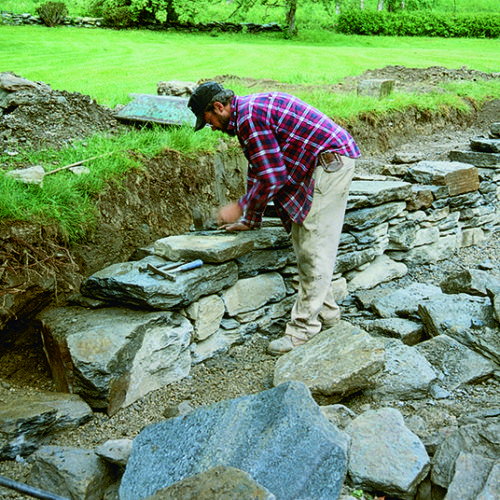
Uložite mnogo strpljenja u proces postavljanja završnog kamena; to je vrhunac vještine koju ste razvili do ove točke. Trebao bi biti dubok oko 15 do 18 inča, sastavljen od jednog do tri kamena. Za učvršćivanje kamenja upotrijebite zemlju i dobar položaj, a kao i kod zidnih spojeva, izbjegavajte dugačke spojeve u završnom kamenu. Ako želite sjediti na zidu, odaberite glatko, ravno kamenje. Ili ispunite praznine zemljom i posadite mirisno bilje za jastuke. Zasađeni završni kamen divan je završni detalj živog zida.






 afrički
 albanski
 amharski
 arapski
 Armenac
 azerbajdžanski
 baskijski
 bjeloruski
 bengalski
  bosanski
 bugarski
 katalonski
 Cebuano
 Kina
Kina Kina (Tajvan)
 Korzikanac
 Hrvatski
 češki
češki danski
 nizozemski
 Engleski
 esperanto
 estonski
 finski
 francuski
 frizijski
 galicijski
 gruzijski
 njemački
 grčki
grčki gudžarati
 haićanski kreolski
 kuća
kuća havajski
 hebrejski
 Ne
Ne Miao
Miao mađarski
 islandski
 igbo
igbo indonezijski
 irski
irski talijanski
 japanski
 javanski
 kannada
 kazahstanski
 kmerski
 ruandski
 korejski
 kurdski
 Kirgistan
 TBC
TBC latinski
 latvijski
 litvanski
 luksemburški
 makedonski
 Malgaši
 malajski
 malajalamski
 malteški
 maorski
 marati
 mongolski
 Mianmar
 nepalski
 norveški
 norveški
 oksitanski
 paštunski
 perzijski
 Polirati
 Portugalski
  pandžapski
 rumunjski
 ruski
ruski Samoanac
 škotski galski
 srpski
 Engleski
 Shona
Shona sindhi
 sinhalski
 slovački
 slovenski
 somalijski
 španjolski
 sundanski
 svahili
 švedski
 tagalog
 tadžički
 Tamil
Tamil tatarski
 teluški
 tajlandski
 turski
 turkmenski
 ukrajinski
 urdu
urdu ujgurski
 uzbečki
 vijetnamski
 velški