

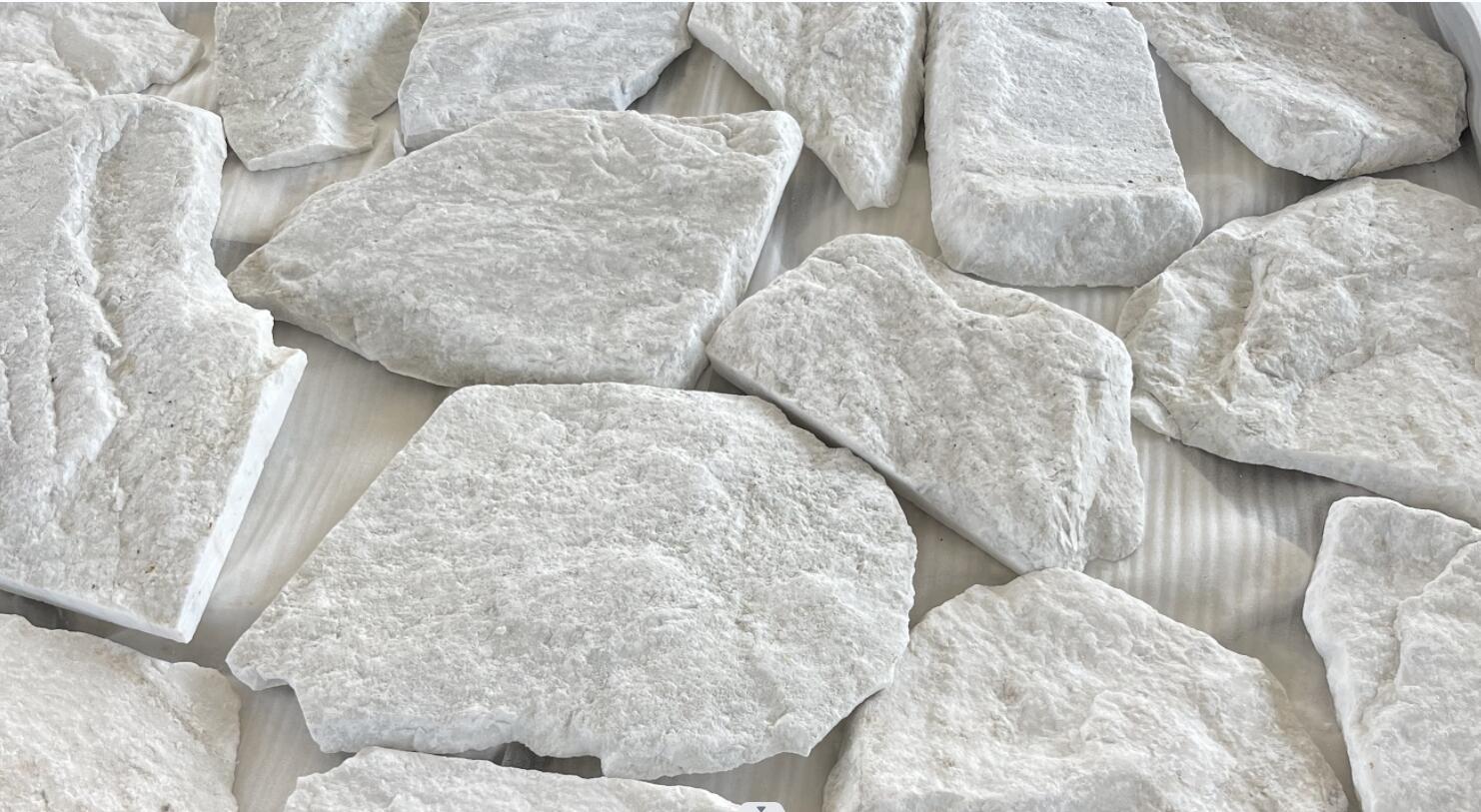
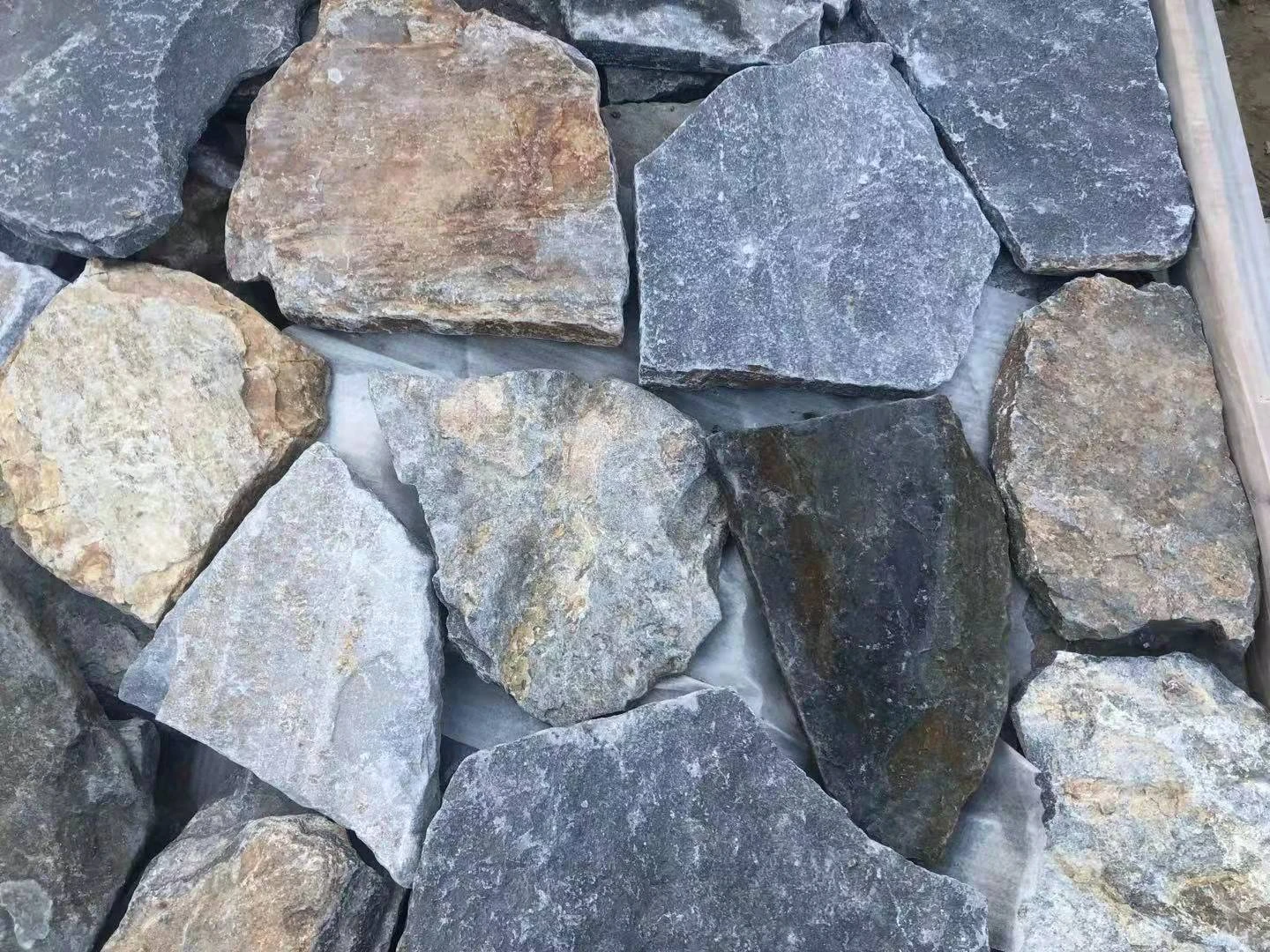
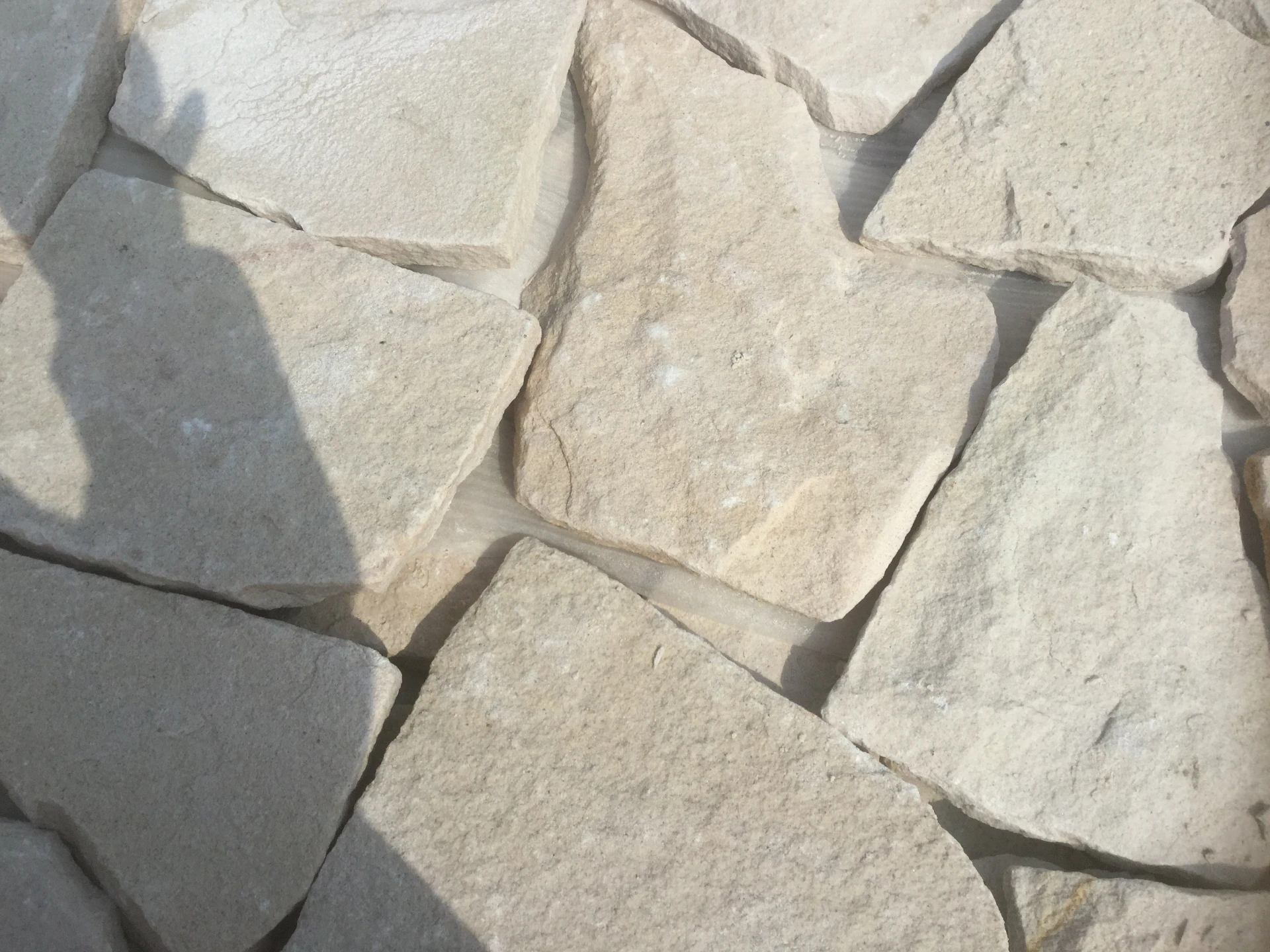
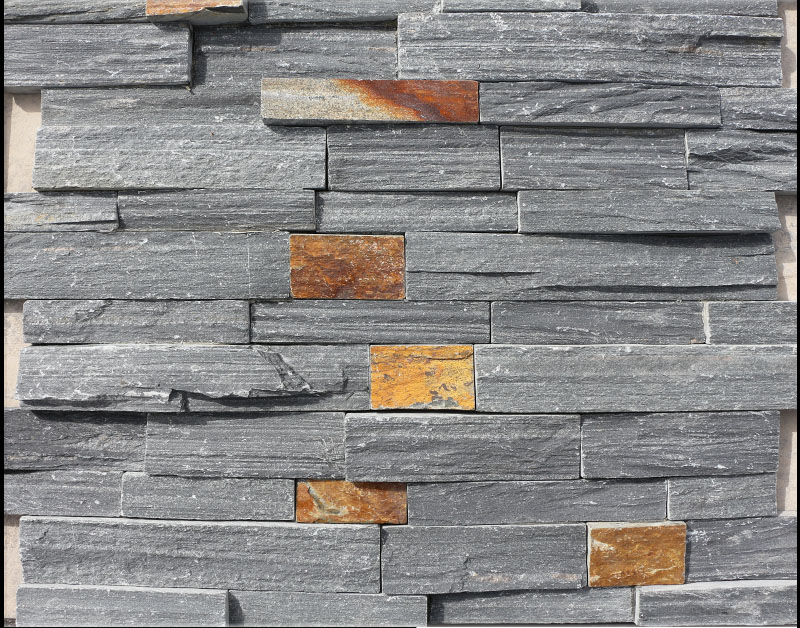
Ruosteiset laatat
Haluatko rakentaa oman kiviseinän, mutta et ole varma kuinka aloittaa? Jos sinulla on epätasainen pihalla, kivitukiseinä voi estää eroosiota ja tarjoaa mukavan istutuspaikan. Jos haluat oppia kokoamaan omasi alusta loppuun, lue eteenpäin.
To figure out how much stone you’ll need, multiply your wall’s height times the depth times the length. If your wall is 2 feet high, 1-1/2 feet wide, and 20 feet long, you’ll need roughly 60 cubic feet of stone. Most stoneyards will deliver the stones for a slight charge; have them placed as close to the site of your retaining wall as possible.
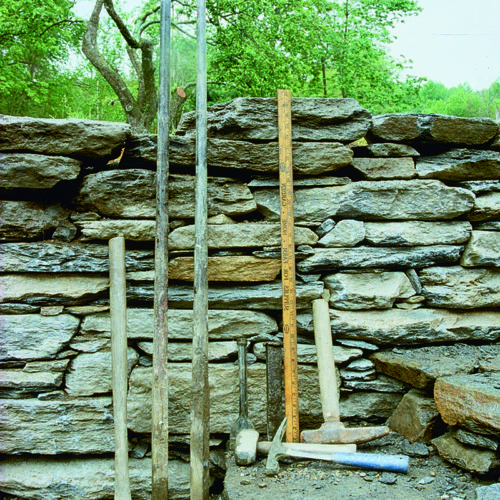
Mitä tulee tools, you’ll need a shovel for digging your trench and backfilling, a kuokka for attacking the grade, and a small sledgehammer for tamping soil. For marking your site and leveling rocks, you’ll need a line level, a few tall stakes, string, some flour, and a 4- or 8-foot level.
Now you can start digging. The easiest approach is to cut and fill—that is, dig into the slope where the wall will go and spread the earth below you to create a level terrace. When you cut and fill, the wall is backed by undisturbed soil, which is more stable than fill. For design reasons, however, you might choose to build a freestanding wall and fill behind it with soil from another site. Or you might do a partial cut and fill, which is somewhere between the two.
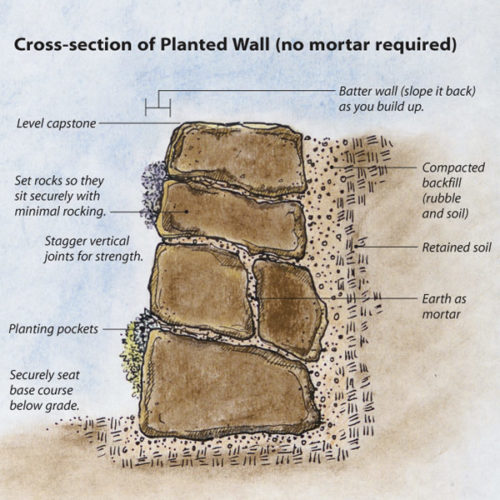
Seinät rakennetaan kursseille. The base course is structurally the most important, while the final course, the capstone, is the most challenging. For stability, walls should be at least 20 inches wide at the base. They can taper slightly toward the top, but you’ll want a wall that is at least two rocks wide in most places. This can be accomplished by mixing stones of different sizes or by backfilling with a combination of two-thirds rubble to one-third soil.
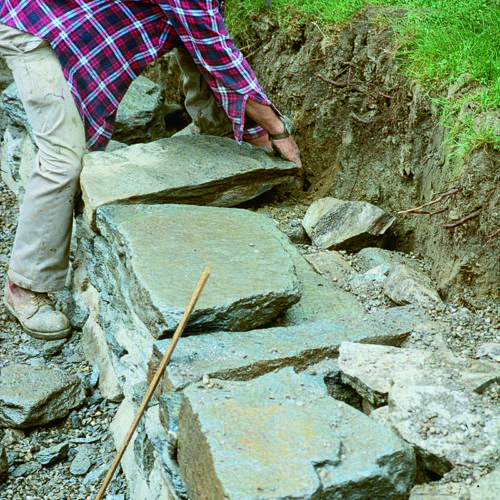
Kaivaa kaivanto pohjakerrokseen
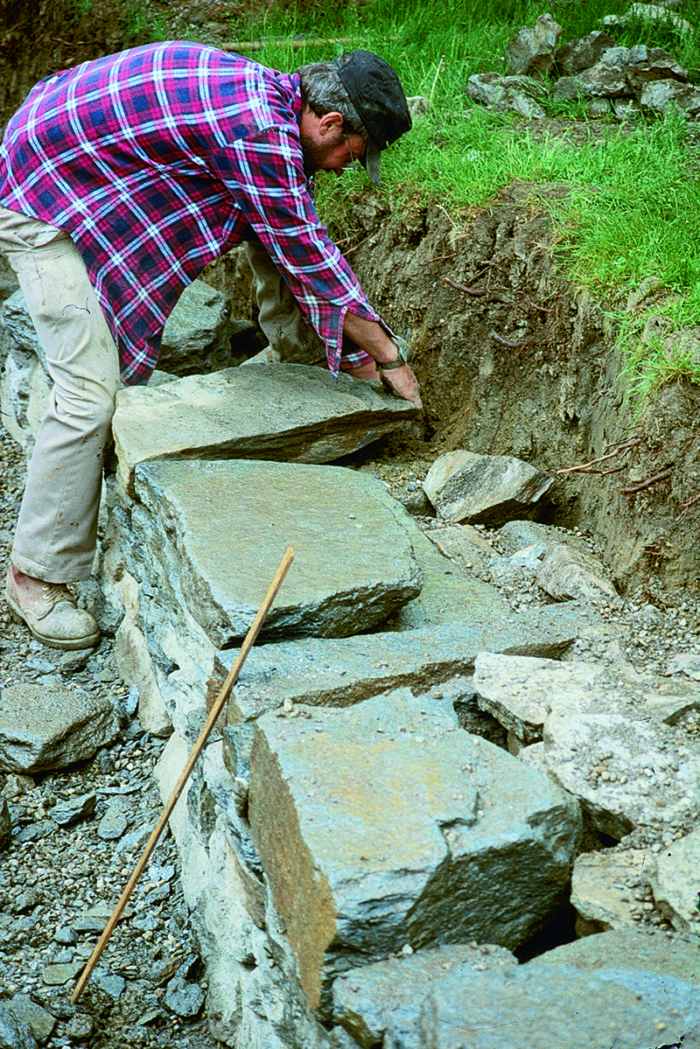
Start by digging a trench about 4 inches deep and at least 2 feet wide. A straightedged spade will give you a nice, even edge. The first course must be very solid and tightly fit because the weight of the wall will rest on it. Take the time to find rocks that lock into place, without leaving gaps. Randomly lay your largest rocks along the front edge of the trench. Set the first stone, shifting it around until it sits securely without being rocked easily, and then fill with the remaining stones. If you are using rectangular stones, you want the height of adjacent stones to be the same, or of a difference that can be made up with a smaller stone. If the rocks are irregular, then the stones will fit together leaving a triangular gap for the next course to fit into. I find irregular rocks easier to work with than flat ones; with flat rocks you have to be more precise. Find a stone that fits well and then continue for a few more feet. A rule of thumb, passed down from my wall-building teacher’s mentor, is to try a stone seven different ways. If it doesn’t fit by the seventh try, use another stone.
Seuraavaksi lapioi likaa kivien taakse ja taputtele maata tiloihin between, behind, and beneath the stones with top of the sledgehammer. This is an important step because the dirt becomes the mortar for the wall. I also recommend adding rubble (those stones you won’t use on the face of your wall) behind the face course to give greater strength to the wall. Pound the rubble and soil mix until you are satisfied that it is solid. Continue the first course until you reach the end of the wall. When you are done, test
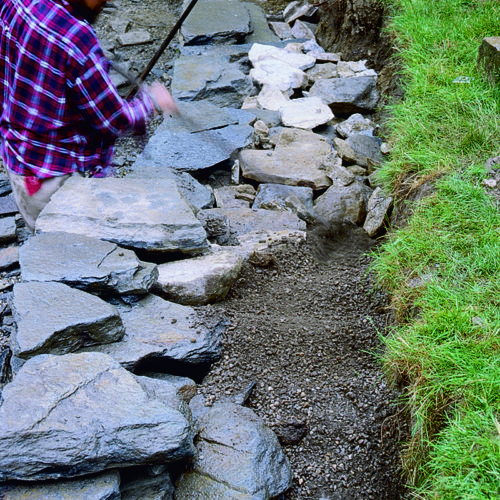
Aloita toinen kerros valitsemalla kivi, joka siltaa pohjakerroksen ensimmäisen liitoksen. Avoid having joints run up the face of the wall, and angle (batter) the courses backward—approximately 1 inch per vertical foot. This creates a stable wall. For added strength, intermittently place single stones that run the full depth of the wall. This will only work with rectangular rocks. For irregular rocks, place a large rock behind a face rock every 3 feet or so. As you set a course, you will come to situations, probably quite a few of them, where the rock placement is perfect on all sides but one. These are the planting opportunities that give life to a stone wall.
Continue building in this manner until you are one course away from the finished height. Fitting stones will get easier as you go, and you’ll likely discover that there’s a certain magic moment when you’re building a wall: you hear a thump that signals you’ve placed a rock perfec
Tee seinän korkeus
The ideal height for a dry-stacked retaining wall is 18 to 22 inches—so you can sit on it when your gardening chores are done. Even if
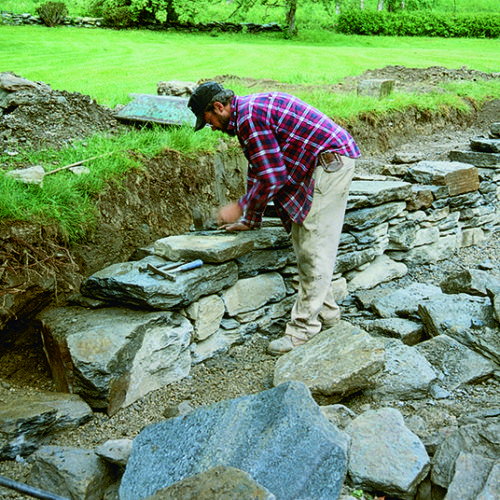
Tuo paljon kärsivällisyyttä yläkiven laskemiseen; se on tähän asti kehittämäsi taidon huipentuma. Sen tulisi olla noin 15–18 tuumaa syvä, ja se koostuu yhdestä kolmeen kivestä. Käytä maaperää ja hyvää sijoittelua kivien kiinnittämiseen, ja aivan kuten seinäliitoksissa, vältä pitkiä liitoksia yläkivessä. Jos haluat istua seinällä, valitse sileät, litteät kivet. Tai täytä aukot mullalla ja istuta tuoksuvia yrttejä tyynyjä varten. Istutettu kattokivi on ihastuttava viimeistely elävälle seinälle.
 afrikkalainen
 albanialainen
 amhara
 arabialainen
 armenialainen
 Azerbaidžani
 baski
baski valkovenäläinen
 bengali
  bosnialainen
 bulgarialainen
 katalaani
 Cebuano
 Kiina
Kiina Kiina (Taiwan)
 Korsikalainen
 kroatialainen
 Tšekki
 Tanskan kieli
 Hollannin kieli
 Englanti
 esperanto
 Virolainen
 Suomalainen
 Ranskan kieli
 friisi
 Galicialainen
 Georgian
 Saksan kieli
 kreikkalainen
 gudžarati
 Haitin kreoli
 hausa
hausa havaijilainen
 heprealainen
 Ei
Ei Miao
Miao Unkarin kieli
 islantilainen
 igbo
igbo Indonesialainen
 irlantilainen
 italialainen
 japanilainen
 jaavalainen
 kannada
 kazakki
 khmerit
 Ruanda
 Korealainen
 kurdi
kurdi Kirgisia
 TB
TB Latina
 Latvialainen
 liettualainen
 luxemburgilainen
 makedonialainen
 Malgashi
 malaiji
 malajalami
 maltalainen
 maori
maori marathi
 mongolialainen
 Myanmar
 Nepali
 Norjan kieli
 Norjan kieli
 Oksitaani
 pashto
 persialainen
 Kiillottaa
 Portugalin kieli
  Punjabi
 romanialainen
 Venäjän kieli
 samoalainen
 Skotlannin gaeli
 serbia
 Englanti
 Shona
Shona Sindhi
 sinhala
 Slovakian
 slovenialainen
 somali
 Espanja
 sundalainen
 swahili
 Ruotsin kieli
 Tagalog
 tadžiki
 tamili
 tatari
 telugu
 thaimaalainen
 turkkilainen
 Turkmenistan
 ukrainalainen
 urdu
urdu uiguuri
 uzbekki
 vietnam
 Walesin