

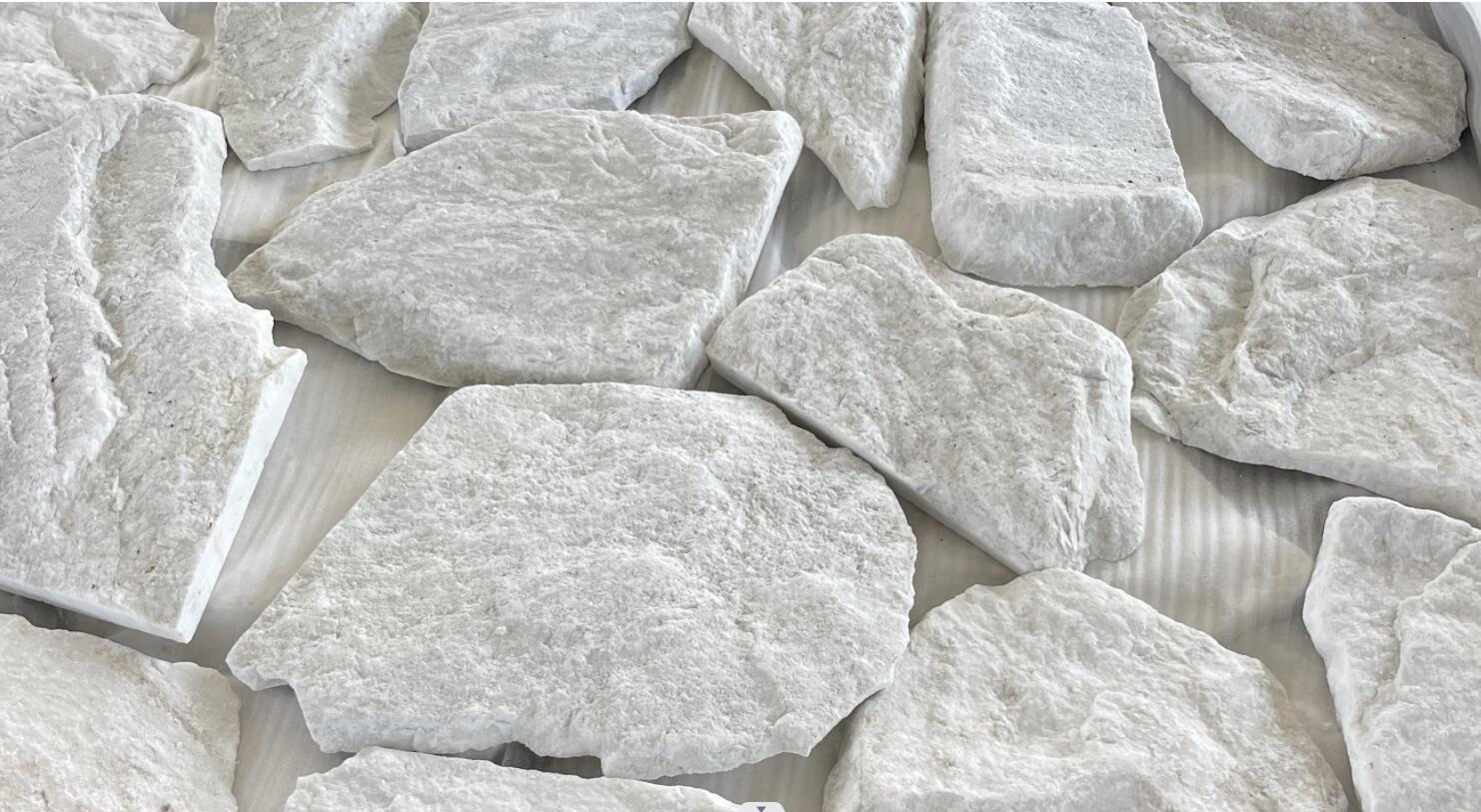
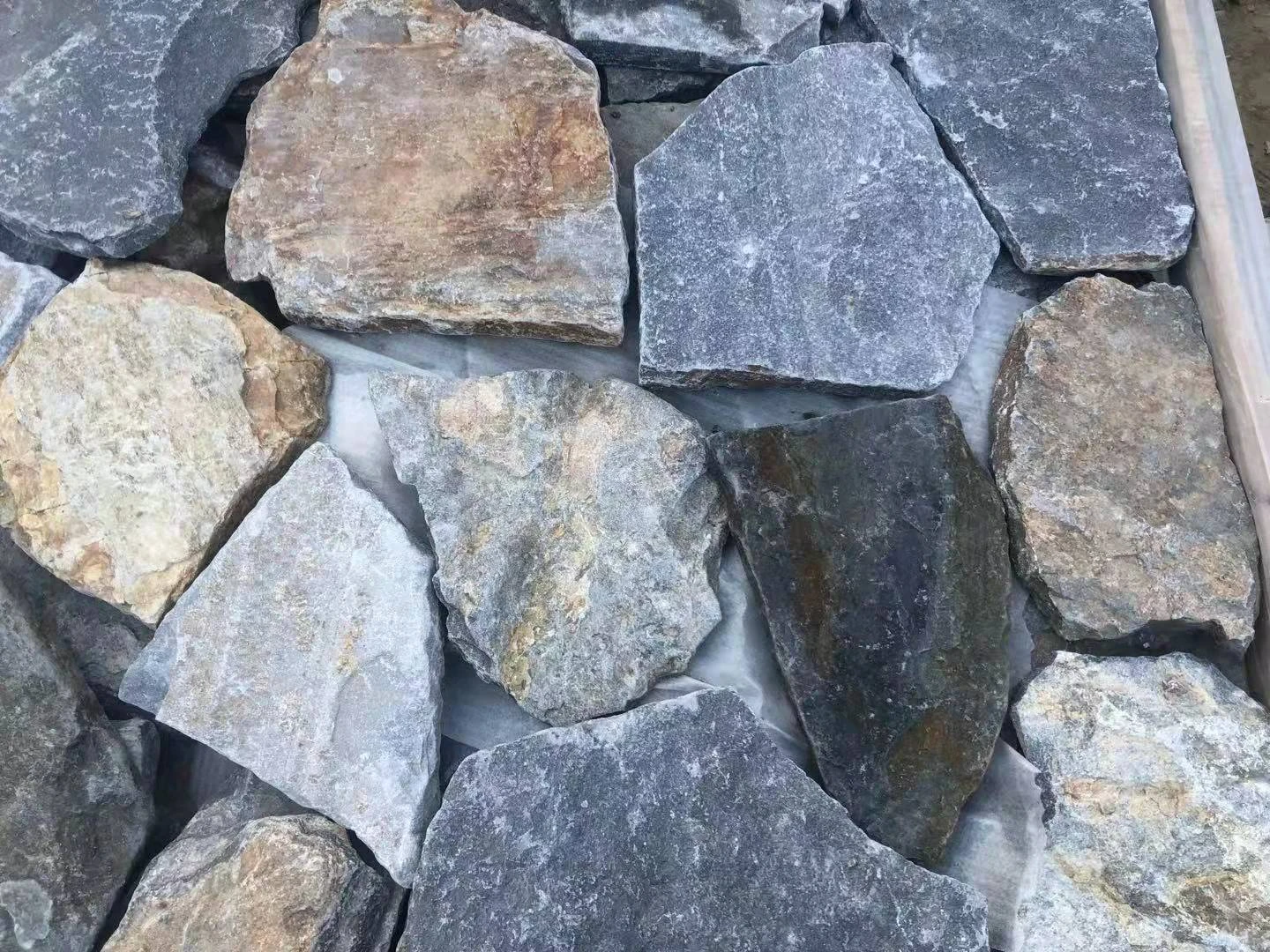
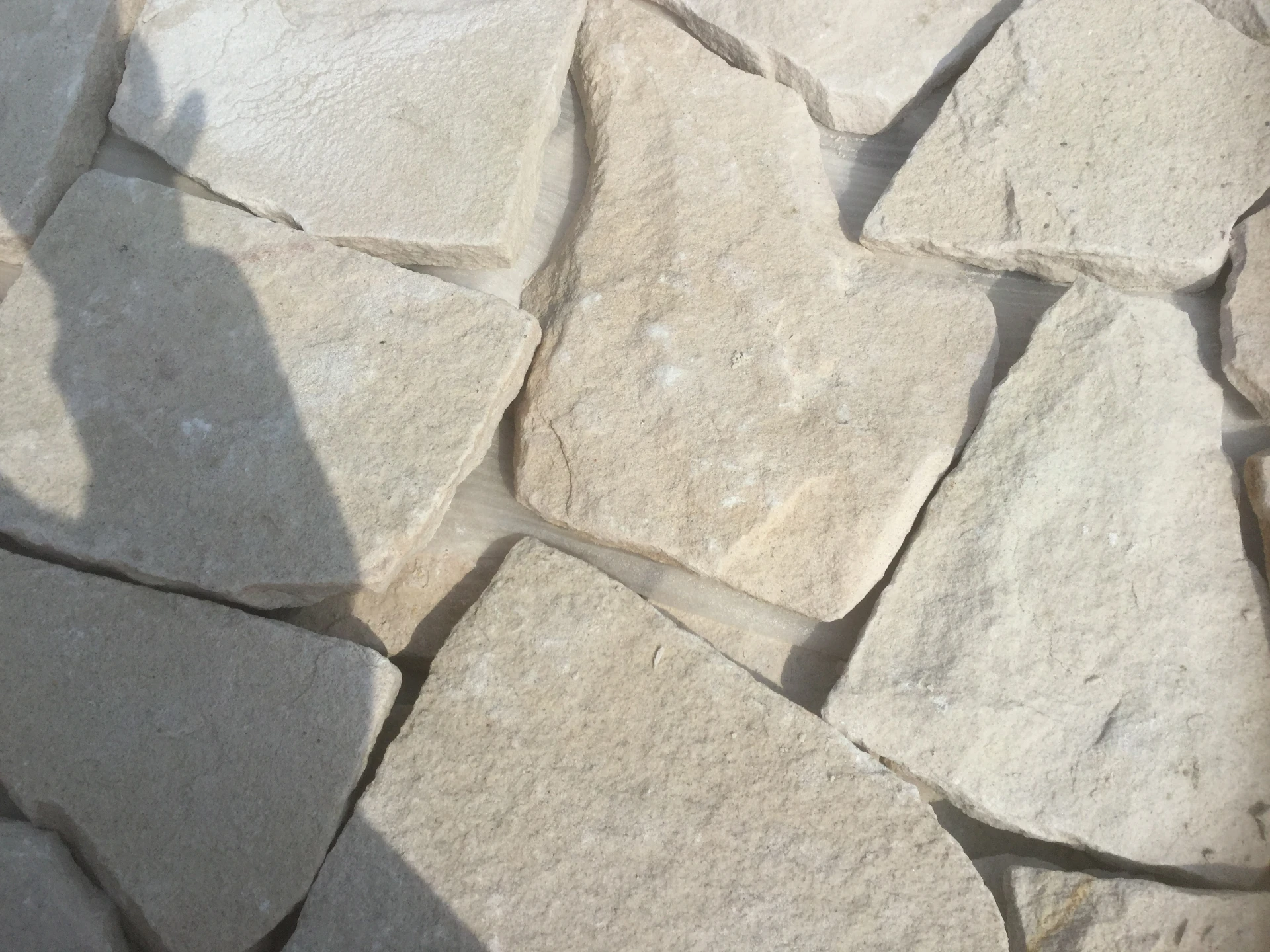
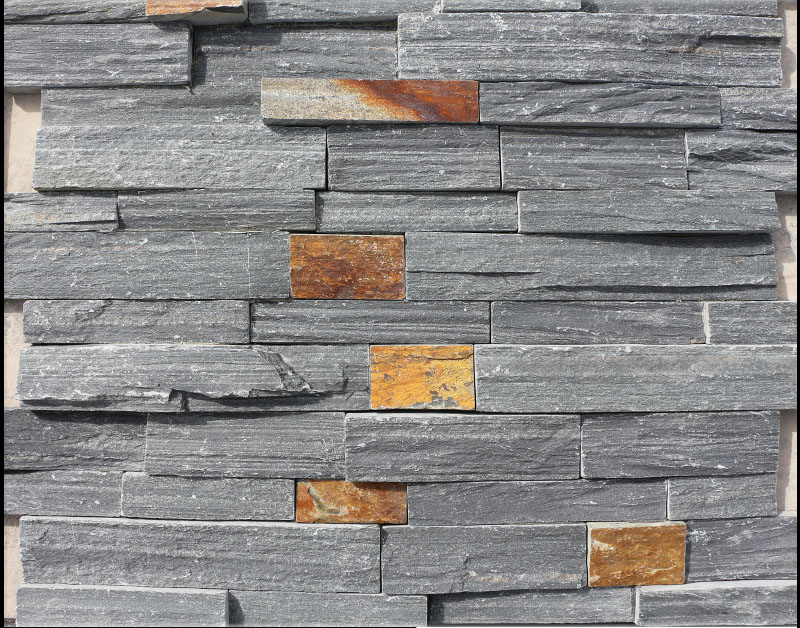
Zanglagan plitkalar
O'zingizning tosh devoringizni qurmoqchimisiz, lekin qanday boshlashni bilmayapsizmi? Agar sizda notekis bo'lsa hovlida, tosh devori eroziyaning oldini olishga yordam beradi va ekish uchun yaxshi joy beradi. O'zingizni qanday qilib birlashtirishni o'rganish uchun boshidan oxirigacha o'qing.
To figure out how much stone you’ll need, multiply your wall’s height times the depth times the length. If your wall is 2 feet high, 1-1/2 feet wide, and 20 feet long, you’ll need roughly 60 cubic feet of stone. Most stoneyards will deliver the stones for a slight charge; have them placed as close to the site of your retaining wall as possible.
kelsak tools, you’ll need a shovel for digging your trench and backfilling, a mattok for attacking the grade, and a small sledgehammer for tamping soil. For marking your site and leveling rocks, you’ll need a line level, a few tall stakes, string, some flour, and a 4- or 8-foot level.
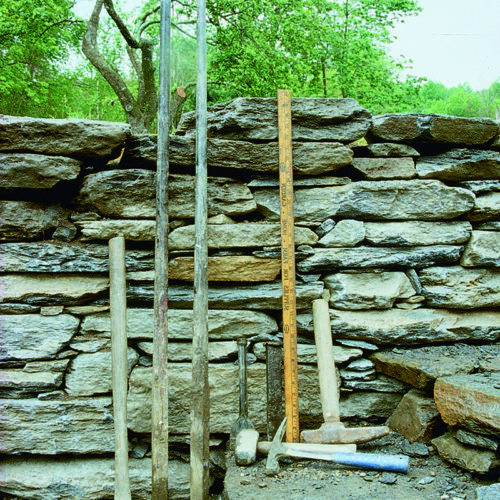
Now you can start digging. The easiest approach is to cut and fill—that is, dig into the slope where the wall will go and spread the earth below you to create a level terrace. When you cut and fill, the wall is backed by undisturbed soil, which is more stable than fill. For design reasons, however, you might choose to build a freestanding wall and fill behind it with soil from another site. Or you might do a partial cut and fill, which is somewhere between the two.
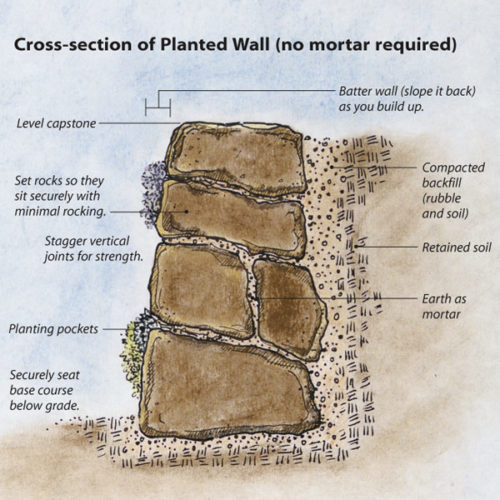
Devorlar kurslarda qurilgan. The base course is structurally the most important, while the final course, the capstone, is the most challenging. For stability, walls should be at least 20 inches wide at the base. They can taper slightly toward the top, but you’ll want a wall that is at least two rocks wide in most places. This can be accomplished by mixing stones of different sizes or by backfilling with a combination of two-thirds rubble to one-third soil.
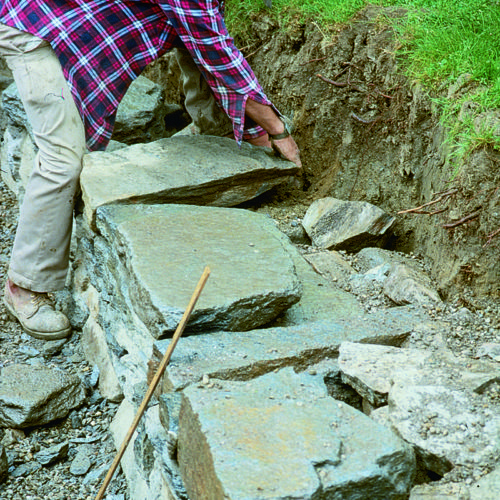
Asosiy kurs uchun xandaq qazing
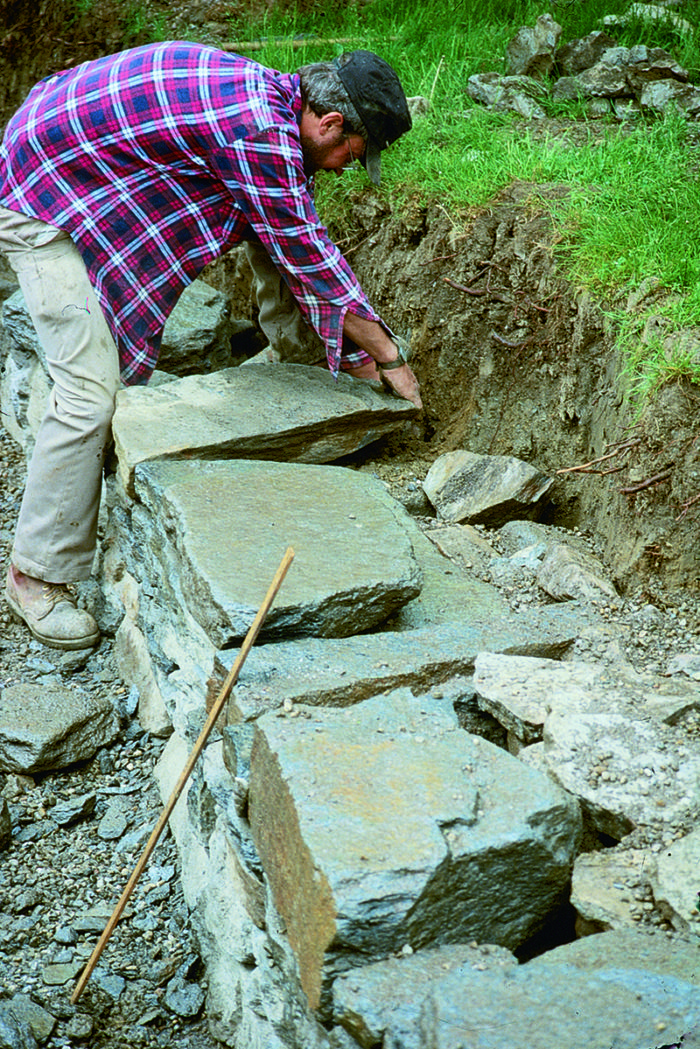
Start by digging a trench about 4 inches deep and at least 2 feet wide. A straightedged spade will give you a nice, even edge. The first course must be very solid and tightly fit because the weight of the wall will rest on it. Take the time to find rocks that lock into place, without leaving gaps. Randomly lay your largest rocks along the front edge of the trench. Set the first stone, shifting it around until it sits securely without being rocked easily, and then fill with the remaining stones. If you are using rectangular stones, you want the height of adjacent stones to be the same, or of a difference that can be made up with a smaller stone. If the rocks are irregular, then the stones will fit together leaving a triangular gap for the next course to fit into. I find irregular rocks easier to work with than flat ones; with flat rocks you have to be more precise. Find a stone that fits well and then continue for a few more feet. A rule of thumb, passed down from my wall-building teacher’s mentor, is to try a stone seven different ways. If it doesn’t fit by the seventh try, use another stone.
Keyinchalik, toshlarning orqasida tuproqni belkurak bilan tozalang va erni bo'shliqlarga siqib qo'ying between, behind, and beneath the stones with top of the sledgehammer. This is an important step because the dirt becomes the mortar for the wall. I also recommend adding rubble (those stones you won’t use on the face of your wall) behind the face course to give greater strength to the wall. Pound the rubble and soil mix until you are satisfied that it is solid. Continue the first course until you reach the end of the wall. When you are done, test
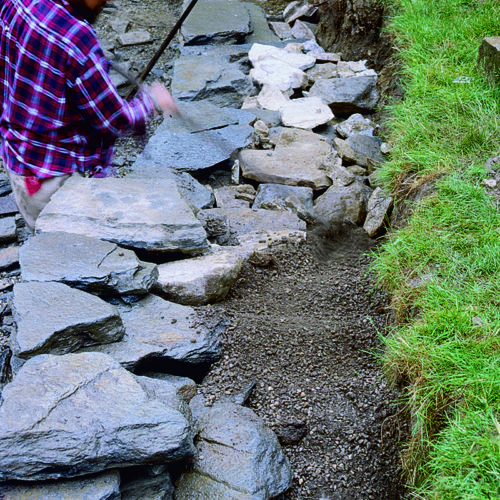
Ikkinchi kursni boshlash uchun pastki qismning birinchi bo'g'inini bog'laydigan toshni tanlang. Avoid having joints run up the face of the wall, and angle (batter) the courses backward—approximately 1 inch per vertical foot. This creates a stable wall. For added strength, intermittently place single stones that run the full depth of the wall. This will only work with rectangular rocks. For irregular rocks, place a large rock behind a face rock every 3 feet or so. As you set a course, you will come to situations, probably quite a few of them, where the rock placement is perfect on all sides but one. These are the planting opportunities that give life to a stone wall.
Continue building in this manner until you are one course away from the finished height. Fitting stones will get easier as you go, and you’ll likely discover that there’s a certain magic moment when you’re building a wall: you hear a thump that signals you’ve placed a rock perfec
Devorning balandligini belgilang
The ideal height for a dry-stacked retaining wall is 18 to 22 inches—so you can sit on it when your gardening chores are done. Even if
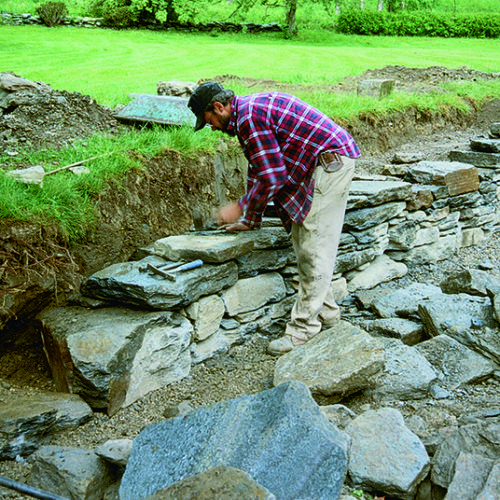
Qopqog'ini yotqizish jarayoniga ko'p sabr-toqat keltiring; bu sizning shu darajaga qadar rivojlangan mahoratingizning cho'qqisi. U taxminan 15-18 dyuym chuqurlikda bo'lishi kerak, birdan uchtagacha toshdan iborat. Toshlarni mustahkamlash uchun tuproq va yaxshi joydan foydalaning va xuddi devor bo'g'inlarida bo'lgani kabi, qopqoq toshidagi uzun bo'g'inlardan saqlaning. Agar siz devorga o'tirmoqchi bo'lsangiz, silliq, tekis toshlarni tanlang. Yoki bo'shliqlarni tuproq bilan to'ldiring va yostiqlar uchun xushbo'y o'tlarni eking. Ekilgan tosh - bu tirik devorga yoqimli tugatish.
 afrikalik
 alban
 Amhar
 arabcha
 arman
 ozarbayjon
 bask
 belarus
 bengal
 bosniyalik
 bolgar
 katalan
 Sebuano
 Xitoy
 Xitoy (Tayvan)
 Korsika
 xorvat
 chex
 Daniya
 golland
 Ingliz
 Esperanto
 eston
 fin
 frantsuz
 frizcha
 Galisian
 gruzin
 nemis
 yunoncha
 Gujarati
 Gaiti kreoli
 hausa
 gavayilik
 ibroniy
 yoq
 Miao
 venger
 island
 igbo
 indonez
 irland
 italyancha
 yapon
 yava
 Kannada
 qozoq
 kxmer
 Ruanda
 koreys
 kurd
 qirg'iz
 sil kasalligi
 lotin
 latviyalik
 litva
 Lyuksemburgcha
 makedon
 Malgashi
 malay
 Malayalam
 Malta
 maori
 marati
 mo'g'ul
 Myanma
 Nepal
 norveg
 norveg
 oksitan
 Pushtu
 forscha
 polyak
 portugal
 panjob
 rumin
 rus
 Samoa
 Shotlandiya gael tili
 serb
 Ingliz
 Shona
 Sindhi
 Sinhala
 slovak
 sloven
 Somali
 ispancha
 sundan
 suahili
 shvedcha
 Tagalog
 tojik
 Tamil
 tatar
 Telugu
 tay
 turkcha
 turkman
 ukrain
 urdu
 uyg'ur
 o'zbek
 Vetnam
 uels