

زنګون ټایلونه
غواړئ خپل د ډبرو ساتلو دیوال جوړ کړئ، مګر ډاډه نه یاست چې څنګه یې پیل کړئ؟ که تاسو یو غیر مساوي لرئ په انګړ کې، د تیږو د ساتلو دیوال کولی شي د تخریب مخه ونیسي او د کښت لپاره یو ښه ځای چمتو کړي. د دې لپاره چې زده کړئ چې څنګه خپل ځان سره یوځای کړئ، له پیل څخه تر پای پورې، ولولئ.
To figure out how much stone you’ll need, multiply your wall’s height times the depth times the length. If your wall is 2 feet high, 1-1/2 feet wide, and 20 feet long, you’ll need roughly 60 cubic feet of stone. Most stoneyards will deliver the stones for a slight charge; have them placed as close to the site of your retaining wall as possible.
لکه څنګه چې tools, you’ll need a shovel for digging your trench and backfilling, a مټک for attacking the grade, and a small sledgehammer for tamping soil. For marking your site and leveling rocks, you’ll need a line level, a few tall stakes, string, some flour, and a 4- or 8-foot level.
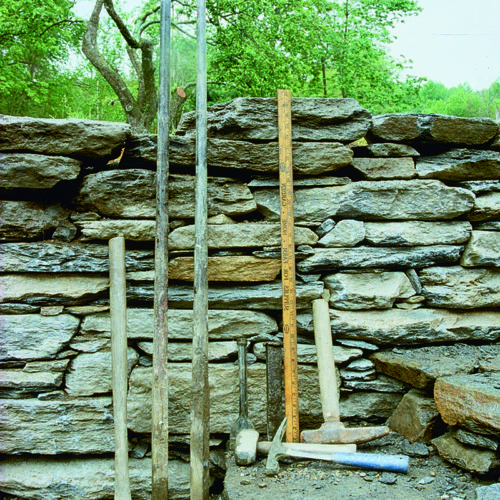
Now you can start digging. The easiest approach is to cut and fill—that is, dig into the slope where the wall will go and spread the earth below you to create a level terrace. When you cut and fill, the wall is backed by undisturbed soil, which is more stable than fill. For design reasons, however, you might choose to build a freestanding wall and fill behind it with soil from another site. Or you might do a partial cut and fill, which is somewhere between the two.
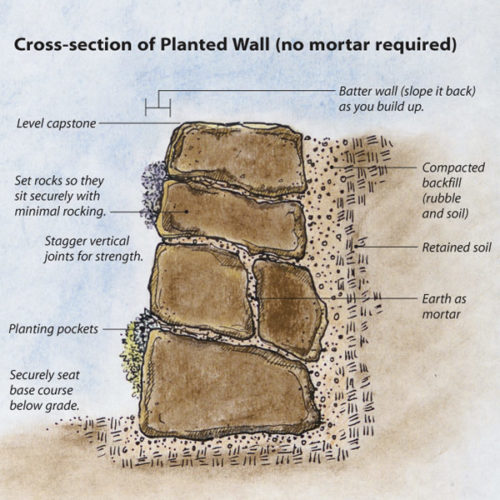
دیوالونه په کورسونو کې جوړ شوي دي. The base course is structurally the most important, while the final course, the capstone, is the most challenging. For stability, walls should be at least 20 inches wide at the base. They can taper slightly toward the top, but you’ll want a wall that is at least two rocks wide in most places. This can be accomplished by mixing stones of different sizes or by backfilling with a combination of two-thirds rubble to one-third soil.
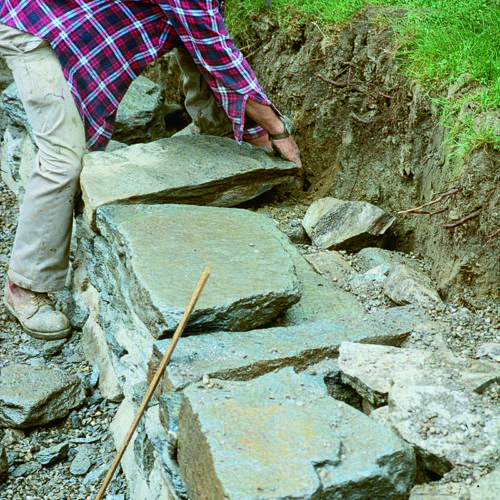
د بیس کورس لپاره خندق کیندل
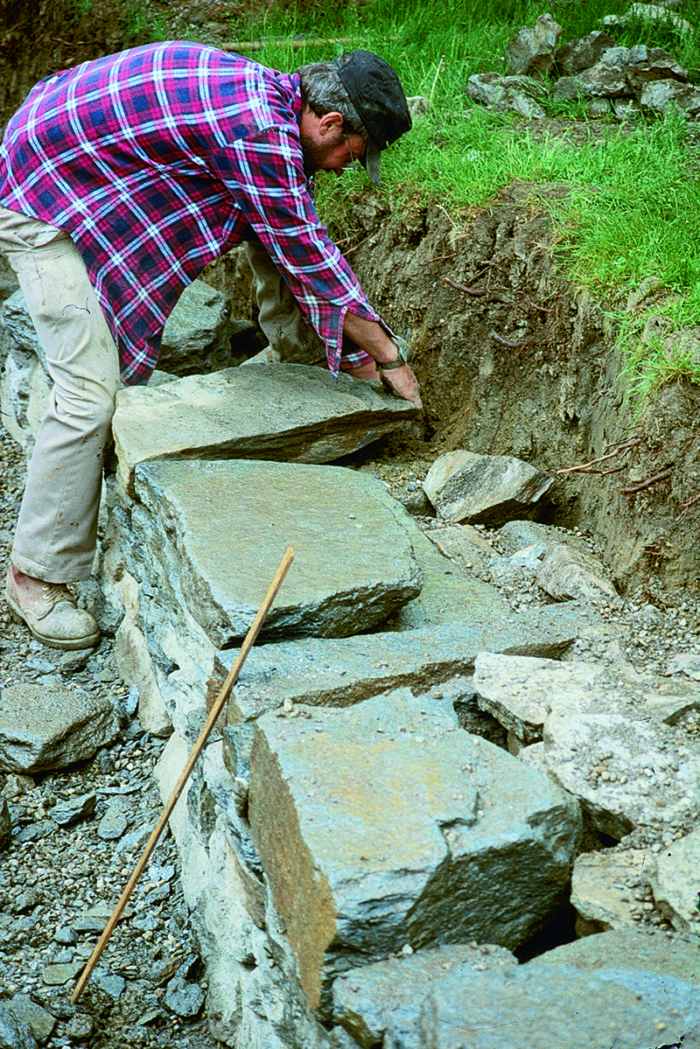
Start by digging a trench about 4 inches deep and at least 2 feet wide. A straightedged spade will give you a nice, even edge. The first course must be very solid and tightly fit because the weight of the wall will rest on it. Take the time to find rocks that lock into place, without leaving gaps. Randomly lay your largest rocks along the front edge of the trench. Set the first stone, shifting it around until it sits securely without being rocked easily, and then fill with the remaining stones. If you are using rectangular stones, you want the height of adjacent stones to be the same, or of a difference that can be made up with a smaller stone. If the rocks are irregular, then the stones will fit together leaving a triangular gap for the next course to fit into. I find irregular rocks easier to work with than flat ones; with flat rocks you have to be more precise. Find a stone that fits well and then continue for a few more feet. A rule of thumb, passed down from my wall-building teacher’s mentor, is to try a stone seven different ways. If it doesn’t fit by the seventh try, use another stone.
بیا، د تیږو شاته کثافات وباسئ او ځمکه په ځایونو کې ټمپ کړئ between, behind, and beneath the stones with top of the sledgehammer. This is an important step because the dirt becomes the mortar for the wall. I also recommend adding rubble (those stones you won’t use on the face of your wall) behind the face course to give greater strength to the wall. Pound the rubble and soil mix until you are satisfied that it is solid. Continue the first course until you reach the end of the wall. When you are done, test
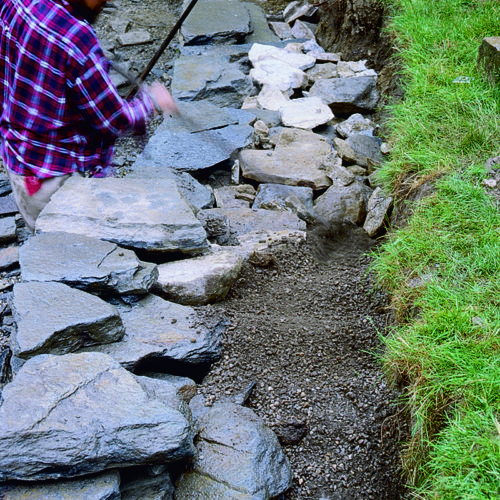
د دوهم کورس پیل کولو لپاره، یوه ډبره غوره کړئ چې د لاندې کورس لومړی ګډ پل به کړي. Avoid having joints run up the face of the wall, and angle (batter) the courses backward—approximately 1 inch per vertical foot. This creates a stable wall. For added strength, intermittently place single stones that run the full depth of the wall. This will only work with rectangular rocks. For irregular rocks, place a large rock behind a face rock every 3 feet or so. As you set a course, you will come to situations, probably quite a few of them, where the rock placement is perfect on all sides but one. These are the planting opportunities that give life to a stone wall.
Continue building in this manner until you are one course away from the finished height. Fitting stones will get easier as you go, and you’ll likely discover that there’s a certain magic moment when you’re building a wall: you hear a thump that signals you’ve placed a rock perfec
د خپل دیوال سایټ لوړوالی جوړ کړئ
The ideal height for a dry-stacked retaining wall is 18 to 22 inches—so you can sit on it when your gardening chores are done. Even if
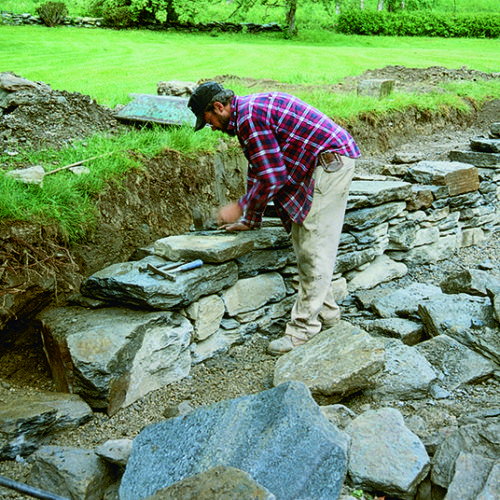
د کیپسټون ایښودلو پروسې ته ډیر صبر ورکړئ؛ دا د هغه مهارت پایله ده چې تاسو دې مرحلې ته وده کړې. دا باید د 15 څخه تر 18 انچه ژور وي، د یو څخه تر دریو ډبرو څخه جوړ شوی وي. د تیږو د خوندي کولو لپاره خاوره او ښه ځای پرځای کول وکاروئ، او لکه څنګه چې د دیوال د بندونو سره، په کیپسټون کې د اوږدمهاله بندونو څخه ډډه وکړئ. که تاسو غواړئ په دیوال کې ناست شئ، نرم، فلیټ ډبرې غوره کړئ. یا، تشې د خاورې سره ډک کړئ او د کشن لپاره خوشبو لرونکي بوټي وکرئ. یو کرل شوی کیپسټون د ژوندی دیوال لپاره په زړه پوری پایی لمس دی.






 افریقی
 البانیایی
 امهاریک
 عربي
عربي ارمانیایی
 اذربایجان
 باسک
باسک بلاروسي
 بنګالي
  بوسنیایی
 بلغاریه ایی
 کتالین
 سیبوانو
 چین
چین چین (تایوان)
 کورسیکن
 کرواسین
 چکسلواکي
 دنمارکي
 الماني
 انګلیسي
 ایسپیرینټو
 ایستونین
 فنلینډي
 فرانسوي
 فریزین
 ګالیسي
 ګرجستاني
 جرمني
جرمني یوناني
 ګجراتي
 هیتیان کریول
 هوسا
هوسا هوایی
هوایی عبري
عبري نه
نه مياو
مياو هنګري
هنګري ایلینډیک
 igbo
igbo انډونیزین
 ایرلینډي
 ایټالیوي
 جاپاني
 جاوه ای
 کناډا
کناډا قزاقي
قزاقي خمیر
خمیر روانډا
 کوریایی
 کرد
کرد قرغیزي
 TB
TB لاتین
لاتین لیتوین
 لیتوانیایی
 لوګزامبورګي
 مقدوني
 ملګاشي
 مالایا
 ملایلم
 مالتیس
 ماوري
ماوري مراټي
مراټي مغولي
مغولي میانمار
 نیپالي
 نارویژي
 نارویژي
 اوکیتین
 پښتو
پښتو فارسي
فارسي پولیش
پولیش پورتګالي
  پنجابي
 رومانیایی
 روسي
روسي سامون
سامون سکاټلینډي ګیلیک
 صربي
صربي انګلیسي
 شونا
شونا سندي
سندي سنګال
سنګال سلواکي
 سلوانیایی
 سومالیایی
 هسپانیه ایی
 سنډانیز
 سواحلي
 سویډیش یا سویډني
 تګالوګ
 تاجک
تاجک تامیل
تامیل تاتار
تاتار تولیګو
 تای
تای ترکي
ترکي ترکمني
 اوکرایني
 اردو
اردو اویغور
 ازبکي
ازبکي ویتنامي
 ولش
ولش