

さびたタイル
自分で石積み擁壁を建てたいけど、どうやって始めればいいか分からない? 庭に石積みの擁壁があれば、浸食を防ぎ、植物を植えるのに適した場所を確保できます。自分で擁壁を組み立てる方法を最初から最後まで学ぶには、以下をお読みください。
To figure out how much stone you’ll need, multiply your wall’s height times the depth times the length. If your wall is 2 feet high, 1-1/2 feet wide, and 20 feet long, you’ll need roughly 60 cubic feet of stone. Most stoneyards will deliver the stones for a slight charge; have them placed as close to the site of your retaining wall as possible.
はどうかと言うと tools, you’ll need a shovel for digging your trench and backfilling, a マトック for attacking the grade, and a small sledgehammer for tamping soil. For marking your site and leveling rocks, you’ll need a line level, a few tall stakes, string, some flour, and a 4- or 8-foot level.
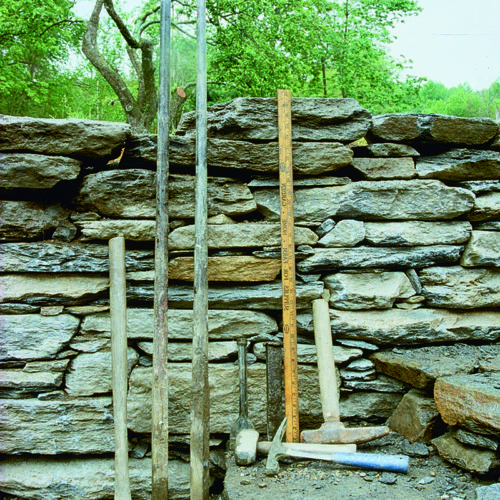
Now you can start digging. The easiest approach is to cut and fill—that is, dig into the slope where the wall will go and spread the earth below you to create a level terrace. When you cut and fill, the wall is backed by undisturbed soil, which is more stable than fill. For design reasons, however, you might choose to build a freestanding wall and fill behind it with soil from another site. Or you might do a partial cut and fill, which is somewhere between the two.
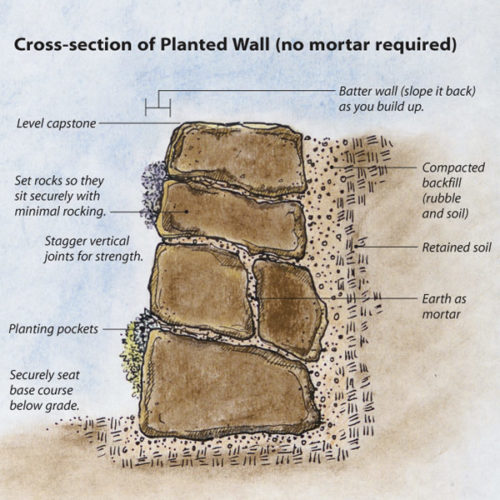
壁は階層的に構築されます。 The base course is structurally the most important, while the final course, the capstone, is the most challenging. For stability, walls should be at least 20 inches wide at the base. They can taper slightly toward the top, but you’ll want a wall that is at least two rocks wide in most places. This can be accomplished by mixing stones of different sizes or by backfilling with a combination of two-thirds rubble to one-third soil.
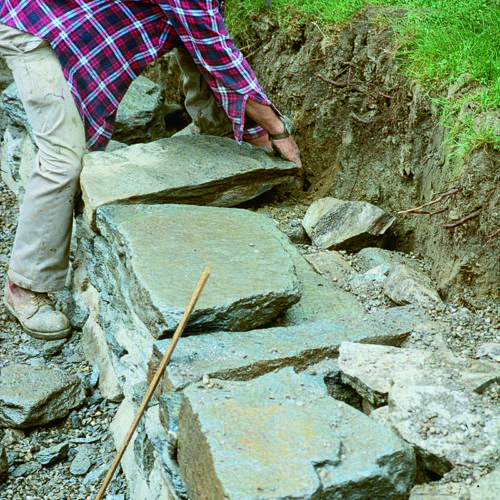
基礎用の溝を掘る
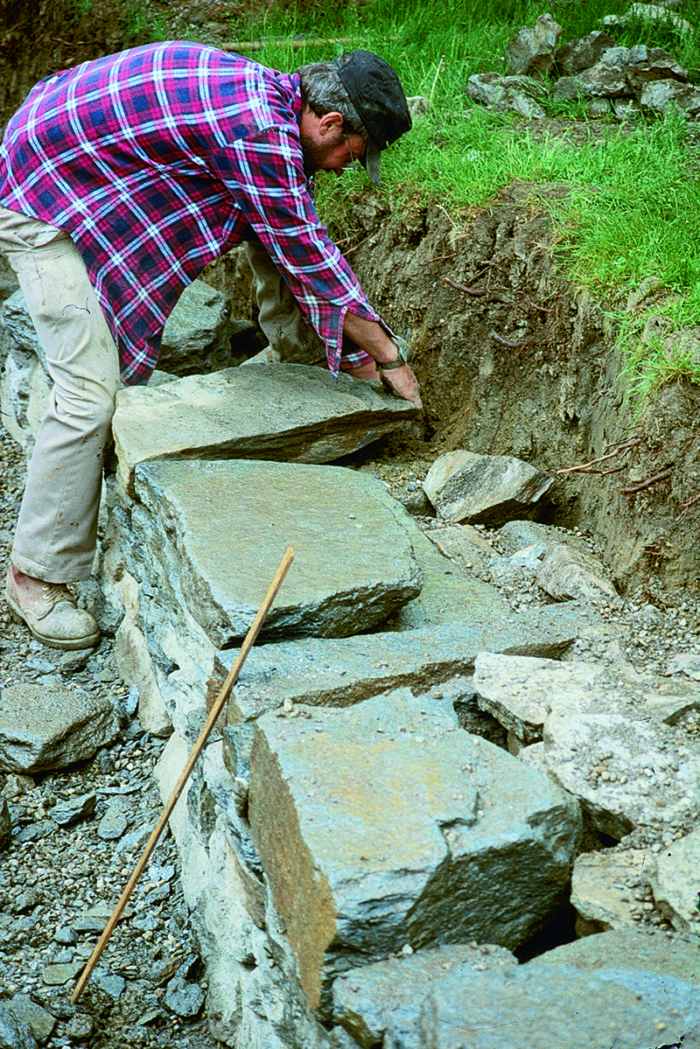
Start by digging a trench about 4 inches deep and at least 2 feet wide. A straightedged spade will give you a nice, even edge. The first course must be very solid and tightly fit because the weight of the wall will rest on it. Take the time to find rocks that lock into place, without leaving gaps. Randomly lay your largest rocks along the front edge of the trench. Set the first stone, shifting it around until it sits securely without being rocked easily, and then fill with the remaining stones. If you are using rectangular stones, you want the height of adjacent stones to be the same, or of a difference that can be made up with a smaller stone. If the rocks are irregular, then the stones will fit together leaving a triangular gap for the next course to fit into. I find irregular rocks easier to work with than flat ones; with flat rocks you have to be more precise. Find a stone that fits well and then continue for a few more feet. A rule of thumb, passed down from my wall-building teacher’s mentor, is to try a stone seven different ways. If it doesn’t fit by the seventh try, use another stone.
次に、石の後ろに土をシャベルで入れ、土を踏み固めます。 between, behind, and beneath the stones with top of the sledgehammer. This is an important step because the dirt becomes the mortar for the wall. I also recommend adding rubble (those stones you won’t use on the face of your wall) behind the face course to give greater strength to the wall. Pound the rubble and soil mix until you are satisfied that it is solid. Continue the first course until you reach the end of the wall. When you are done, test
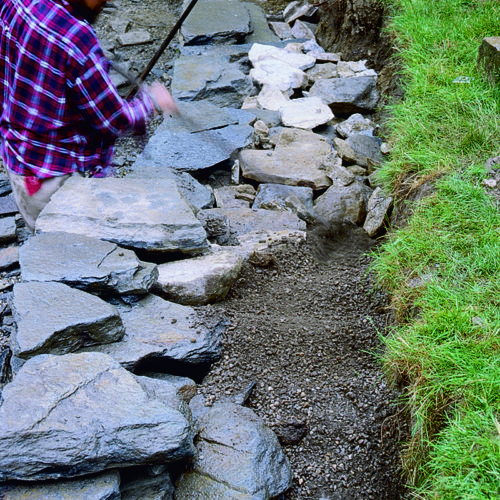
2 番目のコースを開始するには、下のコースの最初のジョイントを橋渡しする石を選択します。 Avoid having joints run up the face of the wall, and angle (batter) the courses backward—approximately 1 inch per vertical foot. This creates a stable wall. For added strength, intermittently place single stones that run the full depth of the wall. This will only work with rectangular rocks. For irregular rocks, place a large rock behind a face rock every 3 feet or so. As you set a course, you will come to situations, probably quite a few of them, where the rock placement is perfect on all sides but one. These are the planting opportunities that give life to a stone wall.
Continue building in this manner until you are one course away from the finished height. Fitting stones will get easier as you go, and you’ll likely discover that there’s a certain magic moment when you’re building a wall: you hear a thump that signals you’ve placed a rock perfec
壁の高さを決める
The ideal height for a dry-stacked retaining wall is 18 to 22 inches—so you can sit on it when your gardening chores are done. Even if
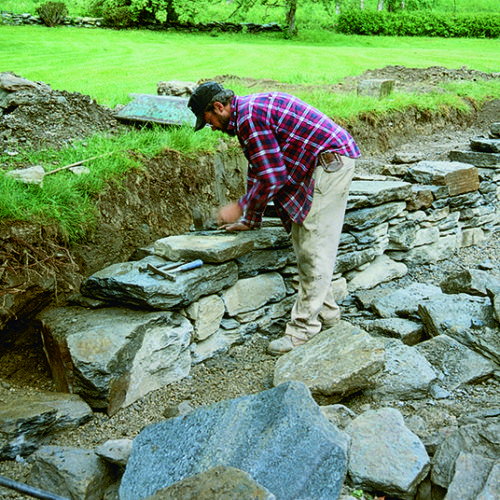
キャップストーンを敷設するプロセスには十分な忍耐力が必要です。 それは、あなたがこれまでに培ってきた技術の集大成です。深さは約 15 ~ 18 インチで、1 ~ 3 個の石でできている必要があります。土を使って石をしっかりと固定し、壁の継ぎ目と同様に、キャップストーンの継ぎ目が長くならないようにしてください。壁に座りたい場合は、滑らかで平らな石を選んでください。または、隙間を土で埋めて、クッションとして香りのよいハーブを植えてください。植物を植えたキャップストーンは、生きた壁の素敵な仕上げになります。






 アフリカ人
アフリカ人 アルバニア人
 アムハラ語
アムハラ語 アラビア語
アラビア語 アルメニア語
 アゼルバイジャン語
 バスク語
バスク語 ベラルーシ語
 ベンガル語
ベンガル語  ボスニア語
ボスニア語 ブルガリア語
 カタルーニャ語
 セブアノ語
セブアノ語 中国
中国 中国(台湾)
 コルシカ島
コルシカ島 クロアチア語
 チェコ語
チェコ語 デンマーク語
 オランダの
オランダの 英語
英語 エスペラント
 エストニア語
 フィンランド語
 フランス語
フランス語 フリジア語
フリジア語 ガリシア語
ガリシア語 ジョージア語
 ドイツ人
ドイツ人 ギリシャ語
ギリシャ語 グジャラート語
 ハイチ クレオール
 ハウサ語
ハウサ語 ハワイアン
ハワイアン ヘブライ語
ヘブライ語 いいえ
いいえ ミャオ族
ミャオ族 ハンガリー語
 アイスランド語
 イボ語
イボ語 インドネシア語
 アイルランド人
 イタリアの
イタリアの 日本語
日本語 ジャワ語
ジャワ語 カンナダ語
カンナダ語 カザフ語
カザフ語 クメール語
クメール語 ルワンダ語
ルワンダ語 韓国語
韓国語 クルド
クルド キルギス
キルギス 結核
結核 ラテン
ラテン ラトビア語
ラトビア語 リトアニア語
 ルクセンブルク語
 マケドニアの
 マルガシ
マルガシ マレー語
マレー語 マラヤーラム語
 マルタ語
マルタ語 マオリ語
マオリ語 マラーティー語
 モンゴル語
モンゴル語 ミャンマー
ミャンマー ネパール語
ネパール語 ノルウェー語
 ノルウェー語
 オック語
オック語 パシュトゥー語
 ペルシア語
ペルシア語 研磨
研磨 ポルトガル語
  パンジャブ語
 ルーマニア語
 ロシア
ロシア サモア語
サモア語 スコットランド・ゲール語
 セルビア語
セルビア語 英語
英語 ショナ
ショナ シンド語
シンド語 シンハラ語
シンハラ語 スロバキア語
 スロベニア語
 ソマリ語
ソマリ語 スペイン語
スペイン語 スンダ人
スンダ人 スワヒリ語
スワヒリ語 スウェーデンの
 タガログ語
タガログ語 タジク語
タジク語 タミル語
タミル語 タタール語
タタール語 テルグ語
テルグ語 タイ語
タイ語 トルコ語
トルコ語 トルクメン語
 ウクライナ語
 ウルドゥー語
 ウイグル語
ウイグル語 ウズベク語
ウズベク語 ベトナム語
ベトナム語 ウェールズ語