

生锈的瓷砖
想要建造自己的石挡土墙,但不知道该如何开始?如果你有一个不平整的 院子里,石挡土墙有助于防止水土流失,并提供良好的种植场所。要了解如何从头到尾建造自己的挡土墙,请继续阅读。
To figure out how much stone you’ll need, multiply your wall’s height times the depth times the length. If your wall is 2 feet high, 1-1/2 feet wide, and 20 feet long, you’ll need roughly 60 cubic feet of stone. Most stoneyards will deliver the stones for a slight charge; have them placed as close to the site of your retaining wall as possible.
至于 tools, you’ll need a shovel for digging your trench and backfilling, a 鹤嘴锄 for attacking the grade, and a small sledgehammer for tamping soil. For marking your site and leveling rocks, you’ll need a line level, a few tall stakes, string, some flour, and a 4- or 8-foot level.
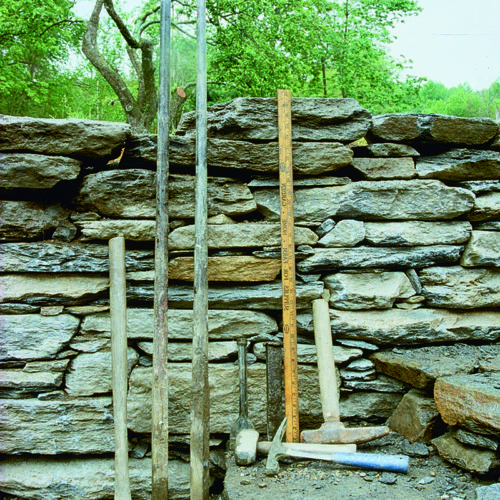
Now you can start digging. The easiest approach is to cut and fill—that is, dig into the slope where the wall will go and spread the earth below you to create a level terrace. When you cut and fill, the wall is backed by undisturbed soil, which is more stable than fill. For design reasons, however, you might choose to build a freestanding wall and fill behind it with soil from another site. Or you might do a partial cut and fill, which is somewhere between the two.
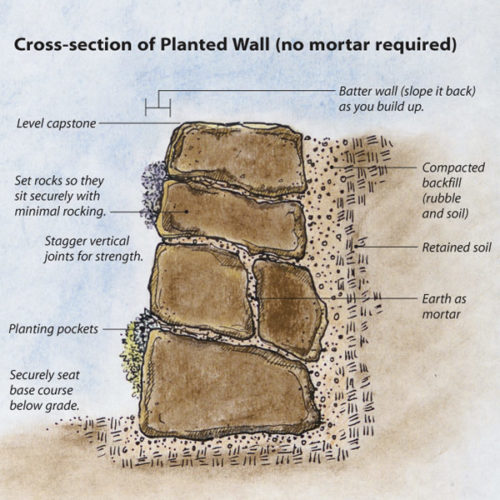
墙壁是分段建造的。 The base course is structurally the most important, while the final course, the capstone, is the most challenging. For stability, walls should be at least 20 inches wide at the base. They can taper slightly toward the top, but you’ll want a wall that is at least two rocks wide in most places. This can be accomplished by mixing stones of different sizes or by backfilling with a combination of two-thirds rubble to one-third soil.
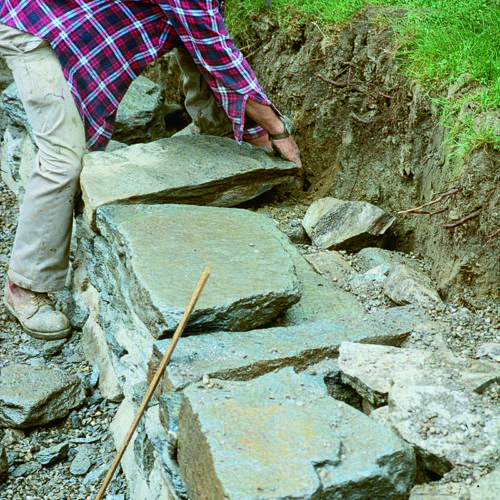
挖一条沟渠作为基层
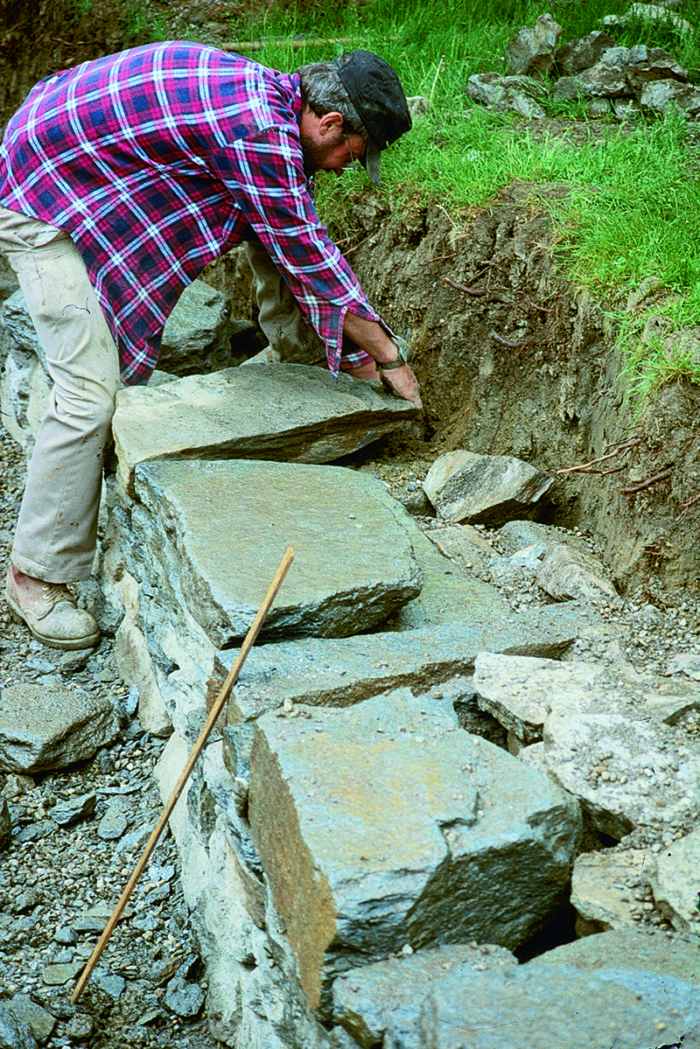
Start by digging a trench about 4 inches deep and at least 2 feet wide. A straightedged spade will give you a nice, even edge. The first course must be very solid and tightly fit because the weight of the wall will rest on it. Take the time to find rocks that lock into place, without leaving gaps. Randomly lay your largest rocks along the front edge of the trench. Set the first stone, shifting it around until it sits securely without being rocked easily, and then fill with the remaining stones. If you are using rectangular stones, you want the height of adjacent stones to be the same, or of a difference that can be made up with a smaller stone. If the rocks are irregular, then the stones will fit together leaving a triangular gap for the next course to fit into. I find irregular rocks easier to work with than flat ones; with flat rocks you have to be more precise. Find a stone that fits well and then continue for a few more feet. A rule of thumb, passed down from my wall-building teacher’s mentor, is to try a stone seven different ways. If it doesn’t fit by the seventh try, use another stone.
接下来,用铲子把泥土铲到石头后面,然后把泥土夯实到空隙中 between, behind, and beneath the stones with top of the sledgehammer. This is an important step because the dirt becomes the mortar for the wall. I also recommend adding rubble (those stones you won’t use on the face of your wall) behind the face course to give greater strength to the wall. Pound the rubble and soil mix until you are satisfied that it is solid. Continue the first course until you reach the end of the wall. When you are done, test
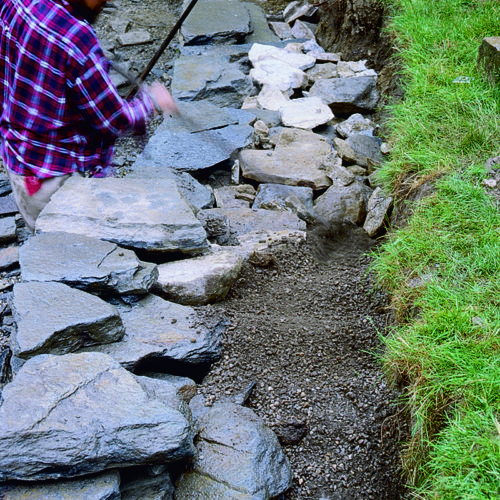
要开始第二层,请选择一块连接底层第一个接缝的石头。 Avoid having joints run up the face of the wall, and angle (batter) the courses backward—approximately 1 inch per vertical foot. This creates a stable wall. For added strength, intermittently place single stones that run the full depth of the wall. This will only work with rectangular rocks. For irregular rocks, place a large rock behind a face rock every 3 feet or so. As you set a course, you will come to situations, probably quite a few of them, where the rock placement is perfect on all sides but one. These are the planting opportunities that give life to a stone wall.
Continue building in this manner until you are one course away from the finished height. Fitting stones will get easier as you go, and you’ll likely discover that there’s a certain magic moment when you’re building a wall: you hear a thump that signals you’ve placed a rock perfec
确定墙壁高度
The ideal height for a dry-stacked retaining wall is 18 to 22 inches—so you can sit on it when your gardening chores are done. Even if
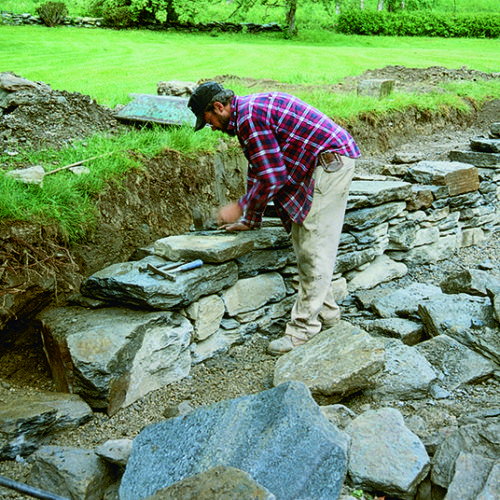
在铺设顶石的过程中要有足够的耐心; 这是您目前所掌握的技能的顶峰。它应该大约有 15 到 18 英寸深,由一到三块石头组成。使用土壤和良好的位置来固定石头,就像墙壁接缝一样,避免在顶石上留出较长的接缝。如果您想坐在墙上,请选择光滑、平坦的石头。或者,用土壤填补缝隙,并种植芳香的草本植物作为垫子。种植的顶石是绿墙的点睛之笔。
 非洲人
非洲人 阿尔巴尼亚语
 阿姆哈拉语
阿姆哈拉语 阿拉伯
阿拉伯 亚美尼亚语
亚美尼亚语 阿塞拜疆语
阿塞拜疆语 巴斯克
巴斯克 白俄罗斯语
白俄罗斯语 孟加拉
孟加拉  波斯尼亚语
波斯尼亚语 保加利亚语
保加利亚语 加泰罗尼亚语
 宿务语
宿务语 中国
中国 中国(台湾)
 科西嘉岛
科西嘉岛 克罗地亚语
克罗地亚语 捷克语
捷克语 丹麦语
丹麦语 荷兰语
荷兰语 英语
英语 世界语
世界语 爱沙尼亚语
爱沙尼亚语 芬兰
芬兰 法语
法语 弗里斯兰语
弗里斯兰语 加利西亚语
加利西亚语 格鲁吉亚语
格鲁吉亚语 德语
德语 希腊语
希腊语 古吉拉特语
古吉拉特语 海地克里奥尔语
 豪萨
豪萨 夏威夷人
夏威夷人 希伯来语
希伯来语 没有
没有 苗族
苗族 匈牙利
匈牙利 冰岛的
冰岛的 伊博语
伊博语 印度尼西亚
印度尼西亚 爱尔兰语的
爱尔兰语的 意大利语
意大利语 日本人
日本人 爪哇语
爪哇语 卡纳达语
卡纳达语 哈萨克语
哈萨克语 高棉语
高棉语 卢旺达
卢旺达 韩国人
韩国人 库尔德
库尔德 吉尔吉斯斯坦
 结核病
结核病 拉丁
拉丁 拉脱维亚语
拉脱维亚语 立陶宛语
立陶宛语 卢森堡语
卢森堡语 马其顿语
马其顿语 马尔加什
马尔加什 马来语
马来语 马拉雅拉姆语
 马耳他语
马耳他语 毛利人
毛利人 马拉地语
马拉地语 蒙
蒙 缅甸
缅甸 尼泊尔语
尼泊尔语 挪威
挪威 挪威
挪威 奥克语
奥克语 普什图语
普什图语 波斯语
波斯语 抛光
抛光 葡萄牙语
葡萄牙语  旁遮普语
旁遮普语 罗马尼亚语
罗马尼亚语 俄语
俄语 萨摩亚人
萨摩亚人 苏格兰盖尔语
 塞尔维亚
塞尔维亚 英语
英语 绍纳语
绍纳语 信德语
信德语 僧伽罗语
僧伽罗语 斯洛伐克语
斯洛伐克语 斯洛文尼亚语
 索马里
索马里 西班牙语
西班牙语 巽他语
巽他语 斯瓦希里语
斯瓦希里语 瑞典
瑞典 他加禄语
他加禄语 塔吉克
塔吉克 泰米尔语
泰米尔语 鞑靼人
鞑靼人 泰卢固语
泰卢固语 泰国
泰国 土耳其
土耳其 土库曼语
土库曼语 乌克兰
乌克兰 乌尔都语
乌尔都语 维吾尔
维吾尔 乌兹别克语
乌兹别克语 越南语
越南语 威尔士语
威尔士语