

Tíleanna meirgeach
Ag iarraidh do bhalla coinneála cloiche féin a thógáil, ach nach bhfuil tú cinnte conas tosú? Má tá míchothrom agat clós, is féidir le balla coinneála cloiche cabhrú le creimeadh a chosc agus soláthraíonn sé áit deas le plandáil. Chun foghlaim conas do chuid féin a chur le chéile, ó thús go deireadh, léigh ar aghaidh.
To figure out how much stone you’ll need, multiply your wall’s height times the depth times the length. If your wall is 2 feet high, 1-1/2 feet wide, and 20 feet long, you’ll need roughly 60 cubic feet of stone. Most stoneyards will deliver the stones for a slight charge; have them placed as close to the site of your retaining wall as possible.
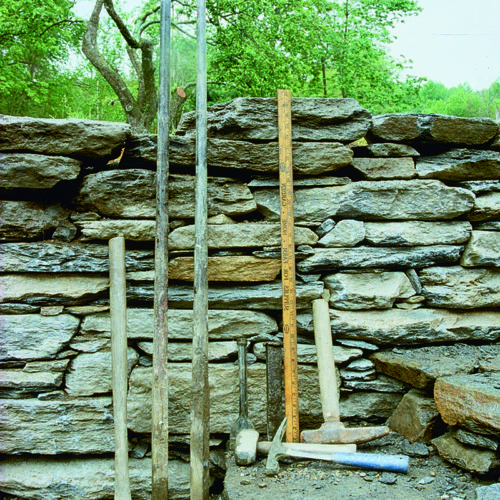
Maidir le tools, you’ll need a shovel for digging your trench and backfilling, a matach for attacking the grade, and a small sledgehammer for tamping soil. For marking your site and leveling rocks, you’ll need a line level, a few tall stakes, string, some flour, and a 4- or 8-foot level.
Now you can start digging. The easiest approach is to cut and fill—that is, dig into the slope where the wall will go and spread the earth below you to create a level terrace. When you cut and fill, the wall is backed by undisturbed soil, which is more stable than fill. For design reasons, however, you might choose to build a freestanding wall and fill behind it with soil from another site. Or you might do a partial cut and fill, which is somewhere between the two.
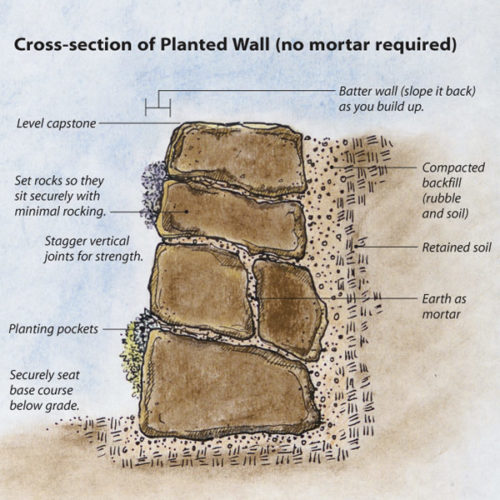
Tógtar ballaí i gcúrsaí. The base course is structurally the most important, while the final course, the capstone, is the most challenging. For stability, walls should be at least 20 inches wide at the base. They can taper slightly toward the top, but you’ll want a wall that is at least two rocks wide in most places. This can be accomplished by mixing stones of different sizes or by backfilling with a combination of two-thirds rubble to one-third soil.
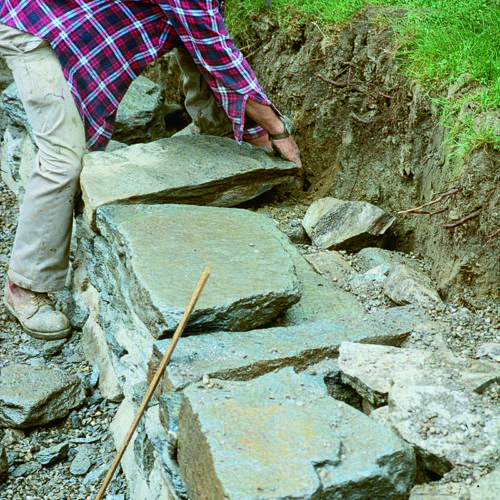
Déan trinse don bhunchúrsa
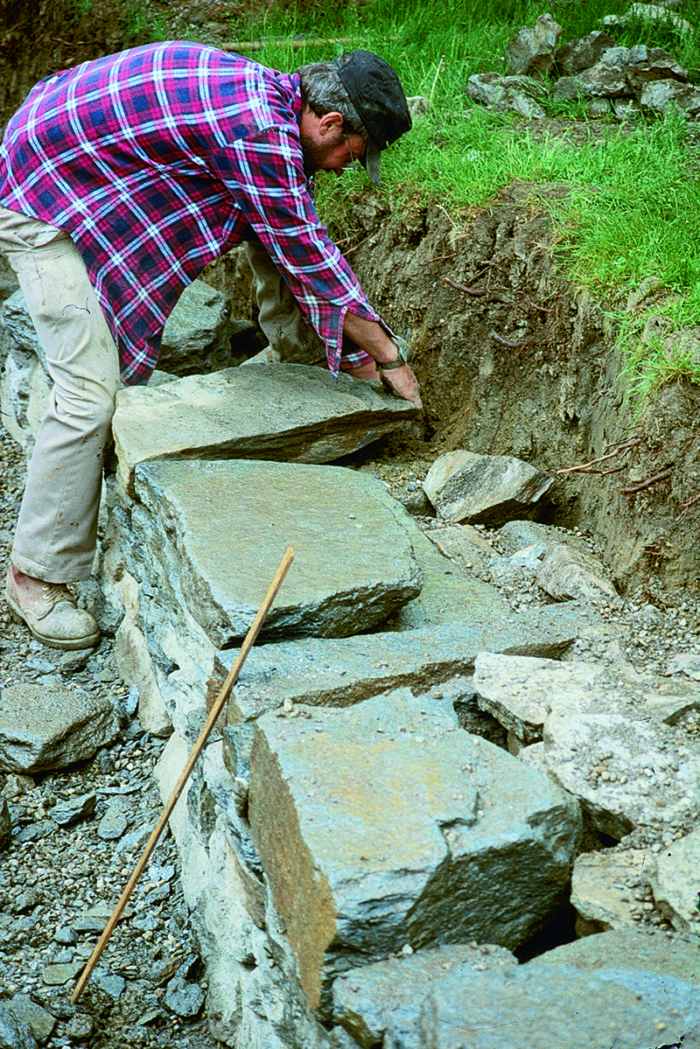
Start by digging a trench about 4 inches deep and at least 2 feet wide. A straightedged spade will give you a nice, even edge. The first course must be very solid and tightly fit because the weight of the wall will rest on it. Take the time to find rocks that lock into place, without leaving gaps. Randomly lay your largest rocks along the front edge of the trench. Set the first stone, shifting it around until it sits securely without being rocked easily, and then fill with the remaining stones. If you are using rectangular stones, you want the height of adjacent stones to be the same, or of a difference that can be made up with a smaller stone. If the rocks are irregular, then the stones will fit together leaving a triangular gap for the next course to fit into. I find irregular rocks easier to work with than flat ones; with flat rocks you have to be more precise. Find a stone that fits well and then continue for a few more feet. A rule of thumb, passed down from my wall-building teacher’s mentor, is to try a stone seven different ways. If it doesn’t fit by the seventh try, use another stone.
Ansin, salachar sluasaid taobh thiar de na clocha agus cuir an domhan isteach sna spásanna between, behind, and beneath the stones with top of the sledgehammer. This is an important step because the dirt becomes the mortar for the wall. I also recommend adding rubble (those stones you won’t use on the face of your wall) behind the face course to give greater strength to the wall. Pound the rubble and soil mix until you are satisfied that it is solid. Continue the first course until you reach the end of the wall. When you are done, test
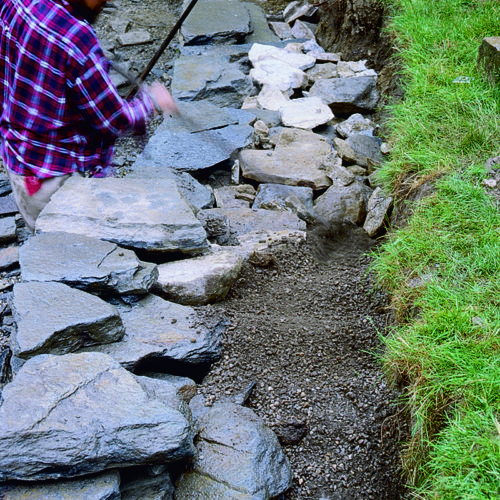
Chun tús a chur leis an dara cúrsa, roghnaigh cloch a dhroicheadfaidh an chéad alt den chúrsa bun. Avoid having joints run up the face of the wall, and angle (batter) the courses backward—approximately 1 inch per vertical foot. This creates a stable wall. For added strength, intermittently place single stones that run the full depth of the wall. This will only work with rectangular rocks. For irregular rocks, place a large rock behind a face rock every 3 feet or so. As you set a course, you will come to situations, probably quite a few of them, where the rock placement is perfect on all sides but one. These are the planting opportunities that give life to a stone wall.
Continue building in this manner until you are one course away from the finished height. Fitting stones will get easier as you go, and you’ll likely discover that there’s a certain magic moment when you’re building a wall: you hear a thump that signals you’ve placed a rock perfec
Déan d'airde suite balla
The ideal height for a dry-stacked retaining wall is 18 to 22 inches—so you can sit on it when your gardening chores are done. Even if
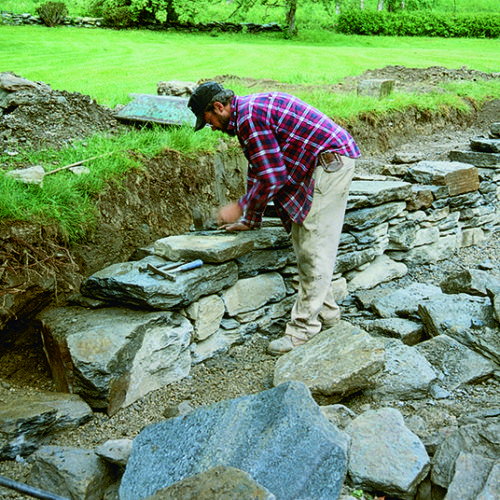
Tabhair neart foighne leis an bpróiseas a bhaineann le leagan na cloiche caipín; is buaic é ar an scil atá forbartha agat go dtí an pointe seo. Ba chóir go mbeadh sé thart ar 15 go 18 orlach ar doimhneacht, déanta suas de 1-3 clocha. Bain úsáid as ithir agus socrúchán maith chun na clocha a dhaingniú, agus díreach mar atá le hailt balla, seachain hailt fhada sa chloch mhullaigh. Más mian leat suí ar an mballa, roghnaigh clocha réidh réidh. Nó, bearnaí a líonadh le ithir agus plandaí luibheanna cumhra le haghaidh cúisíní. Is aoibhinn leis an mballa beo é leac mhullaigh phlandáilte.
 Afracach
 Albanach
 Amáireach
 Araibis
 Airméinis
 Asarbaiseáinis
 Bascais
 Bealarúisis
 Beangáilis
  Boisnis
 Bulgáiris
 Catalóinis
 Cebuano
 tSín
tSín An tSín (Taiwan)
 Corsaicis
 Cróitis
 Seiceach
 Danmhairgis
 Ollainnis
 Béarla
 Esperanto
 Eastóinis
 Fionlainnis
 Fraincis
 Freaslainnis
 Gailísis
 Seoirseach
 Gearmáinis
 Gréigis
 Gúisearáitis
 Criól Haiti
 háis
háis Haváíais
 Eabhrais
 Ní hea
 Miao
Miao Ungáiris
 Íoslainnis
 igbo
igbo Indinéisis
 Gaeilge
 Iodálach
 Seapánach
 Iávais
 Cannadais
 casaicis
 Ciméiris
 Ruanda
 Cóiréis
 Coirdis
 Chirgeastáin
 TB
TB Laidin
 Laitvis
 Liotuáinis
 Lucsamburgach
 Macadóinis
 Malgashi
 Malaeis
 Mailéalaimis
 Máltais
 Maorais
 Marathi
 Mongóilis
 Maenmar
 Neipealais
 Ioruais
 Ioruais
 Occitan
 Paistis
 Peirsis
 Polainnis
 Portaingéilis
  Puinseáibis
 Rómáinis
 Rúisis
 Samóis
 Gaeilge na hAlban
 Seirbis
 Béarla
 Shona
Shona Sindhi
 Siolóinis
 Slóvaicis
 Slóivéinis
 Somáilis
 Spainnis
 Sundais
 Svahaílis
 Sualainnis
 Tagálaigis
 Táidsíc
 Tamailis
 Tatairis
 Teileagúis
 Téalainnis
 Tuircis
 Tuircméinis
 Úcráinis
 Urdais
 Uighur
 Úisbéicis
 Vítneaimis
 Breatnais